Monstera deliciosa grows best in a steady indoor range of 65°F to 85°F (18°C to 29°C), and it tolerates a few degrees of swing in either direction as long as the air does not stay cold for long. The honest answer for most indoor growers is that a normal living room is the perfect climate, and the only real risks are cold drafts, hot radiators, and an outdoor move that lands the plant in a temperature it cannot escape.
Monstera is more cold-sensitive than heat-sensitive. Anything below 50°F (10°C) starts to slow growth and damage new leaves, and a hard frost kills the plant within hours. The hot end is forgiving, as long as the plant has water and humidity to support the heat it is sitting in. The full picture is about avoiding the extremes rather than chasing a perfect number.
What temperature does for a monstera
Monstera is a tropical evergreen that evolved in the warm, stable understory of Central American rainforests. That ecosystem holds a narrow range of 70°F to 82°F (21°C to 28°C) most of the year, with very few drops below 60°F (16°C). Indoors, the plant reads the surrounding air as its climate, and a 10°F swing through the day is the largest most monsteras can handle without stress.
Three things change visibly when temperature is wrong. New growth slows or stalls in cold rooms, the older leaves droop without recovering, and the leaf edges crisp in hot, dry rooms. None of those symptoms are unique to temperature, which is why a basic room thermometer next to the plant is a more useful diagnostic than a soil moisture meter when the symptoms do not match the watering schedule.
Temperature also sets the pace of the rest of the care plan. A monstera in a 60°F (16°C) room uses far less water than the same plant in a 78°F (26°C) room, and the watering guide adjusts the dry-down rhythm to the room temperature. The same logic applies to feeding: a plant in cool, slow growth is not pulling nutrients, and fertilizer in cold soil turns into salt stress.
The range that actually works indoors
A 65°F to 85°F (18°C to 29°C) window covers what monstera uses for steady indoor growth. Below 60°F (16°C), growth slows and the plant begins to show stress. Below 50°F (10°C), leaf damage starts on the newest growth. Above 90°F (32°C), the plant survives but transpires faster than it can replace water, especially in dry air.
A practical middle target is 70°F to 78°F (21°C to 26°C) during the day, with a natural drop of 5°F to 10°F overnight. That range is the most comfortable for the plant and for the people in the room, and it sits in the middle of what an air conditioner or a heater can hold steady.
The danger zones are the edges of the range, not the middle. A 95°F (35°C) afternoon is survivable if the plant has water and humidity. A 45°F (7°C) night is not, and even a few hours below 50°F (10°C) is enough to set the plant back by weeks.
How to read the temperature the plant actually feels
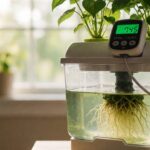
A small analog or digital thermometer placed at canopy height, on the same shelf as the monstera, gives a more useful reading than the thermostat on the far wall. Microclimates around a bright window, near a heating vent, or above a radiator can swing 5°F to 15°F in either direction over the course of a day, and the plant responds to the air at its leaves, not the thermostat average.
Take readings at three times of day for a few days: morning before the sun is on the window, mid-afternoon when the room is warmest, and after the heat has been running for an hour in the evening. The gap between the highest and lowest reading is the working range, and the plant has to live inside that range every day.
Watch for the spot where the leaf meets the stem. Cold air settles downward, and a plant on a cold floor or near a drafty window will show damage on the lower leaves first, even when the rest of the plant looks fine. Move the plant up off a cold sill or onto a plant stand to keep the lower leaves out of the cold pool.
Common cold problems and what they look like
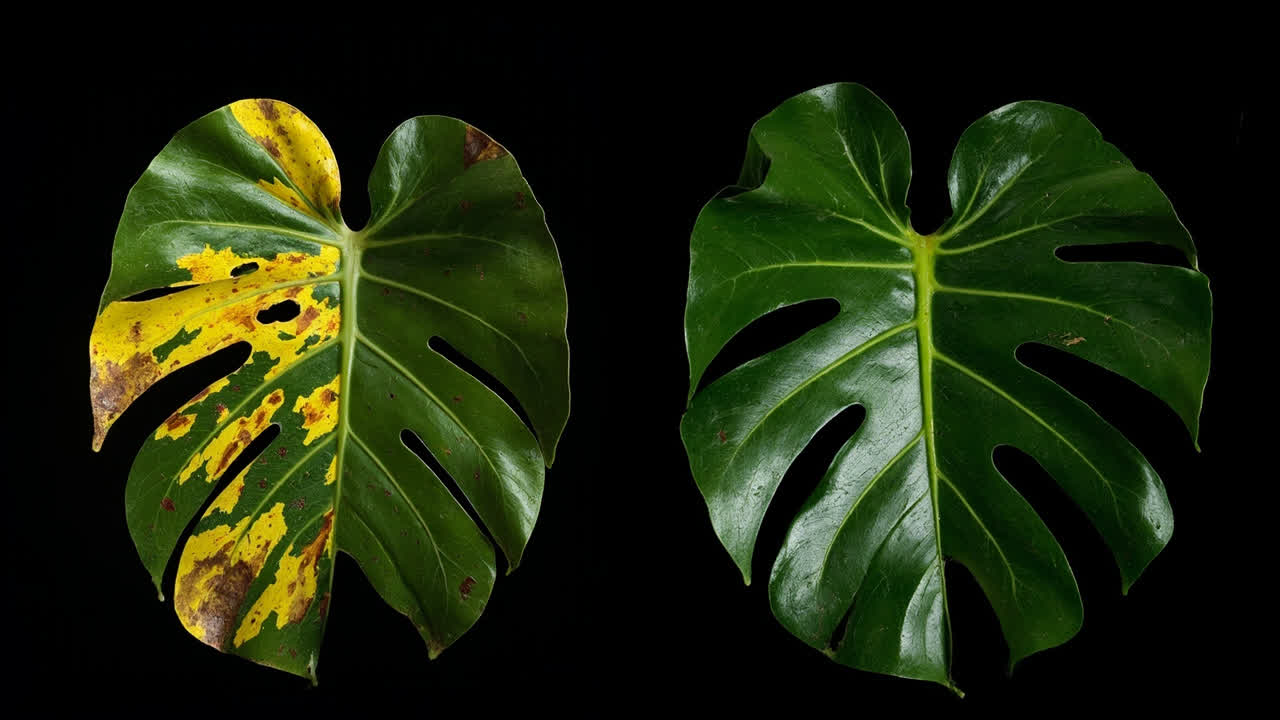
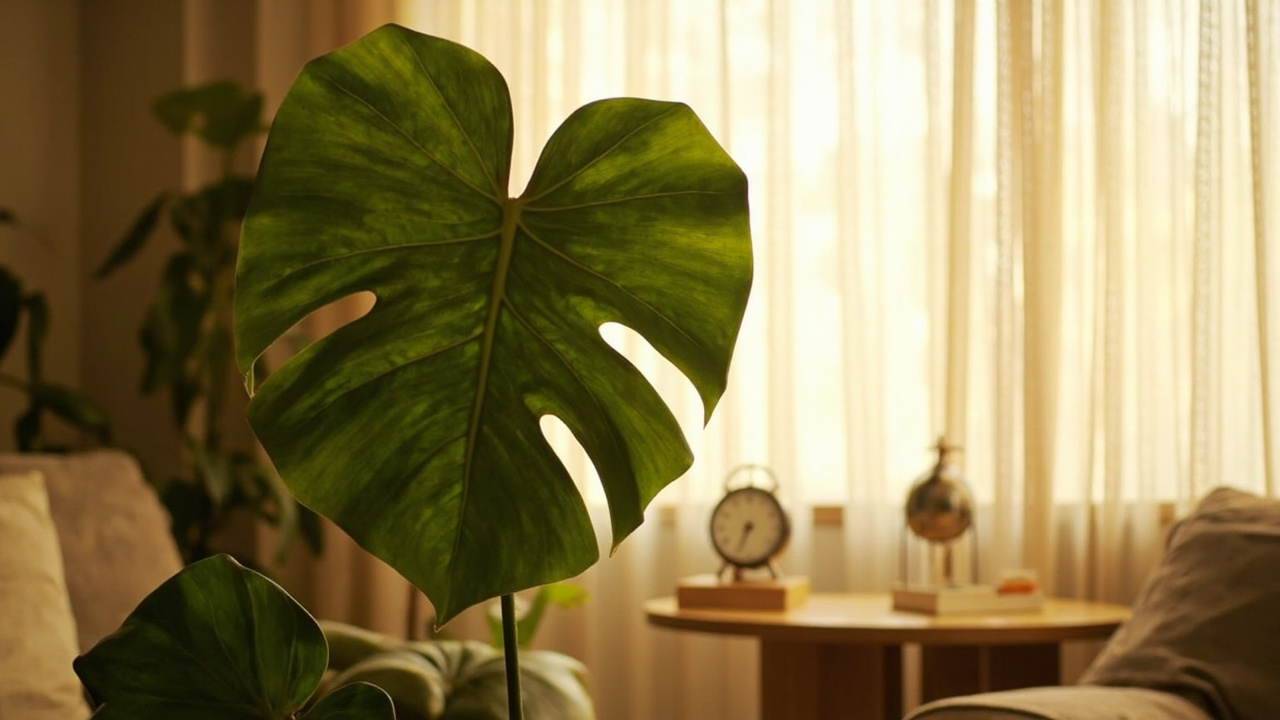
Cold damage on monstera shows up within 24 to 48 hours. The newest leaf, which is the most tender growth on the plant, develops dark, water-soaked patches that turn papery and brown. Older leaves droop, and the soil stays wet because the plant is not pulling water at the cool temperature. Recovery is slow, and the damaged leaves do not heal, so the plant has to push new growth to replace them.
Cold drafts are usually the cause rather than the room temperature itself. A monstera in a 70°F room next to a single-pane window in winter can still get cold damage on the leaf closest to the glass. Move the plant back from the window in winter, or close the curtain between the plant and the glass on cold nights.
Air conditioning can also stress a monstera. The cold air blowing directly onto the leaves drops the leaf surface temperature 5°F to 10°F below the room reading, which is enough to set the plant back. Aim the vent away from the monstera, or move the plant out of the direct airflow.
Heat, dry air, and what to watch for
Hot rooms stress a monstera through water loss rather than direct heat damage. A plant sitting in front of a sunny window in a 90°F (32°C) room will transpire faster than its roots can replace the water, and the older leaves will crisp at the edges, even when the soil is damp. The fix is to back the plant away from the direct sun and to raise the humidity around the canopy.
Heating vents are a hidden heat source. Air blowing out of a forced-air vent at 110°F (43°C) dries the leaves within hours, and the plant loses moisture through transpiration faster than the roots can keep up. Move the plant out of the direct line of any heating vent, especially in winter.
Heat stress is usually fixable within a week. Move the plant to a cooler spot, raise the humidity, water thoroughly, and the newer growth will resume. The crisped older leaves will not recover, and it is fine to trim the brown edges or remove the damaged leaves entirely once the plant is back in steady growth.
Outdoor moves and seasonal transitions
Moving a monstera outside for the warm months is a real boost, because the brighter light and natural humidity push faster growth. The transition matters. A plant moved directly from a 70°F indoor room into 95°F afternoon sun will lose a week of growth to heat stress. Hardening off over a week, with the plant in shade for a few hours longer each day, is the safe route.
Bring the plant back inside before nights drop below 60°F (16°C). A few cool nights in the 55°F (13°C) range will not kill a monstera, but the plant will not push new growth until it is back in the warm range, and the temperature stress can invite a fungal leaf spot that takes weeks to clear.
Potted monstera roots are more exposed to temperature swings than in-ground roots. A black nursery pot sitting on a sunny patio can heat the root ball above 100°F (38°C) on a hot afternoon, which is the fastest way to cook a plant. Move the pot into shade, double-pot it inside a larger ceramic container, or set it on a saucer of damp pebbles to keep the root temperature steady.
How temperature fits with the rest of the care plan
Temperature is one of three atmospheric variables a monstera responds to, and it only works in combination with the right humidity and light. The humidity requirements page covers the 50% to 70% range that pairs with a 70°F to 78°F target, and the light requirements page explains the bright, indirect light the plant needs to actually use the temperature and humidity it receives.
The full picture comes together in the monstera care guide, which is the right starting point for a new grower. A monstera in steady temperature, in the right humidity, and in a pot with the right soil mix will produce a new leaf every four to six weeks through the warm months, and it will hold its older leaves rather than dropping them to temperature shock.
A basic room thermometer, a few feet of space from a cold window, and a sensible outdoor transition are the only temperature management most monsteras actually need. Once the room holds 65°F to 85°F (18°C to 29°C) and the plant is out of the worst drafts, the rest of the care plan is just consistency: water when the top inch dries, feed lightly through the growing season, and let the plant rest in winter.
From PDF to Excel in one click
Forget retyping line by line. Upload any bank statement, get a spreadsheet you can actually use. Your files are never stored, and you can test the converter with 3 free conversions.
Try it free