Growing bamboo in containers can be an ideal solution for home gardeners who crave a lush, Zen-inspired vibe but may be short on yard space—or are perhaps nervous about bamboo’s notorious tendency to spread.
With the right care, bamboo can thrive happily in pots, turning any corner of your balcony, patio, or even a sunny indoor space into a tropical escape.
But while container bamboo gardening keeps bamboo’s growth in check, it also brings specific needs.
Understanding these will keep your bamboo healthy and green while minimizing issues!
Growing Bamboo In Containers: Quick Insights
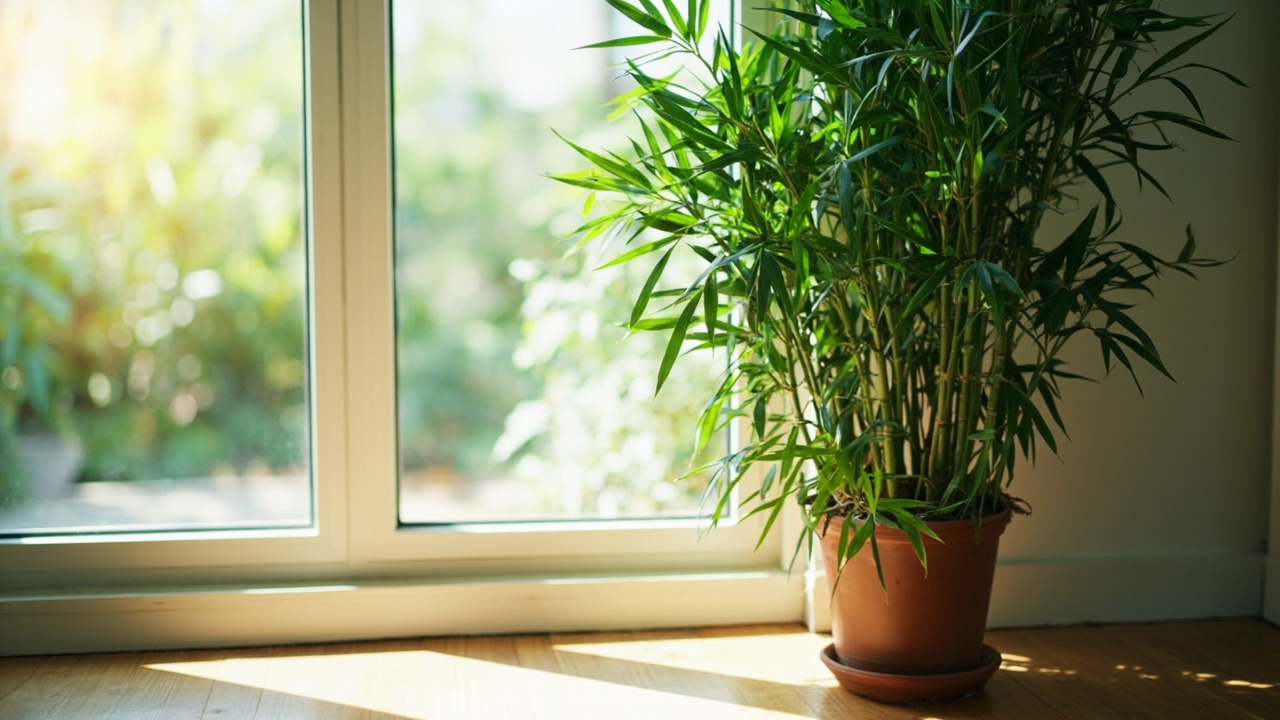
Bamboo in containers needs just the right balance of light, water, and fertilizer to thrive. It enjoys a bright, indirect light—think morning sun or filtered sunlight for the best growth.
Too much direct sunlight, especially on hot days, can lead to scorched leaves, while too little will stunt its growth.
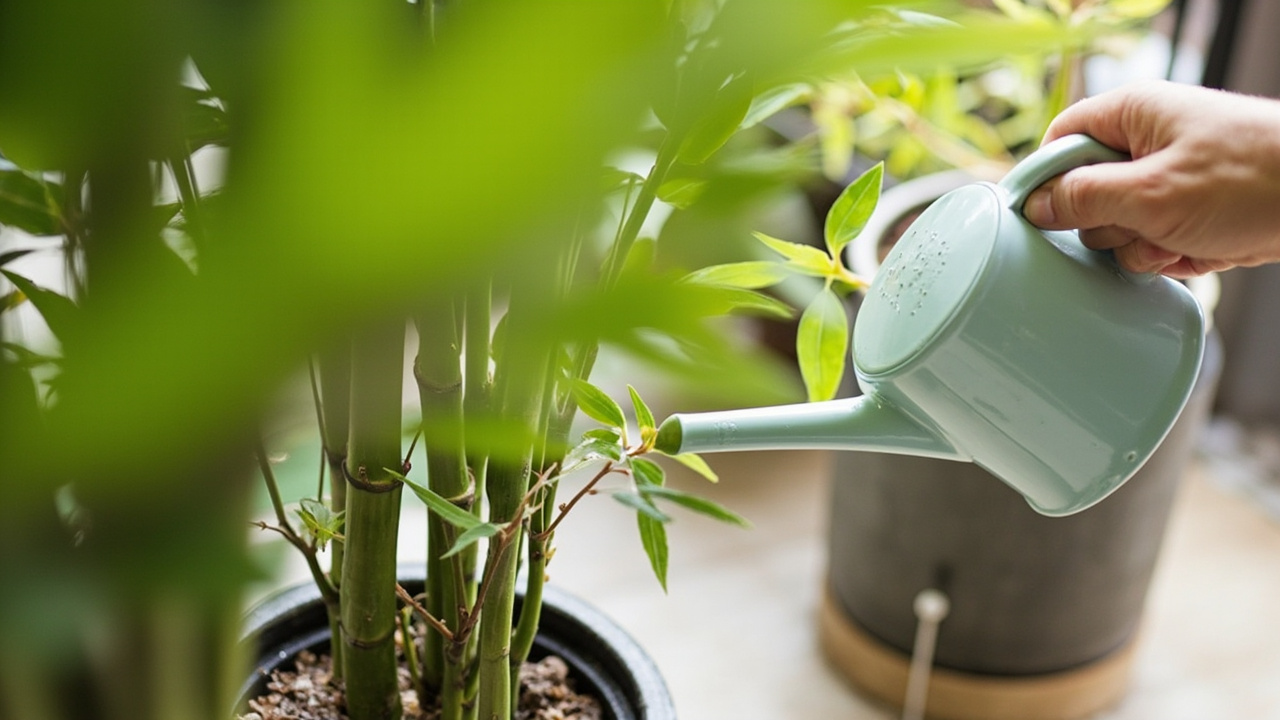
As for water, bamboo is a thirsty plant, so it’s wise to keep the soil consistently moist without drowning it.
Tips: try sticking a finger into the soil; if it’s dry about an inch down, it’s time to water.
Soil is key here!
Bamboo prefers a rich, well-draining mix that holds moisture without becoming waterlogged.
A mix designed for container plants, supplemented with organic matter like compost, will provide the nutrients it needs to keep growing strong.
Fertilizer helps keep its foliage vibrant, so add a slow release fertilizer a few times each year.
And remember to prune!
Cutting back older canes and managing new growth will help maintain the bamboo’s form and keep it from overtaking your space.
The payoff?
Healthy container-grown bamboo brings effortless beauty, a natural privacy screen, and even air-purifying qualities.
And since it’s in a container, you’re in control. So go ahead—embrace bamboo and watch your home garden thrive.
Benefits and Disadvantages of Growing Bamboo in Containers
Let’s first explore the advantages and potential drawbacks of growing bamboo in containers:
Benefits:
- Space Efficiency: Growing bamboo in containers allows you to enjoy the beauty and benefits of this plant without worrying about its invasive nature. It is ideal for those with limited garden space.
- Portability: Containers offer the flexibility of moving your bamboo plants around, allowing you to experiment with different locations and arrangements.
- Easy Maintenance: Container requires less maintenance compared to its ground-planted counterparts. Controlling its growth becomes more manageable, making it an attractive option for busy individuals.
- Controlled Environment: in containers, you have greater control over factors such as soil quality, moisture levels, and sunlight exposure.
Disadvantages:
- Root Bound: Bamboo plants can quickly outgrow their containers, leading to root congestion. Regular monitoring and appropriate measures are necessary to prevent this issue.
- Watering Challenges: Container-grown bamboo may require more frequent watering, as the limited soil volume can dry out quickly. Maintaining adequate moisture levels can be demanding.
- Nutrient Requirements: Bamboo is a nutrient-hungry plant, and container cultivation may necessitate more frequent fertilization to ensure optimal growth.
Look: How To Save A Dying Bamboo Plant
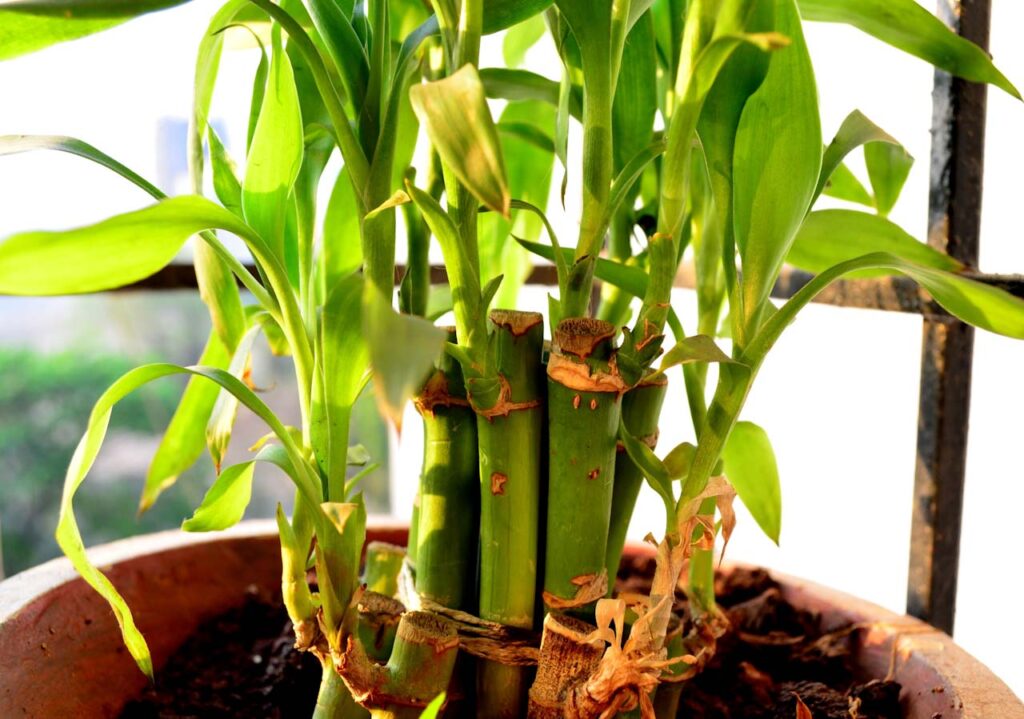
The Best Types Of Bamboo Plants To Grow In Containers
Let’s explore some of the best bamboo species to grow in containers, such Clumping bamboos and dwarf bamboos are generally more ideal for this purpose. However, not all bamboo species are suitable for container growing.
There are more than 100 varieties of bamboo plants, some are more suitable for container growing than others.
1. Bambusa multiplex, or Hedge bamboo
- This bamboo species is known for its ability to thrive in containers.
- It has a compact growth habit, making it an excellent choice for small spaces.
- Hedge bamboo is also relatively easy to maintain, requiring regular watering and well-draining soil.
2. Drepanostachyum khasianum, or Purple jade bamboo
- Purple jade bamboo is a stunning variety that adds a pop of color to any container garden.
- It has a clumping growth habit and stays relatively compact, making it suitable for containers.
- This bamboo species prefers partial shade and regular watering.
3. Himalayacalamus
- Himalayacalamus is a cold-hardy bamboo species that can withstand harsh weather conditions.
- It has an upright growth habit and is well-suited for containers.
- This bamboo requires regular watering and well-draining soil.
4. Otateae
- Otateae is a dwarf bamboo species that is perfect for small containers.
- It has a slow growth rate and stays compact, making it easy to maintain.
- This bamboo prefers partial shade and regular watering.
5. Fargesia varieties, such as Fargesia Murielae ‘Lava’, Fargesia Rufa, and Fargesia Murielae ‘Simba’
- Fargesia varieties are popular choices for container growing due to their clumping growth habit.
- These bamboos are cold-hardy and can tolerate a wide range of temperatures.
- They require regular watering and well-draining soil.
6. Phyllostachys Aurea or Aureosulcata
- Phyllostachys Aurea or Aureosulcata, commonly known as Golden Bamboo, is a running bamboo that can be grown in containers with proper care.
- It has a vibrant yellow color and adds a striking visual appeal to any space.
- Regular monitoring of its growth and containment is essential to prevent it from spreading beyond the container.
7. Seabreeze bamboo, also known as Bambusa Malingensis
- Seabreeze bamboo is a fast-growing variety that can create a lush green screen in your container garden.
- It has a clumping growth habit and is relatively low-maintenance.
- Regular watering and well-draining soil are essential for its success.
Remember, even the best bamboo species for container growing have specific needs and require proper care and maintenance.
Regular monitoring of watering needs, soil quality, and temperature is crucial for the success of container-grown bamboo.
Selecting the Right Container and Potting Mix
Choosing the appropriate container and potting mix is crucial for the successful growth of bamboo.
Consider the following factors when making your selection:
Container Size:
- Bamboo Pot Size: Select a container with sufficient depth and width to accommodate the specific bamboo species or cultivar you intend to grow. As a general guideline, choose a pot that is at least 2 feet deep and wide to allow the roots ample space for growth.
Potting Mix:
- Bamboo Potting Mix: Opt for a well draining potting mix that retains moisture without becoming waterlogged. A mix comprising equal parts of peat moss, perlite, and quality garden soil often works well. Avoid using heavy clay soils that retain excess moisture.
Providing Optimal Growing Conditions
To ensure healthy growth and development, bamboo requires specific environmental conditions.
Pay attention to the following factors:
Sunlight:
- Bamboo Sunlight: Most bamboo species thrive in full sun to partial shade. Place your containers in an area that receives at least 6 hours of direct sunlight each day. However, different bamboo species may have varying sunlight requirements, so research your specific variety for precise recommendations.
Watering:
- Bamboo Watering: Maintain consistent soil moisture levels by watering your bamboo regularly. Check the soil moisture using your finger; if it feels dry up to an inch below the surface, it’s time to water. Avoid overwatering, as can lead root rot.
Drain:
- Bamboo Drainage: Adequate drainage is essential to prevent waterlogging, which can be detrimental to your plants. Ensure that your containers have drainage holes at the bottom and use a layer of gravel or broken pottery shards to facilitate proper drainage.
Fertilizing:
- Bamboo Fertilizer: Bamboo is a heavy feeder, so regular fertilization is crucial for its growth and vitality. Use a balanced, slow release fertilizer specifically formulated for bamboo or other fast growing plants. Follow the manufacturer’s instructions for application rates and frequency.
Controlling Growth and Preventing Invasiveness
Bamboo’s vigorous growth habit can sometimes lead to invasiveness if left unchecked.
Here are some measures to control its growth:
Rhizome Barrier:
- Bamboo Rhizome Barrier: Install a rhizome barrier around your containers to restrict the spread of bamboo’s underground rhizomes. The barrier should extend at least 2 feet deep into the soil to effectively contain the rhizomes.
Culm Support:
- Bamboo Culm Support: Some larger bamboo species may require additional support for their tall culms (stems). Install stakes or trellises to prevent bending or breakage during strong winds or heavy rain.
Propagation, Division, and Transplanting
If you wish to expand your collection or rejuvenate an aging bamboo plant, propagation through division and transplanting is a viable option:
Propagation:
- Bamboo Propagation: Bamboo can be propagated through division or from culm cuttings. Dividing established clumps or taking cuttings from healthy culms are effective methods to create new plants.
Division:
- Bamboo Division: Carefully separate clumps into smaller sections, ensuring that each division has an adequate number of culms and healthy rhizomes. Replant the divisions in separate containers or desired locations, providing them with proper care and maintenance.
Transplanting:
- Bamboo Transplant: If you wish to move an established bamboo plant from one container to another or from a container to the ground, follow proper transplanting techniques. Dig carefully around the plant’s root ball, minimizing root damage during the process.
Grow Bamboo Plant in Container
Growing bamboo plant in containers offers a rewarding gardening experience that combines beauty, convenience, and versatility. By selecting the right container, potting mix, and providing optimal growing conditions, you can successfully cultivate this remarkable plant in a controlled environment.
Remember to monitor growth regularly, control invasiveness, and propagate as desired.
With these expert tips and insights, you are well-equipped to embark on your journey of growing bamboo in containers.
Happy gardening!
Turn PDF Bank Statements Into Workable Spreadsheets
Your bank statement is a mess of numbers, but your books shouldn't be. Use our converter to get Excel, CSV, or QBO files — ready for QuickBooks.
Try It Free Now