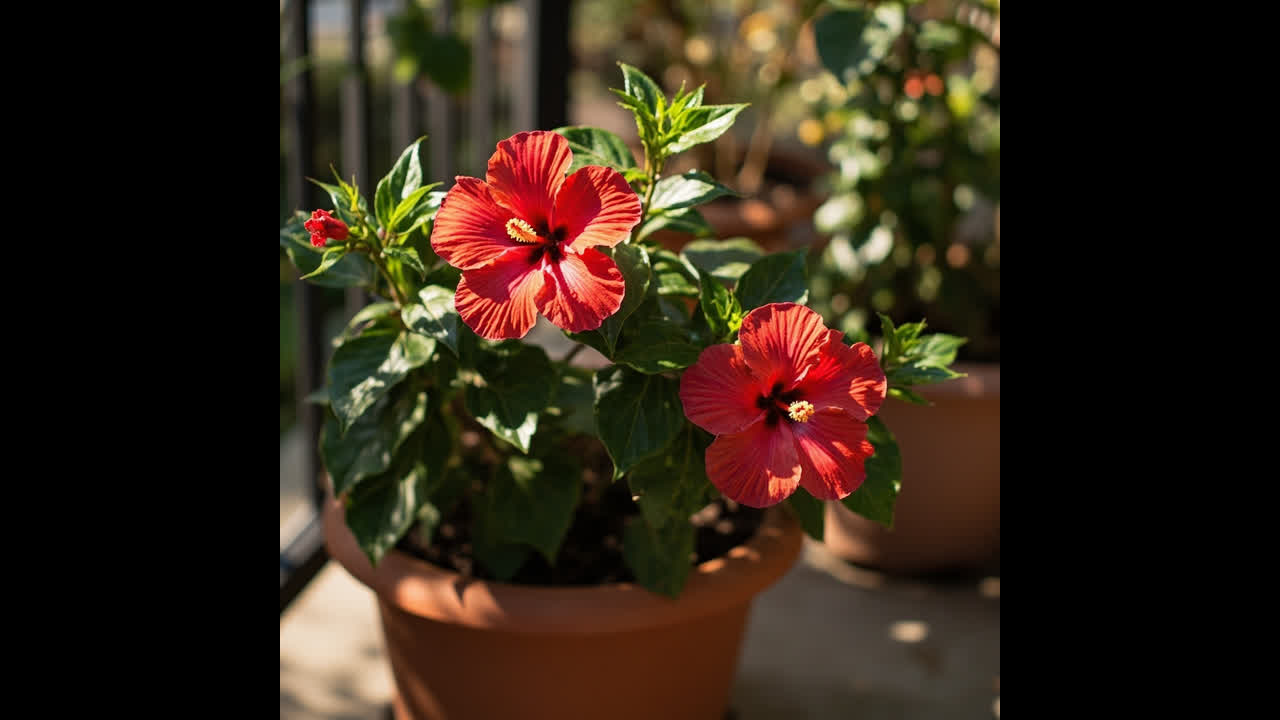
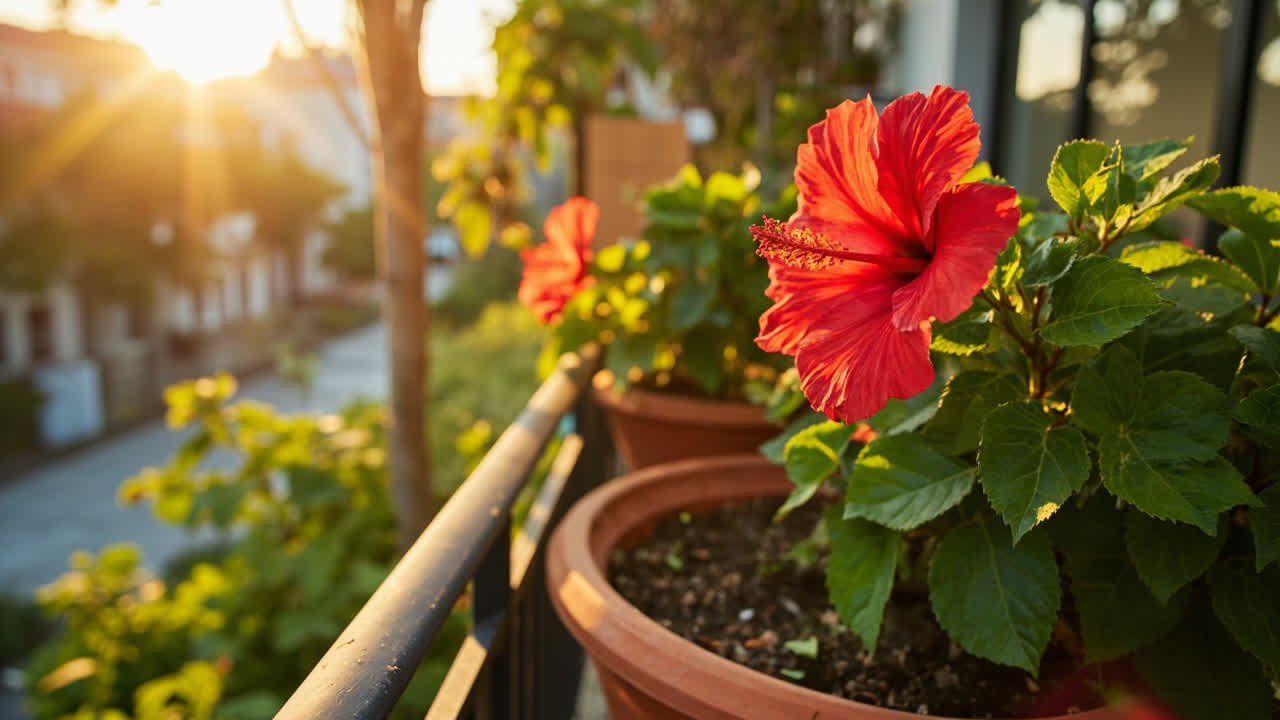
Not everyone has a garden. But if you have a balcony, a patio, a doorstep, or even just a bright window, you can grow hibiscus — and container growing is one of the most practical ways to do it, especially in climates where the ground freezes in winter. Growing hibiscus in pots gives you flexibility: you can move the plant to track the light, bring it indoors when cold weather arrives, and control every aspect of the soil and drainage in a way that in-ground planting does not allow.
Here is what you need to know to do it well.
Why Grow Hibiscus in Pots?
Container growing is particularly useful for hibiscus in several situations. If you live in a climate below USDA zone 9, a pot lets you move hibiscus outdoors for summer and bring it inside before the first frost. If your garden soil is heavy clay or alkaline — conditions hibiscus does not tolerate well — a pot lets you control the growing medium entirely. And if your outdoor space is a balcony or rooftop with limited planting options, a large pot is often the only viable way to grow tropical plants.
Container hibiscus also has aesthetic advantages: you can move a large, blooming hibiscus to wherever it makes the most impact — by the door, on the patio, flanking a seating area — then move it back to a resting position when the season is over.
Choosing the Right Container
The container you choose affects every aspect of hibiscus health. Here is what to look for:
Size
A pot that is 30–45 cm (12–18 inches) in diameter is the ideal range for a mature hibiscus. This gives the root system enough room to develop without so much volume that the soil stays wet for days after watering.
Too small: the plant becomes root bound quickly, growth stalls, and watering becomes difficult (water runs straight through without being absorbed). Too large: the excess soil holds too much moisture between waterings, which increases the risk of root rot.
Material
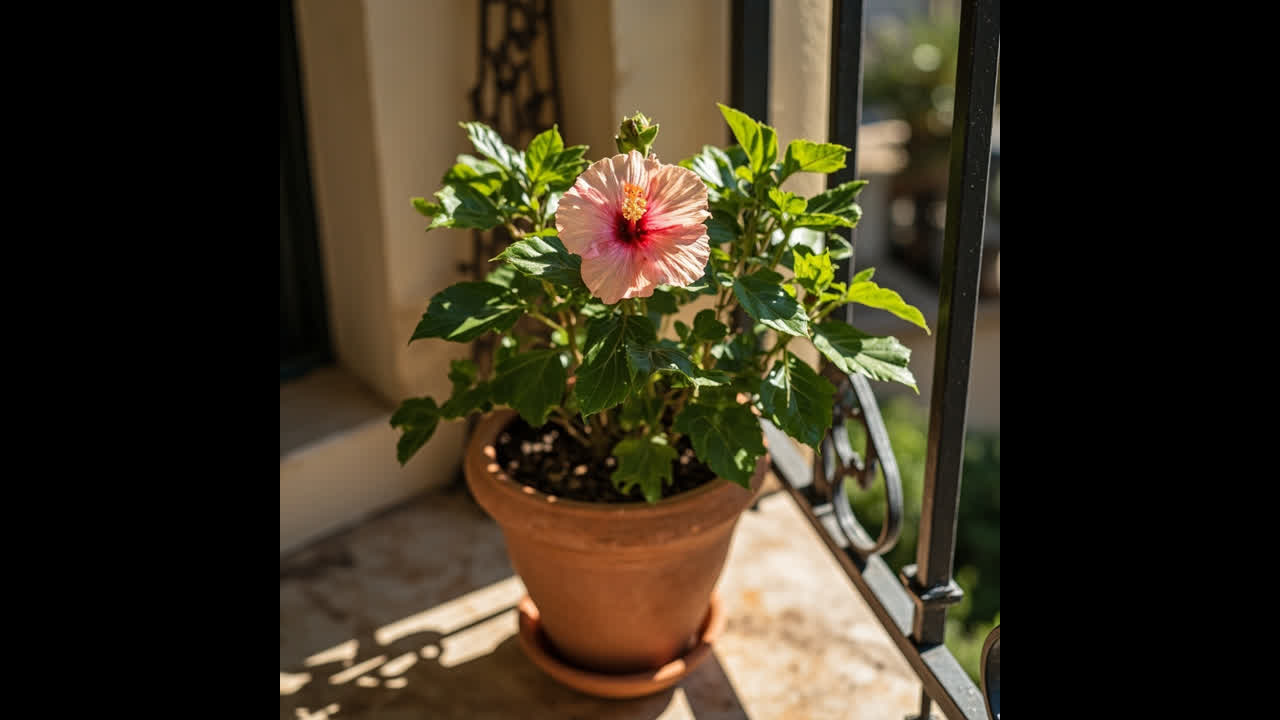
Terracotta pots are ideal for hibiscus in warm climates. They are porous, which means the soil dries out slightly faster than in plastic — this helps prevent the overwatering that leads to root rot. In very hot climates (like the Indonesian climate Aqualogi serves), terracotta also keeps the root zone cooler by evaporating water through the pot walls.
Plastic pots retain moisture longer, which is an advantage in hot, dry climates where container soil dries out very quickly. If you grow in plastic in a cool or humid environment, you will need to be more careful about watering frequency to avoid waterlogging.
Whatever material you choose, ensure there are drainage holes at the base. This is non-negotiable. A decorative pot without holes used as an outer container is fine — place your functional pot (with holes) inside it, and empty the outer container after watering.
Soil Mix for Container Hibiscus
Never use garden soil in a container — it compacts, drains poorly, and harbours pests and fungal spores. For hibiscus, use a quality all-purpose potting mix combined with perlite to improve drainage.
A good ratio is roughly 80% potting mix to 20% perlite. Perlite keeps the mix open and free-draining, which is exactly what hibiscus roots need. If you have difficulty finding perlite, coarse sand is an alternative — use about 25% coarse sand to achieve similar drainage improvement.
The ideal soil pH for container hibiscus is 6.0–7.0 (slightly acidic to neutral). Most commercial potting mixes are within this range. Avoid mixes that are peaty (too acidic) or that contain slow-release fertilizer pellets if you prefer to control fertilizing yourself.
Watering Container Hibiscus
Container hibiscus dries out significantly faster than in-ground plants. In summer on a sunny patio, you may need to water daily. In a cool indoor position, watering every three to four days may be enough.
The best test is the finger test: push your finger into the top 2–3 cm of soil. If it feels dry, water. If it still feels moist, wait another day. Never water purely on a calendar schedule — the weather, pot size, and plant size all affect how quickly the soil dries.
When you water, water thoroughly — pour water over the surface until you see it flow from the drainage holes at the base. This ensures the entire root zone is moistened, not just the surface. Shallow watering creates shallow roots, which makes plants less drought-tolerant overall.
The Afternoon Wilting Question
It is normal for a hibiscus in a dark-coloured pot on a hot sunny patio to look wilted by mid-afternoon even when the soil is moist. This is called photoinhibition — the plant’s response to extreme heat and light intensity, not a sign of water shortage. The leaves should recover by early evening as temperatures drop. If they do not recover by morning, your plant genuinely needs water.
Drainage Trays and Why They Matter
After watering, empty the drainage tray. Do not let the pot sit in standing water — this is one of the most common causes of root rot in container hibiscus. If you use a decorative outer pot without drainage holes, remove the inner pot, water it thoroughly, let it drain, then return it to the outer pot.
If the inner pot sits in the outer pot and water collects there, raise the inner pot on pot feet, small stones, or an inverted saucer so the base is above the water line. This is a small adjustment that makes a significant difference to root health over time.
Light for Container Hibiscus
Outdoors, hibiscus in containers has the same needs as in-ground hibiscus: at least six hours of direct sunlight per day. On a balcony, check whether adjacent walls or structures block light for parts of the day. Moving the pot as the sun changes across the season can make a real difference to bloom count.
Indoors, the best position is a south-facing window. Hibiscus is not well-suited to low-light interior positions — it will survive but it will not bloom. If your only available light is a north or east-facing window, consider supplementing with a grow light.
Moving Plants Between Indoors and Outdoors
If you overwinter your hibiscus indoors and move it outside in summer (or vice versa), make the transition gradually. A plant that has been indoors all winter cannot cope immediately with full outdoor sun — the leaves will burn. Do a gradual hardening-off period over one week: start with one hour outdoors in shade, then two hours, then full sun for increasing periods over five to seven days. After that, the plant is acclimatised and can stay outside permanently until you bring it back in.
Fertilizing in Containers
Container hibiscus needs more frequent fertilizing than in-ground plants. Watering container plants flushes nutrients out of the soil faster than in-ground drainage does. To compensate:
- Use a liquid fertilizer applied every two weeks at half the recommended strength, rather than a granular fertilizer applied monthly at full strength. Half-strength fortnightly feeding gives a steadier supply of nutrients without the peaks and troughs that can stress the plant.
- Use a bloom-boosted formula (higher phosphorus content — e.g., 10-30-20) during the growing season to encourage flowering. Switch back to a balanced formula (10-10-10) in early spring when the plant needs foliage growth.
- Do not fertilize in late autumn and winter when the plant is resting — this is especially important for indoor-overwintered hibiscus, which should be given zero fertilizer from roughly November through February.
When and How to Repot
Hibiscus should be repotted into one size larger pot (roughly 5 cm larger in diameter) every one to two years in spring. The best indicator that it is time is when water runs straight through the pot without being absorbed, or when you see roots emerging from the drainage holes.
Do not repot a hibiscus that is actively blooming — the stress of transplanting will cause bud and flower drop. Wait until flowering has finished for the season, then repot.
When repotting:
- Water the plant a day before to reduce stress.
- Remove it from the old pot — if roots are circling the inside, gently tease them outward with your fingers before placing in the new pot.
- Use fresh potting mix (with perlite) in the new pot. Do not reuse old soil.
- Plant at the same depth as before — do not bury the stem.
- Water thoroughly after repotting, then do not fertilize for four weeks.
Overwintering Container Hibiscus
One of the biggest advantages of container growing is the ability to bring hibiscus indoors for winter. In climates where temperatures regularly drop below 50°F (10°C) in autumn, this is necessary to keep the plant alive.
Before the first frost, move the hibiscus to your brightest indoor position — ideally a south-facing window. Expect leaf drop during the overwintering period. This is normal: the plant is going dormant and shedding leaves it cannot support in lower light conditions. Do not interpret this as a sign of ill health.
Care during overwintering:
- Water less — let the soil dry out more between waterings than in summer. The plant is using far less water, and overwatering is the most common cause of death for overwintered hibiscus.
- Stop fertilizing from roughly November through February. The plant does not need nutrients while resting.
- Watch for indoor pests: spider mites and whiteflies are common on hibiscus brought into heated indoor environments. Check the undersides of leaves every week. If you find pests, treat with insecticidal soap or neem oil.
- Do not be alarmed if the plant looks bare through winter. It will leaf out again in spring when you increase watering, resume fertilizing, and (if possible) move it back outdoors.
Choosing a Variety for Containers
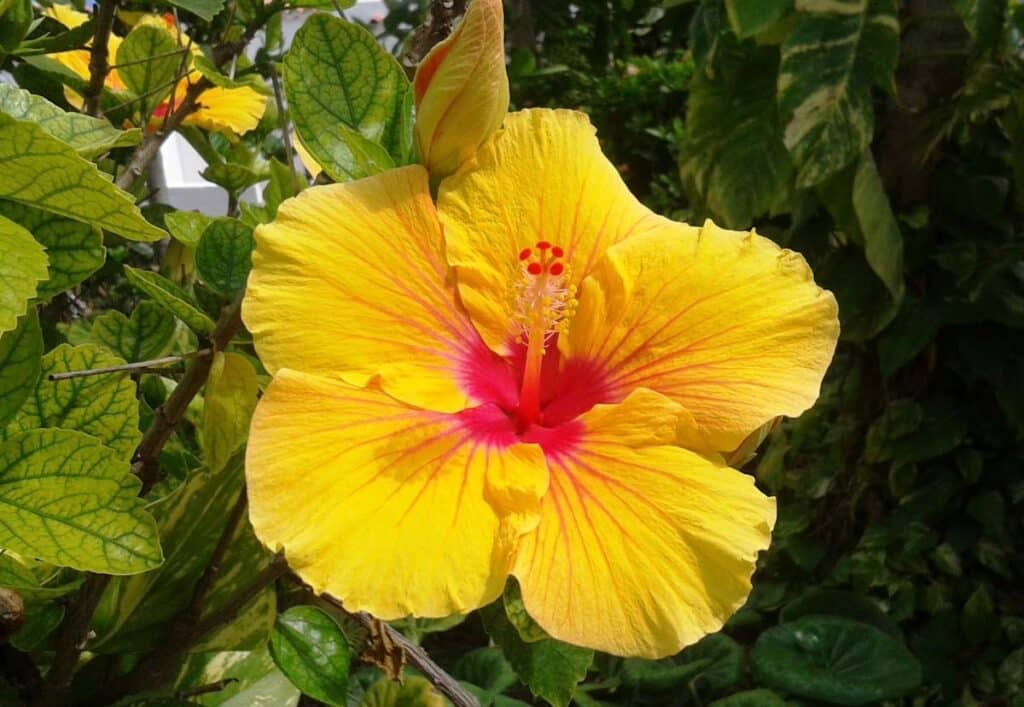
Technically, any hibiscus can be grown in a container. However, if you are choosing a variety specifically for container growing, consider the expected mature size. Compact or standard varieties (growing 60–120 cm / 2–4 feet in a container) are easier to manage than tall, vigorous varieties that may outgrow their container repeatedly. Ask the nursery for container-suited varieties if unsure.
For more on container hibiscus problems — especially drainage-related issues like root rot prevention — and for the full hibiscus care basics, see our linked guides.
If your container hibiscus is struggling and showing signs of decline, see our guide to saving a hibiscus that is struggling.
Turn any PDF statement into a clean sheet
Skip the typos and the hours of copying. Our converter handles any bank statement format and outputs Excel, CSV, or QBO for QuickBooks. No file retention, free to try.
Convert your statement