
Most philodendrons grow well in average household humidity, but they do noticeably better when indoor relative humidity sits between 50% and 65%. Anything above 70% risks fungal leaf spot; anything below 40% leads to brown, crispy leaf edges and slower growth. A simple hygrometer is the only reliable way to know the actual number, because room humidity swings with season, weather, heating, and air conditioning in ways that are not obvious from how a room feels.
What “Humidity” Actually Means for a Philodendron
Relative humidity is the amount of water vapor in the air expressed as a percentage of the maximum the air can hold at that temperature. A philodendron’s leaves are designed to release water vapor through tiny pores called stomata, and the rate of that release is driven by the difference between the moisture inside the leaf and the moisture in the surrounding air. When indoor humidity is low, the leaf loses water faster than the roots can replace it, which is why the leaf tips and margins turn brown and crispy first.
In their native range across Central and South America, philodendrons experience daytime humidity of 60 to 90% and night-time values close to saturation. Indoor environments are almost always drier, especially in winter when heating systems drop the relative humidity into the 20 to 30% range. The goal of any humidity strategy is to bring the local microclimate around the plant closer to its natural range without making the rest of the room uncomfortable for people.
The Ideal Humidity Range by Philodendron Type
Not all philodendrons want the same humidity. The split is mostly between the heartleaf family and the larger, more tropical species.
- Heartleaf and trailing types (Philodendron hederaceum, Brasil, Micans): 40 to 60% is fine. These adapt to ordinary household humidity and tolerate short dips into the 30s without permanent damage.
- Climbing philodendrons (Brasil, Lemon Lime, the larger P. erubescens hybrids): 50 to 65% keeps new leaves coming and prevents crispy edges on mature foliage.
- Velvet-leaved types (‘Micans’, ‘Black Cardinal’, dark-leaved hybrids): 55 to 70%. The velvety leaf surface is more sensitive to dry air and benefits from genuinely humid conditions, though it must be paired with good airflow to avoid fungal spotting.
- Large split-leaf philodendrons (P. bipinnatifidum / Thaumatophyllum, P. maximum): 50 to 70%. The bigger the leaf, the more water it loses per hour, so humidity has an outsized effect on these.
A range is more useful than a single number because the plant’s needs shift slightly with the seasons, the light it sits in, and the moisture in the soil. The goal is to keep humidity inside the working range and avoid sudden swings of more than 15% within a few hours.
How to Measure Humidity the Right Way
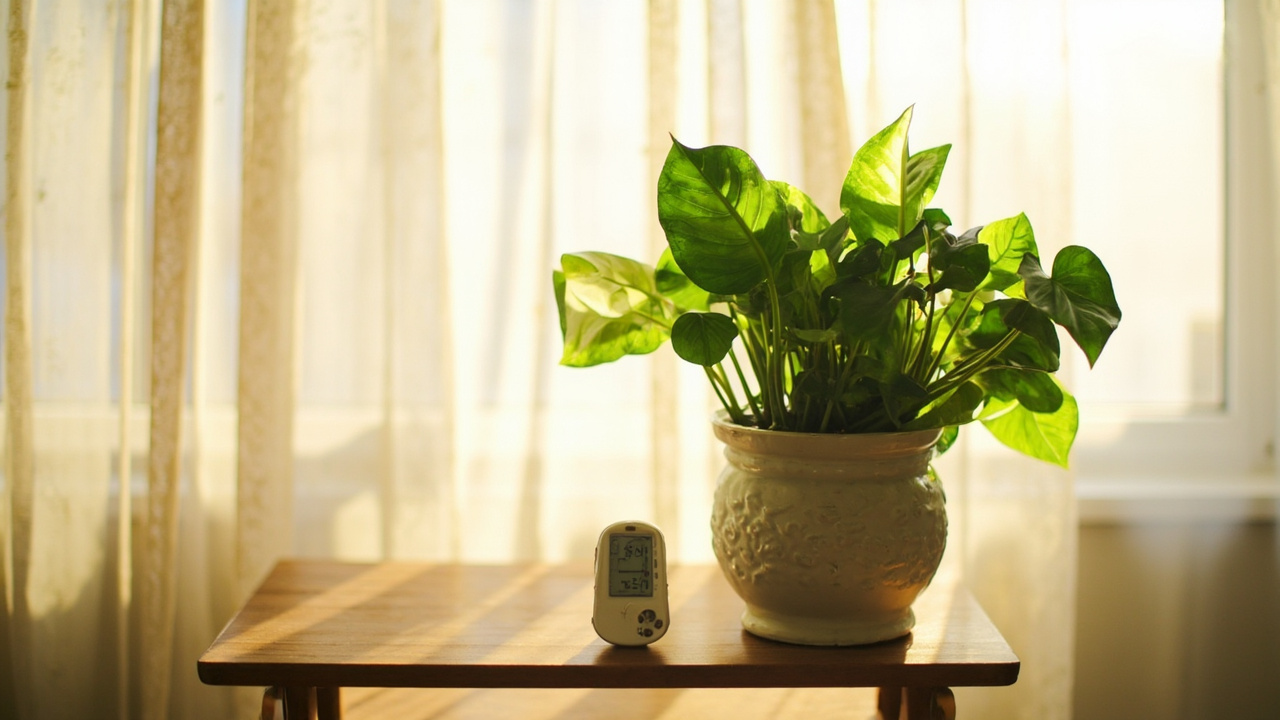
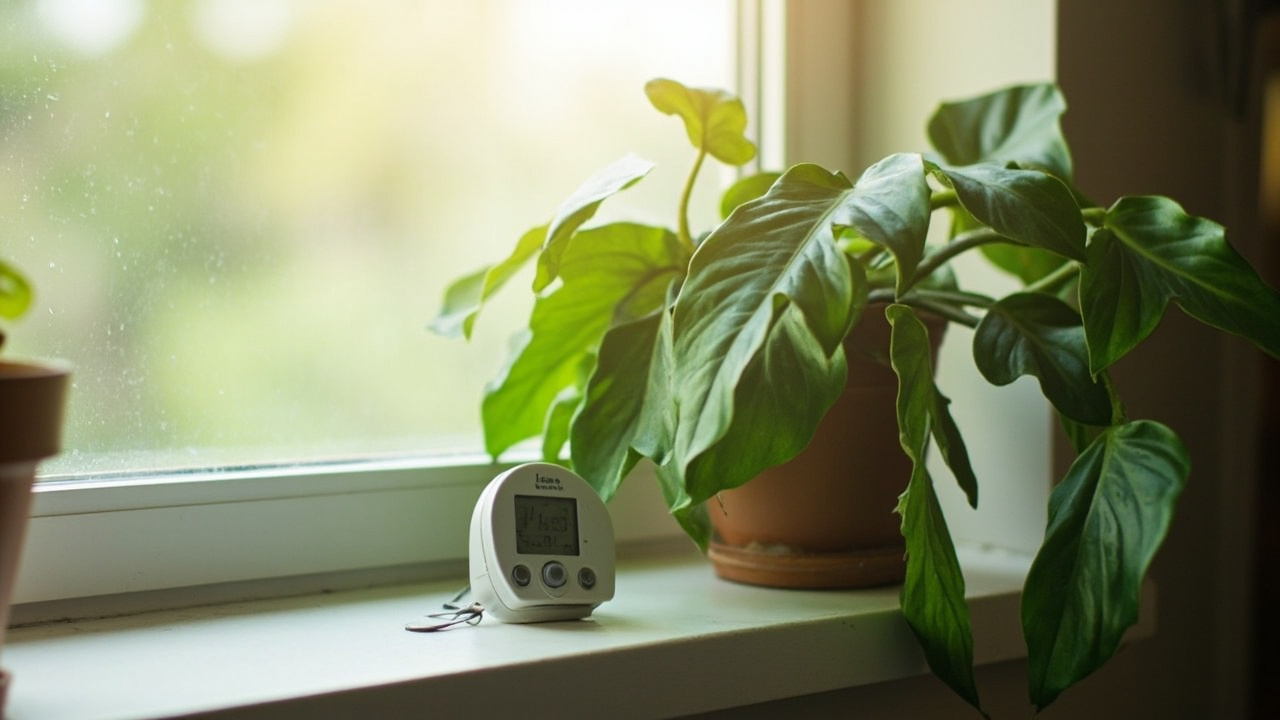
The single best tool is a small digital hygrometer placed at the plant’s level, not at eye level. A unit that costs a few dollars and sits on the shelf next to the plant gives an instant, repeatable reading and removes the guesswork from any “the air feels dry” judgment call. Check the reading at three times of day for a week: morning, midday, and evening. The midday reading is the most relevant because humidity tends to be lowest when the room is warmest and most active.
Watch the daily swing as well as the average. A room that sits at 55% during the day and 30% overnight is harder on a philodendron than a room that holds steady at 45% all day, because the leaves cannot adapt quickly to that range. The goal is a stable range inside the working band, not a single peak number that only happens in the morning.
Reliable Ways to Raise Humidity Around the Plant
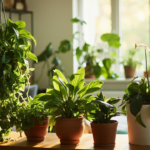
Grouping plants together is the cheapest and most reliable first step. Each plant releases water vapor through transpiration, and a cluster of three to five plants in the same area can lift the local humidity by 5 to 10 percentage points compared to the rest of the room. A pebble tray with water in the base of the pot works for a small lift of 3 to 5%, but it must be cleaned and refilled regularly to prevent mosquito breeding and mineral buildup.
A small humidifier set to 55 to 60% on a hygrostat is the most controllable option. Cool-mist ultrasonic humidifiers are quiet and energy-efficient, and they let the grower dial in a target humidity that holds steady day and night. The two rules are: keep the humidifier a few feet from the plant (so the leaves do not stay constantly wet) and run it with good air circulation in the room to prevent stagnant, overly humid pockets that encourage fungal growth.
What to Avoid: Misting and the “Bathroom Trick”
Misting is the most popular humidity myth. The water on the leaves evaporates within minutes, and during that brief window it does almost nothing to raise the ambient humidity around the plant. Worse, frequent misting leaves a thin film of minerals on the leaf surface, especially in hard-water areas, and the constant wet-then-dry cycle is exactly the pattern that triggers fungal leaf spot. The one situation where misting has value is on propagation cuttings with no roots yet, where the leaf is the only source of moisture.
Placing a philodendron in a bathroom is another common recommendation that usually does not work. Most bathrooms are not humid enough during the day to make a meaningful difference, and the night-time humidity spike from a shower drops back to ambient by morning. A steamy bathroom for a few hours is not a humidity strategy. If the bathroom is genuinely warm and humid all day and the plant gets bright, indirect light from a frosted window, it can work, but most home bathrooms do not meet those conditions.
Signs That Humidity Is Too Low
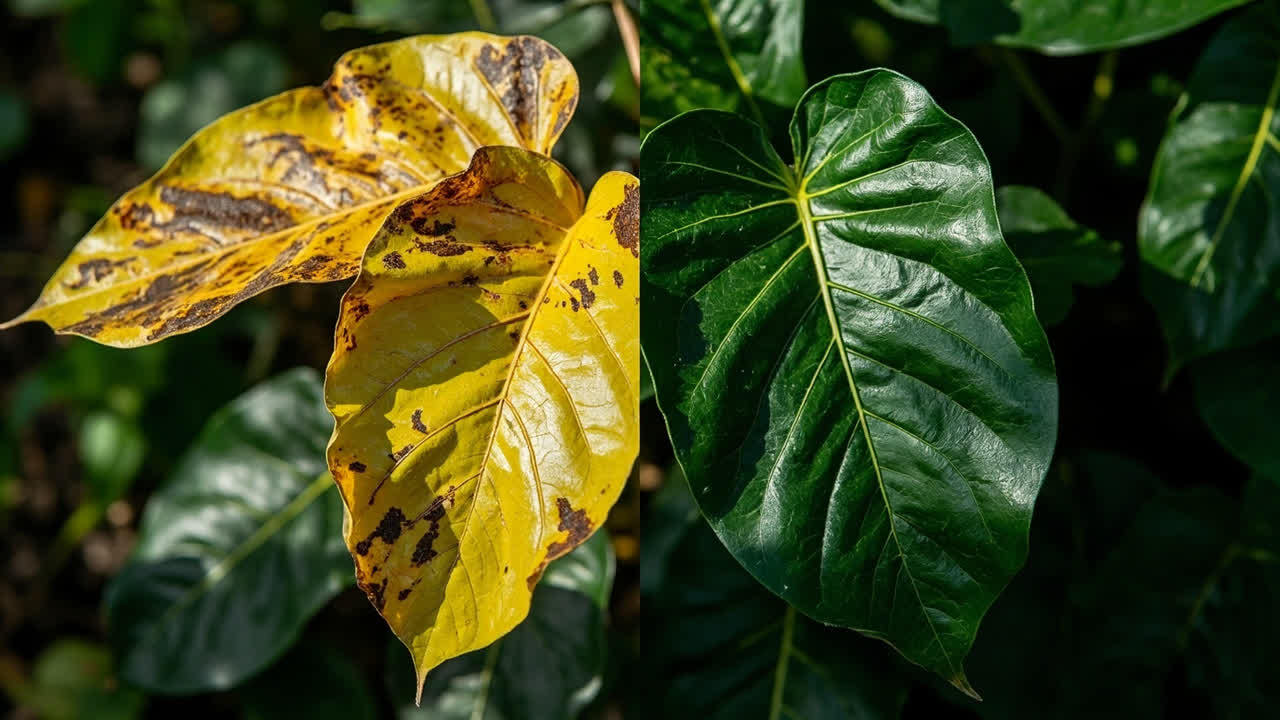
Three visible signs tell you the humidity is consistently below the working range. First, brown, crispy leaf tips and edges, starting on the older lower leaves. Second, leaves that curl slightly inward at the edges as a way of reducing the surface area exposed to dry air. Third, slower growth in the active season, with new leaves emerging smaller than the previous ones. None of these signs are unique to low humidity, so the hygrometer reading is what confirms the cause.
It is also worth distinguishing low humidity from underwatering and low light. A plant that is consistently underwatered usually has limp leaves and dry soil; a plant in low light stretches and produces pale, small leaves. Humidity-related symptoms are crisper and more localized, almost always on the leaf edges, and the soil moisture is usually within a normal range.
Signs That Humidity Is Too High
High humidity is less common indoors but does happen, especially in summer in naturally humid climates, or around a humidifier set too high. The early sign is small, dark, water-soaked spots on the leaves, often ringed with a yellow halo, which is the start of a fungal or bacterial leaf spot. Left unchecked, the spots merge, the affected leaves drop, and the infection can spread to nearby plants. The fix is straightforward: drop the humidifier setting, increase air circulation with a small fan, and remove the most heavily spotted leaves so the spores do not spread.
Good airflow is the unsung partner of healthy humidity. A small oscillating fan set on low for a few hours a day is enough to keep air moving around the plant without creating a draft. The fan also helps the potting mix dry at a steady rate, which is a useful side effect for growers who tend to overwater.
Understanding the Philodendron Leaf Surface
Philodendrons are aroid plants native to the tropical forests of Central and South America, and their leaf anatomy reflects that origin. The leaf surface is covered with tiny pores called stomata that control gas exchange and water loss. In humid environments, the stomata can remain open longer during the day, allowing maximum photosynthesis without risking dehydration. In dry indoor air, the plant partially closes its stomata to conserve water, which slows growth and makes the leaves look slightly duller.
The leaf margin, or edge, is the first area to show stress when humidity drops. This is because the margin is the farthest point from the leaf vein that delivers water, and it dries out fastest when transpiration exceeds uptake. A philodendron with crispy leaf margins but green centers is almost always a humidity problem; a plant with uniformly yellow leaves is more likely dealing with watering or nutrient issues.
Good airflow around the philodendron is essential when humidity is being managed with a humidifier or plant grouping. Stagnant humid air encourages fungal leaf spot, especially on the undersides of leaves where moisture lingers. A small oscillating fan running a few hours daily prevents this without creating a cooling draft that would stress the plant.
Putting It All Together
The simplest working routine is a small digital hygrometer on the plant’s shelf, a humidifier set to 55% if the room regularly drops below 45%, and a small fan for air circulation. Most heartleaf philodendrons will be perfectly healthy in the 45 to 55% band without any extra equipment; the more demanding velvet and large-leaved species benefit from active humidity management only when the household routinely runs dry.
For a closer look at how humidity interacts with watering and light, the philodendron watering guide and the philodendron light requirements page cover the two factors that, together with humidity, make up the bulk of indoor plant care. If brown leaf tips are appearing alongside the humidity drop, the philodendron brown tips troubleshooting guide walks through the most common combinations of causes.
Turn PDF Bank Statements Into Workable Spreadsheets
Your bank statement is a mess of numbers, but your books shouldn't be. Use our converter to get Excel, CSV, or QBO files — ready for QuickBooks.
Try It Free Now