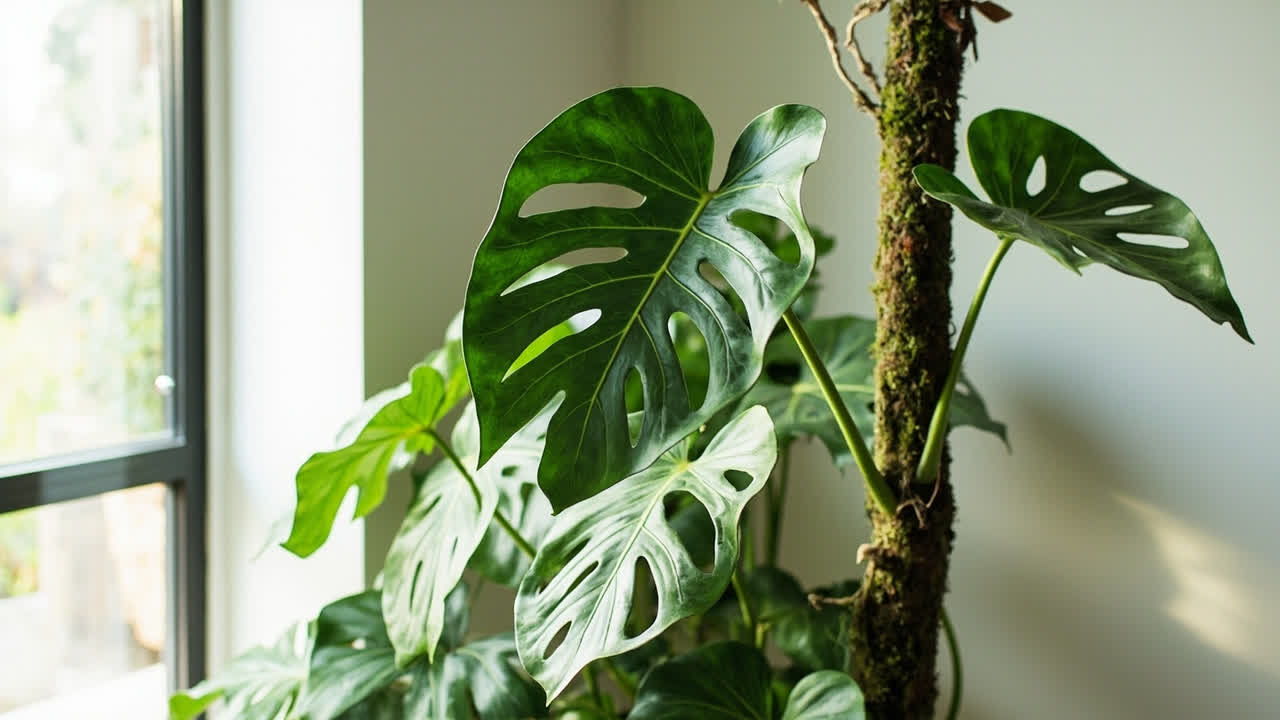
Monstera dormancy in winter is a partial downshift, not the deep sleep of a deciduous tree. The plant is a tropical understory climber from Central America, so it never evolved a true dormancy — but it does read the calendar. Shorter photoperiods and cooler indoor air tell a Monstera to slow new growth, hold steady on existing leaves, and conserve energy. If your plant was putting out a new leaf every two weeks in October and has barely moved since Thanksgiving, that is the normal winter pattern, not a death sentence.
The mistake most plant parents make is treating winter like summer — same watering schedule, same fertilizer cadence, same expectations. The result is almost always the same combination: yellowing lower leaves, a soggy cold root ball, and a fresh outbreak of fungus gnats. Winter care for Monstera is really about restraint, five specific adjustments, each with a number attached.
What Monstera Dormancy Actually Means (and Why It Is Not Real Dormancy)
Botanically, dormancy is a regulated state where a plant suspends visible growth and reroutes resources to survive an unfavourable season. Monstera deliciosa does not do this. It is an evergreen hemiepiphyte that keeps its leaves year-round in its native range. What happens in a temperate-winter home is a growth downshift, triggered by two environmental cues working together.
The first cue is photoperiod. As daylight hours drop below roughly 10–11 per day, the plant’s hormonal balance shifts away from producing new leaves and toward maintaining the ones it has. You can compensate with supplemental lighting, but you cannot fully override it — Monstera reads day length, not just total photons.
The second cue is temperature. Root activity slows below 65°F / 18°C and largely stalls below 60°F / 15°C. Soil that would dry in three days in July now takes seven. This is the single most important number to internalize: the soil stays cold and wet, the roots stop drinking, and the opportunistic fungi that cause Monstera root rot get a free week to colonize the medium.
What happens next: a Monstera in genuine winter downshift will stop unfurling new leaves, stop extending aerial roots, and may drop one or two of its oldest lowest leaves. The stem stays firm, the remaining leaves stay upright, and the soil still dries — just more slowly. That is normal dormancy behaviour for a tropical houseplant in a cold climate.
The 5 Winter Adjustments: Water, Light, Temperature, Humidity, Fertilizer
Each adjustment has a number behind it. The number is the threshold where the plant’s needs genuinely change, not a guess.
Watering
Cut your watering frequency roughly in half. The test is the same as in summer — stick a finger into the top inch of soil — but the timing is different. In a 65–70°F / 18–21°C home, that top inch now takes 7–10 days to dry in a typical chunky aroid mix, not 3–5. Wait until the top inch is dry, then water thoroughly until it drains from the pot. What happens next: the plant takes up what it needs in the first 20 minutes, the rest drains away, and the air-filled pore space returns within an hour. A water meter is unnecessary if you use the finger test, and far more reliable than a calendar.
Light
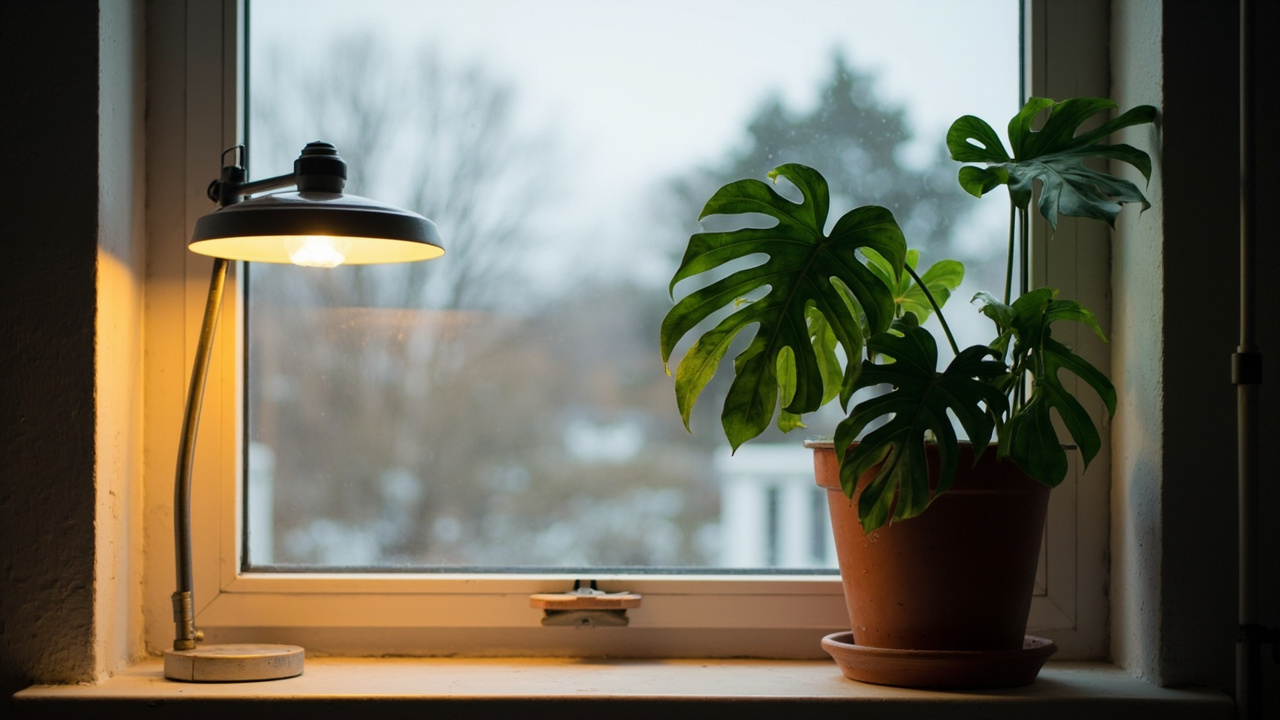
Bright indirect light becomes harder to provide in winter because the sun sits lower and the usable daylight hours shrink. Move your Monstera 1–2 feet closer to its brightest window, or rotate it 90° every two weeks to keep the canopy even. If the window faces north or the room is dim, a full-spectrum LED grow light on a 12-hour timer closes the gap — a 20–40 watt panel mounted 12–18 inches above the canopy is plenty for a single mature plant. What happens next: the plant holds its leaves more upright and is more likely to push out a winter leaf if conditions are warm enough.
Temperature
The ideal range is 65–85°F / 18–29°C. Stress begins below 55°F / 13°C, and damage becomes likely below 50°F / 10°C. Most heated homes sit between 65–72°F / 18–22°C, which is fine. The real winter risk is the cold window — a single-pane on a freezing night can radiate 10–15°F / 5–8°C colder than the room air, and the leaves touching that glass can suffer cold damage. Pull the plant 12 inches back from any window where overnight glass temperature drops below 55°F / 13°C. What happens next: cold-damaged leaves develop dark, water-soaked patches within 24 hours that turn papery and brown; those leaves will not recover.
Humidity
Indoor winter humidity in a heated home typically drops to 20–30%, well below the 50–60% Monstera prefers. A humidity tray — pebbles and water under the pot — raises the microclimate above the tray by 5–10 percentage points. A small cool-mist humidifier running 6–8 hours a day is more reliable and brings the whole room into range. The trade-off: a humidifier uses electricity and needs weekly cleaning, but it is the single change most likely to keep leaf edges from browning. What happens next: a Monstera in 50%+ humidity keeps its fenestrated leaves supple and resists the spider mite pressure that dry winter air encourages.
Fertilizer
Stop feeding. A Monstera that is not actively pushing out new leaves cannot use nitrogen, phosphorus, or potassium — unused fertilizer salts accumulate in the root zone, burning fine root hairs and locking out calcium and magnesium. Resume feeding only when the first new leaf unfurls in spring, typically when daylight exceeds 11 hours and nights stay above 60°F / 16°C. What happens next: the plant survives the lean months on stored energy and the soil chemistry stays balanced. One number to remember: zero fertilizer between the autumnal equinox and the first spring growth flush.
When to Worry: Slow Growth vs Sick Growth
This is the question that brings most readers to this page, so it deserves a direct answer. Your Monstera is dormant, not dying, if the stem is firm, the petioles (leaf stalks) hold the leaves upright, and one or two of the oldest leaves yellow and drop while the rest of the canopy looks healthy. The newest leaf, if there is one, will be smaller than the one before it — this is normal and not a sign of trouble.
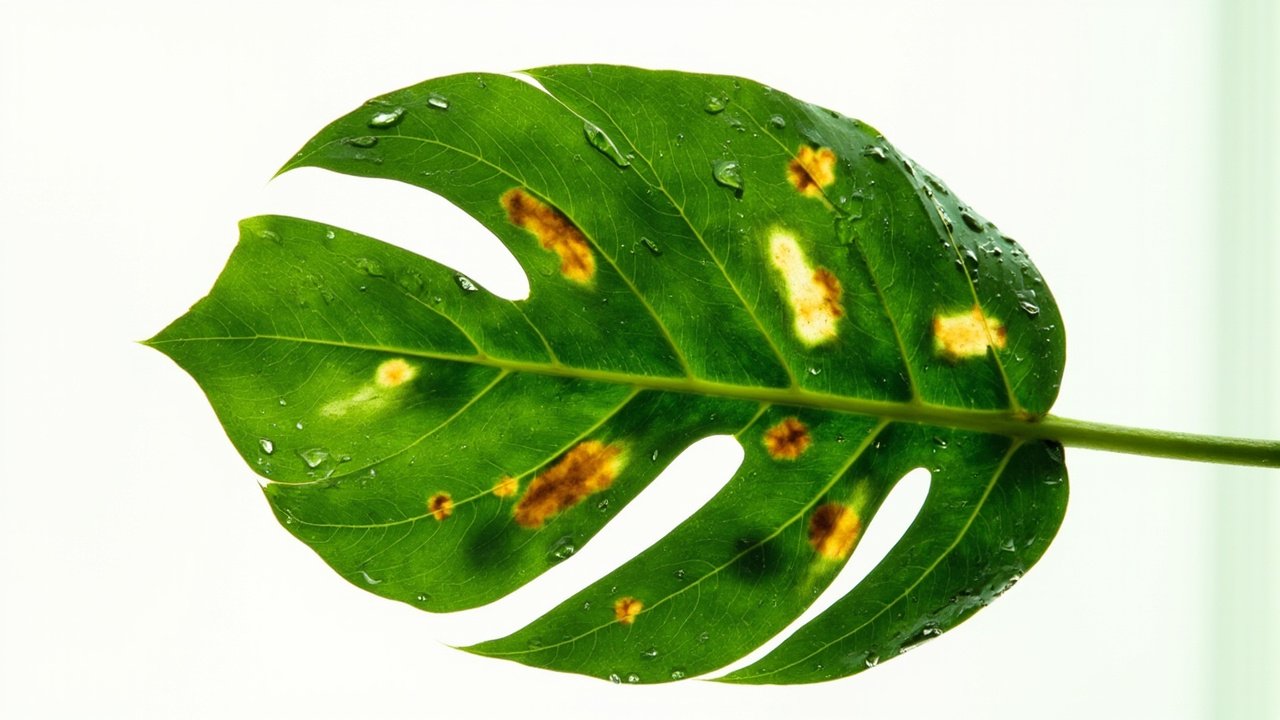
Your Monstera is actually sick if the stem goes soft or mushy, more than two leaves drop in quick succession, leaves develop dark wet spots, the soil smells sour, or new growth emerges yellow or deformed. Most share a root cause: cold, wet soil sitting on roots that have stopped drinking. Cut back to watering only when the top two inches are dry, move the plant to the warmest bright spot you have, and consider repotting into a grittier mix if the soil stays damp for more than two weeks — but never repot during deep dormancy, wait for visible spring growth first.
Two related winter pressures: fungus gnats thrive in the cool damp top layer of soil that winter care creates — more nuisance than threat, but a reliable overwatering signal. Spider mites love the dry indoor air of winter and attack the undersides of leaves; a weekly shower under the kitchen tap keeps them from establishing. Both are covered in the broader Monstera problems guide.
Spring Resumption: When Dormancy Breaks
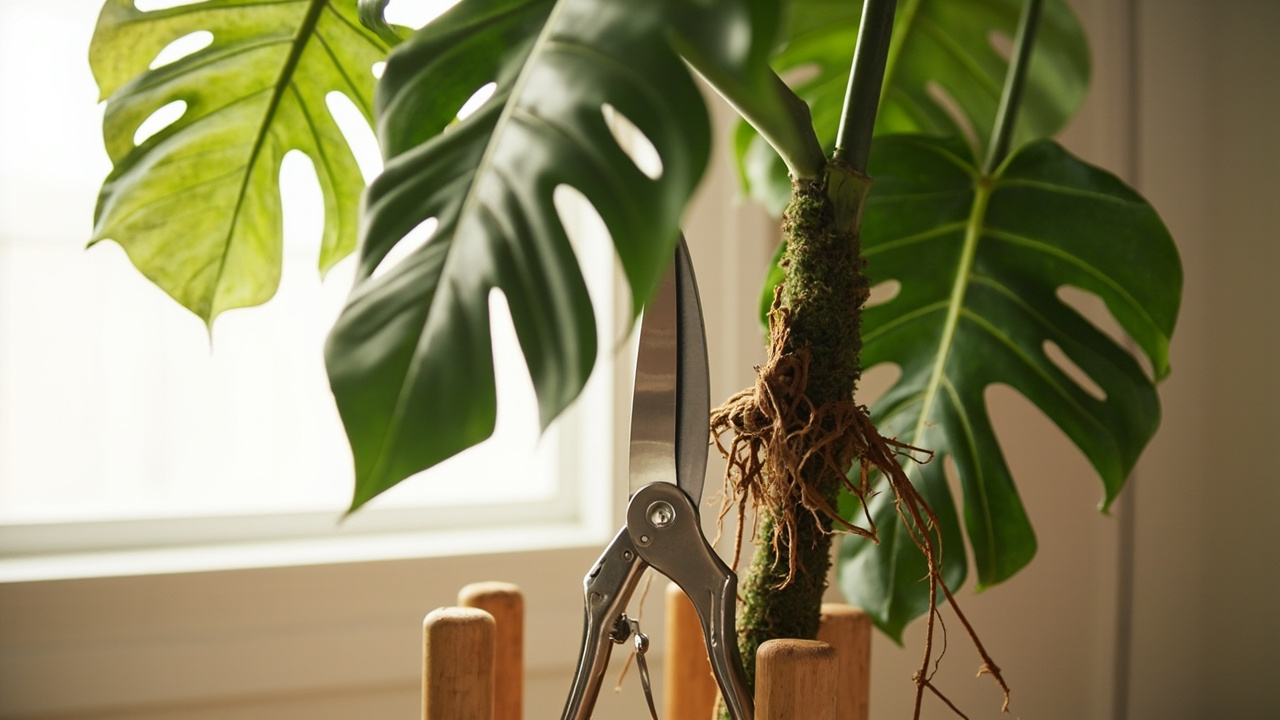
Winter dormancy in a temperate-winter home typically lasts 10–14 weeks, from late November through early March. The reliable signal that it is breaking is not a calendar date — it is new growth. The first sign is usually a swollen, lighter-green spear emerging from a node on the main stem, or from the tip of an aerial root that has found its way into a moss pole. Once you see that, three things change at once.
First, resume watering on the summer schedule: top inch dry, water thoroughly. Second, restart fertilizer at half the previous summer’s strength, ramping to full after the second new leaf. Third, this is the only safe window for repotting if the plant is root-bound — the roots are about to enter their most active growth phase and will recover quickly. Do not repot a Monstera in December, January, or February even if the roots are circling.
The full annual cycle looks like this: vigorous growth from March through October, a gradual slowdown through November, a quiet plateau from December through February, and a sharp restart in March. Match your care to that rhythm — heavy watering and feeding in the active months, restraint in the quiet ones — and the plant will come back larger and more fenestrated than the year before.
For the full seasonal reference, the complete Monstera care guide lays out the four seasonal routines side by side.
Turn PDF Bank Statements Into Workable Spreadsheets
Your bank statement is a mess of numbers, but your books shouldn't be. Use our converter to get Excel, CSV, or QBO files — ready for QuickBooks.
Try It Free Now