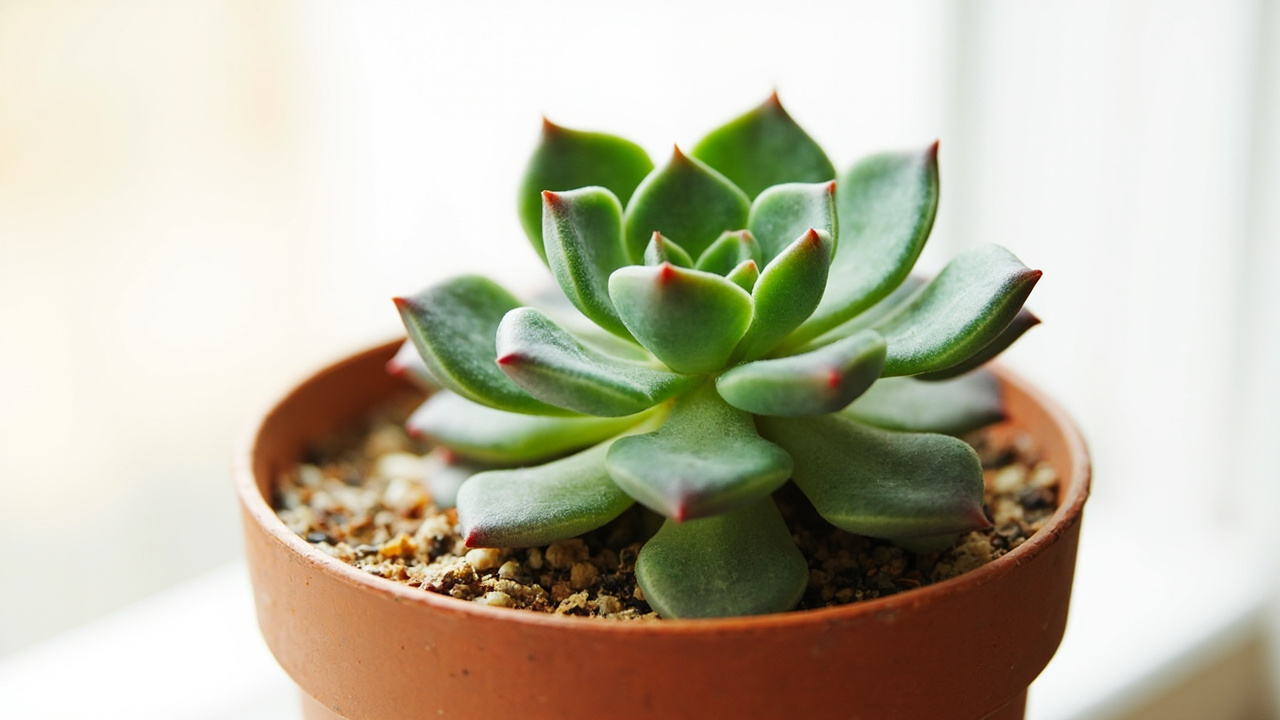
Echeveria roots evolved on rocky Mexican slopes where water vanishes within hours of rain. They are thin, fibrous, and built for brief moisture contact followed by long dry stretches. Standard potting soil holds water for days. The roots sit in moisture they never evolved to handle, inviting the fungi that cause root rot. The growing medium is not a footnote to watering. It is the foundation.
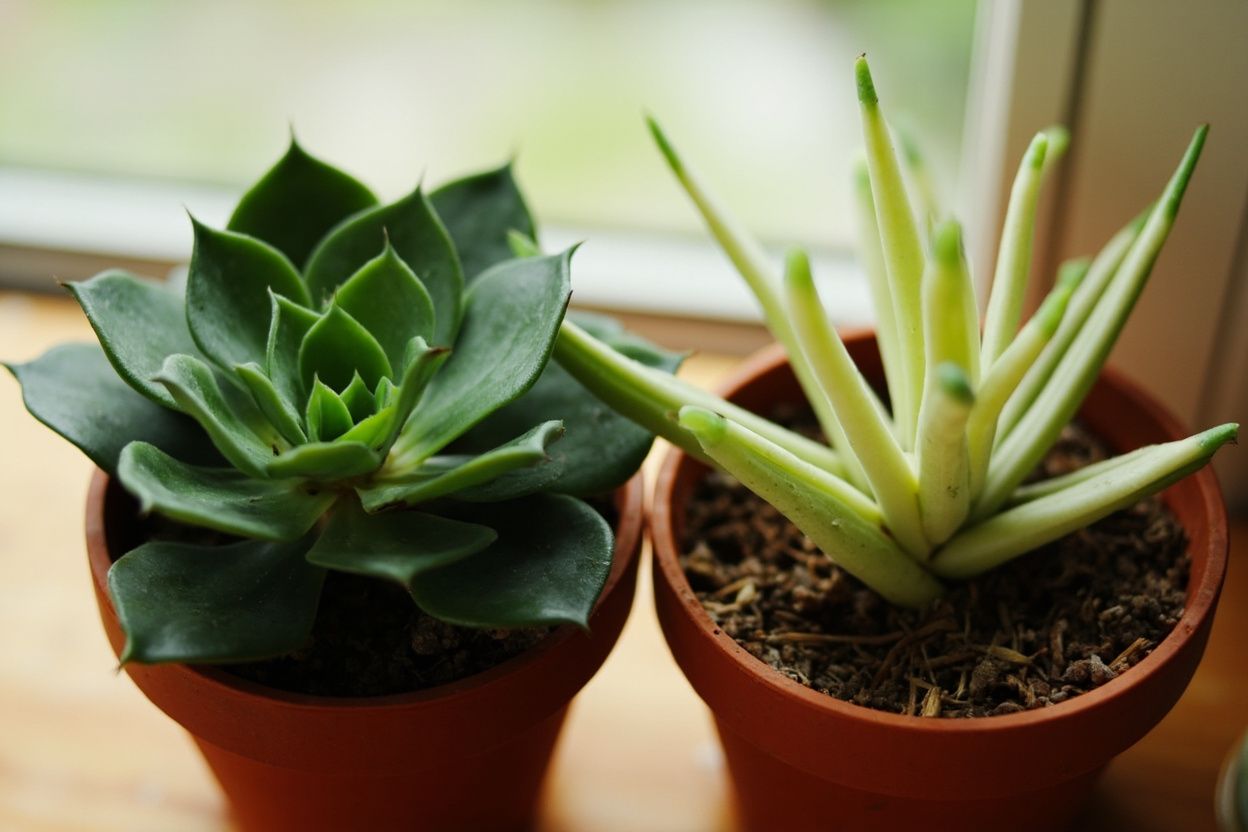
The failure mode is predictable. A newly potted Echeveria looks fine for two to three weeks. Then the lower leaves soften, turn translucent, and detach at the slightest touch. By the time the rosette shows decucculation — that telltale flattening of the leaf stack — the root system is already mostly gone.
The gardener blames overwatering, which is partly true, but the mix is the amplifier. Organic-heavy substrates hold three to five times more water than a mineral substrate at the same watering volume. That excess moisture triggers sun stress recovery cycles the plant cannot sustain.
This is why the Echeveria watering guide pairs every watering recommendation with a substrate assumption. The soak-and-dry cycle only works in a mix that actually dries. The ratio that delivers that drying speed for most container-grown Echeveria is five parts mineral aggregate, one part grit, one part organic matter. The rest of this article breaks down why that ratio works and how to build it.
Why Standard Potting Soil Kills Echeveria
Standard potting soil — even bags labeled “cactus mix” — is built around peat or coir held together with perlite. It is designed to stay moist for seven to fourteen days after watering. For a fern or a pothos, that is ideal. For an Echeveria, it is a death sentence.
The problem is not water volume. It is water duration. Echeveria roots can handle brief saturation. What they cannot handle is sitting in damp organic matter for days while the mix slowly dries from the top down. The bottom of the pot stays waterlogged long after the surface feels dry. Pythium and Phytophthora fungi thrive in that waterlogged zone, colonizing the root cortex and cutting off nutrient uptake.
The visible symptom comes late. By the time the rosette softens, the leaves wilt, or the stem mushies, the root damage is irreversible. Prevention is structural, not behavioral. A mineral-heavy substrate drains completely within minutes of watering and dries to the bottom of a four-inch pot within three to five days. That speed is what keeps the root zone aerobic and prevents the etiolation that follows chronic overwatering.
The 5:1:1 Mineral Formula Explained
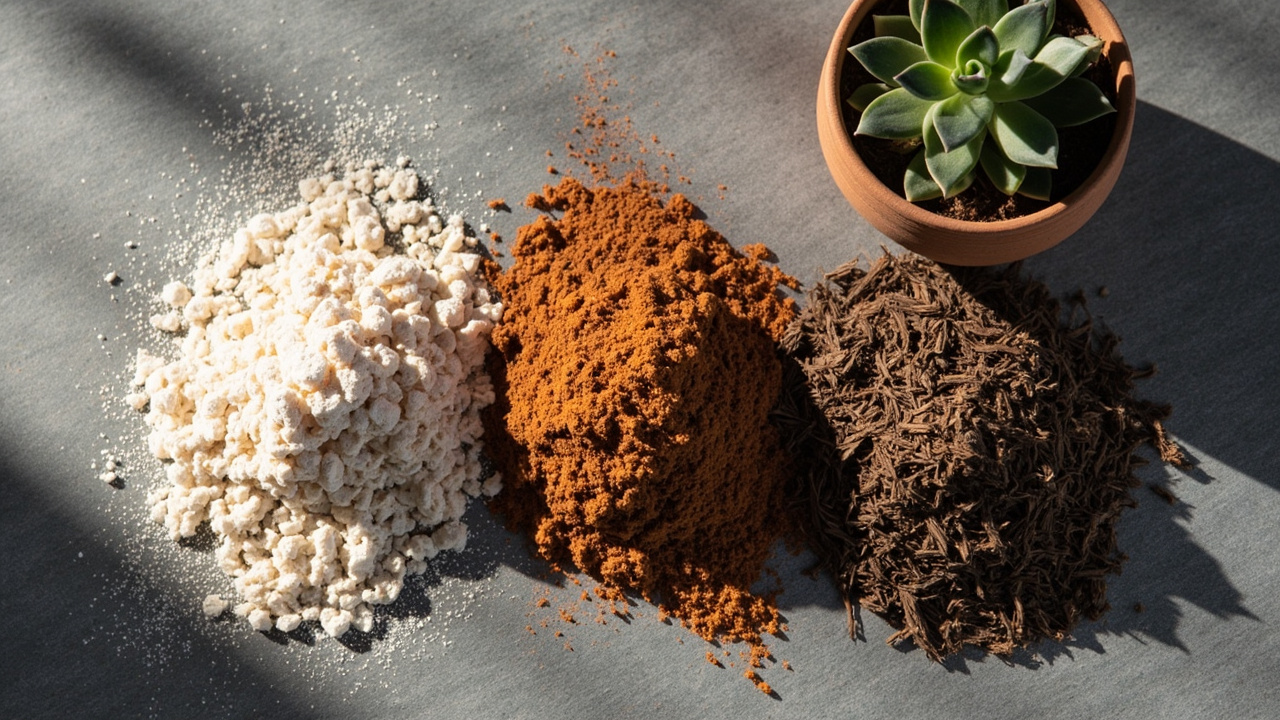
The ratio that works for most Echeveria in container culture is five parts mineral aggregate to one part inorganic grit to one part organic matter. Written as 5:1:1, this formula produces a substrate that drains fast and dries fast. The mineral fraction provides permanent structure. The grit fraction prevents compaction. The organic fraction holds just enough moisture for root function without creating anaerobic conditions.
The five parts mineral aggregate are the backbone. Pumice and scoria are the top choices because they are hard, irregularly shaped, and do not break down over time. Perlite works in a pinch but floats to the surface after repeated waterings and compresses under the weight of a mature rosette. Chicken grit is an excellent budget option but adds noticeable weight.
Particle size matters. Aim for three to six millimeters for the mineral fraction. Anything smaller fills the gaps between larger particles and slows drainage. Anything larger leaves voids where roots cannot make contact with the substrate.
The one part grit occupies the spaces between mineral particles without cementing them together. Use coarse sand, fine poultry grit, or crushed granite in the one to three millimeter range. Without grit, the mineral fraction settles into a dense mass with poor aeration. With it, the mix stays open and oxygen reaches the root zone.
The one part organic matter is the component most frequently overdone. Use screened pine bark fines or buffered coconut coir, never peat moss. Peat rewets unevenly and repels water once fully dry, creating pockets of bone-dry substrate next to saturated zones. Pine bark breaks down slowly and maintains its structure for 18 to 24 months.
Choosing the Right Mineral Ingredients
Pumice is the gold standard for Echeveria soil. It is volcanic glass with a microporous surface that holds a thin film of water on the outside of each particle while the interior stays dry. Roots access moisture without sitting in it. Pumice is lightweight, does not compact, and remains chemically inert for years. The downside is cost — in many regions it sells in small bags at premium prices.
Scoria is the practical alternative. It is heavier than pumice and has a sharper texture. Echeveria roots navigate around scoria particles without issue in practice. Scoria is widely available in 40-pound bags at landscape supply stores for a fraction of pumice’s cost per volume. The trade-off is weight: a six-inch pot filled with scoria-based mix is significantly heavier than a pumice-based one.
Perlite is the most available but the least durable. It is cheap, lightweight, and provides excellent initial drainage. The problem is structural collapse. Perlite particles compress under the weight of a growing rosette and fracture into smaller pieces with each repotting cycle. After 12 to 18 months, a perlite-heavy mix begins to behave like a compacted organic mix rather than a mineral one.
Chicken grit — insoluble crushed granite sold at farm supply stores — is the budget champion. It costs roughly one-tenth the price of pumice per volume and lasts indefinitely. The drawbacks are weight and aesthetics. Grit-heavy mixes look like gravel beds. But functionally, granite grit provides the same permanent drainage structure as pumice. For growers with more than twenty plants, it is the only economically sustainable mineral source.
Terracotta and Drainage: The Container Partnership
A mineral substrate in a glazed ceramic or plastic pot is only half the system. Terracotta is not a stylistic choice for Echeveria. It is a functional partner to the 5:1:1 mix. Unglazed terracotta wicks moisture from the outer layer of the substrate and evaporates it through the pot wall.
This accelerates drying by 20 to 40 percent compared to a plastic pot with the same mix and the same watering schedule. For a plant that is one forgotten watering away from root rot, that margin matters.
The pot must have at least one drain hole at the base. Decorative outer pots without drain holes are the single most common cause of Echeveria death in home settings. If you use a cache pot, always remove the inner nursery pot to water, let it drain completely, and then return it.
Never let an Echeveria sit in a saucer of standing water. The mineral mix cannot save roots that are submerged at the bottom of the pot. Even with perfect drainage, an overpot situation — too much soil volume — keeps the root zone wet far too long.
Pot size is the other half of the equation. Echeveria roots spread horizontally and perform best when slightly rootbound. Choose a pot no more than one inch wider in diameter than the rosette.
An oversized pot holds a larger volume of substrate that takes longer to dry, which defeats the purpose of the mineral mix. The yellow leaves guide covers what happens when roots stay too wet for too long — a scenario that oversized pots make almost inevitable.
When and How to Repot Into a Mineral Mix
The best time to repot an Echeveria into a mineral substrate is early spring, just as the plant exits winter dormancy and before the main growth flush. The second-best time is early fall, when the plant is still active but summer heat has passed. Avoid repotting in deep dormancy or at the peak of summer.
Stop water five to seven days before repotting. Dry substrate releases from the root ball more cleanly than wet substrate, which means less root damage. Remove the plant from its old pot and gently shake or rinse away the existing soil. Inspect the roots and trim any that are brown, mushy, or hollow with clean, sharp scissors.
Let the trimmed roots callous for 24 to 48 hours in a dry, shaded spot before potting into the new mix. Place a layer of the 5:1:1 mix in the bottom of the terracotta pot, set the plant so the root crown sits just above the substrate surface, and backfill around the roots.
Do not bury the stem. Do not water immediately. Wait five to seven days before the first watering to give damaged roots time to seal over. Watering into fresh wounds is the fastest route to leaf rot in an otherwise perfect substrate. Handle the plant by the lower leaves only — farina damage from fingerprints is permanent on existing growth.
For a deeper dive into repotting technique across succulent genera, the haworthia soil mix guide follows the same protocol with genus-specific adjustments.
What to Expect After Repotting
The first two weeks after repotting are a recovery period, not a growth period. The plant may shed one or two lower leaves as it redirects energy to root regeneration. This is normal. Do not increase watering to compensate. The mineral mix stays moist at the root level even when the surface feels bone dry.
Expect to see the first signs of new root growth within two to three weeks, visible as fresh white or pale tan root tips if you gently lift the plant. New rosette growth typically appears within four to six weeks in the growing season.
If you repotted in fall, growth may stall until day length increases in late winter. The mix itself will remain structurally stable for 18 to 24 months before the organic fraction breaks down enough to warrant a refresh.
At that 18 to 24 month mark, repot into fresh mix and use the old mix as a top dressing for outdoor containers. For the genus-wide care context, the Echeveria care guide ties soil, light, and watering into a single system.
If you are building your first mineral mix, start with a single batch in a one-gallon bucket: five shovelful of pumice or scoria, one shovelful of coarse sand, one shovelful of pine bark fines. Mix it dry, pot one plant, and watch how fast it dries compared to your old mix.
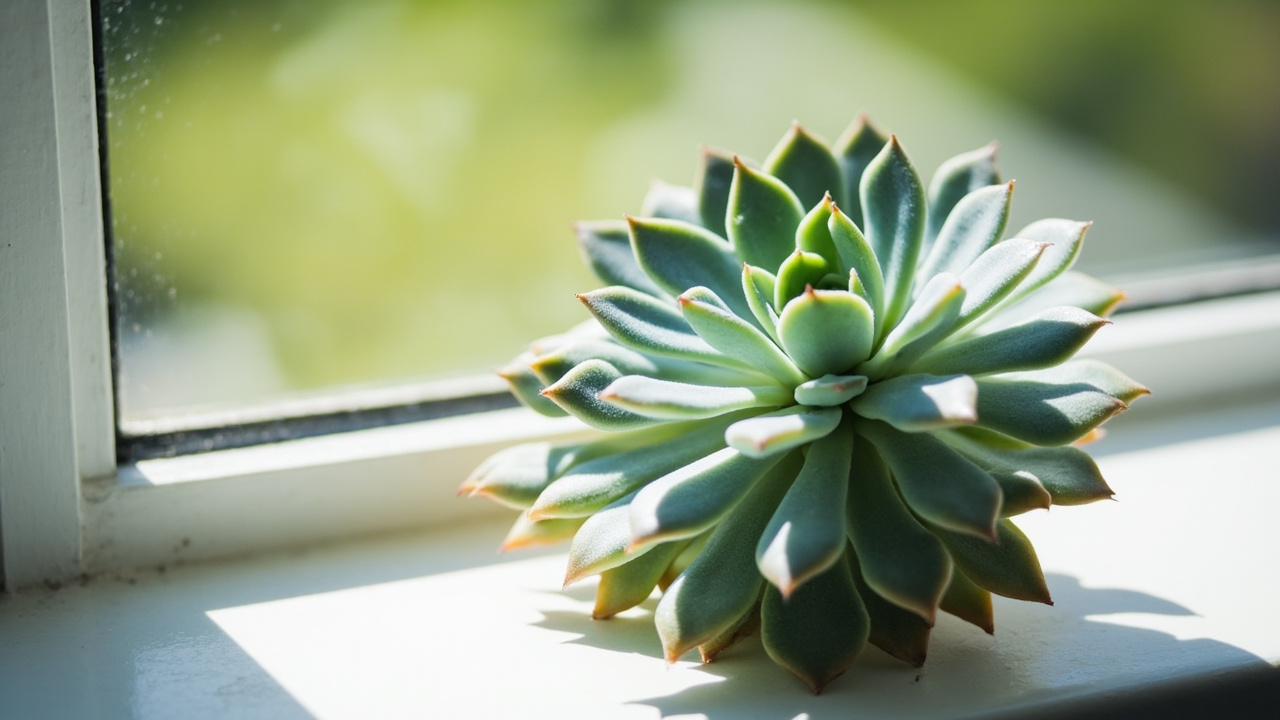
That single comparison will convert you more than any written guide. Place the pot on a windowsill where the plant gets bright indirect light and watch how the offset pups emerge once the root system establishes.
A drought-tolerant Echeveria in the right mix rewards you with steady growth and clean rosettes. For the broader succulent context, the succulent care guide covers genus-neutral principles that apply to every rosette-forming plant in your collection.
Turn That PDF Into a Spreadsheet in Minutes
You've seen how to do it manually — now let the tool handle the heavy lifting. Upload your bank statement and get Excel, CSV, or QBO in a few clicks.
Try It Free