When a Monstera shows a symptom, the visible change is rarely the problem itself — it is the plant’s way of telling you one of a small set of underlying issues is going on. Most Monstera pest problems and diseases start as a symptom that looks identical to a basic care mistake. The job of this page is to help you read the symptom, narrow the cause, and walk away knowing which Aqualogi page to read next. This article is a symptom decoder — the full treatment for each cause lives on the linked pages.
There are seven symptoms that account for nearly every “something is wrong with my Monstera” search: yellow leaves, brown leaf tips, drooping, slow growth, leaf curl, no fenestrations, and leggy stems. For each, the most common cause is listed first because frequency matters — if you see symptom X, the top-ranked cause is statistically the most likely answer, even if the lower-ranked causes are also possible.
Yellow leaves on a Monstera
Yellowing is the most-searched Monstera symptom and the most ambiguous. Yellow can mean overwatering, underwatering, low light, nutrient deficiency, transplant shock, root bound conditions, or simply natural senescence of an old lower leaf. The order of likelihood depends on where the yellowing appears and how the rest of the plant looks.
What the symptom looks like
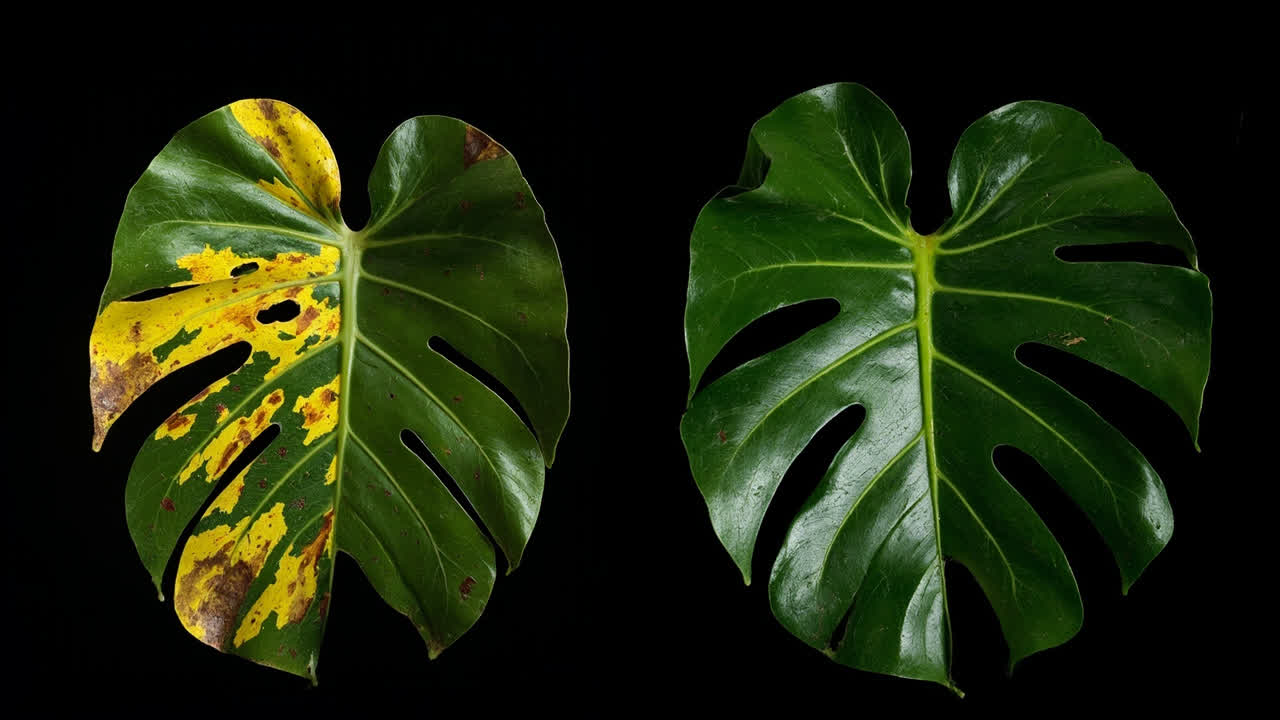
Yellowing shows up in three patterns: a single lower leaf going yellow while the rest of the plant is healthy, multiple leaves yellowing at once from older to newer, or new growth coming in pale yellow and staying that way. The pattern matters more than the color.
The most common causes (ranked by frequency)
First, if only one or two of the oldest, lowest leaves are yellow and the rest of the plant looks vigorous, it is almost always natural senescence — the plant is shedding old leaves to direct energy to new growth. This is normal. The trade-off: many owners panic and start “fixing” a non-problem, then introduce overwatering or repotting stress on a plant that was perfectly healthy. Second, if multiple leaves are yellowing at once and the soil stays wet for more than a week after watering, the cause is almost always overwatering leading to early root rot. Third, if new growth comes in pale and the older leaves are deep green, the cause is usually insufficient light — the plant cannot photosynthesize enough to produce chlorophyll in the new tissue.
When it is normal vs when to worry
One lower leaf yellowing while the rest of the plant pushes out new fenestrated growth is normal. Multiple leaves yellowing at once, especially with soft stems or a sour smell from the soil, is a problem. The first action: stop watering, check the roots, and read the root rot guide if more than one leaf is involved.
For the full breakdown, see our houseplant yellow leaves diagnosis.
Brown leaf tips on a Monstera
What the symptom looks like
The tip of the leaf (sometimes the edges) turns brown, dry, and papery. The brown area may be small — just the very tip — or it may extend a centimeter or two down the edge. The rest of the leaf usually stays green.
The most common causes (ranked by frequency)
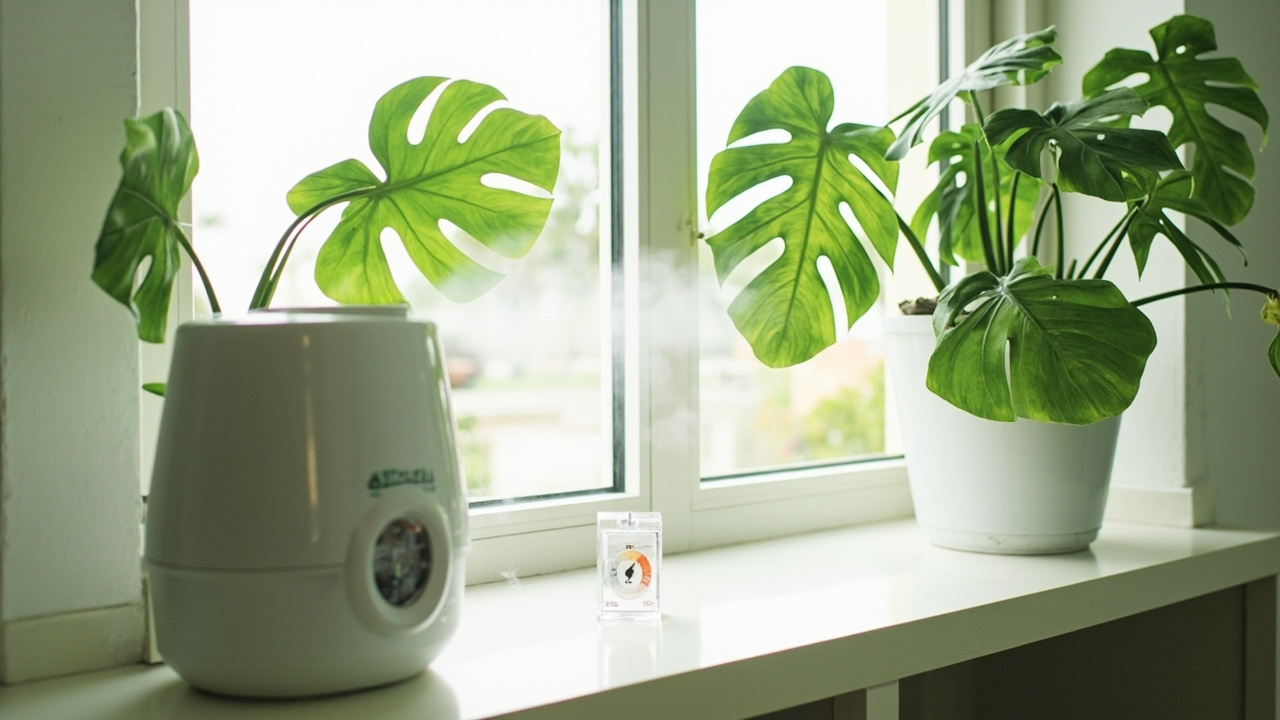
First, low humidity. Indoor winter heating drops household humidity to 20–30%, and Monstera prefers 50%+. Dry air pulls moisture from the leaf faster than the roots can replace it, and the leaf tip — the farthest point from the roots — dries out first. Second, salt and mineral buildup in the soil from tap water or fertilizer. The brown tip is where the plant deposits excess minerals it cannot use. Third, dry soil from underwatering or from water running straight through the pot without being absorbed.
What to check first
Push your finger 3–4 cm into the soil. If it is bone-dry all the way down, the cause is underwatering. If it is moist, the cause is more likely humidity or mineral buildup. The first action: get a humidity gauge and aim for 50%+, and switch to filtered or rainwater if your tap water is hard.
Drooping Monstera leaves
What the symptom looks like
The petioles (the stems that connect each leaf to the main vine) lose their rigidity and the leaves hang limply, often within hours. The leaf itself usually stays green, just structurally weak.
The most common causes (ranked by frequency)
First, underwatering — the cells in the petiole lose turgor pressure when water is short. This is the most common cause and the easiest to fix: water deeply, and the plant usually perks up within 4–6 hours. Second, overwatering leading to root rot — the roots cannot transport water even when soil is wet, so the leaves droop as if thirsty. The trade-off: most owners water a drooping plant, but if the soil is already wet, that compounds the problem. Always check soil moisture before watering a drooping Monstera. Third, transplant shock or repotting stress — a recently repotted Monstera often droops for 1–2 weeks as roots re-establish.
How to tell the three causes apart
Stick a finger 4–5 cm into the soil. If it is dry → underwatering. If it is wet and the plant still droops → overwatering / root rot (do not water again, read the root rot guide). If you repotted in the last 2 weeks → transplant shock, give it time and bright indirect light, no fertilizer until you see new growth.
Slow growth on a Monstera
What the symptom looks like
No new leaves unfurling for months, or new leaves coming in much smaller than the previous ones. The plant otherwise looks healthy — green, no yellowing, no pests.
The most common causes (ranked by frequency)
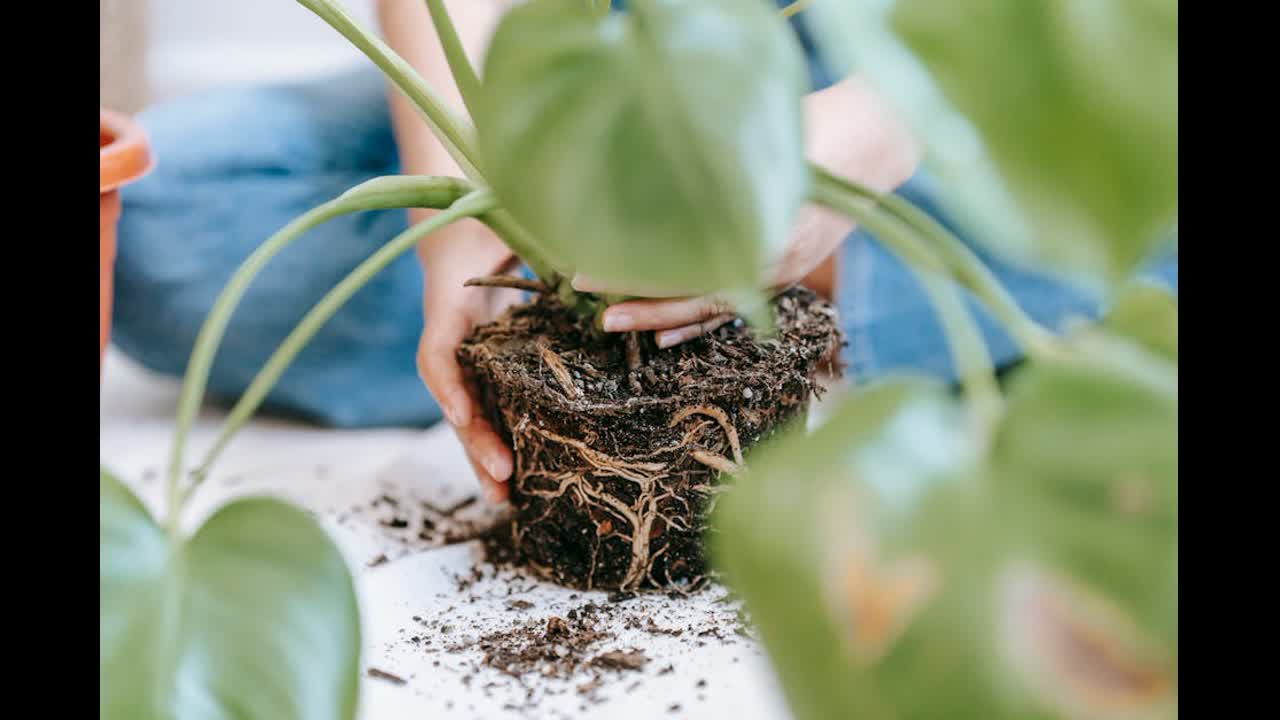
First, insufficient light. Monstera needs bright indirect light for active growth; in dim conditions it survives but barely grows. Second, the plant is root-bound — the pot is full of roots and there is little soil left to hold water and nutrients. Slide the plant out of the pot to check; if you see more root than soil, it is time to repot up one size. Third, winter dormancy — see the winter care guide for what is and isn’t normal in the cold months.
When slow growth is actually a problem
No new growth in active season (spring through early fall) with adequate light and a recent repot is concerning. Check roots and check for unseen pests — fungus gnats and root aphids can slow growth before any visible leaf damage appears.
Leaf curl on a Monstera
What the symptom looks like
New or existing leaves curl inward, sometimes so tightly that the leaf forms a tube. The leaves may also feel thicker or more leathery than normal.
The most common causes (ranked by frequency)
First, underwatering combined with low humidity — the plant curls leaves to reduce surface area and slow moisture loss. Second, light stress — too much direct sun bleaches and curls leaves. Third, severe root damage from rot or transplant shock, where the plant cannot move enough water into the leaves to keep them flat.
The first action
Check soil moisture, check light exposure, and check for direct sun. Most leaf curl resolves within a week once the underlying cause is corrected, but the affected leaves will not uncurl — they stay as a record of the stress event.
No fenestrations on a Monstera
What the symptom looks like
New leaves come in solid, with no holes or splits. Mature leaves that were previously fenestrated stay fenestrated, but the new growth is whole.
The most common causes (ranked by frequency)
First, the plant is too young. Juvenile Monsteras do not produce fenestrated leaves regardless of care. Most Monsteras begin fenestrating around leaf 6–10, depending on light. Second, insufficient light — the plant needs bright indirect light to invest in fenestrations. In dim conditions it produces smaller, less fenestrated leaves. Third, the plant is genetically a less-fenestrated cultivar (such as some Thai constellation varieties).
Why this is rarely a problem
No fenestrations on a juvenile plant is not a symptom — it is normal development. No fenestrations on a mature plant in low light is a sign to move it closer to a window. Trade-off: more light usually means some direct sun, and Monstera leaves burn in harsh direct sun. Aim for bright indirect light, not direct.
Leggy growth on a Monstera
What the symptom looks like
Long stretches of bare stem between leaves, with each leaf smaller than the last. The plant reaches toward the light source.
The most common causes (ranked by frequency)
First, insufficient light — the plant etiolates (stretches toward the light), producing long internodes and small leaves. Second, lack of pruning or training — without a moss pole or support, the vine keeps extending without branching. Third, the plant is just mature and vine-like, which is normal Monstera growth if you want a trailing plant — leggy in this case is a style choice, not a problem.
How to fix leggy growth
Move the plant closer to a bright light source, prune the leggy stem back to a node (a healthy cutting can be propagated), and add a moss pole so new growth has support. The pruned vine will branch from the nearest node within 4–6 weeks.
How to use this page as a decoder
Match what you see to the symptom. Read the ranked causes. Check the single most likely one first. If the fix on the linked page works, you have your answer. If not, work down the list. Most Monstera symptoms have a single dominant cause, and finding it is faster than trying every treatment at once.
For the full diagnosis tree, see the general Monstera problems page. For the underlying care that prevents most of these symptoms, the Monstera care guide is the foundation.
Turn any PDF statement into a clean sheet
Skip the typos and the hours of copying. Our converter handles any bank statement format and outputs Excel, CSV, or QBO for QuickBooks. No file retention, free to try.
Convert your statement