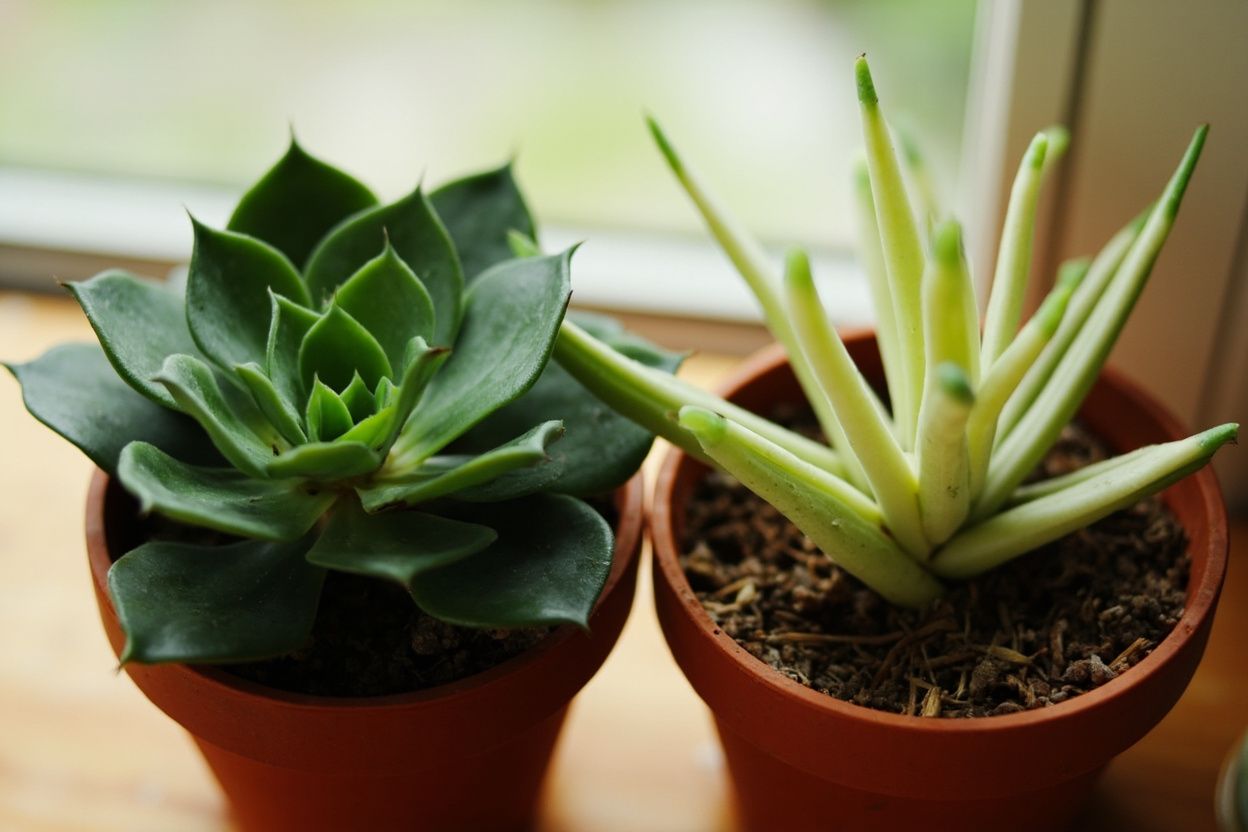
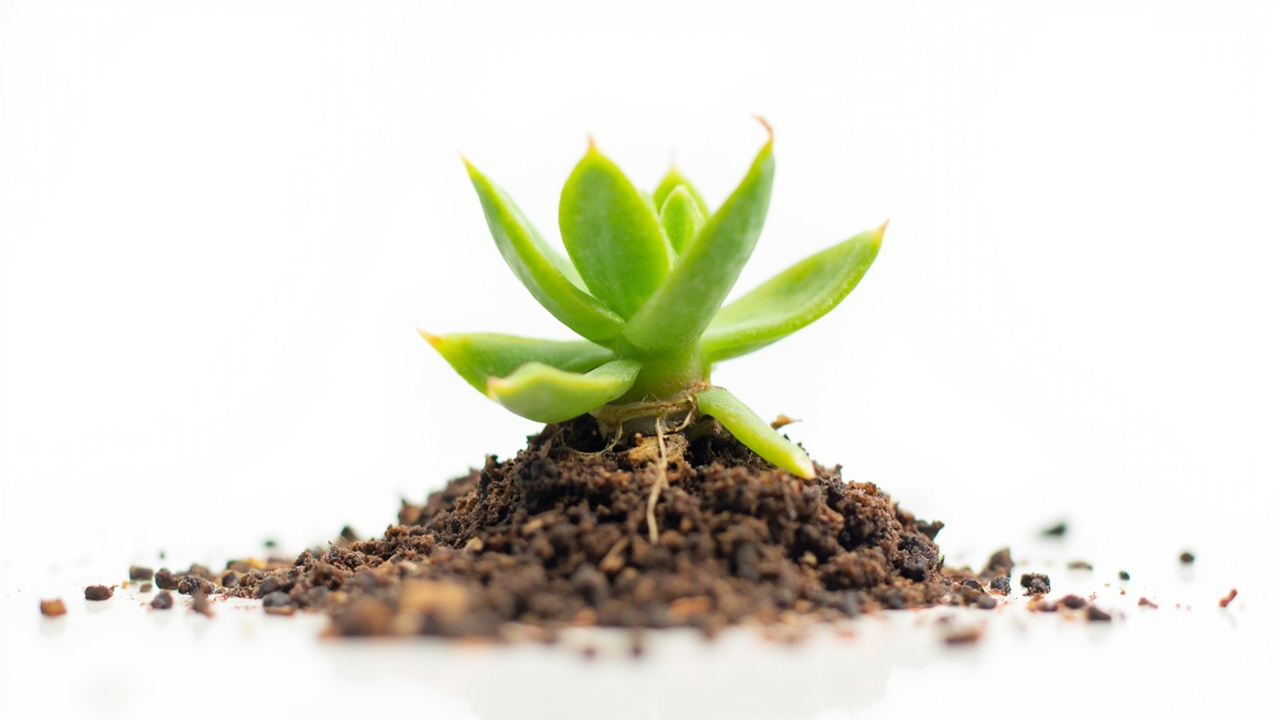
Echeveria watering kills more plants than any other single care mistake. The margin between too much and too little is narrow: overwater for two weeks and the roots rot; underwater for six weeks and the leaf reserves are permanently depleted. This guide covers the soak-and-dry method, seasonal schedules for both hemispheres, the leaf plumpness test, and emergency recovery for both failure modes.
The complete Echeveria care guide covers light, soil, propagation, and the full genus overview. The Echeveria soil mix guide explains the 5:1:1 mineral ratio that makes proper watering possible. Without fast-draining soil, even the best watering schedule will eventually cause root rot.
The Soak-and-Dry Method for Echeveria
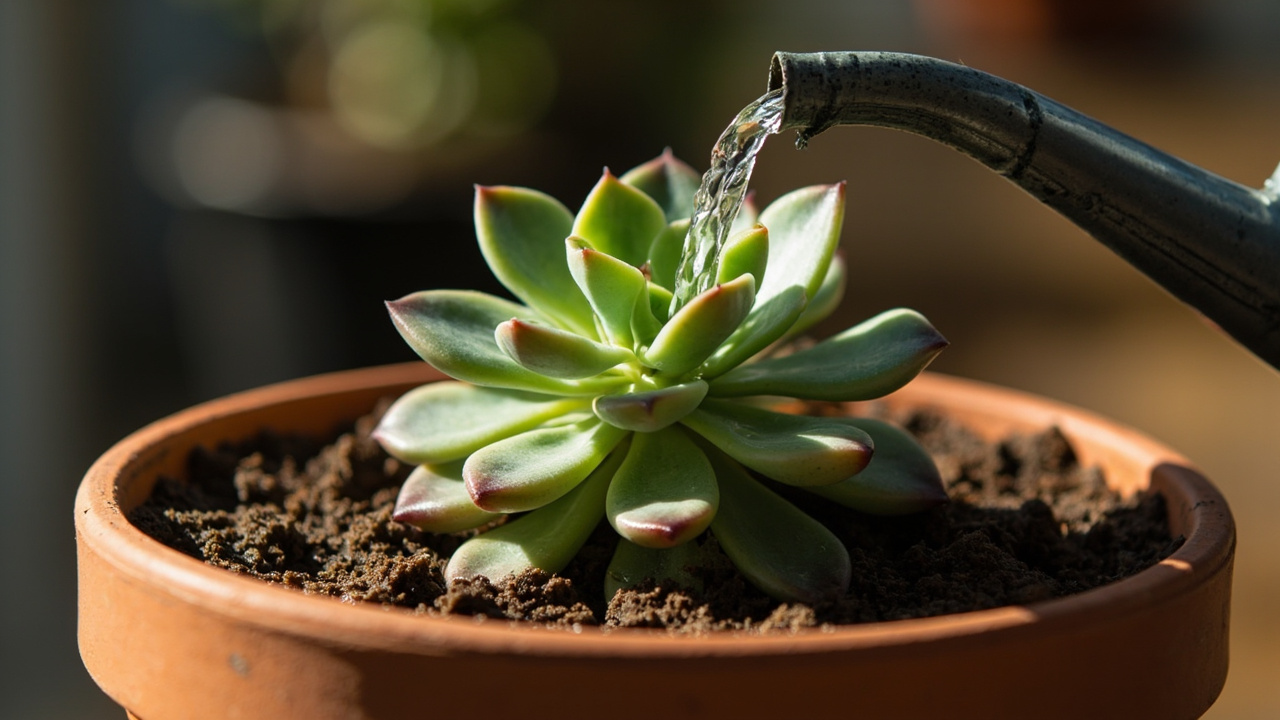
The method is simple: water thoroughly until it flows freely from the drainage holes, then do not water again until the soil is completely dry all the way through. Pour water evenly across the soil surface.
Do not mist, do not drip a few drops on top, do not water from below and let the soil wick moisture upward. The goal is to saturate the entire root zone and then let it dry completely before the next cycle.
Why not water lightly and frequently? Echeveria roots are shallow and fibrous. Light watering only moistens the top centimeter of soil, which encourages roots to grow upward toward the moisture instead of spreading through the pot. This creates a shallow, weak root system that is far more vulnerable to both drought and waterlogging.
A thorough soak followed by a complete dry period trains roots to grow deep and strong. Use a narrow-spout watering can to direct water onto the soil, not into the rosette center. Water sitting in the leaf axils is the most common cause of stem rot in potted Echeveria.
If water pools in the center, tip the pot to drain it or blot with a paper towel. This small habit prevents more Echeveria deaths than any other single watering adjustment.
In hard water areas, use rainwater, distilled water, or filtered tap water. Tap water minerals accumulate on the farina coating over time, leaving white residue that blocks light absorption and increases sun damage risk. If you must use tap water, flush the soil with extra water every third watering to push mineral buildup out through the drain holes.
How Often to Water: Seasonal Schedule by Hemisphere
Watering frequency changes dramatically between active growth and dormancy. In the Northern Hemisphere, March through September is the active period: water every 7 to 10 days using the soak-and-dry method. October through February is dormancy: stretch the interval to every 3 to 6 weeks, always checking the leaf plumpness test before watering.
In the Southern Hemisphere, the schedule reverses. September through March is the active growing season with 7 to 10 day intervals. June through August is dormancy with 3 to 6 week intervals. The calendar is only a starting point — actual frequency depends on pot size, soil composition, humidity, and light levels.
A small terracotta pot in bright direct sun dries out twice as fast as a large plastic pot in indirect light. South facing windows increase evaporation and water use compared to north facing or east facing positions. Adjust the interval based on your specific conditions, not the generic schedule alone.
During active growth, Echeveria uses water rapidly for new leaf production and offset formation. During dormancy, the plant’s metabolic rate drops by 60 to 70% and it needs very little water. The most common cause of winter root rot is continuing the summer watering schedule into dormancy. When in doubt during the cooler months, wait another week.
Temperature and humidity directly affect watering needs. A warm room above 25°C with low humidity dries soil in half the time of a cool room at 18°C with high humidity. In summer heat waves, check the soil every five days.
In winter heating season, indoor air is often very dry, but the plant still needs less water because light levels and temperature are lower. Check the leaves, not the air. The soak and dry principle applies in every season — only the interval changes.
The Leaf Plumpness Test: Reading Your Plant’s Hydration
The leaf plumpness test is the most reliable way to determine when an Echeveria needs water. Gently press a lower leaf between your thumb and forefinger. A well-hydrated leaf feels firm and full, like a fresh grape. A thirsty leaf gives slightly under pressure and feels less taut, like a grape that has been in the fridge for a few days.
Water at the first sign of softening — not when the leaf is visibly wrinkled. Visible wrinkling means the plant has already been stressed and is consuming its own leaf reserves. A single episode of severe underwatering causes permanent damage: the oldest leaves do not re-inflate and will eventually shrivel and drop.
Repeated underwatering causes the stem to become woody and stunted, and the rosette never reaches its full diameter. Some species naturally hold less water than others. Echeveria laui and Echeveria elegans have thick, plump leaves that stay firm for weeks after the soil dries out. Echeveria pulidonis has thinner leaves that show thirst sooner.
Learn your species’ normal firmness level so you can read the early signs of dehydration before visible damage occurs. A compact, well-hydrated rosette is the goal — not a plant that is being pushed to its drought tolerance limit.
Overwatering: Signs, Root Rot, and Emergency Recovery
Overwatering kills Echeveria faster than any other cause. The earliest sign is a lower leaf that turns yellow, translucent, and slightly swollen. This leaf will detach with the lightest touch. At this stage, the fix is simple: stop watering immediately, move the plant to a bright warm location, and let the soil dry completely.
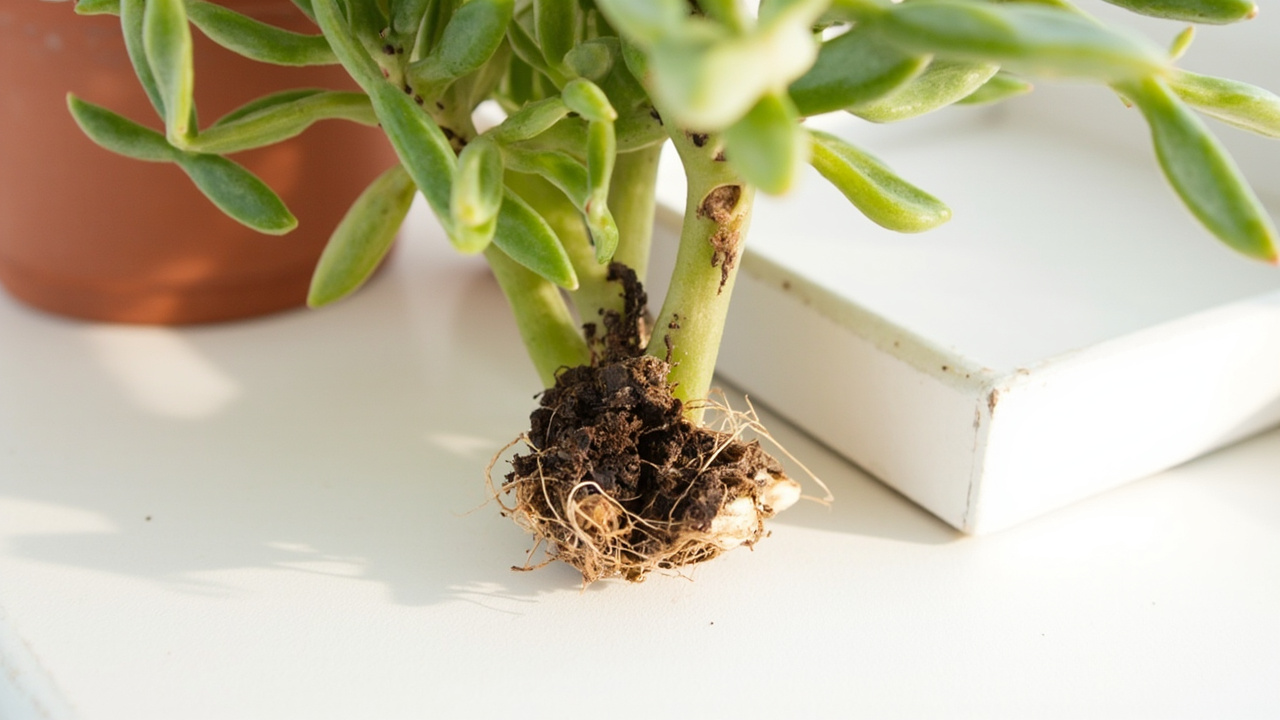
If overwatering continues, the yellowing moves up the plant and the stem begins to soften at the soil line. This is active root rot — the roots are dying and the stem is starting to decay. At this stage, you must unpot the plant immediately. Remove all soil, inspect the root system, and trim every soft or blackened root with sterile scissors.
Trim until only healthy white or tan tissue remains. Let the trimmed plant dry in open air for two to three days to callus any cut surfaces. Repot in fresh, completely dry gritty mix. Do not water for seven days after repotting. The plant will re-root from the healthy remaining roots and resume normal growth within two to four weeks.
The Echeveria rescue guide covers advanced rot surgery for plants that have progressed beyond early-stage root rot. It includes step-by-step beheading instructions and stem re-rooting protocols for waterlogged specimens.
Underwatering: Shriveled Leaves and Recovery Timing
Underwatering is less immediately dangerous than overwatering but causes cumulative damage that is hard to reverse. The earliest sign is a slight softening of the lower leaves. If watering is not increased, the leaves begin to wrinkle and thin. At this stage, the plant is consuming its oldest leaf reserves to support new growth.
A mildly underwatered Echeveria recovers fully after one thorough soak-and-dry cycle. The lower leaves re-inflate within 48 to 72 hours. Severely underwatered plants — those with visibly shriveled, papery lower leaves — recover partially: the healthy upper leaves rehydrate, but the damaged lower leaves do not and will eventually drop.
Remove dead leaves to prevent fungal leaf rot in the leaf joints. Never compensate for a dry spell with a massive soaking. If the soil has been bone-dry for weeks, water lightly first — just enough to moisten the surface — then wait 24 hours before the full soak. Extremely dry growing medium can become hydrophobic and channel water straight through without wetting evenly.
Watering Newly Propagated and Repotted Echeveria
Newly propagated leaf cuttings and stem cuttings should not be watered for the first five to seven days after planting. The cut surface needs time to callus — watering before callusing is complete invites rot at the cut site. After day seven, mist the soil surface lightly every two to three days until roots establish.
Once the new rosette is visibly growing (usually week three to four), transition to the normal soak-and-dry schedule. Repotted Echeveria follows a similar protocol. Water lightly one week after repotting, then resume the normal schedule. The roots need time to re-establish in the new soil after transplant shock.
Watering a freshly repotted plant heavily can push air out of the soil pores and suffocate roots that are already stressed from the move. Offset division is the exception. Offsets separated from the mother plant with intact roots can be watered normally immediately. The root system is already functional and does not need a recovery period.
Pot the offset in slightly moist gritty mix, water once after potting, and resume the normal schedule from there. For pest interactions that complicate watering — mealybugs thrive in dry conditions, while fungus gnats prefer waterlogged soil — the Echeveria care guide and the yellow leaves problem page provide detailed troubleshooting for every scenario.
Turn That PDF Into a Spreadsheet in Minutes
You've seen how to do it manually — now let the tool handle the heavy lifting. Upload your bank statement and get Excel, CSV, or QBO in a few clicks.
Try It Free