Monstera problems almost always trace back to one of four causes: incorrect watering, insufficient light, low humidity, or pests. The good news is that Monstera communicates clearly — the leaves tell you exactly what the plant needs within days of conditions changing. The bad news is that Monstera is unforgiving of prolonged neglect: a Monstera that has been seriously overwatered for weeks may not recover even after you correct the problem.
Yellow Leaves
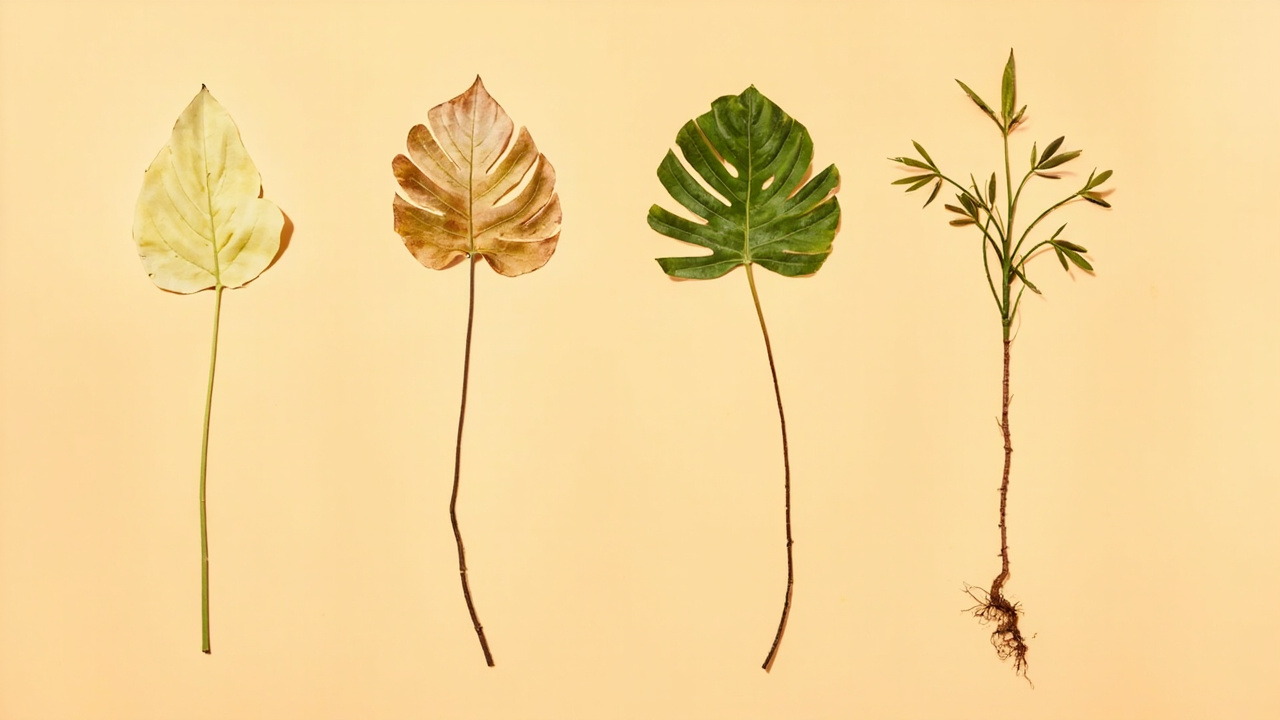
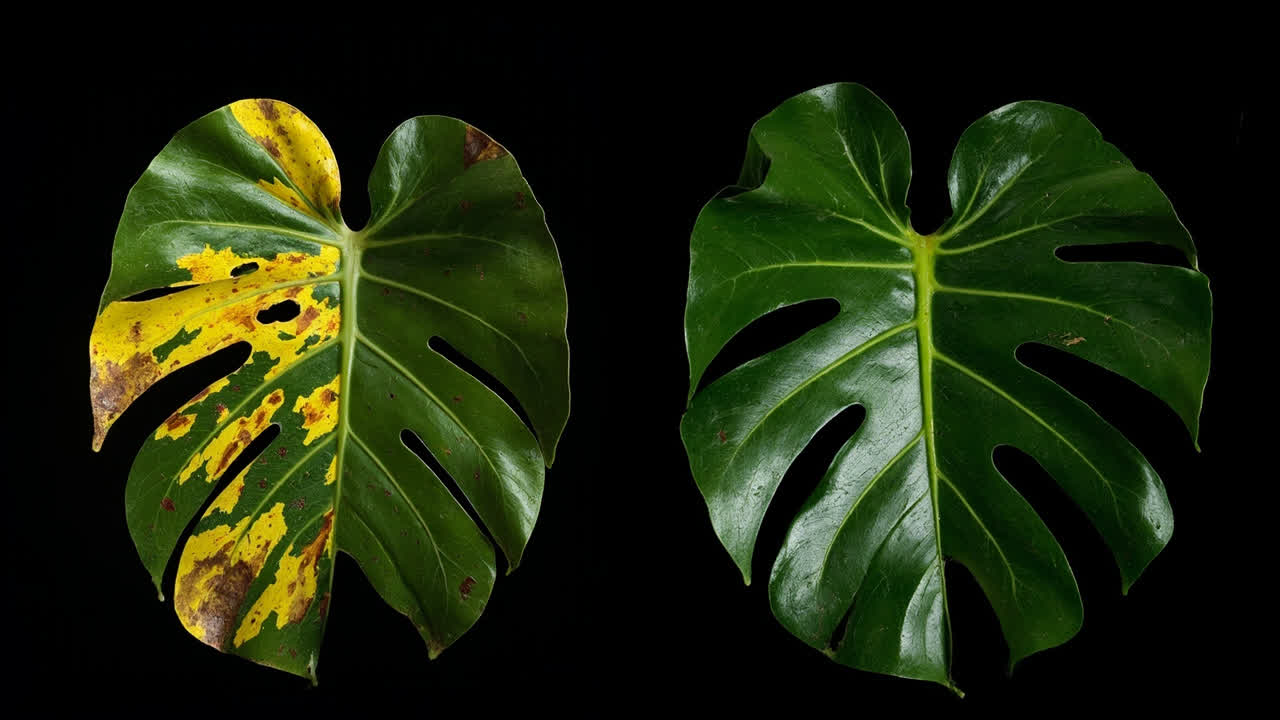
Yellow leaves on Monstera are the most common complaint and the clearest sign of overwatering. When the roots sit in waterlogged soil, they cannot function properly — they deliver less water and nutrients to the leaves, and the plant responds by yellowing the oldest leaves first. If the soil is wet and the lower leaves are yellowing, stop watering immediately and let the soil dry out completely.
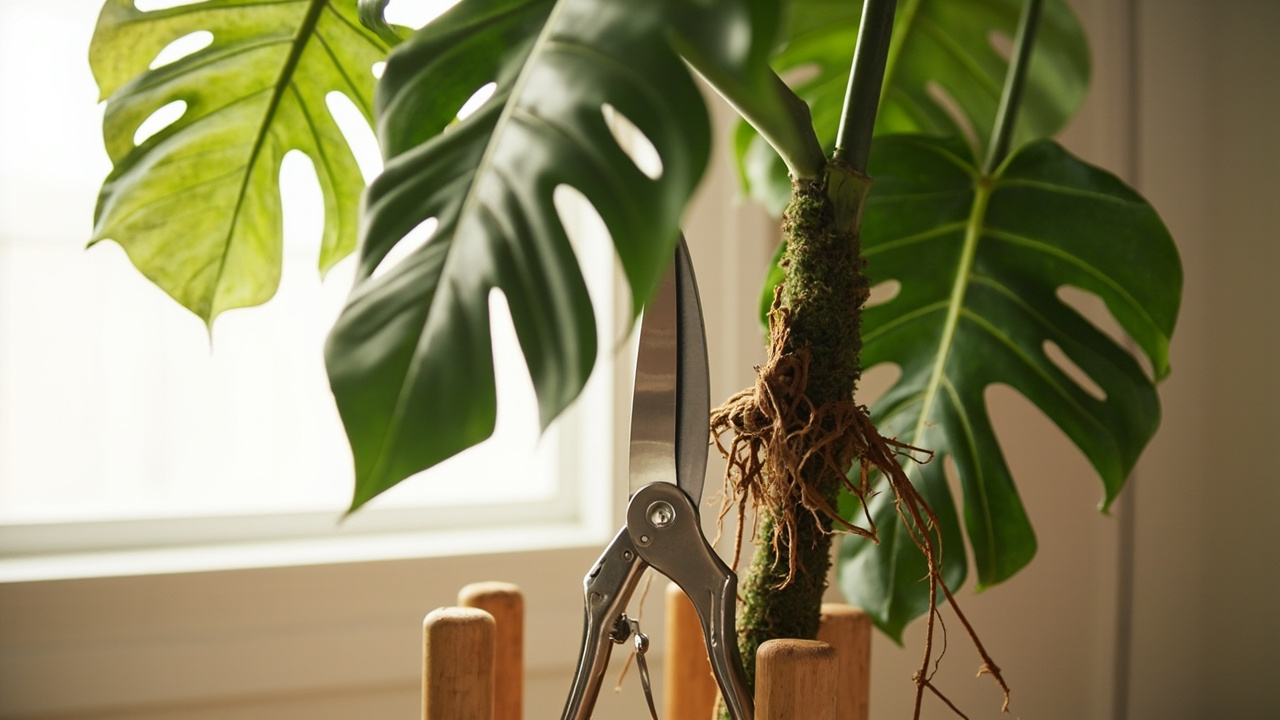
If the yellowing is widespread and the plant looks generally declining — not just one or two lower leaves — unpot the plant and check for root rot. Healthy Monstera roots are pale, firm, and slightly stringy. Dark, mushy, or smelly roots indicate rot. Trim all affected roots with clean scissors, dust with cinnamon, repot in fresh fast-draining soil, and do not water for at least ten days.
A single yellow leaf at the base of the plant can be natural aging — Monstera regularly replaces old leaves. If only one leaf is affected and the rest of the plant is actively growing, remove the yellow leaf and monitor.
Brown Spots and Leaf Damage
Brown spots on Monstera leaves have different causes depending on their appearance and location:
Large brown patches in the centre of the leaf or on the sun-facing side indicate sunburn — the plant is receiving direct afternoon sun that it cannot tolerate. Move it back from the window or filter the light with a sheer curtain. The existing damaged leaves will not heal, but new growth will be clean if the position is corrected.
Brown edges and tips with a yellow halo indicate water stress — either the soil is drying out too much between waterings, or the air is too dry. Establish a consistent watering routine, check the soil every few days, and raise humidity with a pebble tray or humidifier.
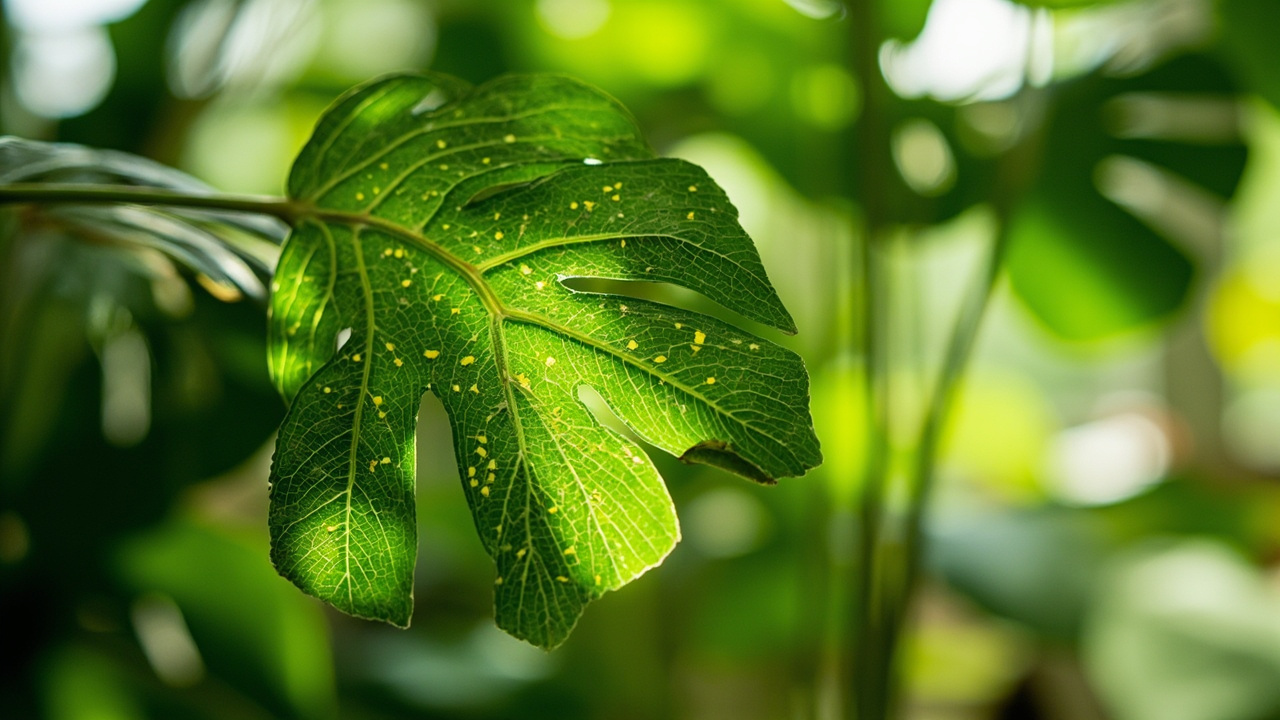
Small dark brown or black spots that spread rapidly across the leaf surface can indicate bacterial or fungal infection. These spots often have a yellow border and appear on multiple leaves simultaneously. Remove affected leaves immediately, reduce watering, improve air circulation around the plant, and treat with a houseplant fungicide if the spread is rapid.
No Splits or Holes in Leaves
A Monstera that produces solid, un-split leaves is usually either too young or not getting enough light. Young Monsteras — those under two years old — typically produce solid leaves. As the plant matures and the stems grow longer, the splits and perforations develop naturally. Be patient with a young plant; solid leaves are normal at this stage.
A mature Monstera — one that has produced split leaves in the past — that suddenly starts producing solid leaves is telling you it needs more light. Move it to a brighter position. North-facing rooms are usually insufficient for mature Monstera to maintain split leaves. An east-facing window or a position 2–4 feet from a south-facing window is ideal.
Leggy growth — long stems with widely spaced small leaves — also indicates insufficient light. The plant is reaching toward whatever light is available and sacrificing leaf quality in the process.
Leaf Drooping
Monstera leaves droop when they need water — the plant loses turgor pressure and the large leaves collapse noticeably. This is normal between waterings and the leaves should perk back up within a few hours of watering. If the leaves do not perk up after watering, the plant may be severely underwatered or the roots may be damaged.
Chronic drooping — the plant always looks slightly wilted — indicates either persistent underwatering or root rot preventing water uptake. Check the soil: if it is consistently dry, water more frequently. If the soil is moist and the plant still droops, check for root rot.
Yellow Halo or Oedema on Leaves
Yellow halos around brown spots, or raised blister-like patches on the leaves (oedema), indicate inconsistent watering — usually overwatering followed by dry periods. The plant’s cells absorb water faster than they can transpire, causing them to burst and create the characteristic raised patches. Fix by establishing a consistent watering routine and never letting the soil dry out completely between waterings.
Pests
For a full pest-by-pest walkthrough with treatment protocols, see the Monstera pest guide, which covers spider mites, thrips, mealybugs, scale, and fungus gnats in detail.
Spider mites are the most common Monstera pest, particularly in dry conditions. They appear as tiny tan or reddish dots on leaf undersides and leave fine webbing between stems and around leaf joints. Regularly wiping the leaves with a damp cloth prevents infestations and lets you catch them early. Treat active spider mite infestations with neem oil applied to the undersides of leaves, repeating every five to seven days until the infestation is gone.
Mealybugs appear as small white cottony clusters at the leaf bases and stem joints. Remove them with a cotton swab dipped in rubbing alcohol, then spray the plant with neem oil or insecticidal soap.
Scale insects appear as small brown or tan discs attached to stems and leaf surfaces. They are immobile once settled and can be scraped off with a fingernail or a blunt knife. Treat with neem oil applied directly to each scale insect.
Yellowing New Leaves
New-leaf yellowing can also signal disease rather than a care mistake. The Monstera diseases guide walks through bacterial leaf spot, rust, mosaic virus, and the rest.
New Monstera leaves that emerge yellow or pale and then brown are usually caused by overwatering, nutrient deficiency, or the leaf being too old to have developed properly. If the new leaf unfurls pale yellow and then turns brown before fully opening, the rhizome may be struggling. Feed with a balanced liquid fertilizer at half strength during the growing season. If the problem persists, check the root system for rot.
Preventing Monstera Problems
The most reliable way to prevent Monstera problems is consistent care: bright indirect light from an east-facing or filtered south-facing window, watering only when the top 2 inches of soil are dry, humidity above 50%, monthly feeding during spring and summer, and repotting every two years in spring. A Monstera that has all of these conditions met will grow vigorously, produce large split leaves regularly, and be a genuinely easy and rewarding houseplant despite its reputation for difficulty.
Turn That PDF Into a Spreadsheet in Minutes
You've seen how to do it manually — now let the tool handle the heavy lifting. Upload your bank statement and get Excel, CSV, or QBO in a few clicks.