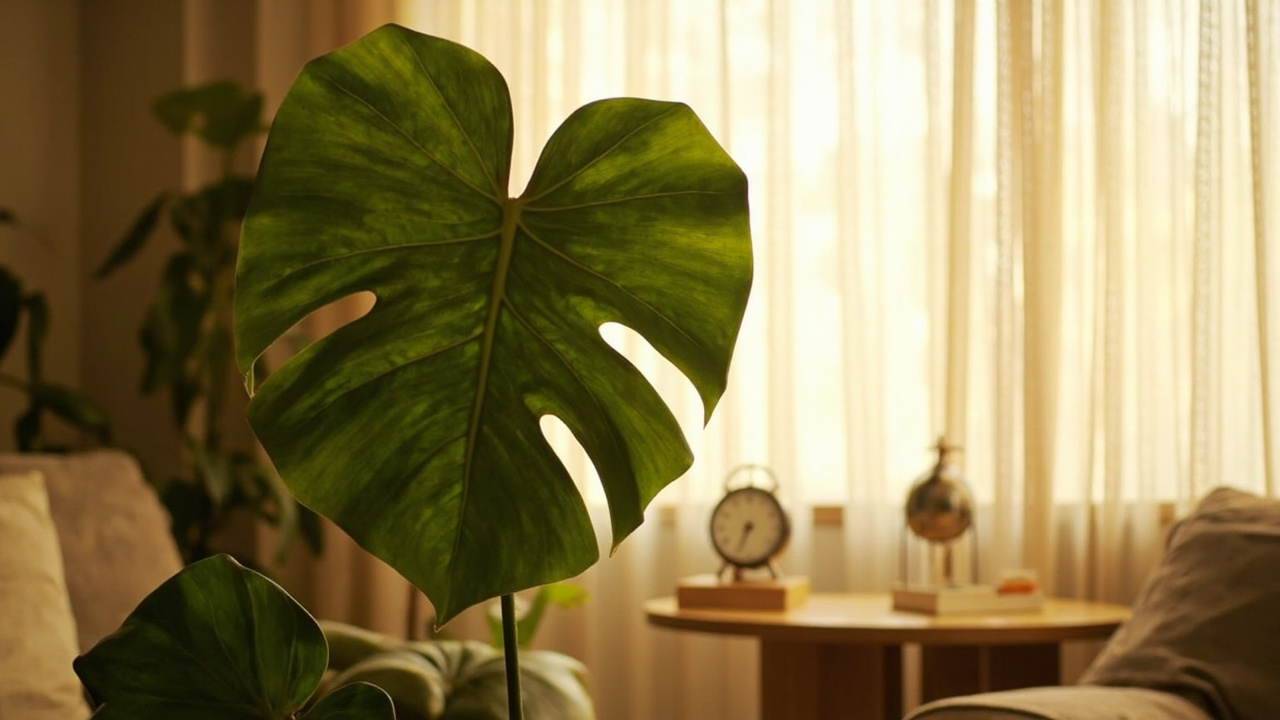
Few house plants have had a cultural moment quite like Monstera deliciosa. Its deeply split leaves—those unmistakable natural Swiss cheese patterns—have appeared on cushions, curtains, wallpaper, and Instagram feeds for years, turning what was once a specialist collector’s plant into a fixture of mainstream interior design.
The plant deserves its reputation. A well-grown Monstera deliciosa is genuinely impressive: a single leaf can reach 60 cm across on a mature plant, and in good conditions it climbs vigorously, producing new leaves with larger and more elaborate fenestrations (the holes and splits) as it matures. It is also more forgiving than its tropical origins suggest. The care routine is straightforward, and once you understand the plant’s priorities, keeping it healthy requires minimal ongoing effort.
Understanding Monstera Growth Habits
>Monstera deliciosa is a hemiepiphyte—a plant that begins life on the forest floor and then climbs up tree trunks toward the light. In the wild, it uses aerial roots to anchor itself to bark and absorb moisture and nutrients from the surrounding air and debris. These roots are a key part of the plant’s biology and why its care differs from conventional potted plants.
As a climber, Monstera grows in a two-part rhythm: root-driven growth underground and stem-driven growth above. When you give it something to climb—a moss pole, a wooden board, a trellis—the plant shifts its energy toward producing larger leaves with more pronounced fenestrations. Without support, it sprawls across the surface, and while still attractive, produces smaller leaves without the dramatic splits the plant is known for.
Light Requirements
>Monstera tolerates a wide range of light, from low to bright indirect. It survives in shady corners but grows slowly, producing small leaves on thin, elongated stems. The plant’s legendary fenestrations only develop under good light conditions—the splits and holes are thought to be an adaptation that allows wind to pass through large leaves without tearing them, but they also signal a healthy, well-lit plant.
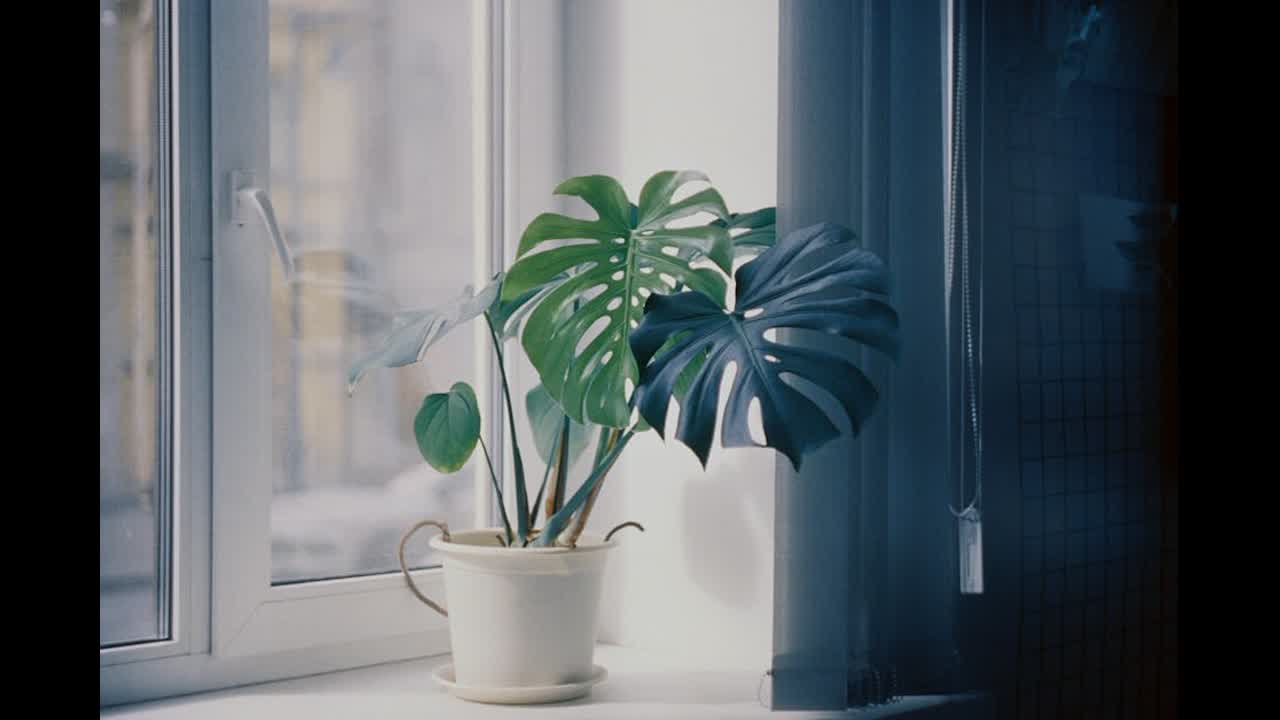
Bright indirect light is the sweet spot. An east-facing window is ideal, or a spot 1–2 metres back from a south or west-facing window with a sheer curtain. Direct afternoon sun burns the leaves rapidly, creating pale, papery scorch marks that are permanent.
If your Monstera is in a dark room, a grow light makes a significant difference. Positioning it under a modest LED grow light for 10–12 hours per day can sustain growth that would otherwise stall. For more on the relationship between light and leaf development, our snake plant light requirements guide covers the core principles that apply to Monstera as well.
Watering
>Monstera’s aerial root system makes it more tolerant of irregular watering than most tropical plants. The rhizome-like underground roots store moisture effectively, and the plant handles brief drought periods without the immediate collapse you would see in a thin-leaved tropical. Still, consistent moisture produces the best results.
Water when the top 3–5 cm of soil feel dry. In summer, this may be every 5–8 days. In winter, every 10–14 days or longer. The single most reliable test is the finger test—stick your finger into the soil up to the second knuckle. If it feels dry at that depth, water thoroughly until it drains from the bottom. If it feels moist, wait.
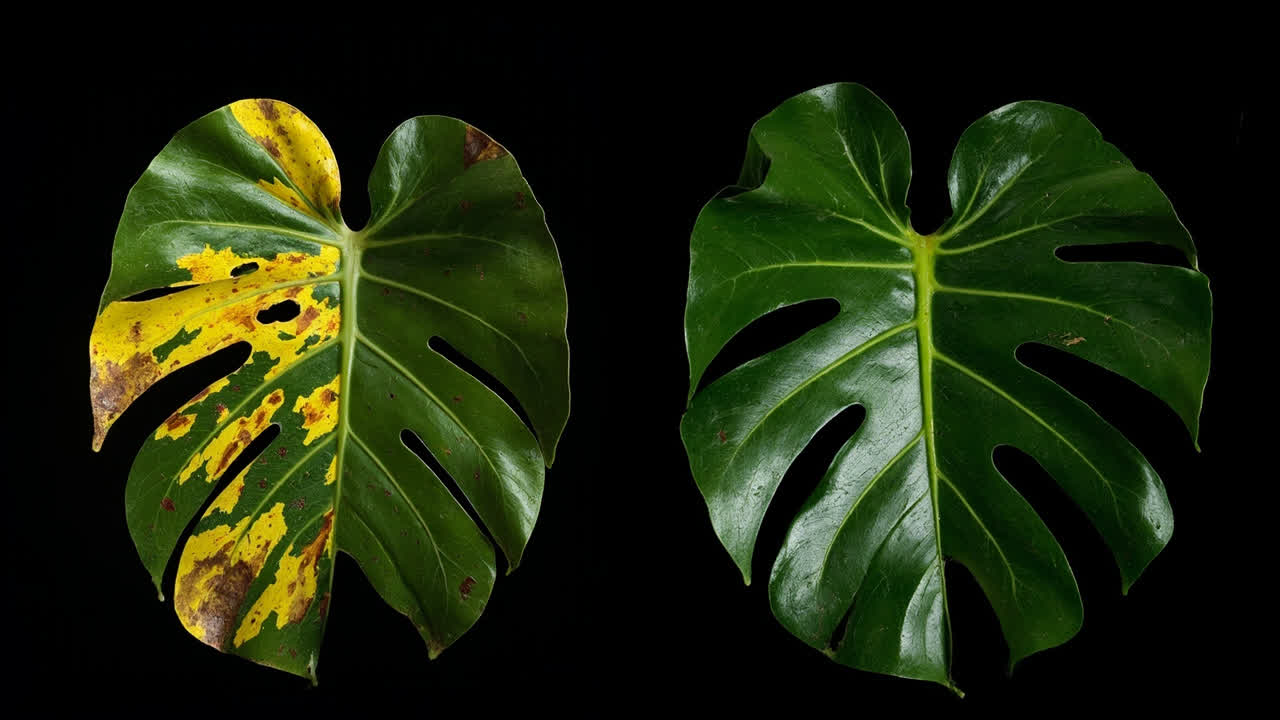
Yellow leaves on Monstera usually indicate overwatering, but can also signal root rot if the soil has been consistently wet. If lower leaves yellow and the soil stays damp for more than a week after watering, unpot the plant and check the roots. Firm, creamy-coloured roots are healthy; soft, dark, or smelly roots indicate rot. Trim affected roots and repot in fresh, fast-draining soil. Our guide to root rot explains what healthy vs rotting roots look like and how to prevent recurrence after repotting.
Humidity
igure>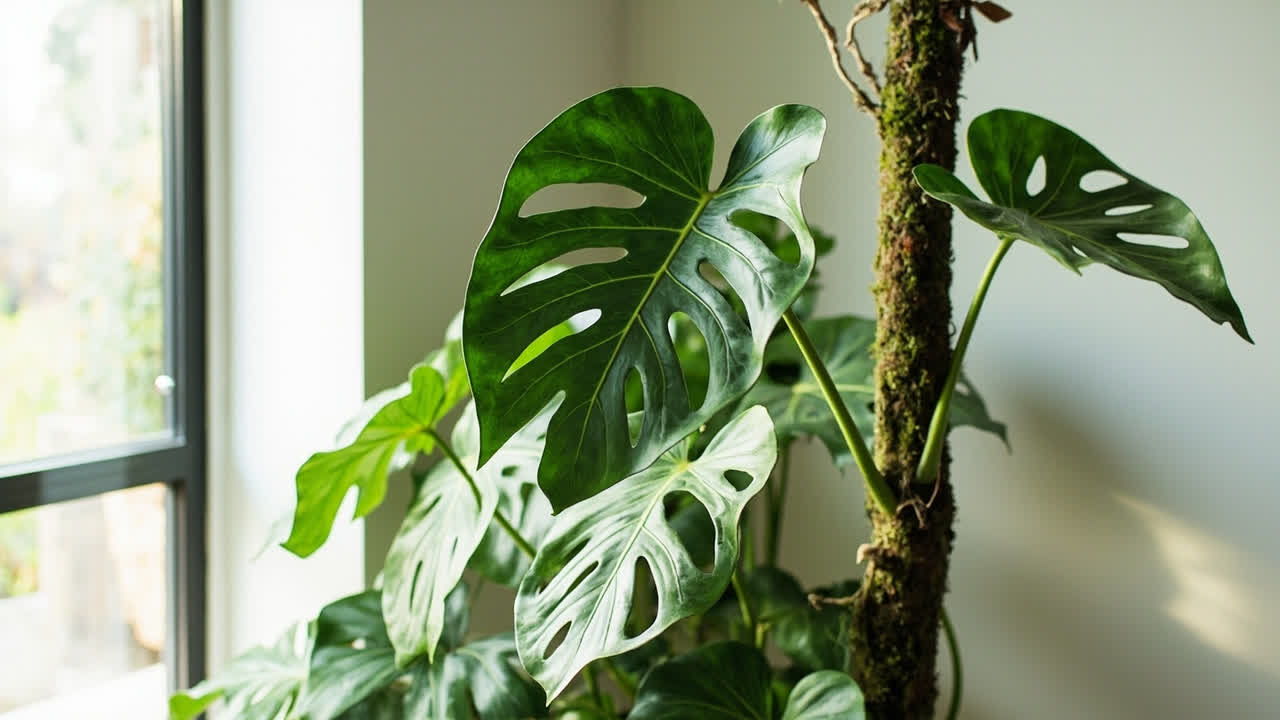
Monstera is more humidity-tolerant than most tropical house plants, partly because its thick, waxy leaf cuticle reduces water loss through transpiration. It handles typical home humidity of 40–60% without developing crispy leaf edges or browning tips—the main complaint most people have with humidity-sensitive plants like alocasias.
That said, higher humidity encourages larger, more vibrant leaves. If your Monstera is in an air-conditioned room or a particularly dry climate, a pebble tray or occasional misting helps. Our guide to raising humidity for house plants covers the practical options in detail. For most Monstera owners in typical home environments, however, humidity management is not a critical daily concern.
Support: Moss Poles and Climbing Structures
>If you want your Monstera to produce the large, dramatically split leaves the plant is famous for, giving it something to climb is the single most impactful change you can make. A moss pole is the most common solution—a cylindrical pole made of sphagnum moss wrapped around a wooden or plastic frame, which the aerial roots penetrate and grip.
The mechanism is straightforward: as the plant climbs, it triggers a physiological response that produces progressively larger leaves with deeper fenestrations. A Monstera allowed to sprawl horizontally typically produces leaves 20–30 cm wide with minimal splits. The same plant given a 1.5-metre moss pole will, within 12–18 months, produce leaves 50–60 cm wide with full Swiss cheese patterns.
To train a Monstera up a moss pole: insert the pole into the soil beside the main stem, and loosely tie the stems to the pole with soft plant ties at intervals. As aerial roots develop and attach naturally, the ties become unnecessary. Keep the moss pole moist by misting it when you water the plant—the roots grow into moist moss more readily than dry moss.
Soil Mix
>Monstera needs a chunky, well-aerating soil mix that retains moisture but drains quickly. Standard potting soil compacts and stays too wet for too long. The ideal mix: 60% high-quality potting soil, 20% perlite, and 20% orchid bark or coco coir. This provides the moisture retention, aeration, and root-gripping texture the plant needs.
Adding slow-release fertiliser pellets to the mix at repotting time provides nutrition for the growing season without the need for frequent liquid feeding. Our fertiliser guide for indoor plants covers types, timing, and dilution rates for Monstera and similar tropicals.
Common Monstera Problems
For a complete walkthrough of every symptom a Monstera can show — yellow leaves, brown tips, drooping, slow growth, and more — start with the Monstera symptom decoder. The dedicated pages below cover the most-searched sub-topics in depth.
>No fenestrations on leaves is the most common complaint. Young Monstera plants—those under 60 cm tall—produce solid leaves without holes. Fenestrations develop on mature plants as they grow taller, and they only appear on leaves that receive adequate light. If your mature Monstera (1 metre or taller) is producing solid leaves, increase light and ensure the plant has a climbing structure.
Yellow leaves indicate overwatering in most cases. Check the soil, reduce watering frequency, and ensure the pot has functioning drainage holes. If the problem persists, inspect the roots for rot.
Browning leaf tips on Monstera are typically caused by dry air, inconsistent watering, or fluoride in tap water. Switch to filtered or rainwater if your tap water is heavily chlorinated. Consistent watering on a regular schedule usually resolves tip browning.
Leggy, stretched growth—long gaps between leaves and thin, weak stems—is a direct response to insufficient light. Move the plant closer to a window or add a grow light. Stems that have already elongated cannot be reversed, but new growth will be compact if light improves. Our guide to common house plant pests covers identification and organic treatment options for the full range of indoor plant pest infestations.
Curling leaves indicate the plant is underwatered or the air is too dry. The leaf curl is the plant’s way of reducing surface area to conserve moisture. Water thoroughly and check again after 30 minutes—if the leaves remain curled, raise the humidity.
Repotting and Propagation
>Monstera needs repotting roughly every two years, ideally in spring. Signs that repotting is needed: roots emerging from drainage holes, water running straight through the pot without absorbing, or the plant’s growth slowing noticeably despite proper care in the growing season. Go up one pot size—roughly 5 cm larger in diameter. Avoid overpotting, which creates excess moist soil that leads to root rot.
Propagation is straightforward via stem cuttings. Take a cutting that includes at least one node (the small bump where a leaf or aerial root meets the stem) and one healthy leaf. Place the node in water or directly into moist perlite or sphagnum moss. Roots develop within 4–8 weeks. Once roots are 5–8 cm long, pot into soil. This is one of the easiest house plants to propagate, and a single mature Monstera can yield many new plants this way.
Monstera vs Other Popular Climbers
>Monstera is often compared to pothos and philodendrons as a starting point for indoor climbers. While all three climb and share similar care requirements, there are practical differences worth knowing. Pothos is more tolerant of very low light and irregular watering, making it better for dim spaces. Philodendrons offer an enormous range of leaf shapes and colours but tend to be more humidity-sensitive than Monstera. For a statement plant that tolerates a wide range of conditions while producing genuinely impressive foliage, Monstera occupies a unique position in the indoor plant hierarchy.
From Bank Statement to QuickBooks-Ready File
That manual cleanup you just read about? This tool skips it. Turn your PDF into QBO for QuickBooks without storing your data anywhere.
Start Converting