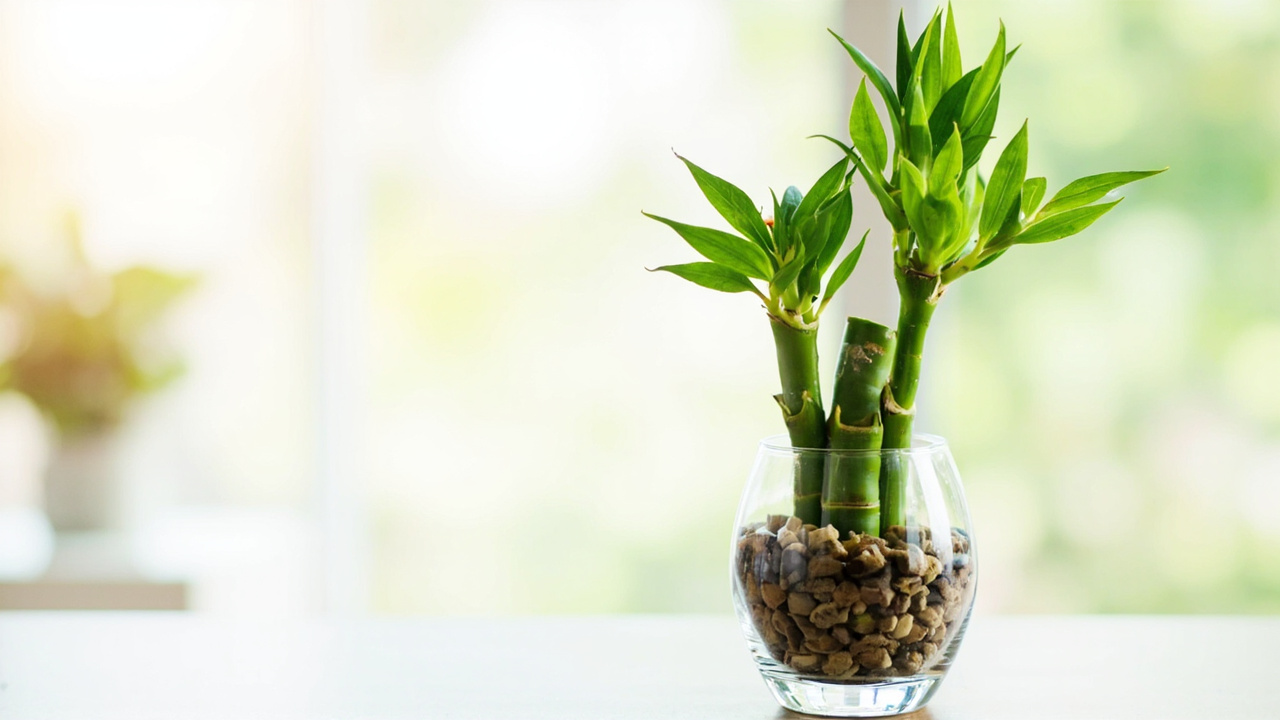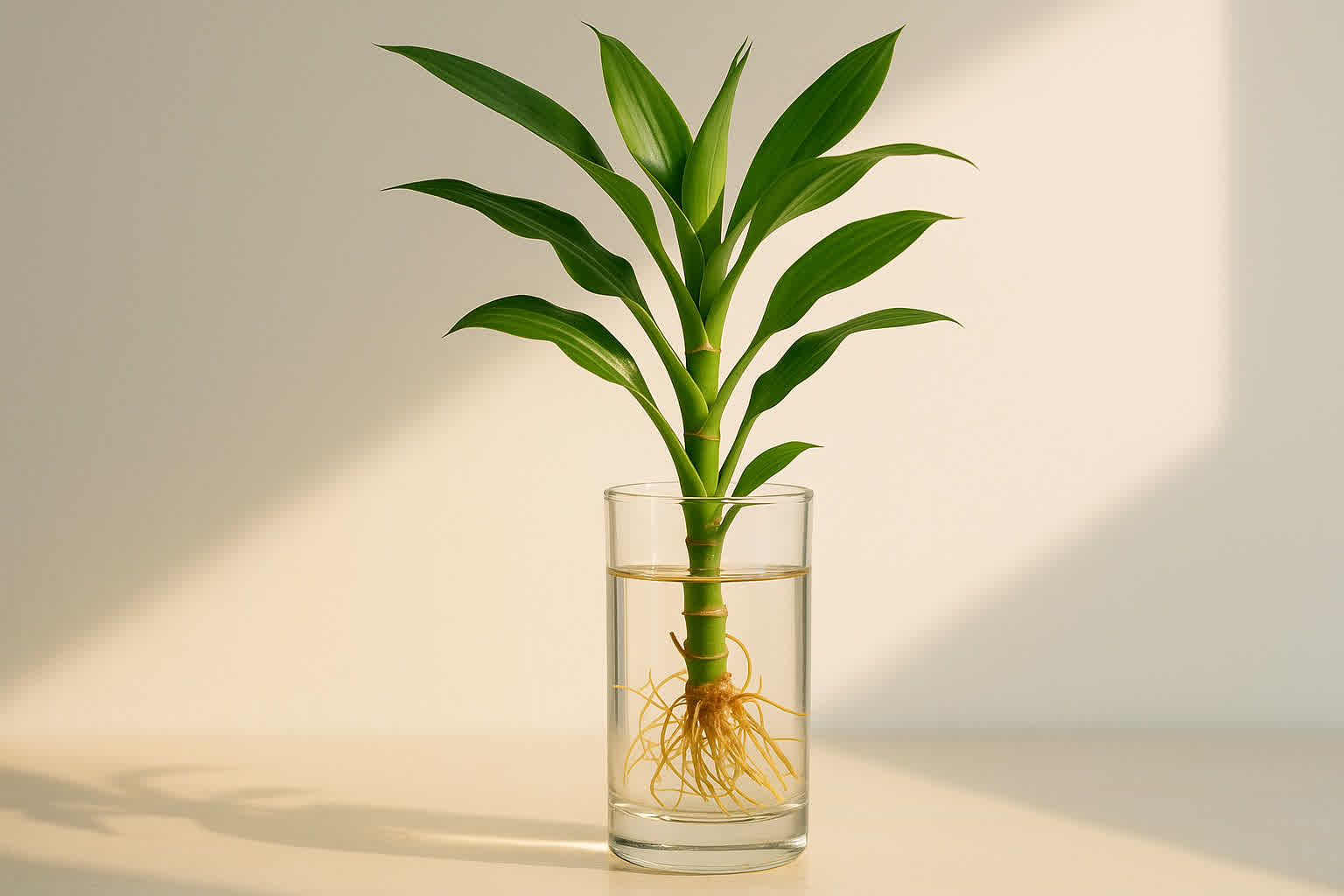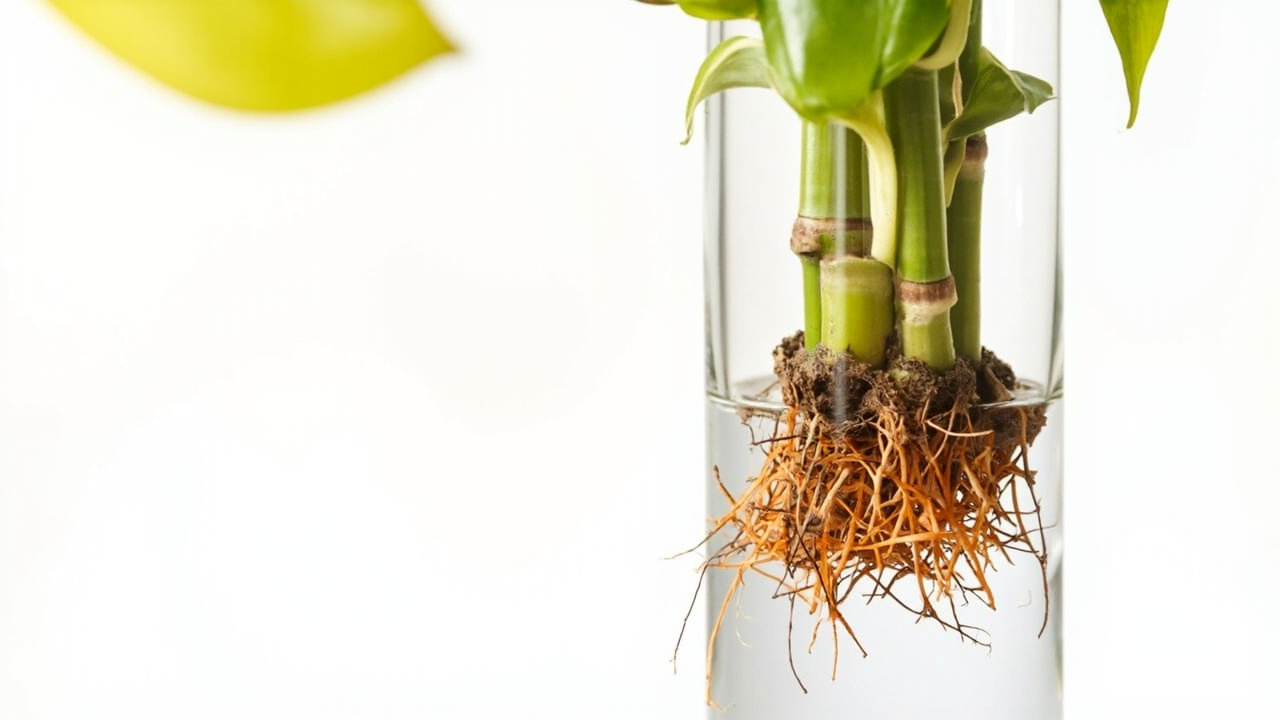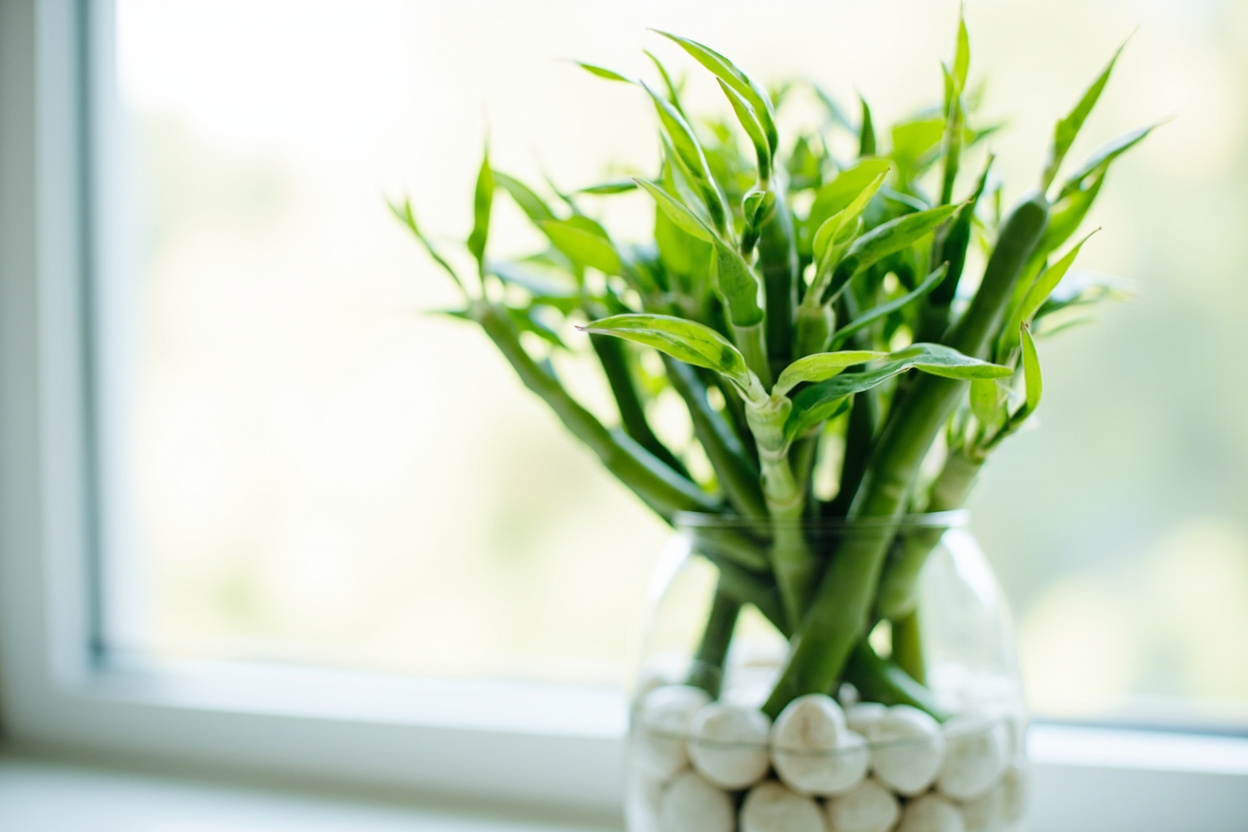

Lucky bamboo (Dracaena sanderiana) develops brown leaf tips when exposed to fluoride or chlorine in tap water, dry air below 40% humidity, or chemical buildup from synthetic fertilizers. Once you identify which one is hitting your plant, the fix is usually straightforward within 2–3 weeks because lucky bamboo is a hardy Dracaena species that grows new foliage quickly once the underlying stress is removed. This guide walks through the diagnosis and fix sequence that works for lucky bamboo brown tips cases, with measurements you can take at home.
Why Are the Tips of My Lucky Bamboo Turning Brown?
Brown leaf tips on lucky bamboo are almost always a chemical-burn issue rather than a disease, because Dracaena sanderiana is unusually sensitive to fluoride, chlorine, and salt buildup in its growing medium. The plant cannot process these compounds the way most houseplants can, so they accumulate at the leaf tips and cause the cells to die back, leaving the characteristic brown, dry, crispy tip you see. Most plants will show this symptom within 7–14 days of exposure to the offending compound, and once the damage is done it will not reverse — the brown tip stays brown even after the cause is removed, and the fix is to stop further damage on healthy tissue.
The three primary causes of brown tips on lucky bamboo, in order of frequency:
- Fluoride or chlorine in tap water — present in most municipal water systems at 0.7–1.2 ppm fluoride and 0.5–4.0 ppm chlorine, and below 1.0 ppm is the safety threshold recommended by the WHO for human consumption; Dracaena species, however, are 10–100× more sensitive than humans. Dracaena sanderiana lacks the enzymes to metabolize either compound, and either one will burn leaf tips within 7–14 days of continuous exposure.
- Low humidity below 40% — common in homes during winter when heating systems dry the air to 20–30% relative humidity. Lucky bamboo prefers 50–70% humidity, and dry air pulls moisture from the leaf tips faster than the roots can replace it.
- Chemical buildup from synthetic fertilizer — over-fertilizing causes soluble salt buildup in the soil or water, and the salts concentrate at the leaf tips where transpiration is highest.
Match your plant to one of these three causes to identify the right fix. If you see other symptoms alongside brown tips — yellow leaves, soft stems, foul smell — the cause may be root rot or bacterial infection rather than a leaf-tip issue, and those are treated differently. For full diagnosis across all lucky bamboo problems, see our lucky bamboo problems guide.
Quick Recognition Checklist: Is Your Lucky Bamboo Brown Tips or Something Else?
Some leaf-tip symptoms look like brown tips but are not. Run through this checklist before any treatment plan because acting on the wrong symptom wastes effort and may stress the plant further.
Leaf-tip symptoms that look like brown tips but are not:
- Yellow leaf tips with brown edges. This usually indicates fluoride burn, not pure brown-tip damage. The fix is the same (filtered water), but the damage spreads faster, so act within 5–7 days rather than waiting 2–3 weeks.
- Yellow leaves with brown stems. This is bacterial soft rot, which is far more serious than leaf-tip damage. The stems go soft from the inside out, and the plant usually cannot recover. See our save dying lucky bamboo guide for the recovery protocol if you suspect rot.
- Brown tips only on new leaves, old leaves healthy. This is normal for lucky bamboo — older leaves show the most accumulated chemical damage because they have been exposed the longest. New leaf growth will not be brown if you fix the cause.
Actual brown-tip causes and signals:
- Brown tips appear on multiple leaves within the same 7-14 day window after a recent change (water source moved, fertilizer added, room humidity dropped).
- Brown tips are crispy and dry (not soft or wet).
- The rest of the leaf remains green and healthy.
- Stem and base of the plant are firm and green.
If your plant shows the actual brown-tip signals, the fix described below will work within 2–3 weeks. If you see yellow leaves or soft stems, the diagnosis is different and you should consult the linked guide instead.
Direct Answer: How to Fix Brown Tips on Lucky Bamboo in 2–3 Weeks
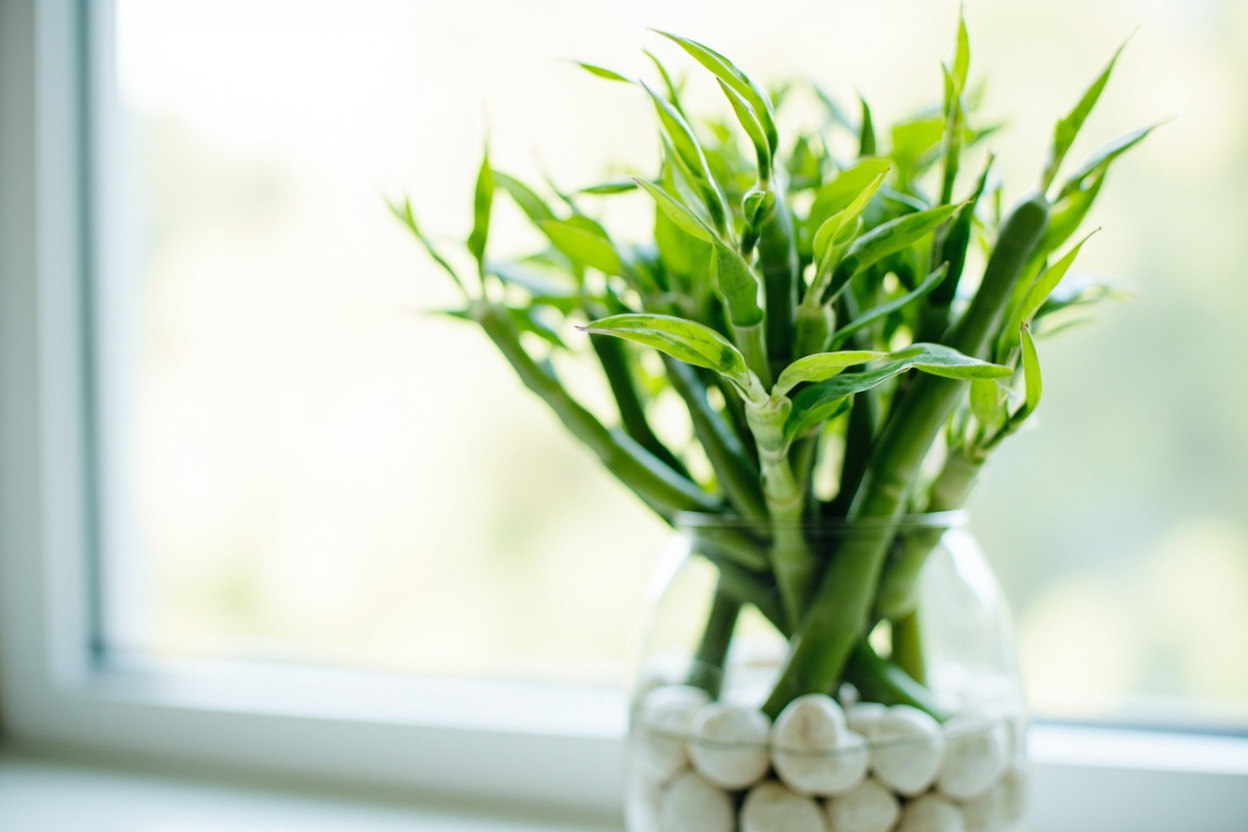
The fastest way to fix brown tips on lucky bamboo is to (1) switch the water source to filtered, distilled, or rainwater, (2) flush the soil or pebbles with the new water to remove chemical buildup, (3) raise humidity to 50–70% with a humidifier or pebble tray, and (4) cut back on fertilizer to once per month at quarter strength or stop fertilizing entirely. This sequence works for the most common cause (fluoride/chlorine buildup) within 2–3 weeks, because lucky bamboo regrows new leaves quickly once the chemical stress is removed.
Existing brown tips will not turn green again — they are dead tissue. The fix is to prevent new brown tips on healthy tissue and to trim the existing damage for cosmetic reasons. New growth that emerges after the fix should be entirely green or with only minor yellow edges, which confirms the cause was addressed correctly.
Expected timeline by cause:
| Cause | Time to First New Healthy Tip | Full Recovery |
|---|---|---|
| Fluoride or chlorine in water | 14–21 days | 4–6 weeks |
| Low humidity below 40% | 7–14 days | 3–4 weeks |
| Synthetic fertilizer buildup | 14–21 days | 4–6 weeks |
| Combined causes (water + humidity + fertilizer) | 21–28 days | 6–8 weeks |
Mechanism: Why Lucky Bamboo Leaves Burn at the Tips
Lucky bamboo is a Dracaena species, not a true bamboo, which means it shares the same sensitivity to fluoride and chlorine as its Dracaena relatives including Dracaena fragrans (mass cane plant) and Dracaena marginata. This sensitivity is rooted in the plant’s metabolism, and understanding it tells you why the fix works.
The leaf tip is the dead-end of transpiration. Water moves through the plant from roots to leaf tips, and anything dissolved in the water concentrates at the very end of that pathway — the leaf tip. When the water contains fluoride or chloride, these compounds accumulate at the leaf margin and tip faster than the plant can transport them away, and the cells die from chemical burn. Because the damage is at the end of the transpiration stream, the rest of the leaf stays green while only the tip browns.
Dracaena sanderiana lacks fluoride-detoxifying enzymes. Unlike some houseplants that can metabolize fluoride into harmless compounds, Dracaena species do not have these enzymes. Fluoride accumulates in the leaf tissue indefinitely, and the plant cannot clear it once it is there. This is why switching to fluoride-free water stops new damage but does not reverse existing damage — the fluoride already in the leaf tissue stays until that leaf dies and falls off naturally.
Humidity matters because transpiration rate drives concentration. In dry air, the plant transpires faster (to cool itself and to pull water through the xylem), which means more water — and more dissolved chemicals — moves through the leaf tips per hour. The faster the transpiration, the more concentrated the chemicals get at the leaf tip, and the faster the tip damage occurs. This is why brown tips get worse in winter (dry heating air) and slow down in summer (higher humidity reduces transpiration rate).
Step-by-Step Fix Process
Step 1: Switch to Fluoride-Free Water
Replace tap water with one of these alternatives:
- Distilled water — available at any grocery store for $1–2 per gallon. Contains no fluoride, chlorine, or dissolved minerals.
- Reverse-osmosis filtered water — produced by most under-sink RO systems. Same fluoride-free properties as distilled water.
- Rainwater — free if you collect it. Contains trace minerals but no fluoride or chlorine. Store in a covered container to avoid mosquito breeding.
- Filtered water (carbon filter only) — removes chlorine but NOT fluoride. Adequate for chlorine-only water but does not fix fluoride issues. Use distilled or RO if your city’s water is fluoridated.
Replacing the water alone is not enough — you also need to flush the old chemicals out of the soil or pebbles. For plants in water with pebbles, dump the old water, rinse the pebbles and the inside of the container with the new water, and refill with fresh filtered water. For plants in soil, water deeply with filtered water until water runs out the drainage holes, then repeat 30 minutes later to leach out accumulated salts. Do this twice, once per week, for 2 weeks to fully clear the buildup.
Step 2: Trim the Existing Brown Tips
Existing brown tips do not recover, but trimming them improves the plant’s appearance and prevents further dieback. Use sharp, sterilized scissors or pruning shears and cut at a 45-degree angle just inside the brown area, leaving a thin brown line at the edge as a buffer (about 1–2 mm). Cutting flush with the green leaf can cause the cut edge to brown again, leaving an unsightly crescent. The angled cut mimics a natural leaf-tip shape and looks better cosmetically.
Do not cut into the green tissue aggressively. The goal is to remove only the dead, brown portion. Each leaf should be trimmed individually, and you can leave any leaves with no brown damage untouched.
Step 3: Raise Humidity to 50–70%
Lucky bamboo prefers humidity above 50%, which is higher than the typical home environment (30–50% in winter, 40–60% in summer). To raise humidity:
- Pebble tray — fill a shallow tray with pebbles and water, place the plant on top. As the water evaporates, humidity rises around the plant. Aim for the water level to be just below the top of the pebbles so the pot does not sit in water.
- Humidifier — set to 50–60% output, run during dry months. The most reliable method, especially in heated homes during winter.
- Group with other plants — clustering plants together raises local humidity through combined transpiration. A group of 3–4 plants can raise humidity 5–10% within their immediate vicinity.
- Misting — less effective than humidifiers or pebble trays, but still helpful. Mist the leaves 2–3 times per week with filtered water, in the morning so the leaves dry before evening.
Aim for 50–70% relative humidity, measured with a hygrometer placed near the plant. Humidity above 70% risks fungal issues, while humidity below 40% will not stop brown tips even with perfect water.
Step 4: Stop or Reduce Fertilizing
Lucky bamboo needs very little fertilizer because it grows slowly and gets most of its nutrients from the water or soil it sits in. Over-fertilizing is one of the fastest ways to cause brown tips. To fix this:
- Stop fertilizing immediately. Do not apply any more fertilizer for the next 4–6 weeks.
- For plants in water with pebbles, change the water weekly with fresh filtered water to dilute any dissolved salts.
- For plants in soil, water deeply with filtered water once per week for 2–3 weeks to leach salts out of the root zone.
- Resume fertilizing only when new growth appears, and only at quarter strength (1/4 of the label’s recommended dose). Use a balanced liquid fertilizer diluted to quarter strength, applied once per month during spring and summer only.
If you have been using a fertilizer specifically marketed for lucky bamboo (which usually has higher nitrogen), switch to a general-purpose balanced fertilizer at quarter strength. Lucky bamboo does not need high nitrogen, and excess nitrogen concentrates at the leaf tips where it burns the tissue.
Causes That Require a Different Fix
Brown tips on lucky bamboo are usually one of the three causes above. But some symptoms look similar and need a different treatment.
If You See Yellow Leaves Plus Brown Tips
Yellow leaves combined with brown tips usually indicate overwatering (in soil) or too much sun exposure, not a leaf-tip chemical issue. Move the plant to bright indirect light and check the soil moisture — if the soil is soggy, treat as overwatering by unpotting, removing rotted roots, and repotting in fresh soil. For complete diagnosis, see our lucky bamboo yellow leaves guide.
If You See Soft, Mushy Stems
Soft stems indicate bacterial soft rot, which is fatal if not caught early. Cut above the soft section to firm green stem tissue, and root the healthy cutting in fresh filtered water. The original plant may not survive if the rot has spread through the main stem, but stem cuttings will regrow. For the full recovery protocol, see our save dying lucky bamboo guide.
If You See Brown Spots, Not Just Tips
Brown spots in the middle of leaves (not just at the tips) usually indicate sunburn from direct sun or fungal leaf spot. Move the plant further from the window or add a sheer curtain, and remove the affected leaves to stop the spread if fungal. Direct sun burns leaves within hours, while leaf spot develops over 1–2 weeks and spreads in concentric circles.
Trade-Offs and Honest Limitations
Lucky bamboo is a forgiving plant once you understand its sensitivity, but there are honest constraints that affect how aggressive a treatment can be.
What lucky bamboo cannot do:
- It cannot metabolize fluoride. Switching water stops new damage but does not reverse existing damage, because the fluoride already in the leaf tissue stays until that leaf dies. Patience is required — over 6–12 months, the damaged leaves will be replaced by healthy new growth.
- It cannot tolerate chlorinated water long-term. If your only water source is chlorinated tap water and you cannot use filtered water, the plant will slowly accumulate chemical damage over months. Consider a small RO filter or a steady supply of distilled water rather than relying on tap water.
- It cannot recover from soft stem rot. Once the stem is soft and brown inside, the plant cannot be saved from the bottom up — only top cuttings will regrow. Check stem firmness monthly by gently squeezing the base.
What works against expectation:
- New leaves tell you the fix worked. Within 2–3 weeks of correcting the water source and humidity, new leaf tips should emerge entirely green. If new tips are still brown, the cause was not fully addressed — usually because the soil or pebbles still hold old buildup that needs more flushing.
- Trimming is cosmetic but worth doing. Some growers leave brown tips alone and wait for the leaves to die and be replaced. Trimming speeds up the cosmetic recovery and gives an early read on whether the fix worked, because the trimmed leaf stays the same while new growth emerges.
Care After Recovery: Keeping New Growth Healthy
Within the first 7 days of switching to filtered water, you should not see any new leaf-tip browning. If new brown tips appear despite the water switch, the cause is likely residual buildup in the soil or pebbles, and an additional flush with filtered water should resolve it within the second 7-day period.
Once your lucky bamboo starts producing green leaf tips, you have two jobs: prevent the original cause from recurring, and gradually settle into a maintenance routine that keeps the plant healthy long-term.
Water source: Use filtered, distilled, or rainwater consistently. If you must use tap water, let it sit uncovered for 24 hours before adding it to the plant — this lets chlorine evaporate but does not remove fluoride. For long-term care, a simple countertop filter or a 5-gallon RO dispenser is cheaper than store-bought distilled water and provides a steady supply.
For plants grown in water with pebbles: Change the water every 7–14 days to prevent stagnation and algae buildup. Rinse the pebbles and the inside of the container with each water change. Add water as needed between changes to maintain the original level. Most lucky bamboo setups can stay in water with pebbles indefinitely, but they grow faster and stronger when their roots have access to nutrients from time to time. For full setup guidance, see lucky bamboo in water vs soil.
For plants grown in soil: Water deeply when the top 1 inch of soil feels dry to the touch, typically every 7–10 days during the active growing season and every 14–21 days in winter. Use filtered water for every watering. Repot every 2–3 years in fresh, well-draining potting soil. The plant prefers being slightly root-bound, so move up only one pot size at a time.
Light: Bright indirect light is the target, ideally 4–6 hours per day from an east-facing window or a few feet back from a south-facing window. Direct sun burns leaves within hours, so avoid placing the plant on a sunny windowsill where afternoon sun hits the leaves directly. For complete lighting guidance, see lucky bamboo light requirements.
Temperature: 65–85°F (18–29°C) is the comfortable range. Lucky bamboo can handle brief drops to 55°F (13°C) but stops growing below 60°F (15°C). Avoid placing the plant near drafty windows in winter or air-conditioning vents in summer.
Fertilizer: Once new growth is healthy, feed monthly during the active growing season (March through September) with a balanced liquid fertilizer diluted to quarter strength. Skip fertilizing in fall and winter. If you see new brown tips appearing despite perfect water and humidity, the cause is almost always over-fertilization — flush the soil or change the water and skip feeding for 2 months.
Frequently Asked Questions
Should I cut off the brown tips on my lucky bamboo?
Yes, trim them at a 45-degree angle just inside the brown area, leaving a thin brown line as a buffer (about 1–2 mm). Cutting flush with the green leaf can cause the cut edge to brown again. Use sharp, sterilized scissors and cut each leaf individually for a natural look.
Will brown tips on lucky bamboo recover on their own?
No. Brown tips are dead tissue and will not turn green again. The plant will eventually drop the damaged leaf and grow a new one, which takes 2–3 months. To speed up cosmetic recovery, trim the brown tips and fix the underlying cause to prevent new damage.
Is distilled water really necessary for lucky bamboo?
Distilled or RO water is the safest choice because it eliminates both fluoride and chlorine. If your tap water is unfluoridated and you let it sit for 24 hours to off-gas chlorine, tap water is acceptable. Most municipal water in the United States is fluoridated, so for most growers, distilled or RO water is the simplest path to healthy new growth.
How can I tell if my tap water has fluoride?
Check your local water utility’s annual water quality report, available on their website. Fluoridation is required to be reported when added above 0.7 ppm. If your water report shows fluoride above 0.5 ppm, treat it as fluoridated and use filtered or distilled water for your lucky bamboo.
Can I use bottled drinking water instead of distilled?
Yes, if the label says “distilled” or “purified by reverse osmosis.” Spring water and mineral water are not fluoride-free because they contain dissolved minerals from their source. Bottled distilled water is widely available and is the safest choice for lucky bamboo and other fluoride-sensitive plants.
Does misting help with brown tips?
Misting helps a little but is not enough on its own. The effect lasts only 5–10 minutes after each misting, and most homes have humidity levels (20–40% in winter) that pull moisture away faster than misting can replace it. A humidifier or pebble tray is more reliable for sustained humidity above 50%.
Will the damaged leaves recover if I move the plant to a new location?
No. Existing brown tips stay brown even if the cause is corrected. The plant will produce healthy new growth from the top of the stem within 2–3 weeks of fixing the cause, and over 2–3 months the damaged leaves will be replaced by new, fully green leaves. Trim the brown tips for cosmetic improvement in the meantime.
Can fertilizer cause brown tips even at low doses?
Yes, if the fertilizer contains fluoride. Most general-purpose fertilizers do not contain fluoride, but some specialty fertilizers (especially those marketed for lucky bamboo or houseplants in general) may contain fluoride-containing compounds. Check the label for “fluoride” or “fluorosilicic acid” in the ingredient list. If present, switch to a fluoride-free fertilizer.
Key Takeaways
To fix brown tips on lucky bamboo, the core steps are simple: switch to fluoride-free water, raise humidity to 50–70%, and cut back on fertilizer. Lucky bamboo is a hardy Dracaena species that recovers quickly once the chemical stress is removed, and most plants show new green leaf growth within 2–3 weeks of corrected conditions. The two most common mistakes are assuming the brown is from a disease (it is almost always chemical) and continuing to fertilize when the plant is already stressed. Trim the existing brown tips for cosmetic improvement, and let new growth confirm the fix worked.
For more lucky bamboo problem diagnosis, see our guides on lucky bamboo yellow leaves, lucky bamboo turning yellow, and Dracaena sanderiana care guide. The same diagnosis logic applies across most Dracaena species, including mass cane plant (Dracaena fragrans) and snake plant (now classified in Dracaena).
From Bank Statement to QuickBooks-Ready File
That manual cleanup you just read about? This tool skips it. Turn your PDF into QBO for QuickBooks without storing your data anywhere.
Start Converting