
Strawberry plants are forgiving in almost every way except one: they hate wet feet. Gardeners pour effort into sunlight, watering schedules, and pest control, then watch their plants decline from root rot that began months earlier in poorly drained soil. This guide explains exactly what strawberry soil needs to thrive, how to test and fix what you have, and the specific amendments that actually work.
Why Most Strawberry Plants Die From Soil Problems First
Strawberry plants are forgiving in almost every way except one: they hate wet feet. Gardeners pour effort into sunlight, watering schedules, and pest control, then watch their plants decline from root rot that began months earlier in poorly drained soil. The problem is invisible until it is too late, because strawberry roots sit shallow and fibrous, spreading horizontally just below the surface where water pools first.
The real killer is not too much water, it is soil that holds water longer than the roots can tolerate. Heavy clay soils, compacted garden beds, and generic potting mixes all share one trait: they stay saturated for days after rain or watering. Strawberries need their root zone to dry slightly between waterings, and when that cycle never happens, Phytophthora and Pythium root rot pathogens move in within 48 hours of saturation.
Understanding this mechanism changes how you approach strawberry soil from the start. Instead of treating soil as background, you treat it as the primary variable, the one decision that determines whether your plants thrive or spend their first summer dying slowly. Every other care practice, from feeding to pruning to mulching, depends on the soil being right first. For a full overview of strawberry care fundamentals, see our strawberry care guide.
This is also why container growing produces more reliable results than in-ground beds for beginners. A container forces drainage, limits root volume, and lets you control the growing medium completely. In-ground plantings succeed only when the native soil is already well-drained and slightly acidic, which is rare in most home gardens.
The Ideal pH Range for Strawberry Soil
Strawberries grow best in soil with a pH between 5.5 and 6.8, with the sweet spot sitting around 6.0. This slightly acidic range is non-negotiable because it controls nutrient availability across the board. When pH rises above 6.8, iron, manganese, and phosphorus become chemically locked in the soil and unavailable to roots, even if those nutrients are present in abundance.
The visual symptom of high pH is interveinal chlorosis, yellow tissue between green veins on the newest leaves. This is not a disease, it is a chemistry problem. The plant cannot access iron because the soil pH has pushed it into an insoluble form. Most gardeners misdiagnose this as a nutrient deficiency and apply fertilizer, which only makes the pH problem worse by adding more salts to an already stressed root zone.
At the other end of the spectrum, soil below pH 5.5 becomes toxic to strawberries. Aluminum and manganese solubility increases sharply in highly acidic conditions, and both elements damage root tips at the cellular level. The result is stunted growth, dark green leaves that are thick and leathery, and a root system that cannot explore the soil profile effectively.
The practical takeaway is simple: test before you plant, and keep the pH in the 5.5 to 6.8 window. If your soil tests outside that range, amend it before the growing season begins. Once the plants are established, adjusting pH becomes much harder and slower, so getting it right at planting time saves months of correction work later.
How to Test Your Current Soil pH and Drainage
Testing your soil takes five minutes and costs less than three dollars for a basic kit. The most reliable method for home gardeners is a liquid test kit, such as the LaMotte or General Utilities models, which give you a color-matched reading far more accurate than the cheap paper-strip testers sold at big box stores. Digital pH meters work too, but they require frequent calibration and can drift out of accuracy within a month.
Take soil samples from four inches deep, where the active root zone lives, and mix samples from at least three spots in your planting area. A single sample from one corner of the bed will not represent the whole bed. Spread the mixed sample on a clean paper plate and let it air-dry for a day before testing, because moist soil gives falsely low pH readings.
Drainage testing is equally straightforward and just as important. Dig a hole about twelve inches deep and ten inches wide, fill it with water, and time how long it takes to drain completely. If the water disappears in less than two hours, drainage is excellent and your soil is likely sandy or loamy. If it takes more than twelve hours, you have heavy clay or compacted soil that will kill strawberries unless youfix it significantly.
When both tests are complete, you have a clear picture of what you are working with. High pH plus slow drainage means you need both amendments and structure changes. Low pH with fast drainage means you can focus on organic matter to retain moisture and nutrients. Each combination has a different amendment path, and knowing which one you have prevents wasting time on the wrong fix.
Amending Acidic, Well-Drained Soil for Strawberries
If your soil tests above pH 6.8, you need to lower it. The standard amendment is elemental sulfur, which soil microbes convert to sulfuric acid over time. Apply one tablespoon per square foot for every 0.1 point you need to drop, work it into the top two inches of soil, and water thoroughly. Expect the pH shift to take four to eight weeks, so amend in fall or early spring, well before planting time.
If your soil tests below pH 5.5, you need to raise it. Garden lime, specifically aglime or dolomitic lime, is the standard amendment. Apply one pound per square foot to raise pH by roughly 0.5 points, working it into the top four inches of soil. Lime reacts more slowly than sulfur, so plan for a six-to-eight-week window before the full effect appears.
Organic matter improves both pH buffering and drainage regardless of your starting point. Well-aged compost worked into the top four inches of soil increases microbial activity, which stabilizes pH fluctuations and provides a slow-release nutrient source. Pine bark fines, aged three to six months, add structure and acidity simultaneously, making them ideal for strawberry beds in neutral to alkaline soils.
Coarse sand, not fine builder sand, improves drainage in clay soils when mixed at a ratio of one part sand to three parts native soil. The key is particle size: coarse sand particles create macro-pores that let water move through quickly, while fine sand fills those pores and makes the problem worse. Verify your sand source specifies “coarse” or “angular” before purchasing.
Once amendments are in place, retest soil pH after six weeks to confirm you are moving in the right direction. Small incremental adjustments beat large one-time applications because over-correcting pH is harder to reverse than under-correcting it. The goal is steady progress toward the 5.5 to 6.8 target, not an instantaneous jump.
Container Soil Mix Recipe for Strawberries
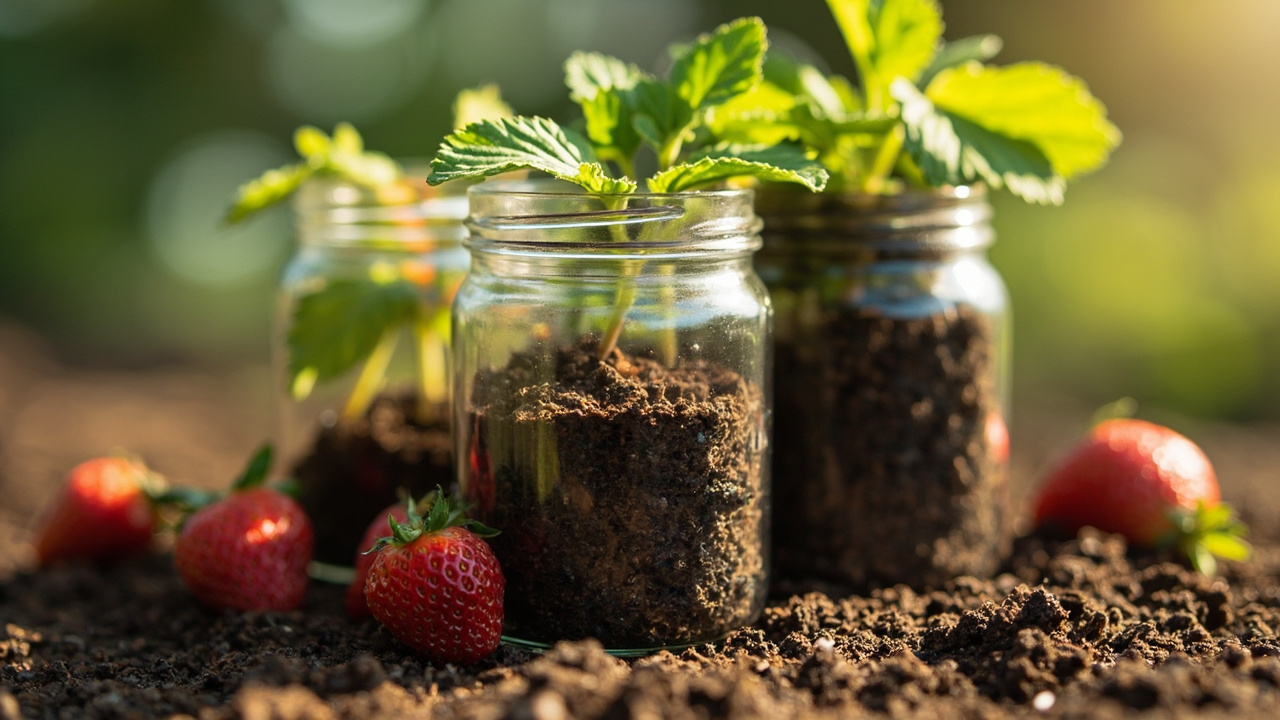
The most reliable soil mix for container strawberries combines two parts peat moss or coconut coir, one part coarse perlite or pumice, and one part well-aged compost. This ratio gives the airy, fast-draining structure strawberries need while retaining enough moisture to keep roots from drying out between waterings. Add one cup of slow-release balanced fertilizer per gallon of mix at blending time.
Pot selection matters almost as much as the mix itself. Choose containers at least twelve inches deep with multiple drainage holes in the bottom. A saucer under the pot is counterproductive: standing water in the saucer wicks back up into the soil and defeats the drainage you worked to create. Elevate pots on feet or bricks so excess water flows freely away from the container base.
Fill the container with the mix, water it thoroughly to settle air pockets, and let it drain completely before planting. Strawberry crowns should sit exactly at the soil surface, not buried and not exposed. Burying the crown invites rot, while exposing it causes the runners to dry out. Firm the soil gently around the crown, then water again.
Repot or refresh the container mix every 12 to 18 months. The organic components break down over time, compacting the mix and reducing drainage. When you notice water running through the pot in minutes instead of soaking in, it is time to replace the mix entirely. Adding fresh compost on top each year helps but does not restore the original structure of the growing medium.
How Strawberry Variety and Growing Method Affect Soil Needs
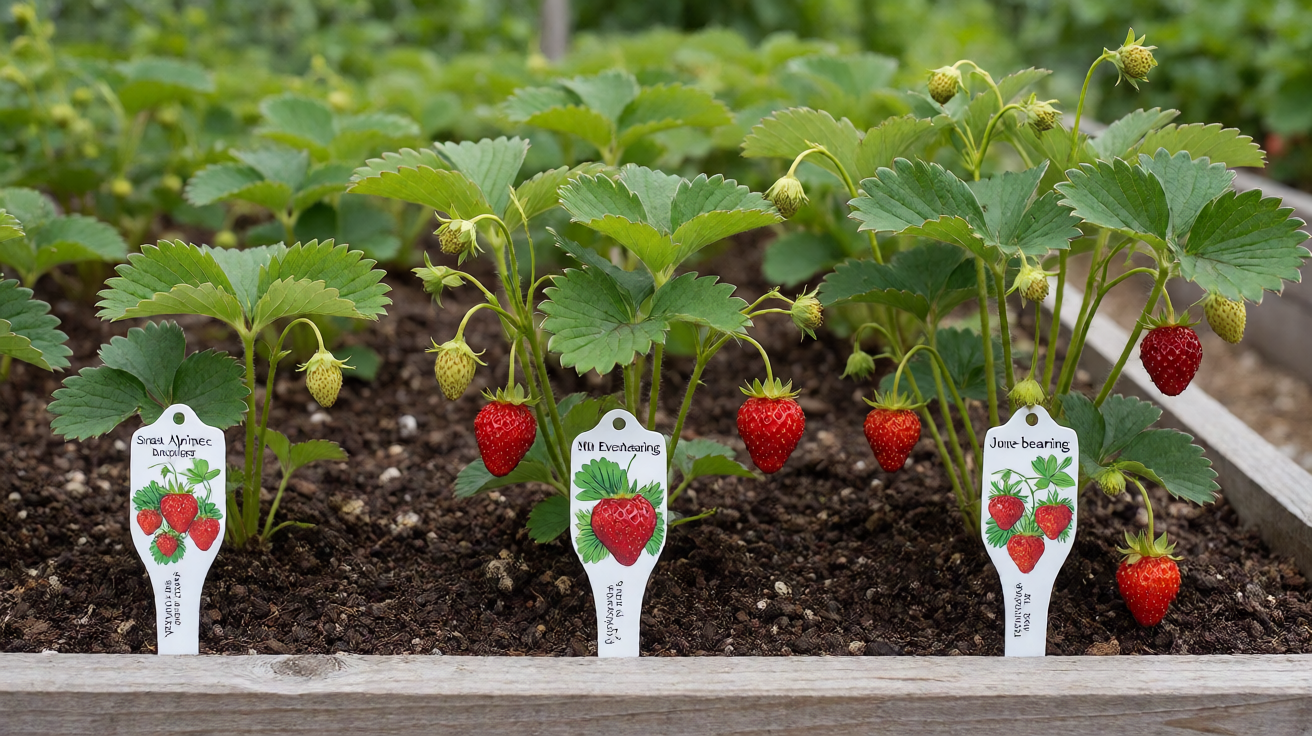
Different strawberry varieties have slightly different soil preferences that affect your amendment strategy. June-bearing varieties, which produce one concentrated crop in early summer, tolerate slightly heavier soils than everbearing or day-neutral varieties because their deep root systems explore more soil volume during the long growing season. Day-neutral varieties like Seascape and Albion, which fruit continuously from spring to fall, need consistently well-drained soil because their continuous fruiting demands steady nutrient uptake that waterlogged soil cannot provide.
Propagation method also affects soil needs. Bare-root transplants establish faster in well-amended soil than container-grown plants, which arrive with a root ball that may have already depleted the potting mix nutrients. If you are planting bare-root stock in spring, work compost and elemental sulfur into the planting hole before setting the crown at soil level. Full sun exposure, at least six hours of direct sun daily, intensifies soil drying and means you will need to water more frequently, but the trade-off is worth it for fruit set and flower production.
Spacing affects soil moisture management. Plants spaced 12 to 14 inches apart in raised beds allow adequate airflow that speeds soil drying between waterings. Overcrowded plantings trap moisture at the soil surface and create the exact conditions that promote root rot and fungal disease. Transplant shock is worse in poorly drained soil, so if your strawberry plants are wilting after planting, check drainage before assuming they need more water.
Overwintering preparation depends entirely on soil conditions. In cold climates, a four-inch layer of straw mulch protects dormant crowns from freeze-thaw heaving, but only if the underlying soil drains well. Wet soil freezes harder and expands more, pushing plants out of the ground. Before winter, amend soil with compost to improve structure and apply mulch after the first hard frost. Nitrogen applications should stop six weeks before the first expected freeze to allow plants to enter dormancy naturally without pushing tender new growth that will be damaged by cold.
For indoor strawberry production, grow light supplementation replaces direct sun and affects soil moisture evaporation rates. A full-spectrum LED positioned 6 to 12 inches above the canopy for 14 to 16 hours daily creates light intensity equivalent to full sun, but the artificial light does not warm the soil the way direct sun does. This means soil stays moist longer under grow lights, and you must adjust your watering schedule to avoid the waterlogging that causes etiolation in leggy indoor plants. Photosynthesis efficiency drops sharply below 6 hours of light, and shade-grown strawberries produce fewer flowers and smaller fruit than those in full sun exposure.
How Often to Retest and Re-Amend Strawberry Soil
Retest soil pH at least once per year, ideally in late fall after harvest or in early spring before new growth begins. Active growing plants do not reflect the true soil pH as accurately as dormant soil samples, so timing matters for consistent results. Keep a simple log of each test result alongside the date and any amendments applied, so you can track trends over time.
Re-amend only when tests show you have drifted outside the 5.5 to 6.8 range. Small annual adjustments of half the full recommended rate are safer than large infrequent corrections because they prevent overshooting and give soil biology time to stabilize. Over-amending once is far more damaging than under-amending several times across a growing season.
Container growers should test more frequently, every three to four months, because watering leaches nutrients and shifts pH faster in confined volumes. For more on watering technique, see our strawberry watering guide. Rain and irrigation water also carry dissolved minerals that accumulate over time, gradually raising pH in containers treated with soft water. Adjusting the watering regime, such as using rainwater instead of municipal supply, can slow this drift significantly.
From Bank Statement to QuickBooks-Ready File
That manual cleanup you just read about? This tool skips it. Turn your PDF into QBO for QuickBooks without storing your data anywhere.
Start Converting