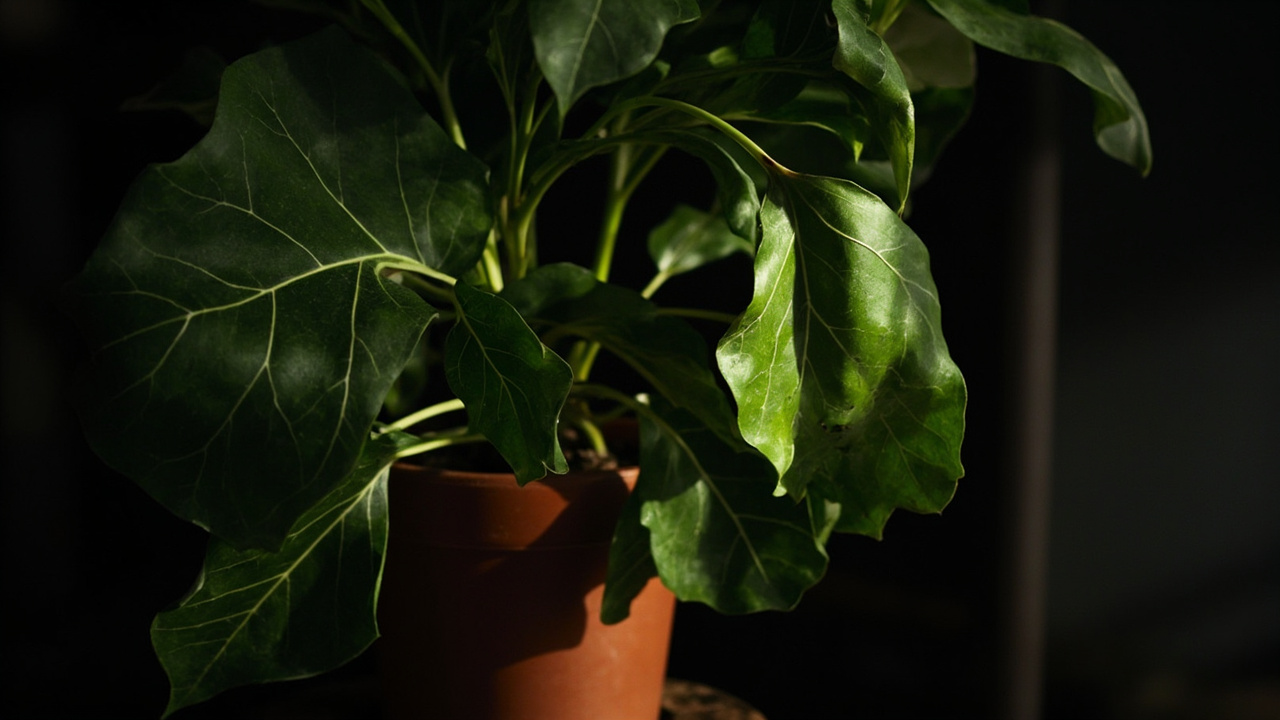
Fiddle leaf figs have a reputation for being dramatic, and the drooping leaf is the plant’s most theatrical complaint. A fiddle leaf fig that droops looks like it’s dying — and it might be — but the droop is often the plant’s most visible symptom of something that started weeks earlier, in the roots or in the environment.
This guide focuses on the droop: what causes it, how to distinguish between causes, and what to actually do. Unlike generic plant care advice, the goal here is to help you diagnose correctly the first time rather than guessing wrong and making things worse.
Why Fiddle Leaf Figs Droop: The Core Mechanisms
A fiddle leaf fig droops when the cells in its leaves and stems don’t have enough water pressure (turgor) to maintain their structure. Turgor pressure is maintained by water moving into cells from the soil, through the roots, up the stem, and into the leaves. When any part of that chain breaks down — soil too dry, roots damaged, stem blocked, or evaporation too fast — the leaves lose their firmness and the plant droops.
The most important thing to understand: a fiddle leaf fig that droops has usually been experiencing the underlying problem for 2–3 weeks before the droop becomes visible. The plant compensates quietly for a long time before showing symptoms. By the time you see the droop, the cause is established, not new.
The most common causes, in order of frequency: over-watering and root rot (which damages the roots’ ability to absorb water), acute underwatering, temperature shock or cold exposure, and excessive direct sun causing rapid water loss through transpiration.
Diagnosing the Cause: Before You Do Anything Else
The single most important diagnostic step happens before you touch the watering can: check the soil moisture.
Step 1: Insert your finger 2–3 inches into the soil. This is non-negotiable and takes 10 seconds. Do this before adjusting anything.
Results:
– Soil is wet and stays wet for days after watering → over-watering / root rot
– Soil is bone dry, pulling away from the sides of the pot → acute underwatering
– Soil is moderately moist → move to the next section
Step 2: If the soil is wet, gently tip the pot slightly to check weight. A pot that feels heavy despite the soil being dry on the surface may have waterlogged soil below. A pot that feels light confirms dry soil.
Step 3: Check the stems near the base. Firm stems mean the plant still has turgor and is structurally sound. Soft or mushy stems near the base indicate root rot and cellular collapse — more serious.
What happens next: once you know whether the soil is wet or dry, the diagnosis narrows quickly. If the soil is wet, the droop is from root rot. If the soil is dry, the droop is from underwatering. If the soil is neither particularly wet nor dry, the cause is environmental — temperature, light, or shock.
Over-Watering and Root Rot: The Most Common Cause
Root rot in fiddle leaf figs is almost always caused by over-watering — watering before the soil has dried sufficiently, or planting in a pot without adequate drainage. The roots of a fiddle leaf fig need both water and air. When the soil stays saturated for too long, the roots suffocate, die, and begin to rot. A damaged root system can’t absorb water efficiently, so even though the soil is wet, the plant cells aren’t getting what they need.
The drooping pattern for root rot: individual leaves droop first, then entire branches. The leaves may turn yellow before they droop, or they may droop while still green. The stems may feel softer than normal near the base. In severe cases, the main trunk becomes soft or the bark separates from the inner tissue.
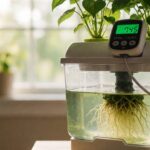
At this point: stop watering immediately. Remove the plant from the pot and inspect the roots. Healthy fiddle leaf fig roots are firm and range from white to tan to light brown. Rotted roots are dark brown to black, soft, and may have a sour smell.
Step 1: Remove the plant from its pot. Gently shake off the soil and rinse the roots with clean water.
Step 2: Cut away all soft, dark, or mushy roots with a clean, sharp knife or pruning shears. Healthy roots should be firm — if they squish between your fingers, they’re rotted and should be removed.
Step 3: Let the roots air-dry for 2–4 hours. This is important — it allows the cut surfaces to callous before repotting, which reduces the risk of reinfection.
Step 4: Repot in a clean pot with fast-draining soil. Use a mix of standard potting soil with perlite at roughly a 3:1 ratio, or use a well-draining houseplant mix. The pot should have adequate drainage holes.
Step 5: Do not water for 7–10 days after repotting. The roots need time to re-establish and the damaged root system cannot yet absorb water efficiently. After 7–10 days, water lightly once, then return to normal watering only when the top 2 inches of soil are dry.
What happens next: if the root rot was caught early and the trunk is still firm, the plant should stabilize within 3–4 weeks and produce new leaves within 6–8 weeks. If the trunk is soft or mushy, the prognosis is poor — the internal vascular system may be too damaged to recover.
The Trade-Off With Fiddle Leaf Fig Watering
The honest reality: most people over-water their fiddle leaf figs. The plant looks healthy, the soil feels dry on the surface, and there’s a natural impulse to water before checking whether the root zone is actually dry. Fiddle leaf figs in typical indoor conditions — not blazing sun, not outdoor heat — often only need watering every 10–14 days once established. The top inch of soil drying out is not the signal. The top 2–3 inches is.
Underwatering: When the Soil is Dry and the Plant is Drooping
A fiddle leaf fig that is genuinely underwatered — not just slightly dry but bone dry — will droop as the cells lose turgor. The leaves will feel thin and papery rather than thick and firm, and the plant may look generally wilted rather than just drooping from individual leaves.
The fix: water thoroughly. Not a light watering from above — immerse the pot in a container of water and let it soak from the bottom for 20–30 minutes. This allows the entire root ball to rehydrate evenly. After soaking, let the pot drain fully before returning it to its saucer.
What happens next: the plant should recover within 2–4 hours of thorough watering. If it doesn’t — if the leaves remain wilted and the stems stay limp — the issue is likely more serious: either the roots have died from prolonged underwatering, or there is root damage from a previous over-watering event that you didn’t notice. In that case, follow the root inspection steps above.
Environmental Causes of Drooping
Cold Shock and Temperature Drop
Fiddle leaf figs are native to West African tropical forests — they want warmth and consistency. A sudden temperature drop — leaving a window open overnight, placing the plant near a cold draft, or moving it from a warm greenhouse to a cold room — will cause immediate drooping, sometimes within hours.
The drooping from cold shock typically comes on suddenly and affects the whole plant at once rather than individual leaves. The leaves may also roll or curl inward slightly as they droop.
The fix: move the plant to a warmer location (ideally 65–80°F / 18–27°C) and away from any drafts. Do not water cold-shocked plants until the soil has warmed and the plant has stabilized. Recovery typically takes 3–7 days if the exposure was brief. If the plant was exposed to frost or temperatures below 35°F (2°C) for more than a few hours, the damage may be irreversible.
Light Shock and Repotting Stress
Moving a fiddle leaf fig from low light to direct sun, or moving it to a new position after it’s been stable for a long time, can cause light shock — a sudden increase in transpiration that the root system can’t immediately supply, causing temporary wilting and drooping.
The trade-off: fiddle leaf figs are sensitive to repositioning more than most houseplants. Once a fiddle leaf fig has acclimated to a position, moving it often results in a temporary setback — some leaf drop, temporary drooping, or slowed growth for 2–4 weeks. If you need to reposition the plant, do so gradually — a few inches closer to the window every few days.
Low Humidity
In very dry indoor environments — particularly heated or air-conditioned spaces with humidity below 40% — fiddle leaf figs can droop from excessive water loss through the leaves. This is less common than the other causes but does occur in arid climates or during winter heating.
The practical fix: increase ambient humidity with a humidifier, or move the plant to a more humid room (bathrooms or kitchens with adequate light are typically more humid). A pebble tray provides modest, localized humidity improvement but is rarely sufficient as a standalone solution for fiddle leaf figs in very dry conditions.
How to Prevent Future Drooping Episodes
The key habit that prevents most fiddle leaf fig drooping: watering only when the top 2–3 inches of soil are dry, not when the surface looks dry. Insert your finger before every watering. This single habit eliminates the most common cause of fiddle leaf fig death.
The second habit: consistent placement. Pick a position with bright, indirect light, away from cold drafts, heating vents, and air conditioning flows. Once the plant stabilizes, avoid moving it unless necessary. Fiddle leaf figs do best when they’re left to acclimate to one position.
Third: monitor the trunk. The trunk of a healthy fiddle leaf fig should feel firm when you press it gently. If the trunk starts to feel softer or thinner than usual, check the roots immediately — even before the leaves droop. The trunk is the most reliable barometer of the plant’s internal health.
What happens next: if you catch root rot early and the trunk remains firm, a fiddle leaf fig can recover fully from a severe drooping episode. The leaves that drooped won’t recover their firmness — they should be removed at the stem to allow the plant to redirect energy to new growth. New leaves are the sign of true recovery.
For a complete guide to fiddle leaf fig care that prevents these issues from developing in the first place, see our fiddle leaf fig care guide. For diagnosing the range of other problems fiddle leaf figs develop, our fiddle leaf fig problems guide covers yellowing, brown spots, root rot, and leaf drop in detail.
Root rot is the most common underlying cause of fiddle leaf fig decline and is often not visible until the plant is already in serious trouble. Root rot explained covers the full mechanism, including why over-watering is so dangerous for this species.
Read also: why houseplant leaves droop, which separates thirst from root failure before you touch the soil.
Turn PDF Bank Statements Into Workable Spreadsheets
Your bank statement is a mess of numbers, but your books shouldn't be. Use our converter to get Excel, CSV, or QBO files — ready for QuickBooks.
Try It Free Now