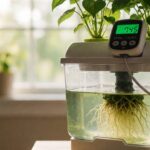
Repotting Calathea is one of those tasks that looks straightforward and turns out to have a few specific rules. Done wrong — wrong season, wrong soil, wrong pot size — and the plant drops leaves for months. Done right, the plant rewards you with a flush of new growth that visibly fills out within a few weeks. The difference comes down to three variables: timing, soil, and pot size.
When to Repot Calathea
The best time to repot Calathea is active growth, not dormancy. For most homes, that means late March through early June in the Northern Hemisphere, or whenever the plant is putting out new leaves and the day length is increasing. Repotting during active growth gives the root system time to recover before the slower winter months, when Calathea naturally slows down.
The clearest sign that a Calathea needs repotting is roots circling the bottom of the pot or growing out of the drainage holes. Another sign: water runs straight through the pot without being absorbed, which suggests the root mass has displaced most of the soil. A third, less obvious sign: the plant has been in the same pot for more than 2 years, even if it looks fine — soil structure breaks down over time and the microbial community that supports Calathea declines.
How Often (and Why Not More)
Calathea likes to be slightly root-bound. A plant that is mildly snug in its pot will focus energy on foliage rather than expanding its root system. Repotting more than once a year, or upsizing the pot aggressively, shifts the plant’s energy into root growth at the expense of leaves. The result is a plant that looks like it has “stalled” — fewer new leaves, no new shoots, and slower growth overall.
The standard cadence is every 1.5 to 2 years for a healthy, established Calathea. Younger plants (under 1 year) may need it more often — once a year — because they are growing faster. Mature plants that have reached a stable size can stay in the same pot for 3 years, with a top-dressing of fresh soil in between to refresh the upper root zone.
Pot Size: One to Two Inches Larger, Maximum
The single most common repotting mistake with Calathea is going up too many pot sizes. If your current pot is 6 inches (15 cm) in diameter, the next pot should be 7 or 8 inches (18–20 cm), not 10 or 12. The reason is moisture. A larger pot holds more soil, which holds more water, which takes longer to dry out. Calathea roots are sensitive to prolonged wet conditions and will develop root rot in a pot that is too large.
The soil-volume-to-root-volume ratio matters. The aim is for the roots to fill the new pot within 4 to 6 months. If the new pot is so large that the roots take 12 months to fill it, the soil stays too wet in the meantime and you risk Pythium or Rhizoctonia — the two most common Calathea root rot pathogens.
Pot Material and Drainage
Terracotta, plastic, and glazed ceramic all work for Calathea, but the watering frequency changes. Terracotta breathes, which means the soil dries faster — useful in humid climates, problematic in dry homes. Plastic retains moisture longer, which suits the typical 40–50% indoor humidity. A pot with at least one large drainage hole is non-negotiable. Calathea sitting in standing water for more than 2 hours is a root-rot risk regardless of soil mix.
If you are moving from a nursery pot (plastic with drainage) to a decorative cachepot, do not plant directly in the cachepot unless it has drainage. Use the plastic nursery pot as an inner pot inside the cachepot, and remove it for watering. This way the plant drains fully and you do not lose track of the watering cycle.
Soil Mix: The Part That Matters Most
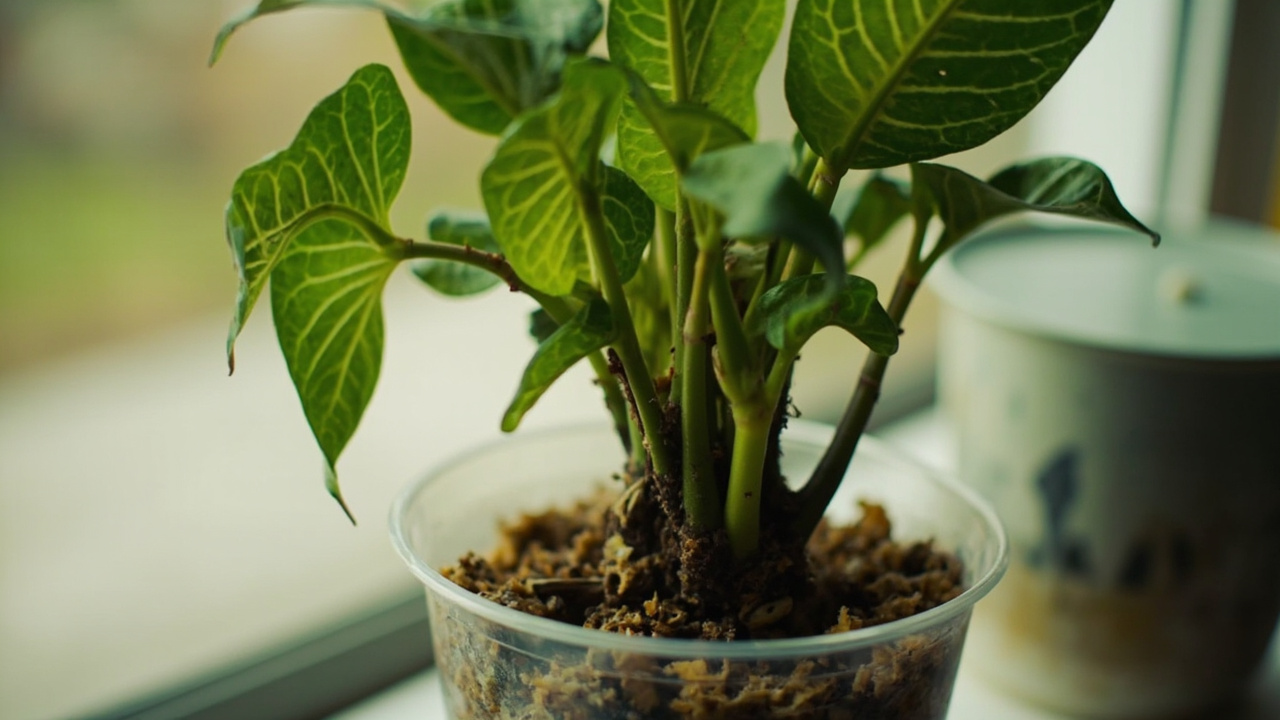
Calathea needs a soil mix that holds some moisture but drains well. The standard recommendation — equal parts peat, perlite, and orchid bark — is a reasonable starting point, but a more accurate version for indoor Calathea is: 40% peat or coco coir, 30% perlite or pumice, 20% orchid bark, and 10% worm castings. The worm castings add slow-release nutrition and microbial activity that Calathea benefits from, but anything more than 10% will make the mix too rich and risk root burn.
Avoid pure peat-based “African violet” mixes. They retain too much water and break down into a dense, hydrophobic mass within a year. Avoid cactus mix — it drains too fast and Calathea will desiccate. The ideal is a mix that, when squeezed in your fist, holds its shape loosely and crumbles when you poke it.
pH and the Lime Question
Calathea prefers slightly acidic to neutral soil, pH 6.0 to 6.5. Most peat-based mixes are already in this range. If you are using coco coir (which is closer to pH 7.0), add a small amount of dolomitic lime — about 1 teaspoon per gallon of mix — to bring the pH down and add calcium and magnesium, both of which Calathea uses heavily.
The reason pH matters: Calathea is sensitive to fluoride and chlorine, which are common in tap water. Slightly acidic soil helps buffer the root zone against these. If you are using rainwater or filtered water, pH is less critical, but the calcium-magnesium supplementation is still worth doing for foliage colour.
Step-by-Step Repotting
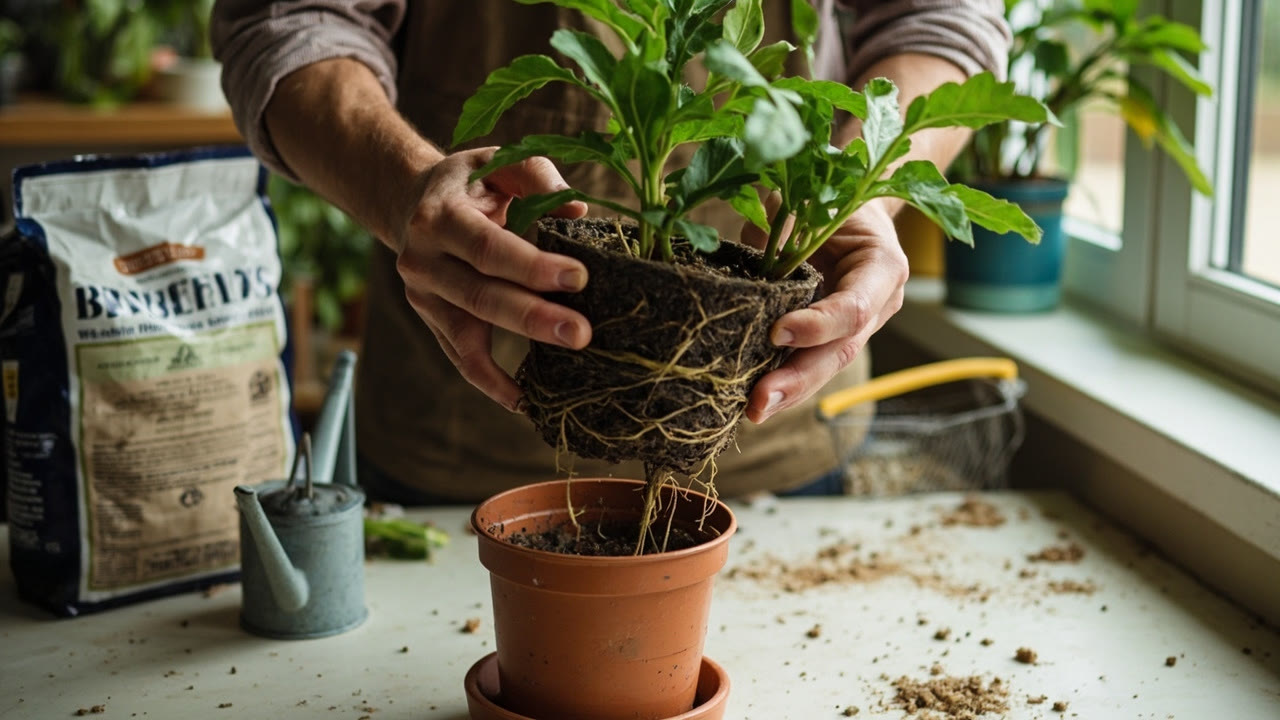
Water the Calathea 24 hours before repotting. Moist (not wet) soil holds together better around the roots during the move and reduces transplant shock. Prepare the new pot with a thin layer of fresh mix at the bottom — just enough to lift the root ball to its previous soil level.
Remove the plant from its old pot. If the root ball is stuck, run a knife around the inside edge of the pot or squeeze the sides of a plastic nursery pot. Do not yank the plant by its stems — Calathea stems are brittle and will snap. If the roots are circling tightly, gently tease them apart with your fingers. If the root ball is severely compacted, score the bottom 1 cm of roots with a clean knife to encourage new growth outward.
Place the plant in the new pot. Add fresh soil around the sides, firming gently with your fingers. Do not compact the soil — Calathea roots need air. The soil line should match the original soil line on the stem. Burying the stem too deep invites stem rot.
The First Two Weeks After Repotting
After repotting, water thoroughly until water runs from the drainage hole. Let it drain completely. Then do not water again until the top 1 inch (2.5 cm) of soil is dry — this can take 7 to 10 days in a normal indoor environment. Calathea is most vulnerable to root rot in the first two weeks after repotting, when damaged roots are still recovering.
Do not fertilise for at least 4 weeks. The fresh soil has enough nutrition, and adding fertiliser to a plant with damaged roots causes fertiliser burn. Hold off on repotting-related stress by keeping the plant in bright indirect light (no direct sun, which would compound the stress) and maintaining 60%+ humidity if possible.
Some leaf droop in the first week is normal. If the plant does not recover by week 2, check the soil moisture and root health. If the soil stays wet for more than 10 days, the plant may need to be unpotted to inspect for rot before the problem progresses.
Repotting is one of the high-leverage moments in Calathea soil mix design — the mix you choose determines how often you’ll need to repot again, and how often you’ll water. The Calathea watering guide covers the post-repotting watering rhythm in more detail, and if the leaves start curling after the move, the Calathea leaf curling guide walks through whether it’s transplant shock or something else.
Turn That PDF Into a Spreadsheet in Minutes
You've seen how to do it manually — now let the tool handle the heavy lifting. Upload your bank statement and get Excel, CSV, or QBO in a few clicks.
Try It Free