If you’ve stood in a garden centre and stared at a row of Calatheas wondering which one is which, you’re not alone. The genus Calathea (now partly reclassified as Goeppertia, but still sold as Calathea) includes more than 200 species, plus dozens of cultivars and hybrids sold under trademarked names. Most home growers will only encounter six or seven of these in practice. This guide walks through the most common ones, the differences that matter for care, and which to start with if you are new to the genus.
The Big Six: What You’ll Actually Find for Sale
Despite the 200+ species in the genus, the houseplant market has consolidated around a handful that propagate reliably and ship well. These six cover roughly 90% of what you’ll see in a typical North American or European garden centre, plus most online sellers.
1. Calathea lancifolia (Rattlesnake Calathea)
The rattlesnake Calathea has long, lance-shaped leaves with dark green wave-like markings on a lighter green background. The undersides are deep purple. It is one of the more forgiving Calatheas, tolerating a wider humidity range (40–60% is workable) and recovering more reliably from underwatering than most of its cousins.
Care difficulty: easy to moderate. Best for: beginners who want a Calathea but don’t want to invest in a humidifier right away. Mature size: 18–24 inches (45–60 cm) tall. Light: bright indirect, no direct sun.
2. Calathea orbifolia
The orbifolia has broad, rounded leaves with silver-green striping. It is the most visually striking of the common Calatheas and the one that draws people into the genus in the first place. It is also the most demanding. Orbifolia wants high humidity (60%+), consistent moisture, and is highly sensitive to fluoride in tap water. New growth frequently comes in with crispy edges if any of these is off.
Care difficulty: hard. Best for: growers who already have a humidifier and are comfortable with rainwater or filtered water. Mature size: 24–36 inches (60–90 cm) tall. Light: medium to bright indirect.
3. Calathea roseopicta (Medallion)
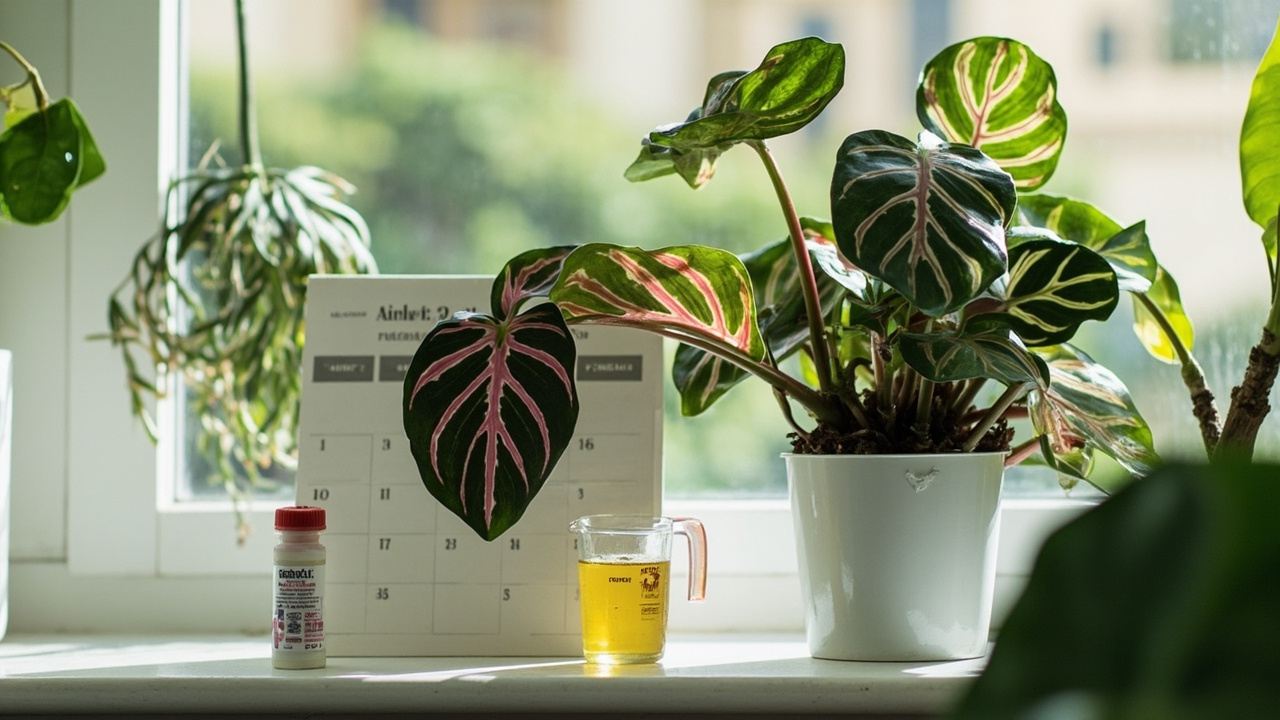
The medallion Calathea has rounded leaves with a dark green border, a light green or silvery centre, and purple undersides. It is the most “designer” looking of the common varieties and the one most often featured in interior design magazines. The medallion is moderately demanding — better than orbifolia, worse than lancifolia — and is the standard against which most “is this Calathea easy?” complaints are measured.
Care difficulty: moderate. Best for: intermediate growers who have figured out a watering rhythm. Mature size: 18–24 inches (45–60 cm) tall. Light: bright indirect, no direct sun.
4. Calathea ‘White Fusion’
White Fusion is a variegated cultivar with cream, white, and green sectors in the leaves, often with pink or purple undersides. It is also the most demanding cultivar in common circulation. The variegation means less chlorophyll per leaf, which means slower growth and less margin for error. White Fusion is notorious for crispy edges, leaf drop, and overall decline when conditions are not perfect.
Care difficulty: very hard. Best for: experienced growers who want a specific look and are willing to manage humidity, water, light, and temperature actively. Mature size: 12–18 inches (30–45 cm) tall. Light: medium indirect (too much light bleaches the variegation).
5. Calathea rufibarba (Furry Feather / Velvet Calathea)
The rufibarba has long, narrow, lance-shaped leaves with a slightly fuzzy texture on both surfaces. The undersides are deep purple, and the leaf edges have a subtle ripple. It is more tolerant of lower humidity than most Calatheas and is one of the better choices for drier homes or for growers who do not want to invest in active humidity control.
Care difficulty: easy to moderate. Best for: anyone who likes the texture but doesn’t want the orbifolia-level demands. Mature size: 18–30 inches (45–75 cm) tall. Light: bright indirect.
6. Calathea ‘Beauty Star’
Beauty Star is a sport of Calathea ornata with broader, more silvery striped leaves. It is less common than the others on this list but worth knowing if you see one in a speciality nursery. Beauty Star is moderately demanding, similar to medallion, and the silvery variegation tends to be more stable than White Fusion.
Care difficulty: moderate. Best for: collectors who like the ornata look but want a more forgiving plant. Mature size: 18–24 inches (45–60 cm) tall. Light: medium to bright indirect.
Which Calathea Should You Start With?
If you are new to Calathea, start with either lancifolia (rattlesnake) or rufibarba (velvet). Both tolerate a wider range of conditions and are more forgiving of common mistakes. They are also less expensive — typically $15–25 for a 4-inch pot — so if the first one doesn’t work out, the financial hit is small.
If you have some houseplant experience and a humidifier already running, go for medallion or Beauty Star. These are the most photogenic of the moderately demanding varieties and will reward consistent care with strong growth and reliable new leaves.
Save orbifolia and White Fusion for when you have a year or more of consistent Calathea success under your belt. Both are stunning plants, and both are unforgiving to growers who are still figuring out their home’s microclimate. The investment is also higher — $30–60 for a 6-inch pot is common — which makes a learning-period loss more painful.
The Taxonomic Note
Many plants sold as “Calathea” have been reclassified into the genus Goeppertia. Goeppertia lancifolia, Goeppertia orbifolia, Goeppertia roseopicta — these are the botanically current names. The trade, however, continues to use Calathea, and the care is identical regardless of which name appears on the tag. If a plant is labelled Goeppertia and the care instructions say “Calathea,” the instructions are right.
What All Calatheas Have in Common
Despite the differences above, all Calatheas share a few care requirements that are non-negotiable:
- Bright indirect light. No direct sun, which bleaches the foliage within days.
- Filtered or rainwater. Most municipal water contains fluoride and chlorine that damage Calathea leaf tips over time.
- 50%+ humidity at the leaf surface. Below 40%, leaf edges crisp and growth slows.
- Consistent moisture. The soil should dry slightly between waterings but never completely. The Calathea watering guide covers the rhythm in detail.
- Warm, stable temperatures. Below 60°F (15°C), growth stops and cold damage begins. The temperature tolerance guide has the thresholds.
Get those five right and the specific variety matters less. Get any of them wrong, and even the most forgiving lancifolia will eventually decline.
For variety-specific care adjustments, the humidity requirements guide breaks down the differences by species tolerance, and the leaf curling guide is the most useful diagnostic when something is off — leaf curl patterns differ between varieties, and matching the curl to the variety is sometimes the fastest way to the right fix.
Turn PDF Bank Statements Into Workable Spreadsheets
Your bank statement is a mess of numbers, but your books shouldn't be. Use our converter to get Excel, CSV, or QBO files — ready for QuickBooks.