Most home gardeners either do not prune their blueberry bushes at all, or they prune too hard in the wrong season and remove the wood that would have produced the next season’s fruit. Both mistakes are common, and both have the same result: a bush that looks healthy but produces almost nothing.
The logic of blueberry pruning is specific and learnable. The bush produces fruit on one-year-old wood — the canes that grew the previous season. An unpruned blueberry bush fills with five, six, seven-year-old canes that fruit poorly while shading out the young, productive growth. Pruning removes the old, replaces it with new, and keeps the bush in continuous production.
Prune in late winter, before the buds break — never in fall, and not during active growth in summer. This guide covers when to prune, how to read cane ages, the four-cut method, variety-specific adjustments for container and in-ground bushes, and a staged plan for rejuvenating a neglected plant. For the full blueberry growing overview, see our growing blueberries at home guide.
Why Late Winter Is the Right Pruning Season
A blueberry bush is dormant in winter. The buds are closed, the leaves are gone, and the plant has no active growth that would be disrupted by pruning. Pruning during dormancy allows you to see the full structure of the bush — where the oldest wood is, where the newest canes are, and which ones should go. You are working with the skeleton, not the full canopy.
Pruning in late winter (February to early March in USDA zones 4-7, January in zones 8-9) is better than early winter because it protects the wound from cold damage over the remaining weeks of winter. Cuts made in early winter can dry out and die back below the cut during cold snaps, losing more wood than you intended. Late winter cuts callus quickly as temperatures rise and bud break approaches.
Fall pruning is the costliest timing mistake. The canes that grew during the just-finished growing season — smooth, tan, vigorous — are next season’s primary fruit producers. Cutting them in fall means cutting off next summer’s harvest entirely. Cornell Cooperative Extension notes that fall-pruned bushes often produce zero fruit the following year, and the bush must expend stored energy regrowing the wood you removed.
Summer pruning removes foliage the bush needs for photosynthesis and carbohydrate storage. A light summer session to remove broken or diseased wood is acceptable. A major structural prune in summer forces the bush to push late, tender growth that will not harden before frost — this winter-killed wood becomes an entry point for fungal canker in spring. Proper planting depth and spacing also affects how the bush develops its cane structure from the start.
Reading a Blueberry Bush — Canes by Age
Before you cut anything, learn to read the cane ages on your bush. This is the foundation of every pruning decision, and it takes less than two minutes once you know what to look for.
First-year canes (new growth): Smooth, tan to reddish-brown bark, usually the tallest and most vigorous shoots from the previous season. These have not yet produced fruit. They will fruit heavily next summer. Keep the strongest 1-5 each year as next season’s producers.
Two-year-old canes: The primary fruit producers this season. Bark is slightly darker and rougher than first-year canes. The side branches — called laterals — are where fruit clusters form in spring. These are the canes to keep most carefully. A healthy two-year cane on northern highbush will carry 8-15 flower buds along its length.
Three to four-year-old canes: Still productive but beginning to decline. Bark is darker, rougher, and may show cracking at the base. Fruit production moves to the upper portions of the cane as the lower sections produce fewer and smaller berries. Keep a few for structural balance but prioritize younger wood.
Five-year-old and older canes: Low or no fruit production. These crowd the center, shade new growth, and consume water and nutrients that younger canes need. Remove them at the base — they will not recover productivity no matter how much you feed them.
The target cane mix for a mature highbush blueberry: one to five strong first-year canes as next season’s producers, two to four-year-old canes as this season’s heavy producers, and a constant replacement rotation that removes the oldest wood as new canes arrive. Penn State Extension recommends a mature bush carry twelve to eighteen canes total, with no more than six years represented in the age range. Pruning is only half the productivity equation — fertilizing with the right acid-forming products keeps the new canes growing strongly after each cut.
The Four Cuts of Annual Blueberry Pruning
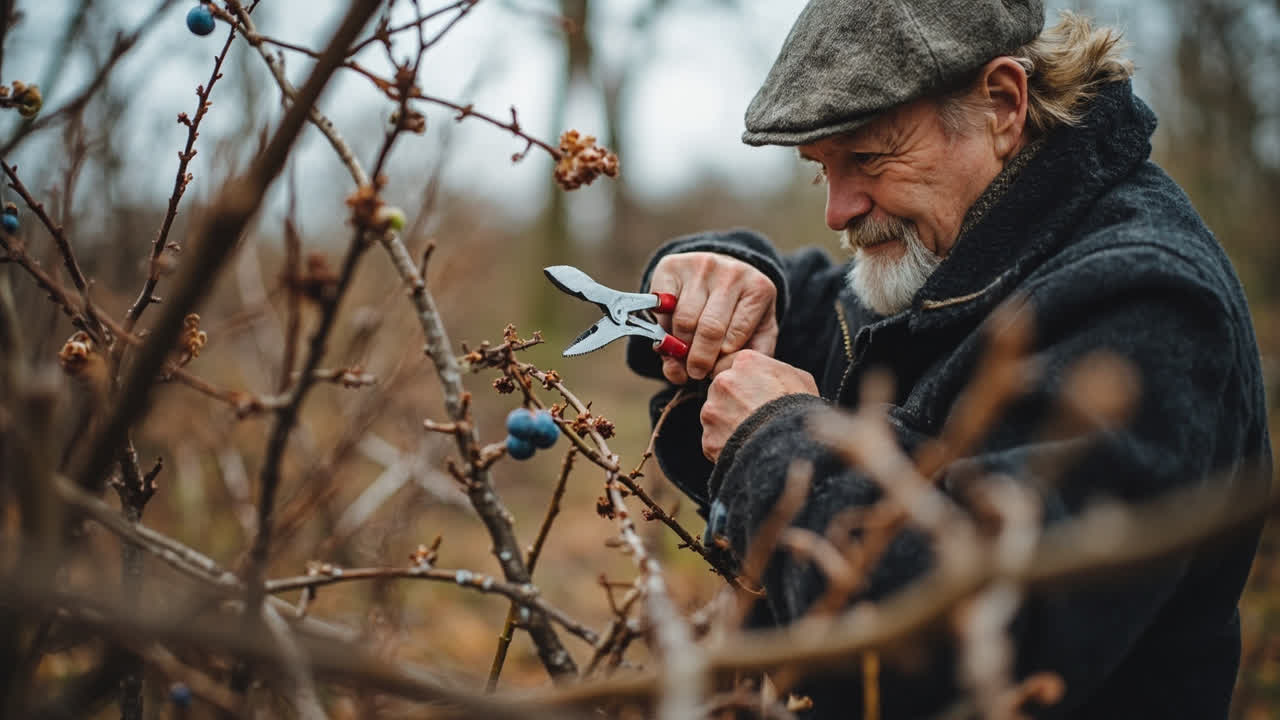
Step 1 — Remove dead wood. Any cane that has died back, shows no living buds when scratched with a thumbnail, or displays fungal canker lesions should be cut at the base. Cut flush with the ground — do not leave stubs, which rot and invite disease. Dead wood is easy to identify in late winter: it is brittle, gray, and the buds are shriveled rather than plump.
Step 2 — Remove canes older than five years. These are the least productive canes and they crowd the center of the bush. Cut them at the base with bypass loppers. If the bush has more than three or four old canes to remove, spread the removals across two to three years — removing more than a third of the bush at once stresses the plant and triggers excessive suckering from the root crown.
Step 3 — Remove crossing and inward-growing canes. Canes that grow through the center of the bush block airflow and light from reaching the fruit. Canes that cross each other rub and create wound points where fungal spores enter. Remove whichever cane is less productive or less structurally sound when a pair is competing for the same space. Prioritize keeping canes that grow outward from the center.
Step 4 — Thin to open the center. For a mature northern highbush blueberry, you want a vase shape — an open center with canes fanning outward like ribs. This shape maximizes light penetration to the fruiting laterals and airflow through the canopy, which reduces mummy berry and botrytis pressure. On half-high varieties (compact types bred for cold climates), maintain a slightly more compact shape but still open the center enough that you can see through the bush.
Pruning Blueberries by Bush Age and Variety Type
First-year planting: Do not prune. Let the bush establish roots and grow. You may remove flower buds as they appear in the first spring — pinch them off when they swell in March or April — to direct the plant’s energy into root and cane growth instead of fruit production. This sacrifices the first harvest for a stronger bush that produces 3-4x more fruit from year three onward.
Second year: Remove any dead wood or broken canes. Otherwise, let the bush grow. Remove flower buds if the bush is still small (under 18 inches tall) — same logic as first year. A bush that fruits too young diverts energy from the cane framework it needs for long-term production.
Third year: Begin light pruning in late winter. Remove dead wood and any canes that are obviously weak, crossing, or damaged. Do not do heavy structural pruning yet — the bush is still building its permanent framework. Allow light fruiting this year to confirm the variety is performing in your conditions.
Year four and beyond: Full annual pruning as described in the four-cut method above. A mature highbush blueberry in full production should have twelve to eighteen canes total, with a balanced mix of one, two, three, and four-year-old wood. Rabbiteye varieties (V. ashei) carry fewer but thicker canes — aim for eight to twelve total, with more space between them. Lowbush blueberries (V. angustifolium) are pruned differently: mow half the field to the ground every other year in a two-year rotation, since lowbush fruits on a biennial cane cycle. For variety recommendations by zone, see our best blueberry varieties guide.
Pruning Container Blueberries
Container blueberries need more aggressive pruning than in-ground bushes because root space limits the number of canes the plant can support. A blueberry in a 20-gallon container should carry six to ten canes maximum — any more and the root-to-shoot ratio is unbalanced, leading to poor fruit set and winter root damage in cold climates. For container selection and soil mix, see our growing blueberries in containers guide.
Prioritize one to three-year wood in containers. Remove any cane older than four years promptly — the container cannot support the root volume needed to sustain old wood. Thin to a compact vase shape with no more than two to three canes growing from any single point at the base. This keeps the center open and the root crown accessible for inspection.
At repotting time (every 2-3 years in March before bud break), prune the roots as well as the canes. Remove circling roots from the outer root ball, trim any damaged or rotted roots back to healthy white tissue, and refresh the potting mix with acidic pine bark-based media. Root pruning stimulates fine feeder root growth and prevents the plant from becoming rootbound, which shows up as stunted new cane growth and premature leaf drop in summer.
Rejuvenating an Old, Neglected Bush
If you have inherited or neglected a blueberry bush that has not been pruned in five years or more, do not try to bring it back to productivity in a single year. A severely overgrown bush cut back hard will respond with a flush of suckers from the base — vigorous, unfruiting shoots that replace the removed canes but produce nothing for two seasons. Staged rejuvenation avoids this trap.
Year one: Remove all dead wood and at most two to three of the oldest, least productive canes. Open the center by removing crossing canes. The bush will produce light fruit this year on the remaining younger wood, and you should see stronger new cane growth from the base by mid-summer.
Year two: Continue removing old wood — another two to three of the thickest, darkest canes. By now the new canes from year one are two years old and will fruit heavily. The bush structure should be visibly more open and balanced.
Year three: The bush should be in its full rotation by now — annual pruning as described in the four-cut method, with a good balance of cane ages. Expect full production to return by year three or four of the rejuvenation process. NC State Extension research on commercial fields shows that staged rejuvenation over three years produces 40% more cumulative fruit than a single hard pruning, because the bush never loses a full season to sucker regrowth.
If the bush is more than fifteen years old and has been completely neglected — very old, declining wood at the base and almost no new growth even after year one — it may be beyond reasonable recovery. Replace it with a new planting rather than spending years trying to rejuvenate something that will never be productive. A new blueberry in good soil with proper pH will outproduce a rescued veteran within three years. If your bush shows decline beyond pruning issues, our save dying blueberry plant guide covers diagnosis and recovery.
Pruning blueberry bushes is not complicated once you understand the cane age system. The main mistakes are skipping it entirely, pruning in fall, and pruning too hard at once. An annual late-winter pruning session of fifteen minutes per mature bush keeps a blueberry productive for twenty years. That is the trade — fifteen minutes now for twenty years of good harvests.
From PDF to Excel in one click
Forget retyping line by line. Upload any bank statement, get a spreadsheet you can actually use. Your files are never stored, and you can test the converter with 3 free conversions.
Try it free