Bamboo propagation works best by division or by planting healthy rhizome sections with roots attached. Random stem cuttings usually fail with true bamboo because a cut culm does not contain the rooted rhizome system the plant needs to push new shoots.
This is where true bamboo behaves very differently from lucky bamboo. Lucky bamboo is a dracaena that can root from cane sections in water; garden and container bamboo is a grass that spreads from rhizomes, so successful propagation starts below the soil line.
The Propagation Methods That Actually Work
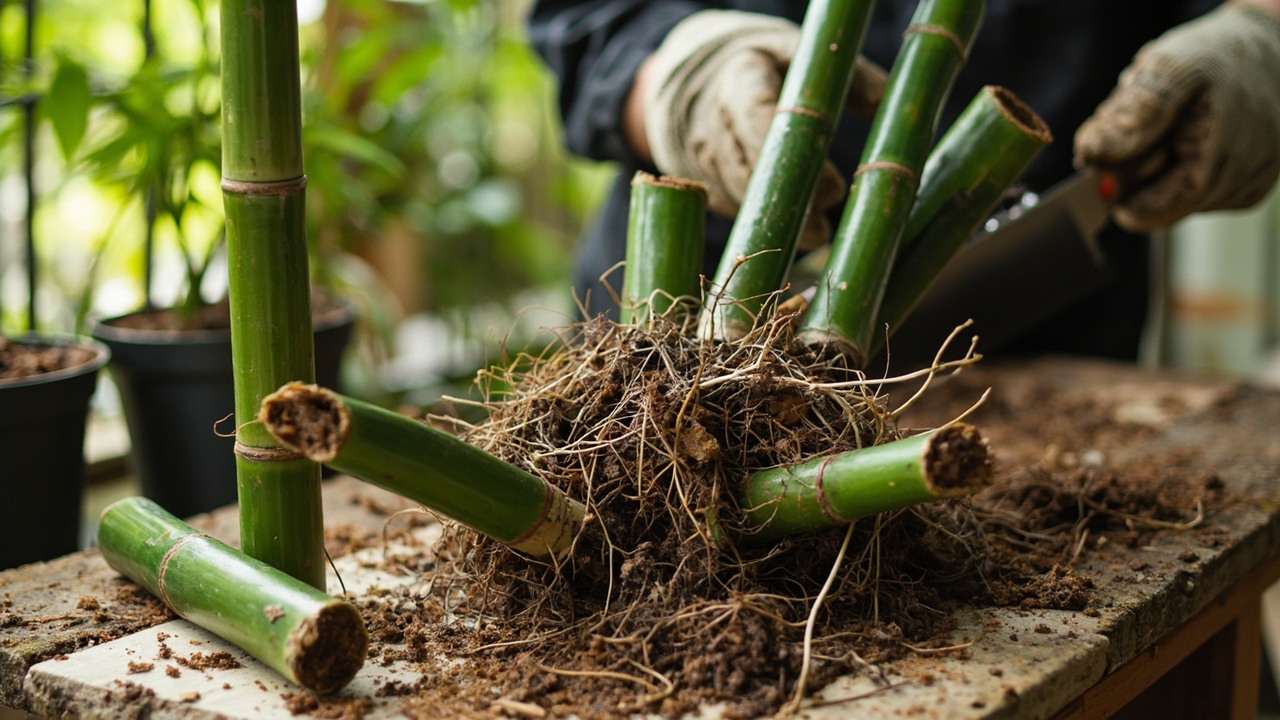
The most reliable bamboo propagation method is division: separating a living section of the root ball that already has rhizomes, roots, and at least one healthy culm. A smaller rhizome section can also work if it has firm nodes and active roots, but it is slower and easier to dry out.
Before propagating, make sure the parent plant is growing well using the guide on how to grow bamboo.
- Division: best for container bamboo and clumping bamboo because you move a complete living piece, not just a stem.
- Rhizome sections: possible when the rhizome is firm, rooted, and not shriveled, but recovery is less predictable than a full division.
- Culm cuttings: unreliable for most true bamboo grown by home gardeners because the above-ground cane is not the plant’s main regenerative structure.
- Seed: uncommon and slow because many bamboo species flower irregularly, and seedlings do not give quick, predictable results.
The trade-off is simple: a larger division has a better chance of recovery, but it also disturbs the parent plant more. A tiny rhizome piece is easier to handle, yet it has fewer stored reserves if heat, dry mix, or root damage slows it down.
When to Divide Bamboo
Divide bamboo when the plant is actively growing but not under peak stress. For most home growers, that means spring or early summer, after cold weather has passed and before the hottest part of the season. A plant that is already wilting, recently repotted, or sitting in poor drainage should be stabilized before you cut into the root ball.
Maturity matters. A young plant with only a few culms may not have enough rhizome mass to share, while an overcrowded container often has clear sections that can be separated with less guessing. Divisions recover faster when the plant returns to the right exposure from the bamboo light requirements guide.
Expect a pause after division. Even a good piece may spend several weeks repairing roots before it sends up visible new shoots, and older culms may shed a few leaves while the root system catches up.
How to Propagate Bamboo by Division
Division is easiest with bamboo in containers because the root ball is already accessible.
- Water the parent plant the day before. Moist roots are less brittle, and the root ball usually slides out of the pot with less tearing.
- Remove the bamboo from its container or expose the clump edge. Work on a tarp or bench so you can see the rhizomes and keep the root mass from drying in sun or wind.
- Choose a strong section. Look for a piece with one to three healthy culms, firm rhizome tissue, and plenty of fibrous roots. Avoid hollow, blackened, sour-smelling, or mushy sections.
- Cut with a clean, sharp saw or knife. Bamboo roots can be dense, so make one deliberate cut instead of hacking repeatedly. A ragged cut removes more roots than necessary.
- Pot the division immediately. Set it at the same depth it was growing before, firm the mix around the roots, and water until the mix is evenly moist.
- Trim only what is clearly damaged. Do not strip healthy leaves just to make the division look tidy; the plant still needs working foliage while roots recover.
The main consequence of division is temporary root loss. A newly separated bamboo plant can look unchanged above the soil while its roots are doing the important work below, so judge success by firmness, moisture response, and later shoot growth rather than instant new leaves.
Soil and Water After Propagation
New divisions need the airy structure described in bamboo soil requirements more than heavy feeding.
Use a potting mix that holds steady moisture but still drains quickly. Fresh divisions are vulnerable to two opposite failures: drying before the fine roots reconnect with the mix, or sitting in heavy, wet soil that cuts oxygen from damaged roots. Both problems can look like wilt, which is why the feel and smell of the root zone matter more than the surface appearance alone.
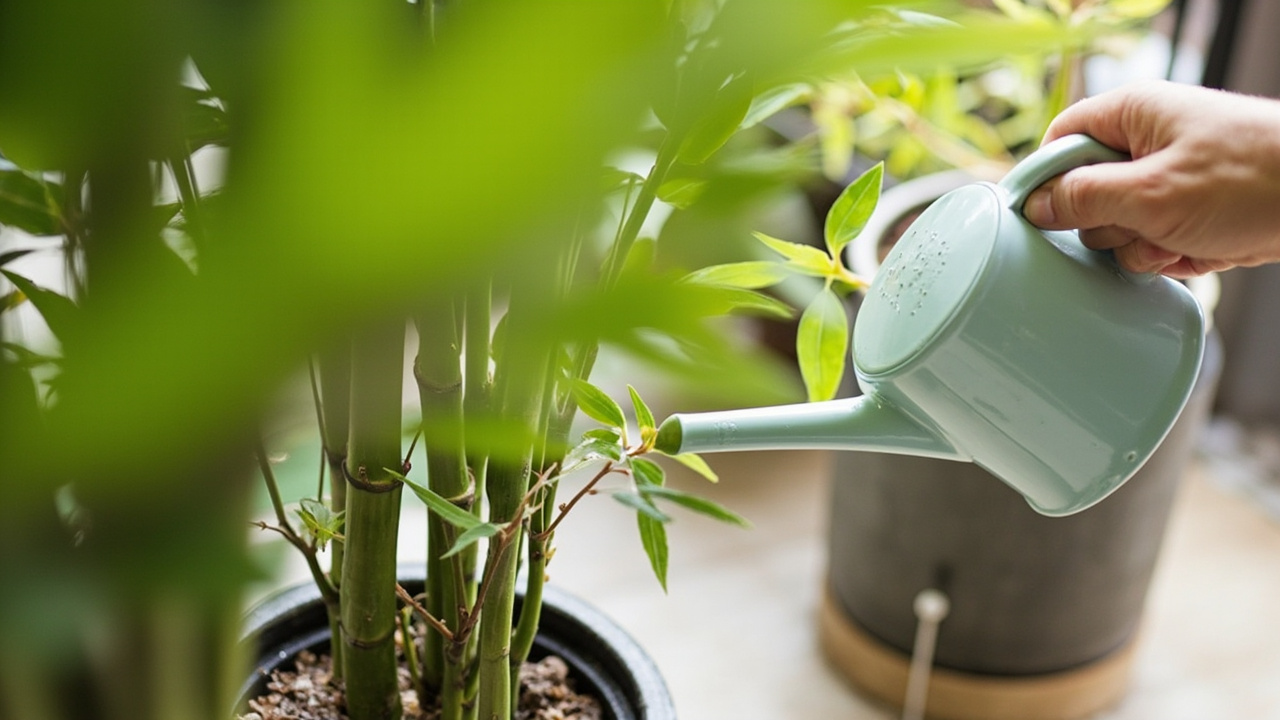
Water thoroughly after potting, then let excess water drain away. Keep the mix lightly moist during recovery, not constantly saturated. Fertilizer can wait until the plant is stable and showing new growth; pushing nutrients into a stressed root system rarely makes the division recover faster.
Aftercare Until New Growth Appears
Keep the division in bright, sheltered conditions while it settles. Morning sun or bright filtered light is easier on a fresh division than harsh afternoon heat, especially if the plant lost roots during cutting.
Use the bamboo watering guide to avoid drying new divisions or keeping them soggy.
New shoots may appear in a few weeks, but some divisions wait until the next active growth push. That delay is not automatic failure. The warning signs are different: collapsing culms, a sour smell from the mix, black mushy rhizomes, or leaves that keep crisping even when the root ball is evenly moist. If the division stays firm and gradually responds to water, patience is often the correct aftercare.
Turn PDF Bank Statements Into Workable Spreadsheets
Your bank statement is a mess of numbers, but your books shouldn't be. Use our converter to get Excel, CSV, or QBO files — ready for QuickBooks.
Try It Free Now