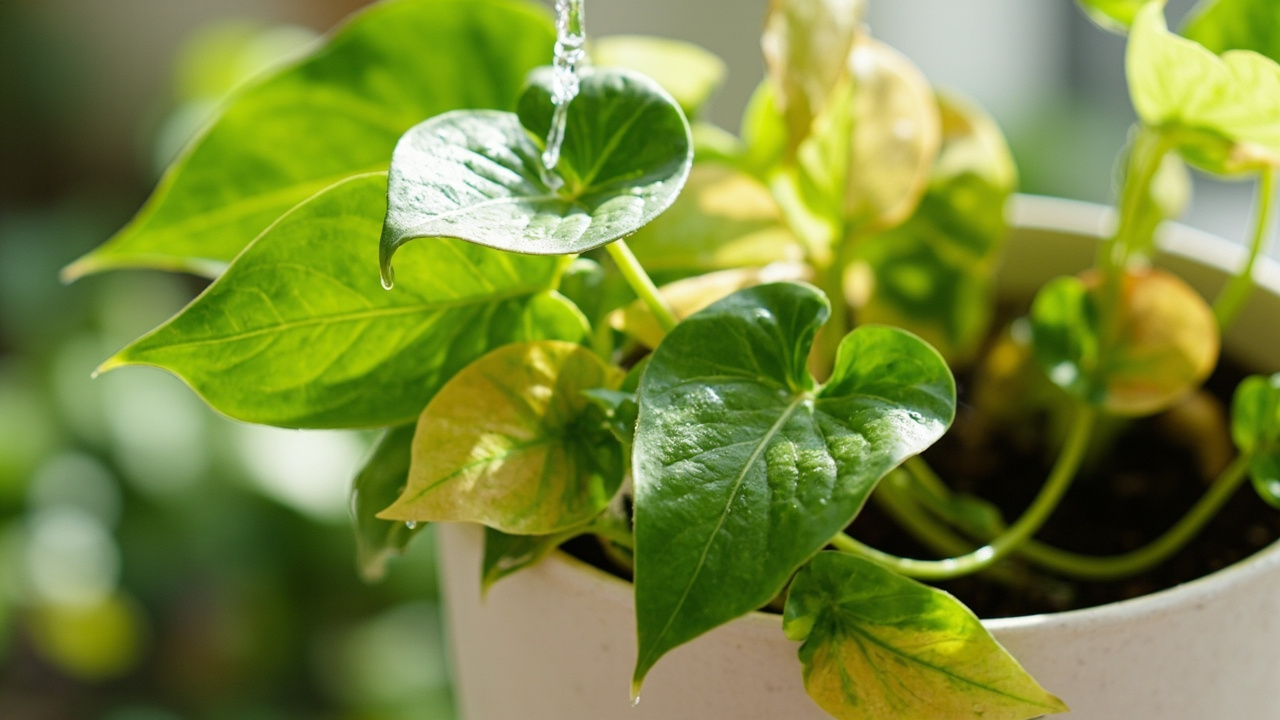
A dying money plant usually has one of four causes: root rot from overwatering, severe underwatering, too much direct sun, or temperature shock from a cold draft or air conditioning blast. This guide shows you how to diagnose which one and fix it fast, with realistic recovery timelines for each case.
The most important first step is to stop guessing and actually look at the plant. Pull the pot slightly away from its saucer, slip a finger 2 inches (5 cm) into the soil, and check the roots by gently tipping the pot on its side. What you find in the soil and at the roots tells you more in 30 seconds than a dozen online symptom lists. Write down what you see before you do anything else — it makes the diagnosis easier.
Work through the four most common causes in this order: root rot first because it is the most lethal and the most common, then underwatering, then light stress, then temperature. If you find multiple problems, address root rot before anything else — root rot kills plants quickly, while the other three usually give you more time.
Step 1: Diagnose the Problem First
Each cause has a distinct signature. Here is what to look for.
Overwatering / Root Rot
The soil stays wet for more than a week after watering. Roots look brown, mushy, or smelly instead of white and firm. The lower leaves turn yellow first, then the next layer up. The plant wilts even though the soil is wet — because the roots that should be absorbing water are rotting. If you pull a root out and it slides off like a sock, that is rot.
Underwatering
The soil pulls away from the sides of the pot and the pot feels noticeably light when you pick it up. Leaves droop and feel papery or crispy rather than soft and mushy. The top 1–2 inches (2–5 cm) of soil are completely dry. If the soil was dry for more than a week, the fine root hairs may be dead even if the thicker roots still look okay.
Too Much Direct Sunlight
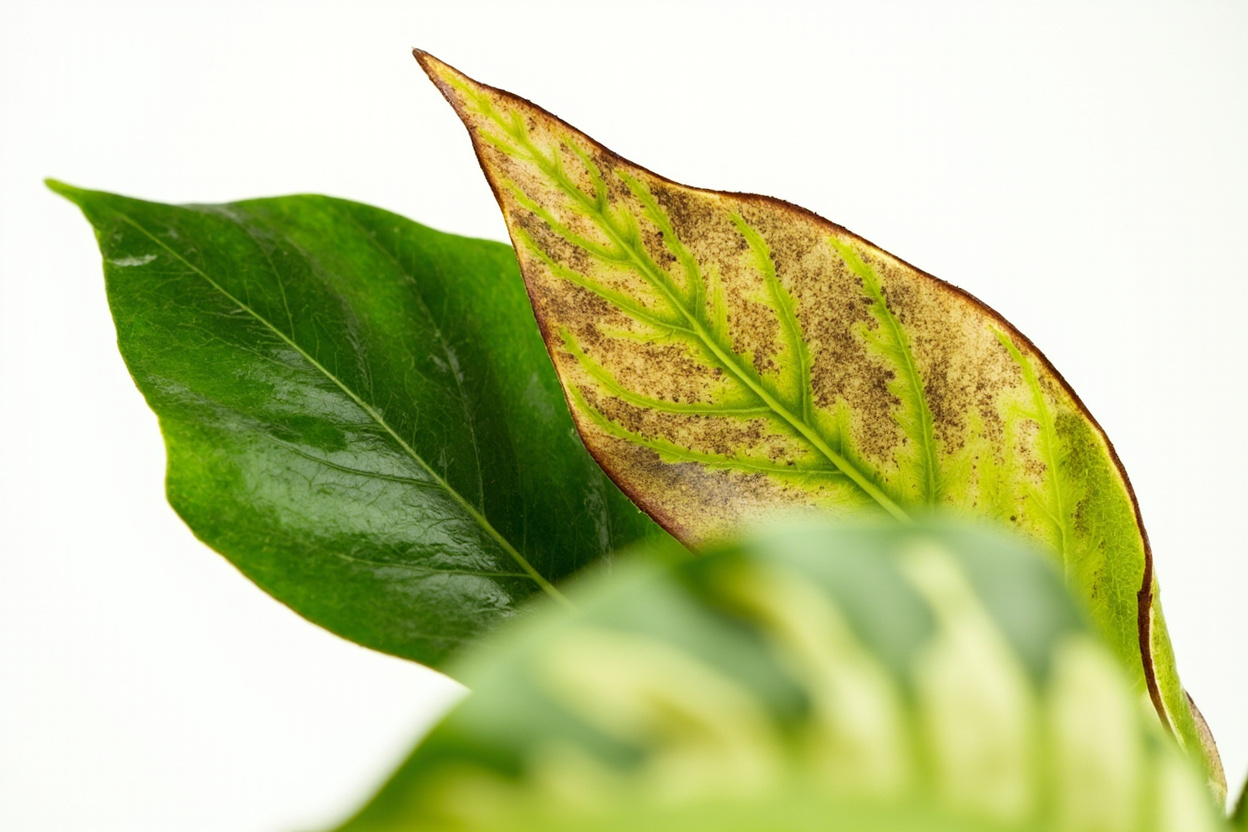
Brown or pale scorch patches appear on the side of the plant facing the window. The affected patches feel dry and papery, not soft or mushy. New leaves come in smaller than normal or with brown tips. The plant was moved to a sunnier position recently, or the season has changed and a window that used to give indirect light now gets direct afternoon sun.
Temperature Shock or Draft
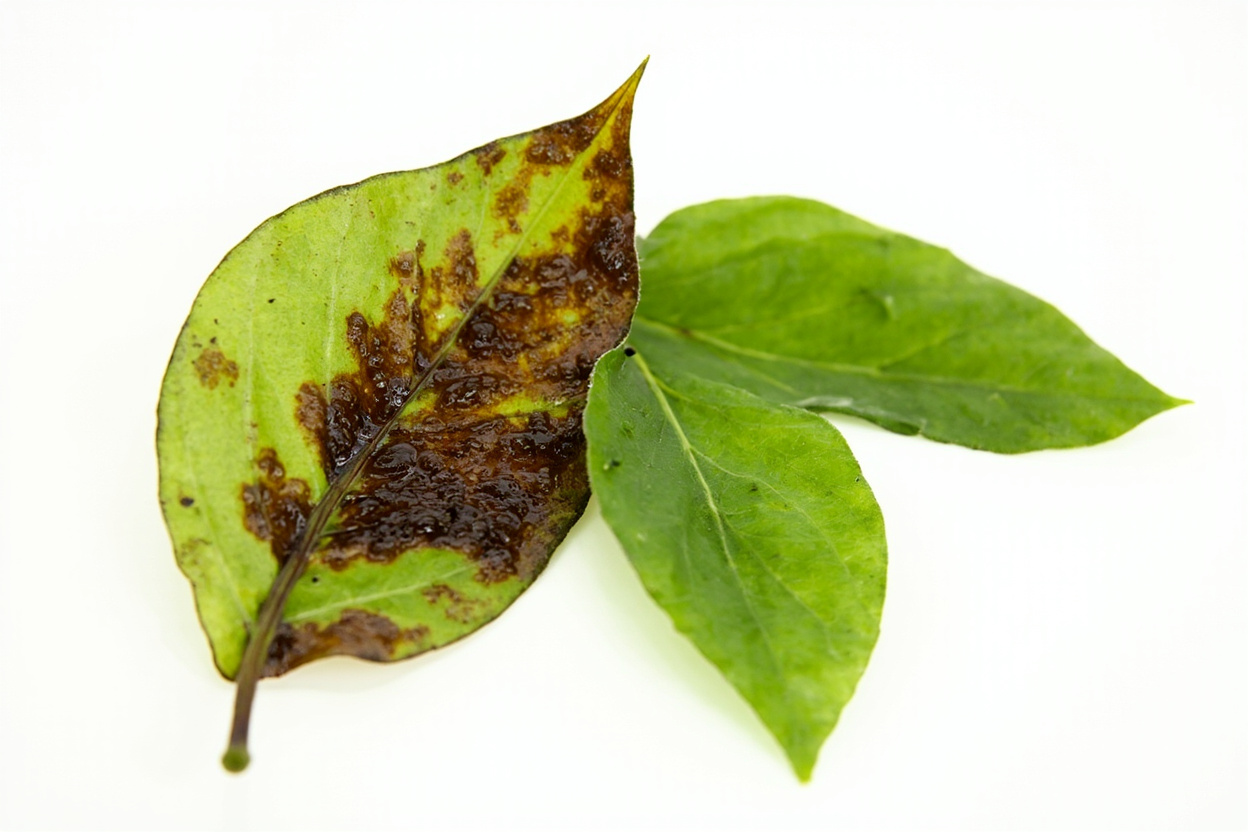
The plant was exposed to a cold window in winter, an air conditioning vent, or a cold draft from a door. Damage shows as dark, water-soaked, or translucent patches on leaves, usually within 24–48 hours of exposure. The stems may feel soft below the soil line. Wilting that does not improve after watering in a cold room is a classic sign of cold-damaged roots.
Fixing Root Rot (the Most Common Killer)
If root rot is the problem, act fast. The rotting spreads from root to root and can kill a money plant within 10–14 days of the soil staying constantly wet.
- Unpot the plant carefully. Tip the pot on its side and slide the root ball out. Shake off as much wet soil as you can without tearing live roots. Work over a surface you can clean — root rot is fungal and spreads through contaminated soil.
- Cut away every brown, mushy, or smelly root. Use clean, sharp scissors or a knife. Cut at least 1 inch (2.5 cm) above the visibly rotted section — do not leave a margin of damaged tissue. Healthy roots are firm and white or tan;rotted roots are soft, dark brown or black, and may collapse when you touch them.
- Let the root ball air-dry for 2–4 hours. Place the plant on a clean towel in a warm, dry spot out of direct sun. This lets the remaining roots and the crown dry out, which stops the rot from spreading.
- Repot in fresh, fast-draining mix. Use a standard house plant potting mix with 20–30% perlite added, or a 50/50 mix of potting mix and orchid bark. Do not reuse the old soil — it harbors the pathogen. The new pot should be only slightly larger than the remaining root mass; too much soil holds moisture and invites rot to come back.
- Water sparingly for the first three weeks. Wait until the top 2 inches (5 cm) of soil are completely dry before watering again. Then water thoroughly and let it drain fully. Once new root growth is confirmed (usually in 2–4 weeks), return to a normal watering schedule.
Cutting away too many roots can kill a plant faster than the rot would have. If you have to remove more than half the root mass, also trim the foliage proportionally — a plant with 30% roots can only support 30% of its leaves. This sounds drastic but it gives the remaining roots a survivable workload.
Fixing Underwatering
Underwatering is easier to fix than root rot because the roots are usually still alive. The plant is stressed but not rotting.
- Water thoroughly until water runs freely from the drainage holes. Do not just give it a splash — saturate the entire root ball.
- If the soil has pulled away from the pot sides, water may run down the gap instead of soaking in. Set the pot in a shallow tray of water for 20–30 minutes and let it absorb from the bottom up.
- Move the plant to a shadier spot for 3–5 days while it recovers — less light means less water demand.
- Expect the leaves to perk up noticeably within 24–48 hours if the roots are still alive.
For a thorough guide on diagnosing what went wrong and preventing a recurrence, see preventing root rot in house plants — most of the same watering logic applies to both overwatering and the chronic underwatering that weakens roots and makes them vulnerable to rot later.
Fixing Light and Temperature Damage
Light and temperature damage are different problems requiring different corrections. Sometimes a plant has both at once — a plant that has been overwatered and kept in too cold a spot, for instance.
Sun Scorch
Move the plant immediately out of direct sun to a location with bright indirect light. South- and west-facing windows without curtains are the most common culprits. Scorched leaves will not heal, but they do not spread — remove them only if they are fully dead and dry, and only after the plant has had 2–3 weeks to stabilize. New growth appearing at the crown confirms the plant has recovered.
Cold Draft
Move the plant away from the cold source immediately. If the damage is recent (within 48 hours) and the roots are not soft, the plant has a good chance of recovering on its own if you keep it at 65°F–80°F (18°C–27°C) and do not water until the soil is dry. Do not fertilize until new growth appears. If the roots are soft and mushy, treat it as root rot using the steps above.
When to Expect Recovery : and When It Is Too Late
Recovery timelines vary by cause and severity:
- Underwatering: Most plants visibly perk up within 24–48 hours of a thorough watering. Within 1–2 weeks, new leaf growth should be visible if the roots were not fatally damaged.
- Root rot after successful treatment: New root growth appears in 2–4 weeks. New leaf growth follows 4–8 weeks after that, once the root system is re-established enough to support it.
- Sun scorch: Stable within 1–2 weeks after removal from direct sun. New leaf size returns to normal within one growth cycle — usually one to two months.
- Cold damage: If the roots survived, new leaf growth appears in 4–8 weeks. Cold damage that killed the roots cannot be reversed by warming the plant — at that point the plant is gone.
Signs the plant is genuinely dead rather than dormant: the stems are dry and brittle all the way to the crown, the roots crumble when you touch them, and no green tissue remains anywhere on the plant — not even at the very base of the stems. If you are not sure, make one clean cut near the base of a stem and look at the inside. Green and moist means the plant is alive. Brown and dry all the way through means that stem is dead. If all stems are brown and dry, the plant is gone.
If the plant does pull through, consider reviving a money plant in water as a temporary support measure while it regrows roots in soil — a money plant sitting in clean water for 2–3 weeks while its soil roots recover often bounces back faster than one kept in the same sick soil.
Turn any PDF statement into a clean sheet
Skip the typos and the hours of copying. Our converter handles any bank statement format and outputs Excel, CSV, or QBO for QuickBooks. No file retention, free to try.
Convert your statement