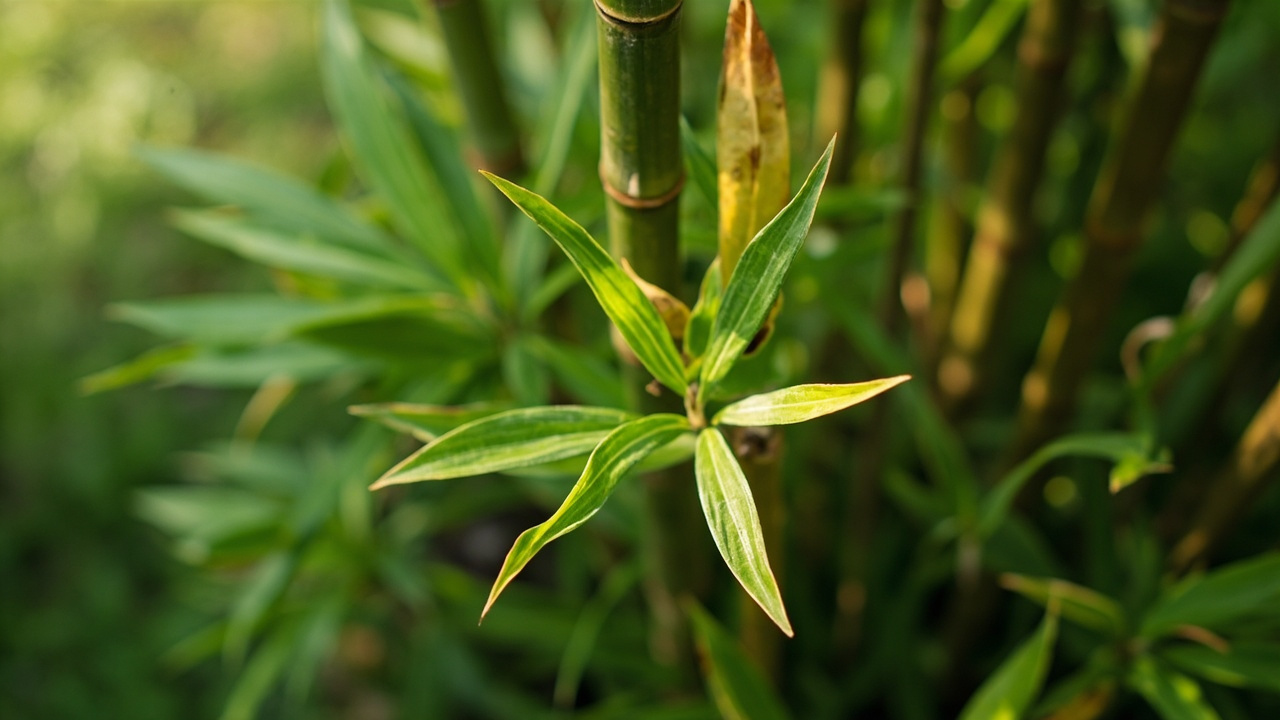
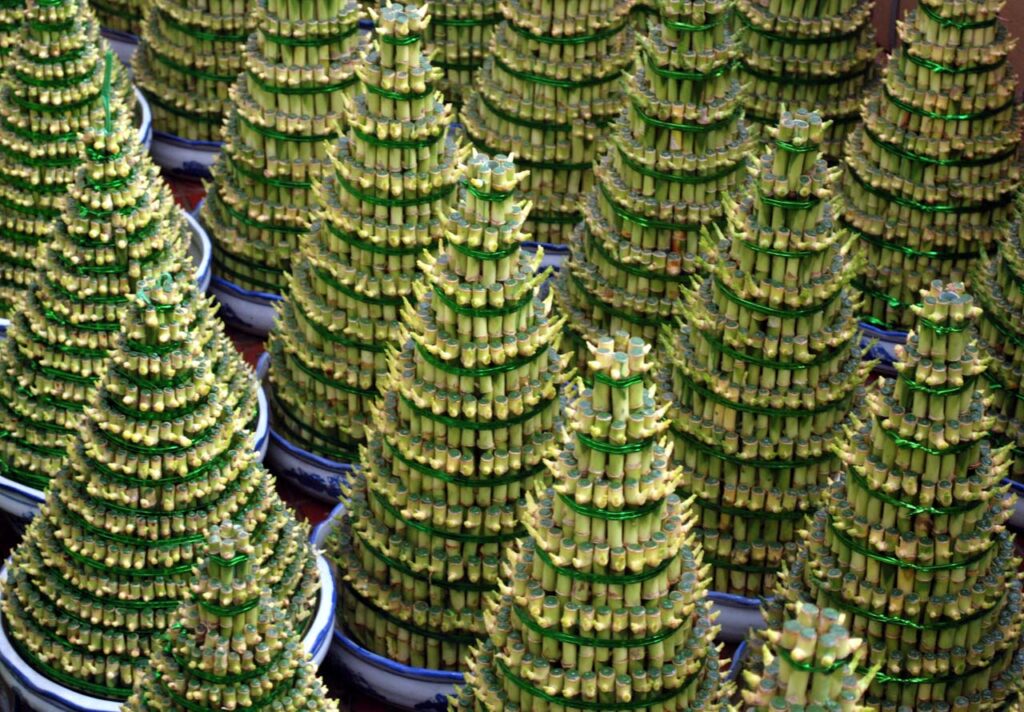
Bamboo grows best in bright light. Most true bamboo plants need at least 4 to 6 hours of strong light each day, but the safest exposure depends on whether the plant is indoors, in a container, or planted outside in hot afternoon sun.
The useful rule is simple: bamboo needs enough light to push strong canes and dense leaves, but not so much heat that the leaves scorch or the pot dries out before the roots can keep up.
The Best Light for Most Bamboo
Outdoor bamboo usually performs best in full sun to partial shade. In mild climates, many bamboo types handle full sun well. In hot climates, morning sun with afternoon shade is often safer, especially for young plants and container-grown bamboo.
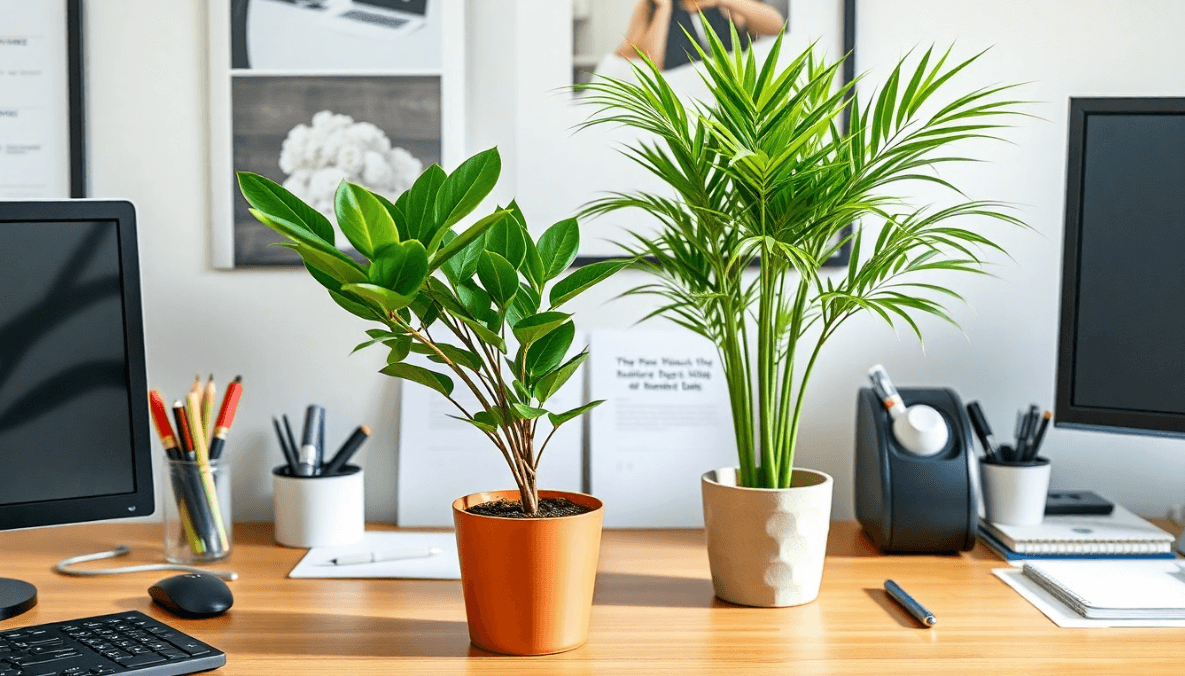
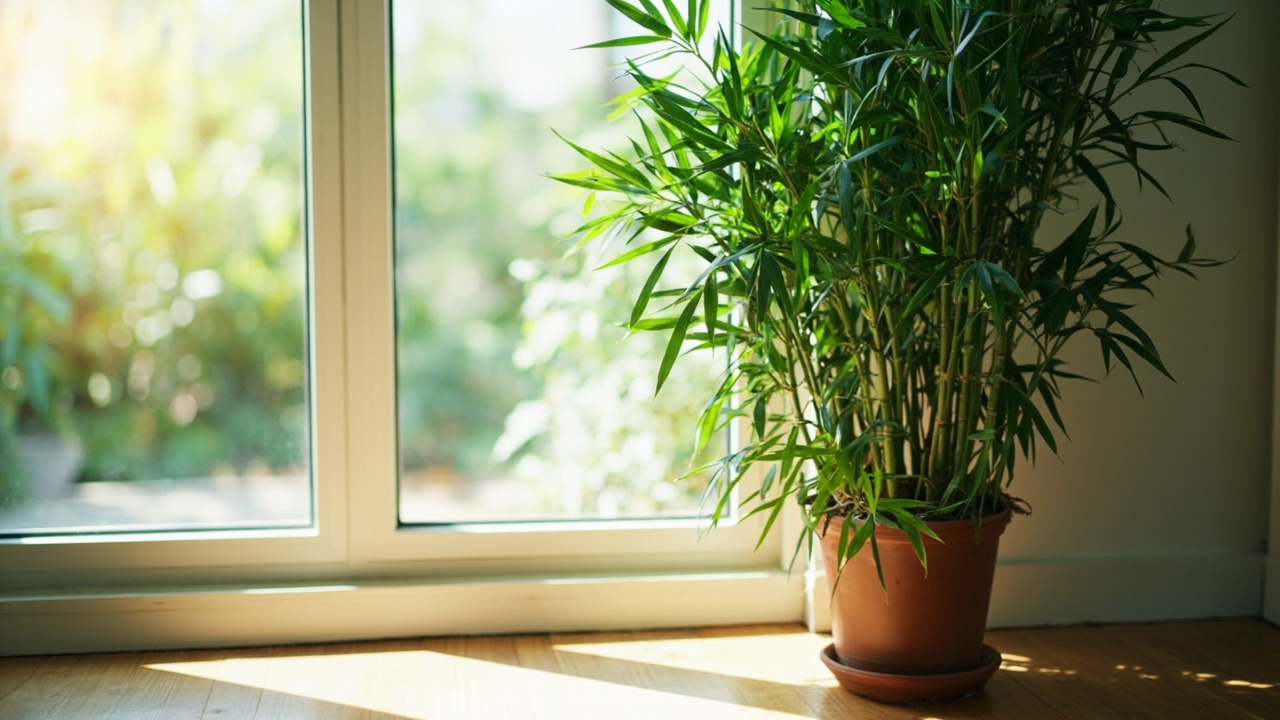
Indoors, bamboo needs the brightest spot you can give it without baking the leaves against glass. A south- or east-facing window is usually stronger than a dim room corner. If the plant is several feet away from the window, the light may look bright to you but still be weak for active bamboo growth.
For the full growing context, the guide on how to grow bamboo covers placement, water, and maintenance together.
Indoor Bamboo Needs Bright Windows, Not Dark Corners
Indoor bamboo often declines slowly when light is too weak. The plant may stay green for a while, but new canes are thinner, leaf spacing opens up, and growth leans toward the window. That is not a fertilizer problem first. It is usually a light problem.
Place indoor bamboo close to a bright window where it receives strong indirect light for most of the day. A little gentle morning sun is useful. Harsh afternoon sun through hot glass can scorch leaves, especially if the pot is small and the root zone dries quickly.
Rotate the pot every week or two so the canes do not lean one way. Indoor growers should pair this with the full guide to growing bamboo indoors.
Container Bamboo Dries Faster in Direct Sun
Container bamboo has a different light problem from in-ground bamboo. The leaves may like the sun, but the pot heats and dries faster than garden soil. A black nursery pot on a sunny patio can push the root zone into stress before the top of the plant shows obvious symptoms.
This does not mean container bamboo belongs in deep shade. Too little light weakens growth and reduces the dense, upright look people usually want. The better compromise is bright morning sun, filtered afternoon light, and a pot large enough to buffer temperature and moisture swings.
This is especially important for bamboo in containers, where sun and root temperature change faster than in the ground.
Signs Bamboo Is Getting Too Much or Too Little Light
Light stress shows in the leaves and in the shape of new growth. Read the pattern before moving the plant.
- Too little light: thin new canes, sparse leaves, slow growth, and stems leaning strongly toward the window.
- Too much direct heat: brown leaf tips, scorched patches, curled leaves, and a pot that dries unusually fast.
- Uneven light: growth only on one side of the plant and canes bending toward the brighter side.
- Recent move stress: yellowing after a sudden shift from shade to full sun or from outdoors to indoors.
If the plant is already declining, use the guide to save dying bamboo after checking light.
The Practical Placement Rule
Give bamboo the brightest position that does not overheat the leaves or dry the pot too fast. Outdoors, that often means full morning sun and some afternoon protection. Indoors, it means close to the brightest window, not across the room.
Healthy light also supports the ornamental and screening value covered in the benefits of bamboo. If growth is thin, slow, or leaning, increase light gradually rather than shocking the plant with a sudden move into harsh sun.
Turn PDF Bank Statements Into Workable Spreadsheets
Your bank statement is a mess of numbers, but your books shouldn't be. Use our converter to get Excel, CSV, or QBO files — ready for QuickBooks.
Try It Free Now