Anthuriums are aroids with epiphytic roots that need oxygen as much as moisture. That is the foundational fact about anthurium soil requirements, and it is why a standard potting mix is the wrong medium for these plants. Getting the soil right is not a detail — it is the structural foundation on which every other aspect of anthurium care depends. A plant in the right soil can tolerate occasional watering mistakes; a plant in the wrong soil will develop root problems even with perfect watering discipline.
In the wild, anthuriums grow in the crevices of tree bark, among mosses and organic debris that accumulates in tree forks, and in rocky substrates where their roots are exposed to air as much as water. These roots are not adapted to be buried in dense, water-retentive media the way most common houseplant roots are. They absorb moisture and nutrients from the humidity and occasional rainfall in their immediate environment, and they need rapid drainage and good aeration to function. A standard peat-based potting mix creates the opposite environment — one that holds water persistently and excludes air from the root zone.
Why Standard Potting Mix Fails Anthuriums
Root rot in aroids is overwhelmingly caused by the wrong growing medium rather than overwatering alone. A plant in a fast-draining aroid mix can be watered daily without developing root rot; a plant in a dense peat-based mix can develop root rot even with infrequent watering because the mix itself stays waterlogged. The mix is the primary variable.
The mechanism: peat-based mixes are formulated to retain moisture for extended periods — that is their design purpose, and it makes them excellent for most tropical foliage plants that have roots adapted to consistent soil moisture. But for an epiphytic aroid, the water held in the fine peat particles fills the air pores that the roots need to breathe. In waterlogged peat, anaerobic bacteria proliferate, organic matter decomposes faster than the plant can use it, and the root tips — the most metabolically active part of the root — begin to die back. This is the start of root rot. By the time the above-ground symptoms are visible, the root damage is usually significant.
The Ideal Anthurium Soil Mix Recipe
The anthurium care guide covers the broader care context, and the soil mix is the single most important substrate decision. A reliable general-purpose recipe by volume is:
- 40% fine orchid bark or pine bark fines (5–15mm size): provides structure, aeration, and slow decomposition
- 30% perlite or pumice: ensures rapid drainage and prevents compaction
- 20% coco coir or sphagnum peat moss: provides some moisture retention without the density of standard potting mix
- 10% horticultural charcoal: helps keep the mix sweet, absorbs contaminants, and improves drainage
Each component has a specific function. The bark provides the chunkiness that keeps air in the mix and prevents compaction over time. Perlite ensures that any water not absorbed by the coir or bark drains freely rather than pooling around the roots. Coir or peat provides just enough moisture retention to keep the plant from drying out between waterings, without creating the waterlogged conditions that cause root rot. Charcoal helps maintain a healthy root zone biology and prevents the sour-smelling anaerobic conditions that develop in very old or heavily watered mixes.
The pH target for anthurium mix is slightly acidic, around 5.5–6.5. Coco coir is naturally in this range. Peat moss is also slightly acidic. If using tap water with a high pH, this is worth monitoring, but most water supplies are within an acceptable range for anthuriums.
Optional Additions and Substitutions
The base recipe above is reliable and widely used. Practical substitutions depend on what is available: perlite can be replaced entirely with pumice or coarse calcined clay (LECA, if washed thoroughly). Coco coir can be replaced with long-fibre sphagnum moss, though sphagnum decomposes faster and may need repotting more frequently. Bark can be replaced with coconut husk chips, which have similar properties and are increasingly available.
Soilless growing media for aroids covers the broader range of options, including pure bark mixes, semi-hydroponic clay pebble systems, and various combinations. The key principle is the same across all options: the medium must drain fast, dry relatively quickly, and leave space for air in the root zone.
The honest trade-off with very fast-draining mixes is that they dry out more quickly and require more frequent watering, especially in summer or in warm, bright conditions. A mix that is 60% perlite will drain exceptionally fast but will need watering every 2–3 days in warm weather. This is not a problem — it just requires adjusting your watering habit to match the mix.
When to Repot and How to Do It
The signals that indicate it is time to repot an anthurium are: roots growing visibly from the drainage holes or circling the surface of the mix; water running straight through the pot without being absorbed (indicating a compacted, water-repellent or completely root-bound mix); the plant requiring watering more frequently than every 4–5 days because the roots have taken up most of the pot volume; or the plant looking pot-bound — heavy with foliage relative to the pot, leaning, or sending out few new leaves despite good overall care.
The best time to repot is early spring, at the start of the active growing season, when the plant has the best recovery capacity. Anthurium watering guide covers the post-repotting period — after repotting, reduce watering frequency slightly for 2–3 weeks while the plant’s root system recovers from the disturbance and begins growing into the new mix. Go up only one pot size: 2–3cm larger in diameter. Oversizing the pot means more mix, more water retention, and a higher risk of root rot in the recovery period.
Signs of Soil Problems
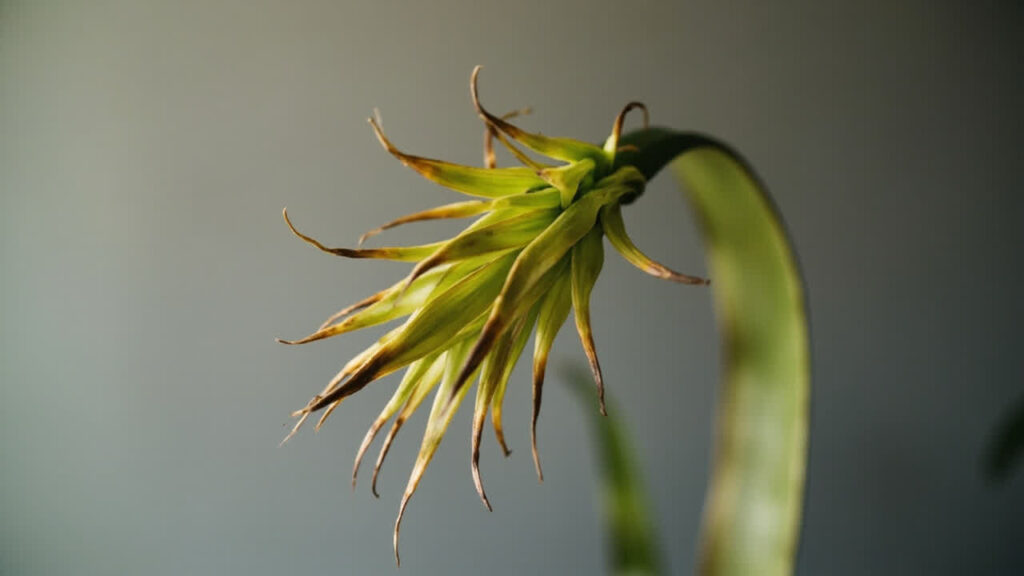
Yellowing from soil issues in anthuriums most commonly traces back to one of three problems: the mix staying too wet (overwatering, poor drainage); the mix becoming water-repellent (hydrophobic, usually from being allowed to dry out completely and repeatedly); or salt buildup from fertiliser accumulation. Compaction is a fourth issue, more common in bark-based mixes that have been in the same pot for several years without repotting.
The water-repellency problem is worth knowing about: when a peat or coir-based component in the mix dries out completely multiple times, it can become hydrophobic — water applied to the surface runs down the sides of the pot and out the drainage hole without soaking into the root ball. The plant appears drought-stressed even though it is being watered regularly. The fix is to bottom-water the plant (place the pot in a tray of water and let it absorb from below) or to repot with fresh mix.
Turn any PDF statement into a clean sheet
Skip the typos and the hours of copying. Our converter handles any bank statement format and outputs Excel, CSV, or QBO for QuickBooks. No file retention, free to try.
Convert your statement