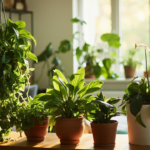
Anthuriums need bright, filtered light to bloom. That is the core fact about anthurium light requirements, and everything else follows from it. In low light, an anthurium will survive — it may even look reasonably healthy — but it will not bloom, and it will grow slowly. Getting the light right is the single most impactful change you can make if you have an anthurium that looks healthy but never flowers.
The reason for this is botanical: anthuriums are understory plants native to the tropical forests of Central and South America, where they receive bright ambient light filtered through the forest canopy. They never evolved to tolerate direct sun — their leaves are not adapted to deal with high-intensity radiation, and their spath (the coloured modified leaf most people call the flower) develops its pigments in response to adequate light energy. Without enough light, the spath either does not form or emerges small, green, and aborts before fully colouring.
What Bright Indirect Light Actually Means
Bright indirect light means strong ambient light that does not fall directly on the plant. In practical terms, this translates to: within 1–2 metres of an east or west-facing window; 1–2 metres back from a south-facing window with a sheer curtain acting as the filter; or directly in a north-facing window in tropical or subtropical regions where ambient outdoor light is high even through a north-facing glass. In temperate latitudes, a north-facing window alone is usually insufficient for consistent blooming.
The indoor plant light requirements guide covers the foot-candle and lux measurements for different light levels in more detail. For anthuriums specifically, the target range is approximately 1,000–2,500 foot-candles of ambient light. A light meter app on a smartphone can give a rough reading; the key is that the plant should be able to read a book comfortably in the same spot — if the light is too dim to read in, the plant is probably also light-starved for blooming purposes.
Best Window Directions for Anthuriums
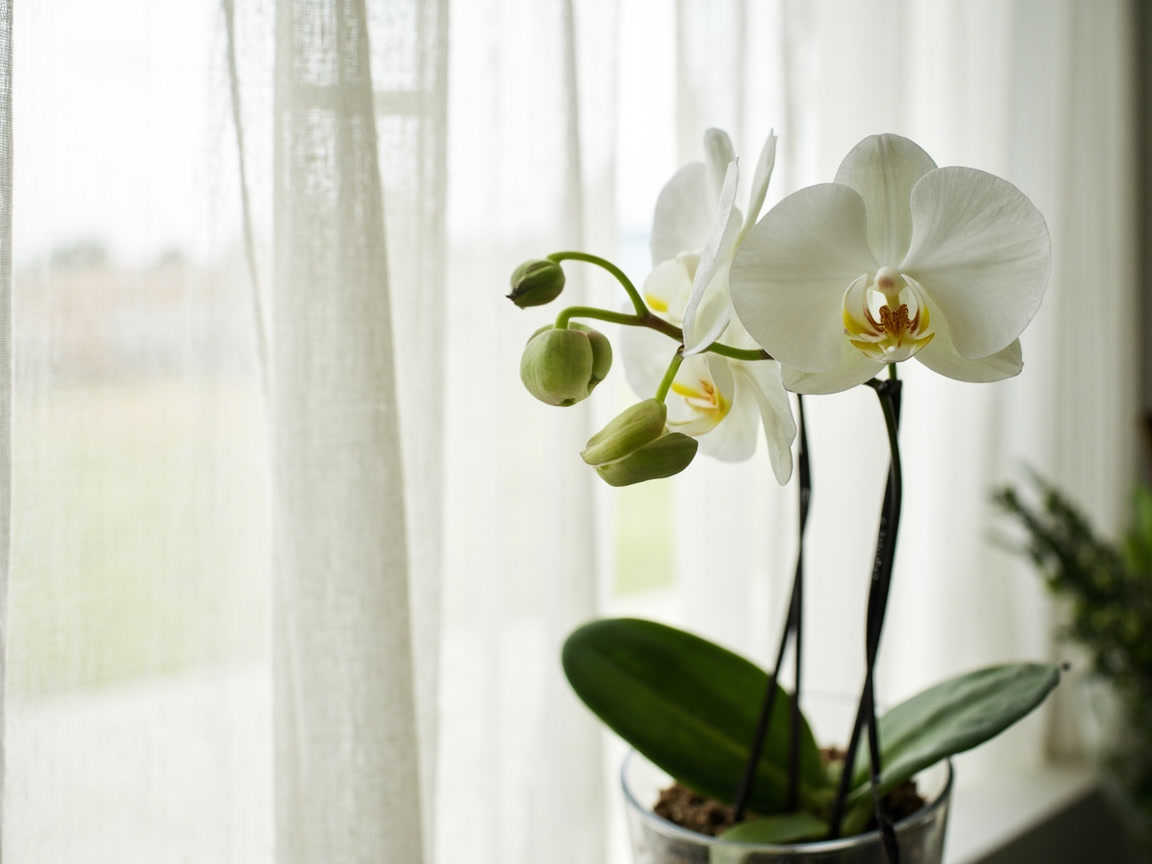
East-facing windows are close to ideal for anthuriums. The morning sun is gentle and filtered through the atmosphere, and the rest of the day the plant receives bright ambient light. A plant placed on a shelf or table within a metre of an east window, or on a windowsill with a sheer curtain, will typically receive adequate light for good growth and regular blooming.
South-facing windows provide the most light but also the greatest risk of direct sun damage. An anthurium placed directly in an unfiltered south window will receive direct sun, especially in summer, and this will scorch the leaves and bleach the spath. With a sheer curtain filter, or placed 1–2 metres back from the glass, a south window can work well. West-facing windows provide strong afternoon light that can be intense — the same filtering rules apply.
North-facing windows in temperate climates are typically too dim for consistent anthurium blooming. The anthurium care guide covers the overall care requirements, and the honest trade-off with north-facing positions is that while the plant will survive, it will grow more slowly and bloom rarely without supplemental grow lighting.
Signs of Too Much Light (Leaf Scorch)
Brown tips on anthuriums caused by excessive light show a specific progression. The first symptom is often a pale, washed-out look to the leaves — the chlorophyll is being degraded by excess radiation faster than the plant can repair it. This progresses to brown, papery patches on the leaf surface where the cells have died. The spath is also susceptible: direct sun bleaches the vivid colour, leaving it faded, brown-edged, and short-lived.
The mechanism is phototoxicity: at high light intensities, the photosynthetic system produces more reactive oxygen species than the plant can neutralise, and these oxidise and destroy cell membranes. The brown patches are areas of dead tissue. Anthuriums are not adapted to direct sun — they have not evolved the thick, sclerophyllous leaves of sun-tolerant species.

Signs of Insufficient Light
The most obvious sign of insufficient light is the absence of spathes — an anthurium that receives less than roughly 1,000 foot-candles of ambient light will rarely bloom. Other symptoms include: new leaves emerging significantly smaller than the previous ones; petioles becoming unusually long as the plant reaches for available light; and the spath emerging but staying green and small rather than developing its full colour and size.
The underlying mechanism is that blooming is triggered by adequate carbohydrate reserves, which require sufficient photosynthesis. In low light, the plant is operating at a net carbohydrate deficit, so it allocates resources to survival rather than to the energetically expensive process of spath production. Yellowing from low light in anthuriums tends to manifest as a general pallor and loss of vigour rather than the sharp yellow patches associated with nutrient deficiency or overwatering.
Grow Light Supplementation
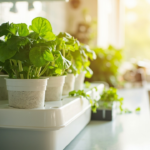
If your available natural light is insufficient — particularly in north-facing rooms, in winter when daylight hours are short, or in rooms without windows — a grow light is a practical solution. The minimum effective supplementation for anthuriums is a full-spectrum LED grow light placed 30–60cm above the plant, running for 10–12 hours per day. This is enough to maintain growth and trigger blooming in plants that would otherwise receive too little light.
The fertilizing anthuriums becomes more important when grow lights are used, because increased light drives faster growth and depletes the potting mix nutrients more quickly. The combination of adequate light, half-strength balanced fertiliser every 4–6 weeks in the growing season, and appropriate watering will keep a grow-light-grown anthurium healthy and blooming.
Light, Watering, and How They Connect
Light intensity directly affects how quickly an anthurium uses water. A plant in bright indirect light photosynthesises actively, draws water from the potting mix at a relatively fast rate, and dries the mix more quickly. A plant in low light grows slowly, transpires less, and the mix stays wet significantly longer. This is why a plant can be overwatered in winter or in a low-light corner even if it is given the same watering frequency it had in summer. The anthurium watering guide covers this interaction in detail — and adjusting watering frequency in response to the plant’s light environment is one of the most reliable ways to prevent root problems.
From Bank Statement to QuickBooks-Ready File
That manual cleanup you just read about? This tool skips it. Turn your PDF into QBO for QuickBooks without storing your data anywhere.