
The Hawaiian spider plant is a cultivar that behaves differently from every other Chlorophytum comosum you have grown. This page names the light window, fertilizer rhythm, and growth expectations that keep the golden stripe from fading or the leaves from scorching.
Hawaiian Sunshine Is a Golden-Stripe Cultivar, Not Just a Yellow Spider Plant
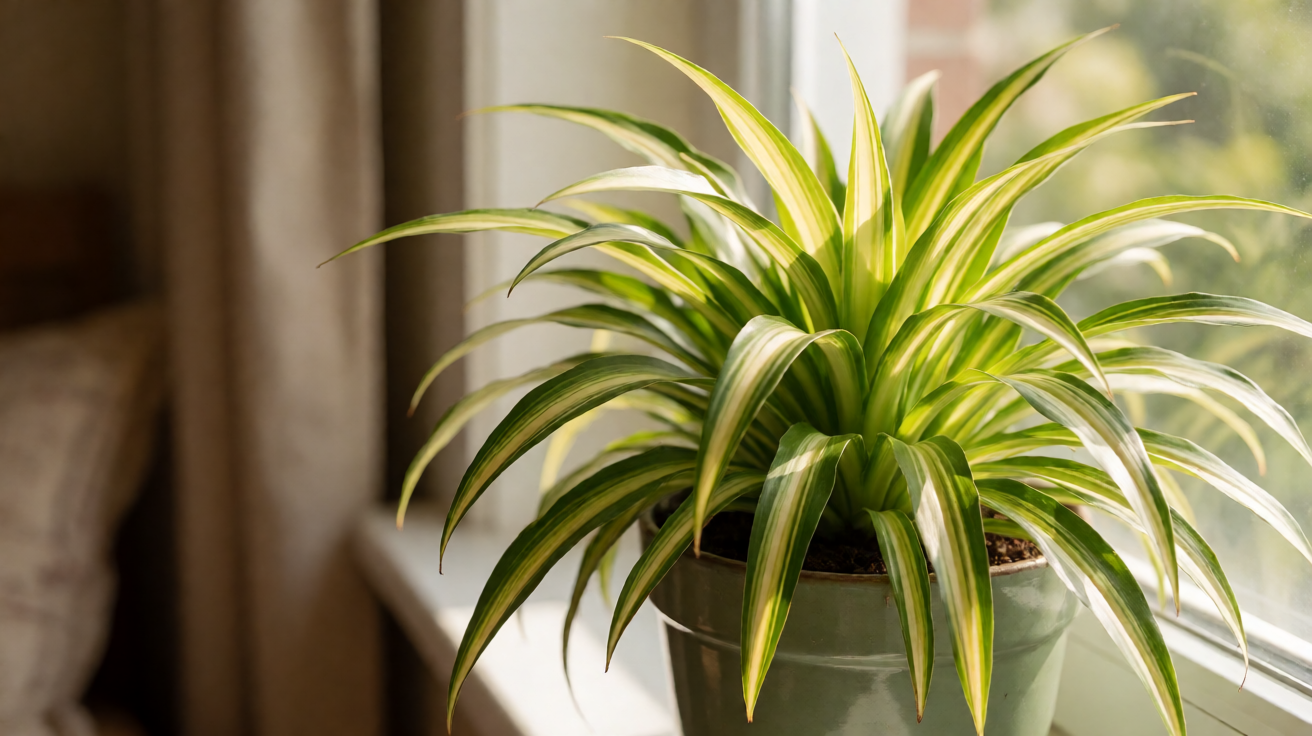
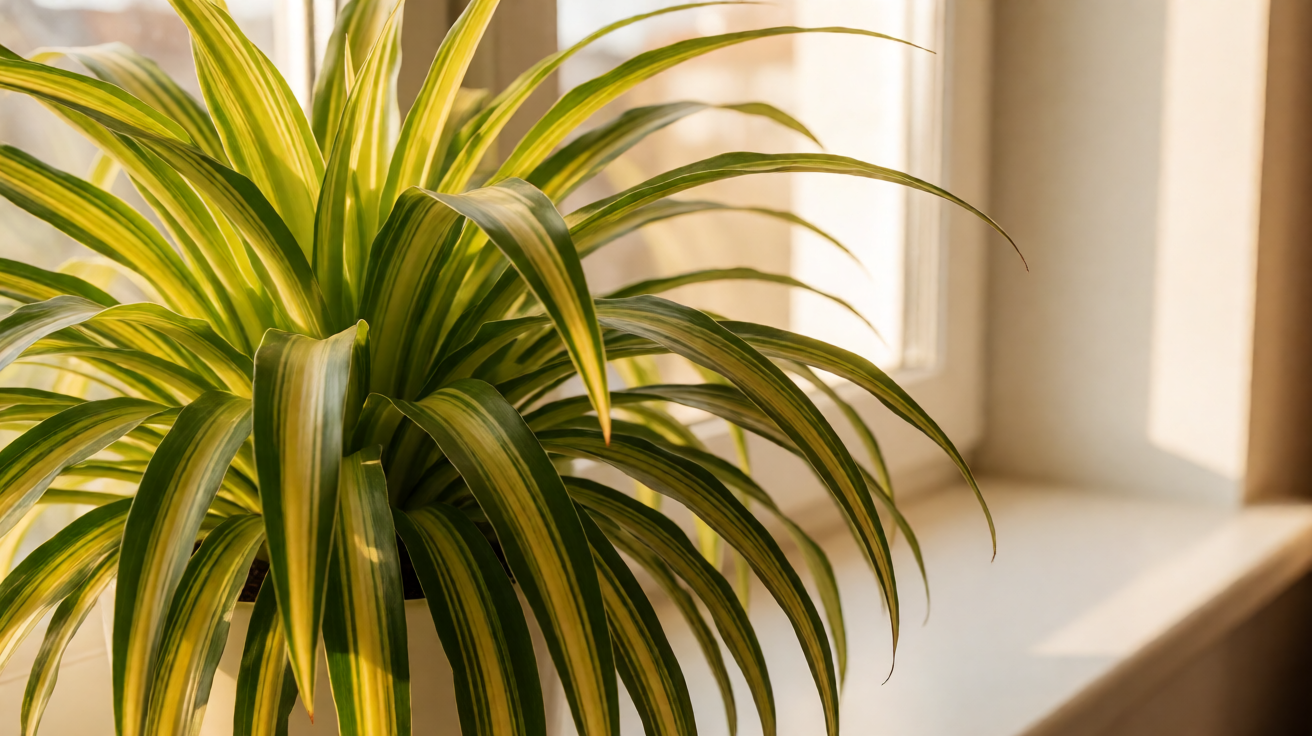
A Hawaiian spider plant carries the cultivar name Chlorophytum comosum ‘Hawaiian Sunshine’. The golden yellow stripe down the center of each leaf is the trait that sets it apart from the white-striped Vittatum most readers picture when they hear “spider plant”. The color comes from a higher lutein-to-chlorophyll ratio in the leaf tissue, which is what makes the gold visible in the first place.
That same ratio is also why this cultivar needs a more specific light window than a generic spider plant. Lower chlorophyll means less photosynthetic capacity per leaf. In plain terms: a Hawaiian Sunshine cannot make as much energy from dim light as a green-leafed spider plant can, so it depends on brighter conditions to keep its golden stripes from fading.
Why Hawaiian Sunshine Loses Its Gold in Low Light
When light drops below the threshold the golden stripe needs, the plant responds by producing more chlorophyll to compensate. The yellow stripe fills in with green, and the leaf looks like a plain green spider plant within a few weeks. This reversion is not damage to it is the plant’s normal response to dim conditions.
The fix is positional, not chemical. Move the plant 2 to 3 feet closer to a bright window or rotate it onto a shelf that gets 4 to 6 hours of indirect light per day. East-facing windows work well in the northern hemisphere; south-facing windows work if the plant sits behind a sheer curtain. North-facing windows usually produce reversion within a month unless you add a grow light.
Light hours the golden stripe needs to stay visible
Most Hawaiian Sunshine plants keep their gold with 4 to 6 hours of bright indirect light per day. Less than 3 hours and the stripes start to fade. More than 8 hours of direct sun and the yellow patches scorch brown. If you want a single number to anchor your placement decision, aim for the 4-hour floor on the darkest week of winter and the 6-hour ceiling on the brightest week of summer.
Watering Hawaiian Sunshine: Same Rhythm, Smaller Pot
The watering rhythm for a Hawaiian Sunshine is the same as for any spider plant to water when the top inch of soil is dry, roughly once per week in summer and every 10 to 14 days in winter. The cultivar difference is root size: Hawaiian Sunshine grows a more compact root system than Vittatum, so it often sits in a 1- to 2-inch-smaller pot than the shop label suggests.
A smaller pot dries faster than a larger one, which means a Hawaiian Sunshine can dry out a day sooner than a Vittatum in the same window. Check the soil with your finger rather than following a fixed schedule. If the top inch is still damp, wait. If it’s dry to the second knuckle, water until it drains from the bottom holes.
What the right watering rhythm looks like in practice
1. Insert a finger to the second knuckle before watering.
2. If the soil feels dry at that depth, water thoroughly until runoff appears.
3. Empty the saucer within 15 minutes so the roots do not sit in standing water.
4. Log the date to most Hawaiian Sunshine plants settle into a 7- to 10-day rhythm indoors.
5. If leaves yellow uniformly, cut back one day; if leaf tips brown, the water may be too high in fluoride (use filtered or rainwater to see Spider Plant Tap Water).
Fertilizer: Why Less Is Better for This Slower Cultivar
Hawaiian Sunshine grows slower than Vittatum, which means it uses less fertilizer per month. The common mistake is treating the slow growth as a problem and overfeeding to “fix” it. Excess fertilizer on a compact root system produces salt buildup at the soil surface, which scorches the golden patches first because the yellow tissue is more sensitive than green tissue.
The right dilution is half the strength recommended on a balanced liquid fertilizer label. Apply once per month during spring and summer, and skip feeding entirely from October through February. If the leaf tips start to brown uniformly across multiple leaves, flush the soil with plain water and skip the next scheduled feed.
Monthly fertilizer rhythm for an indoor Hawaiian Sunshine
1. March through September: feed once per month at half the label dilution.
2. October through February: do not feed to the plant is resting, not starving.
3. After each feed, water lightly the next day to move salts through the soil profile.
4. If white crust forms on the soil surface, scrape it off and flush with 2 pot-volumes of plain water.
5. Repot every 2 to 3 years with fresh soil rather than increasing the fertilizer dose.
Why Hawaiian Sunshine Grows Slower (and Why That’s Normal)
The compact rosette form means shorter internodes, which means fewer new leaves per month than a Vittatum. A Hawaiian Sunshine typically produces 4 to 6 new leaves per growing season, compared to 8 to 12 for a Vittatum in the same window. This is a cultivar trait, not a problem to diagnose.
Plantlet production follows the same slower curve. A Hawaiian Sunshine usually sends out its first stolons in its second year of growth, not its first. When the plantlets do appear, they are smaller than Vittatum plantlets and root more reliably in soil than in water.
For a reader comparing this cultivar against other spider plant varieties, the full comparison lives in Spider Plant Vittatum vs Variegatum and the broader variety guide in Spider Plant Varieties: A Complete Guide. For general care that applies across all cultivars, see Spider Plant Care Guide and Spider Plant Light Requirements.
What the slower growth means for repotting and propagation
Repot a Hawaiian Sunshine every 2 to 3 years rather than annually, because the compact root system takes longer to fill the pot. When you do propagate, the plantlets root faster in a small pot of moist soil than in a glass of water to the smaller root mass handles soil moisture better than water submersion.
If you want a similar cultivar that grows faster and produces more plantlets, see Curly Spider Plant Care or Bonnie Spider Plant Care. For the full propagation walkthrough that works across cultivars, see Spider Plant Propagation Guide.
Reversion: When Hawaiian Sunshine Leaves Turn Green and What to Do
Reversion is the most common concern readers bring to this cultivar. A Hawaiian Sunshine that loses its gold is responding to one of three conditions: not enough light, too much nitrogen, or a new shoot from below the graft point. Each has a different fix.
Light-driven reversion is the most common. If the plant sits further than 3 feet from a bright window, the leaves will fill in with green over 4 to 8 weeks. Move the plant closer and the new leaves that emerge will carry the gold back. The older leaves that already turned green will not revert to they stay green until they age out.
Nitrogen-driven reversion happens when fertilizer pushes leafy growth at the expense of pigment. Switch to a half-strength balanced NPK and skip the next feed. New growth will be slower but the golden stripe will return on the next leaf.
Shoot reversion is rare in Hawaiian Sunshine because the cultivar is propagated from divisions, not grafts. If you see a fully green shoot emerging from the soil line, cut it at the base to it is a sport from the parent rootstock and will outcompete the variegated growth if left in place.
Decision rule for the next 30 days
1. Check the plant’s distance from the nearest bright window to move it closer if more than 3 feet away.
2. Skip the next scheduled fertilizer feed and watch the new leaf that emerges.
3. If the new leaf carries a clear golden stripe, the reversion was light-driven and the move worked.
4. If the new leaf is still green, switch to half-strength fertilizer for two months and reassess.
5. If a fully green shoot emerges from the soil, cut it at the base to keep the variegated growth dominant.
Pets, Pests, and the Same Problems Every Spider Plant Gets
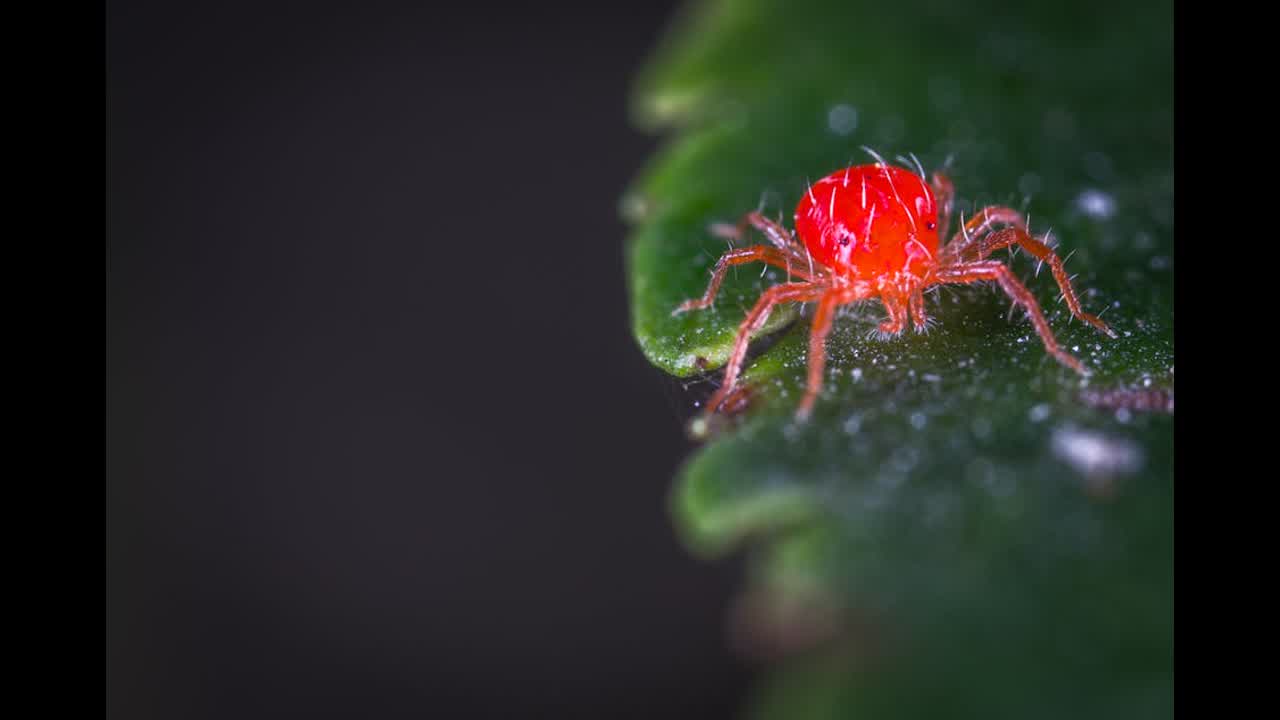
A Hawaiian Sunshine is non-toxic to cats and dogs, same as every other Chlorophytum comosum cultivar. For the full pet-safety breakdown, see Is Spider Plant Toxic to Pets?. The pest profile is also identical to other cultivars to mealybugs and spider mites are the two insects that show up indoors, and both are treated the same way as on a Vittatum.
If you see webbing between the leaves or sticky residue on the stem, the plant has either spider mites or mealybugs. Treat with a 70% isopropyl alcohol swab for small outbreaks, or a neem-oil spray weekly for 3 weeks for larger ones. The golden stripe does not change the pest profile, only the light threshold.
What changes and what stays the same across cultivars
What changes: light threshold, growth rate, fertilizer tolerance, plantlet timing.
What stays the same: pet safety, pest profile, watering rhythm, soil mix preference, propagation method, division technique, hanging-basket suitability, and tolerance of missed waterings.
Honest Limits of the Golden-Stripe Cultivar
A Hawaiian Sunshine will not produce as many plantlets as a Vittatum in the same window. It will not grow as fast as a generic green spider plant. It will not tolerate direct sun, and it will not hold its gold in a dim corner. These are cultivar limits, not problems to fix.
If a reader wants a faster-growing, more prolific spider plant for the same bright spot, the better choice is Vittatum or Bonnie. If a reader wants the gold stripe specifically, the trade-off is the slower growth and the narrower light window. Both choices are valid; the cultivar decision comes down to which trade-off fits the reader’s space and patience.
Quick Reference: Hawaiian Sunshine vs Other Spider Plant Cultivars
Hawaiian Sunshine is one cultivar in a wider spider plant family that includes Vittatum, Variegatum, Bonnie, reverse variegatum, and the curly spider plant. Each cultivar carries its own variegation pattern, growth rate, and light threshold. Below is the cultivar-by-cultivar picture that a reader shopping for a new spider plant can use as a starting reference.
The Vittatum shows a white stripe down the center of each arching leaf and grows faster than Hawaiian Sunshine, sending out more spiderettes and plantlets per season. The reverse variegatum flips that pattern, with green at the center and white edges. Bonnie produces a tighter rosette with curled ribbon leaf forms and a moderate growth rate. The curly spider plant folds its leaves over in a tighter spiral, with a slightly slower plantlet production than Vittatum. Hawaiian Sunshine sits between curly and reverse variegatum in growth rate, with a distinctive golden stripe that is more sensitive to dim conditions than the white stripe on Vittatum.
For a reader comparing hanging basket suitability, all four cultivars work well as trailing plants in a hanging basket, but Hawaiian Sunshine produces fewer stolons in its first year than Vittatum, so the trailing effect develops more slowly. The mother plant forms a tighter rosette in a 4- to 6-inch nursery pot, and the plantlets that do appear root reliably in soil once they reach 2 inches. Pot size up to 8 inches supports mature growth without triggering root bound stress.
Beginner houseplant readers will find Hawaiian Sunshine forgiving once they understand the light threshold. Compared to a pothos, which tolerates low light more readily, Hawaiian Sunshine needs the bright indirect light that a pothos would merely prefer. The trade-off is the golden stripe, which a pothos cannot offer. Pet-safe and non-toxic to cats and non-toxic to dogs, the cultivar fits homes with curious cats that nibble trailing leaves, though hanging basket placement keeps the stolons out of reach.
Watering is straightforward: filtered water or rainwater prevents leaf tip browning from fluoride sensitivity, with humidity around 40 percent supporting clean arching leaves without leaf cleaning. Distilled water works in a pinch, though rainwater is the easier long-term answer for a reader with a balcony. Over-fertilization produces salt buildup at the soil surface, which a half-strength balanced NPK dilution avoids. Skip leaf folding as a stress signal until you have checked light first, because a Hawaiian Sunshine that folds its leaves is usually asking for more bright indirect light, not more water.
Turn any PDF statement into a clean sheet
Skip the typos and the hours of copying. Our converter handles any bank statement format and outputs Excel, CSV, or QBO for QuickBooks. No file retention, free to try.
Convert your statement