
Curled leaves on a spider plant are not a single problem. The curl is a symptom, and the same twist can come from dry air, mineral buildup, cold drafts, or a plant that is root bound and cannot move water fast enough. Treating it as “spider plant disease” leads to the wrong fix. The useful approach is to read the curl: where it sits, when it started, and what else changed at the same time.
This guide walks through the main causes of spider plant leaves curling, how to tell them apart, and the fix that matches each one. It is written for Chlorophytum comosum grown indoors, and it assumes you want a diagnosis, not a generic care checklist.
What Curled Leaves Look Like on a Spider Plant
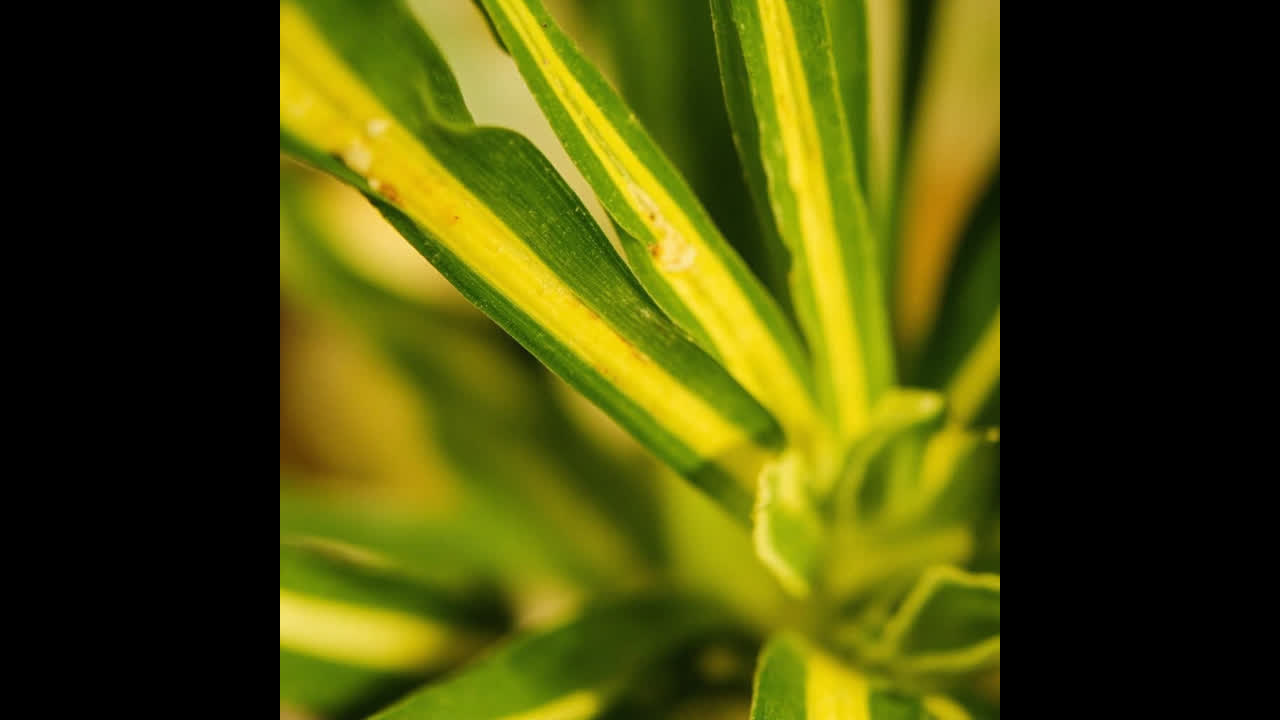
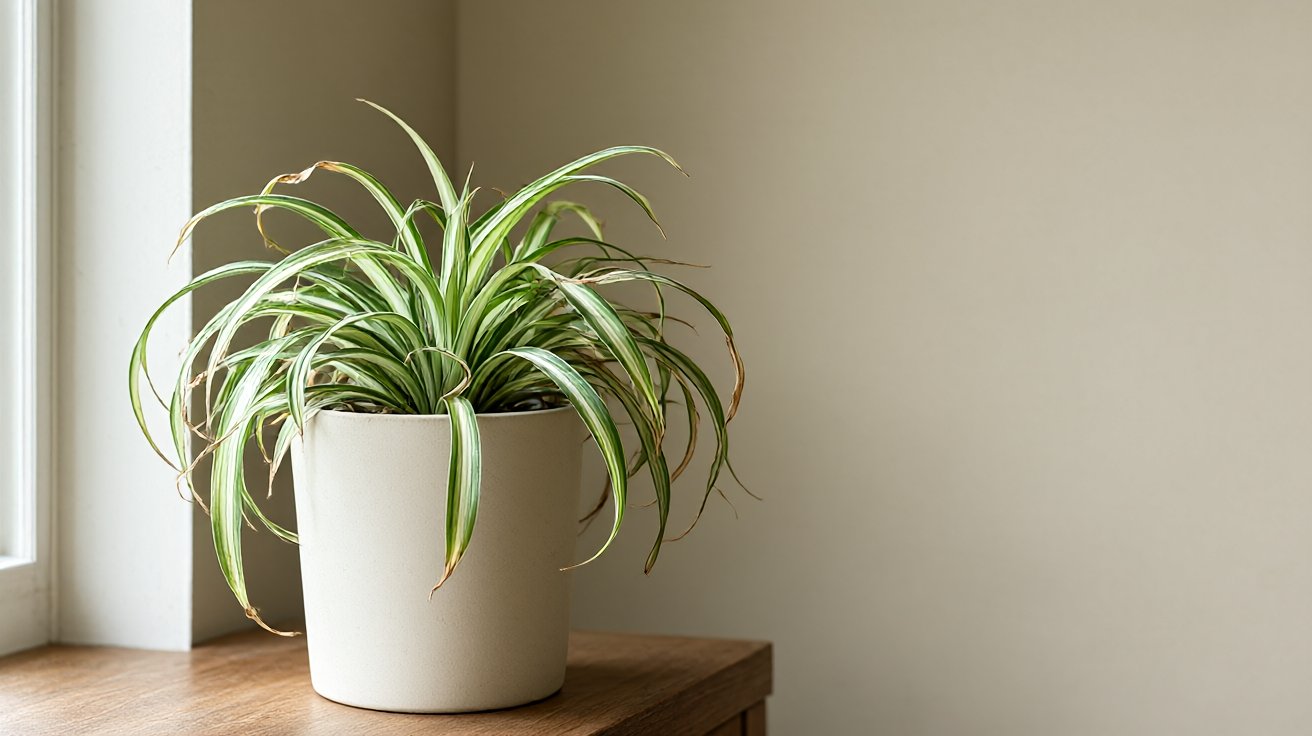
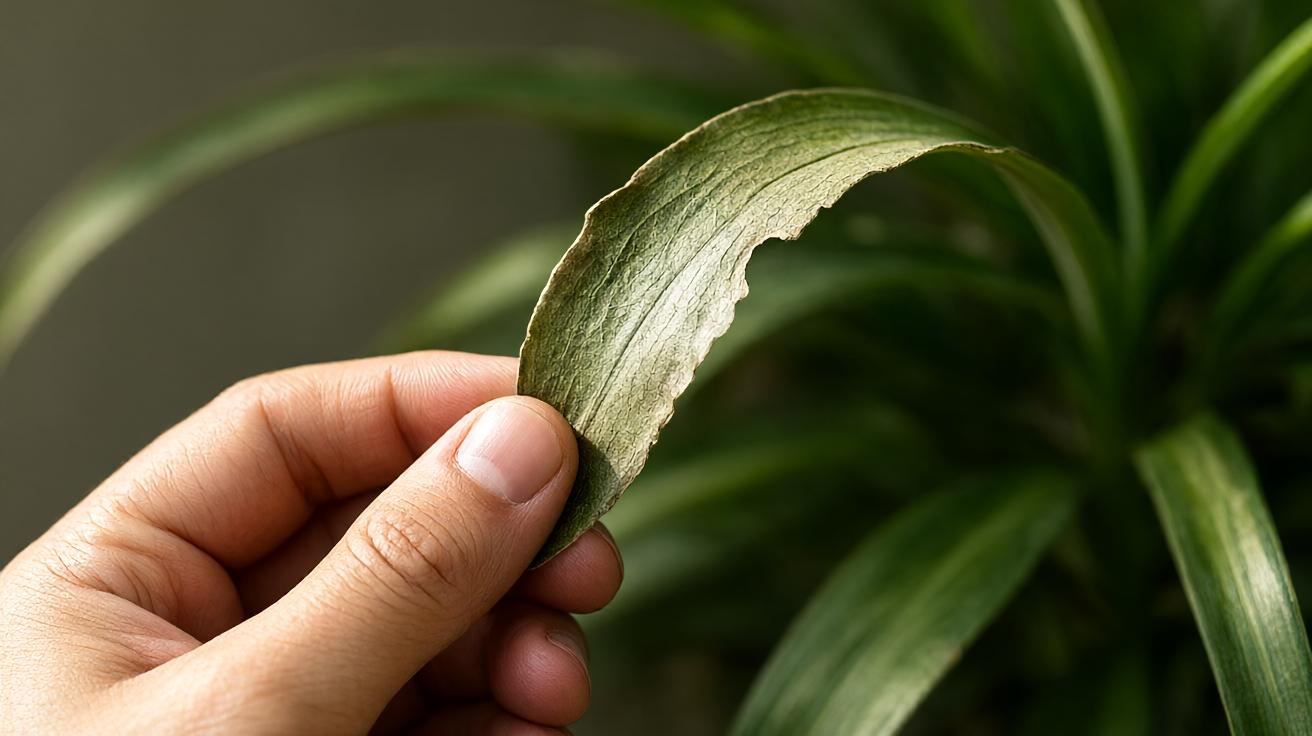
A healthy spider plant leaf is flat, slightly arching, with a smooth edge. When curling starts, the leaf folds along its length, often rolling inward toward the midrib, sometimes twisting into a spiral. The tips may stay straight while the middle curls, or the whole leaf may cup. New growth is usually the first to show it, because young tissue is softer and reacts faster to stress.
Curled leaves are often mistaken for brown tips or yellow leaves, but they are different signals. Brown tips point to water quality or salts. Yellow leaves point to watering or light. Curling points to water movement and tissue stress. A plant can have all three at once, which is why the order of diagnosis matters.
The Most Common Causes
Dry air and low humidity
Spider plants evolved in the humid understorey of southern Africa. Indoor air, especially in winter with heating running, can drop well below 30 percent relative humidity. Leaves lose moisture faster than roots can replace it, and the edges roll inward to reduce exposed surface. The curl here is usually uniform across the canopy, worse on the outer leaves, and worse in the morning before watering.
The fix is humidity, not more water. Raising water frequency on dry air only risks root rot. Group plants, use a pebble tray, or run a small humidifier near the plant. Aim for 40 to 50 percent relative humidity. Avoid misting as a primary fix; it raises humidity for minutes and can spot variegated leaves.
Mineral and fluoride buildup
Fluoride and soluble salts in tap water accumulate in leaf tips and margins over time. The tissue becomes brittle and curls or scorches. This is the same chemistry behind brown tips, but curling can appear first when the buildup is lower. If your plant has both curling and brown tips, water quality is a strong suspect.
Switch to rainwater, distilled water, or water that has been filtered. If you must use tap water, let it stand for 24 hours to dissipate chlorine, but understand that standing does not remove fluoride. Our guide on spider plant tap water and fluoride explains the difference and the limits of each method.
Cold drafts and temperature swings
Spider plants tolerate a range of 13 to 27 degrees Celsius, but sudden drops cause tissue stress and curling. A plant near a window in winter, or under an air conditioning vent, can curl within days. The curl here often appears on the side facing the draft, and the affected leaves may feel cool to the touch.
Move the plant away from the draft source and let it recover. Do not move it to a much warmer spot suddenly; that adds heat stress on top of cold stress. For the full temperature range and thresholds, see our spider plant temperature tolerance guide.
Root bound and water stress
A spider plant that has filled its pot with roots cannot take up water fast enough, especially in warm weather. Leaves curl as the plant rations moisture. This often shows as curling plus slow growth, plus soil that dries within a day or two of watering. The plant may also push out fewer spiderettes.
Check the drainage hole for circling roots. If the root ball is dense, repot into a container one size larger with fresh, well-draining mix. Our step-by-step how to repot a spider plant guide covers the procedure, and the when to repot a spider plant guide helps you time it.
Overwatering and early root rot
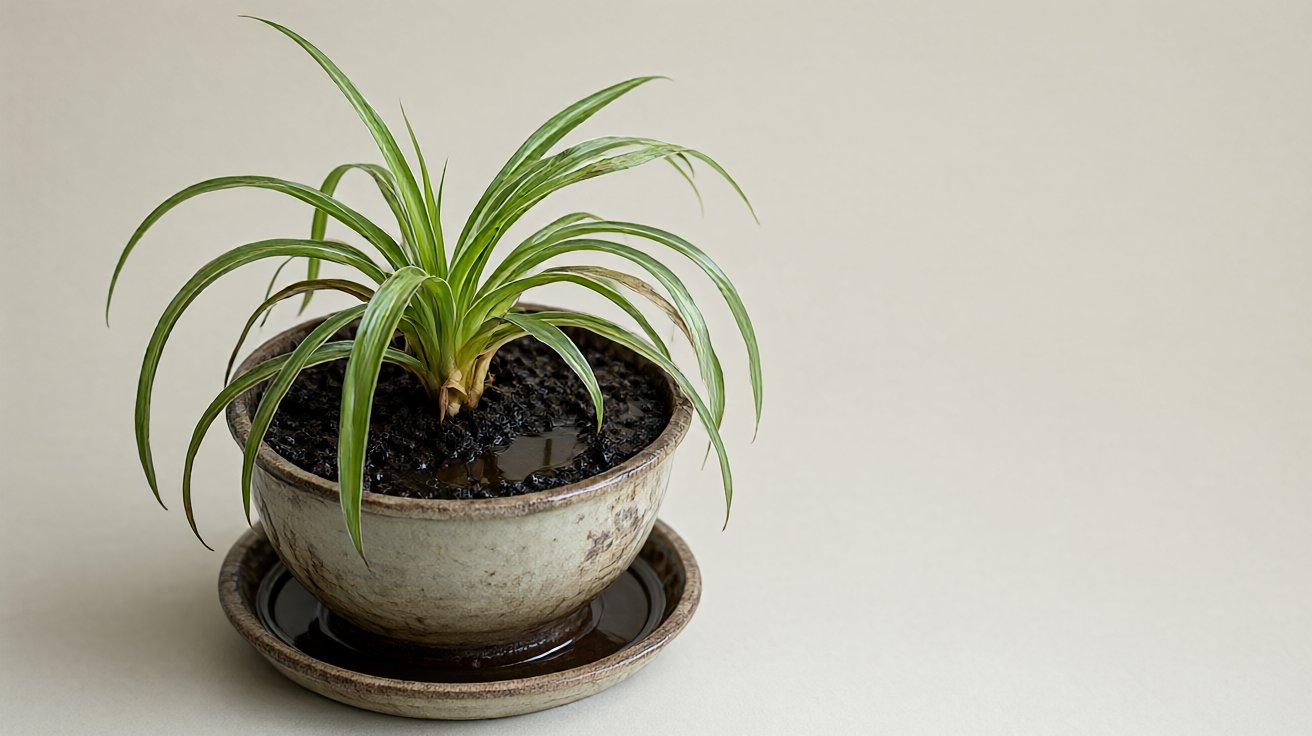
Overwatering damages roots first. Damaged roots cannot absorb water, so the plant shows drought stress symptoms, including curling, even though the soil is wet. The difference from true drought is that the soil stays damp and the base of the plant may feel soft or smell musty.
If you suspect this, stop watering and check the roots. Remove mushy, brown roots and repot into fresh mix. Our spider plant overwatering guide covers diagnosis and recovery, and spider plant root rot covers advanced damage.
How to Diagnose Before You Act
Run through these checks in order, because the causes overlap:
1. Touch the soil. If it is dry two centimetres down, water stress or root bound is likely. If it is wet, suspect overwatering or root rot.
2. Check the air. If humidity is below 35 percent and the curl is uniform, dry air is the leading cause.
3. Check the location. If the plant sits in a draft or near a heat source, temperature stress is likely.
4. Look at the roots. If they circle the pot or push out of the drainage hole, the plant is root bound.
5. Look at the water. If you use tap water and see brown tips alongside curling, mineral buildup is contributing.
Only change one variable at a time. If you raise humidity, switch water, and repot on the same day, you will not know which fix worked.
Recovery Timeline
Curled leaves that are mildly stressed can flatten again within one to two weeks once the cause is removed. Severely curled or twisted leaves usually do not uncurl fully; they should be left if they are still green, because they still photosynthesise. Remove only leaves that are brown, mushy, or dead. New growth is the real indicator of recovery, and it typically appears within two to four weeks.
If curling persists after six weeks of corrected conditions, revisit the root system. Curling that does not resolve is usually a root problem, not a leaf problem.
Prevention
Keep humidity above 40 percent, water with low-mineral water, avoid drafts, and repot every one to two years before the plant becomes root bound. A plant that is not stressed does not curl. For the full care baseline, see our spider plant care guide, and if curling is only one of several symptoms, our spider plant problems index helps you sort the bigger picture.
Turn That PDF Into a Spreadsheet in Minutes
You've seen how to do it manually — now let the tool handle the heavy lifting. Upload your bank statement and get Excel, CSV, or QBO in a few clicks.
Try It Free