Pothos (Epipremnum aureum) is one of the most forgiving indoor plants you can grow — but “low maintenance” doesn’t mean no maintenance. The difference between a pothos that survives and one that thrives comes down to understanding what this tropical vine actually needs indoors. This guide covers every core care attribute so you can keep yours full, healthy, and trailing beautifully year-round.
The most common misconception about pothos is that it grows in anything, anywhere. It survives in low light, in heavy soil, in dry air — but it won’t put on the lush, variegated growth that makes it a standout houseplant. Give it the right conditions and you’ll see new leaves unfurling every week during the growing season, with trailing stems that reach six feet or more.
Pothos Light Requirements: The Key to Full Growth and Variegation
Pothos thrives in bright indirect light — think near an east- or north-facing window, or pulled back from a south- or west-facing one. In this range (roughly 200–400 foot-candles), growth is steady and variegation on cultivars like Marble Queen and Neon stays vivid.
Below 200 foot-candles, growth slows noticeably. Leaves come out smaller, internodes stretch longer, and variegated varieties progressively revert to solid green. This is a survival response: the plant produces more chlorophyll to compensate for low light. It’s not fatal, but if you want that marbled look, you’ll need to move it closer to a window or add a grow light.
Direct sun is the other extreme. More than an hour or two of direct afternoon light scorches the leaves — you’ll see bleached, papery patches that never heal. Morning sun is gentler and usually tolerated.
| Variety | Light Needs | Growth Speed |
|---|---|---|
| Golden Pothos | Low to bright indirect | Fast |
| Marble Queen | Bright indirect | Moderate |
| Neon Pothos | Bright indirect | Moderate |
| Pearls and Jade | Bright indirect | Slow |
| Jessenia | Bright indirect | Slow |
Watering: How Often and How Much
Water your pothos when the top inch of soil feels dry to the touch. In most indoor environments this means every 7–10 days during the growing season (spring through fall) and every 14–21 days in winter. The exact interval depends on your pot size, soil mix, light level, and humidity — so use the finger test rather than a calendar.
When you water, water thoroughly until it runs out of the drainage holes. This flushes out accumulated salts and ensures the root ball is evenly moist. Never let the pot sit in a saucer of standing water for more than 30 minutes.
The most common mistake is reactive watering — waiting until leaves droop before giving a drink. A drooping pothos will bounce back after watering, but repeated stress weakens the root system over time and invites yellow leaves from overwatering when the soil never gets a chance to dry. Water on a dry-soil schedule instead.
Soil and Potting Mix
Pothos needs a well-draining mix that holds some moisture but never stays soggy. Standard potting soil is too dense on its own — it compacts over time, reducing oxygen at the roots. A simple mix of two-thirds peat- or coco-based potting mix with one-third perlite or coarse bark works well.
Key properties to look for:
- Drainage: water should flow through within 10–15 seconds of pouring
- Aeration: the mix should feel light and fluffy, not dense
- Slight moisture retention: coco coir or peat holds some water without waterlogging
Repot every 18–24 months, or when roots circle the inside of the pot or emerge from drainage holes. Spring is the best time. Move up one pot size — no more than two inches larger in diameter. See pothos soil requirements for detailed mix ratios.
Humidity and Temperature
Pothos tolerates average indoor humidity (40–50%) but grows best at 50–60%. In heated winter homes where humidity drops below 30%, leaf tips may brown and curl. A small humidifier nearby or grouping with other plants helps. Misting is less effective — it raises humidity for only a few minutes.
The ideal temperature range is 65–85 °F (18–29 °C). Pothos tolerates brief dips to 50 °F (10 °C) but prolonged cold causes leaf yellowing and drop. Keep it away from cold drafts, air conditioning vents, and heating radiators.
| Condition | Ideal Range | Tolerance |
|---|---|---|
| Temperature | 65–85 °F / 18–29 °C | Down to 50 °F / 10 °C |
| Humidity | 50–60% | Down to 30% |
| Draft tolerance | None | Avoid all cold drafts |
Fertilizing: When, How Much, and What to Use
Feed pothos once a month during the growing season (March through September) with a balanced liquid fertilizer diluted to half strength. A 10-10-10 or 20-20-20 formula works well. Skip fertilizing from October through February when growth naturally slows.
More is not better. Over-fertilizing causes salt buildup in the soil, which burns root tips and shows up as brown, crispy leaf edges. If you suspect salt accumulation, flush the soil with plain water (run twice the pot volume through) and reduce feeding frequency.
Signs of nutrient deficiency include uniform pale green or yellow on older leaves (nitrogen) or stunted new growth. These are rare in pothos grown in decent potting mix, and usually resolve with one or two regular feedings.
Propagation: Stem Cuttings That Root Reliably
Pothos is one of the easiest plants to propagate. Here is the method that works consistently:
- Choose a healthy stem with at least 3–4 leaves and one visible node (the small brown bump where the leaf meets the stem)
- Cut just below the node with clean scissors or a sharp knife
- Remove the lowest leaf to expose the node — this is where roots will emerge
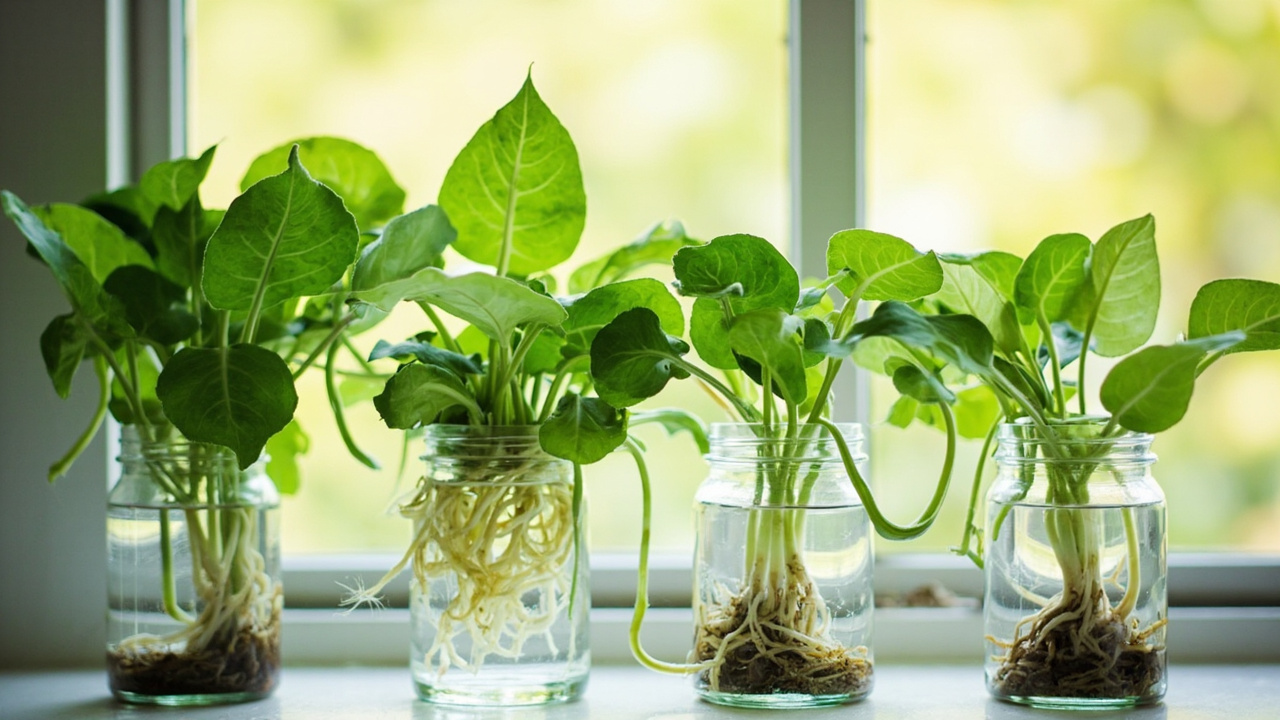
- Place the cutting in a glass of water, ensuring at least one node is submerged
- Set in bright indirect light and change the water every 3–4 days
- Wait 2–4 weeks for roots to reach 2–3 inches, then transplant to soil
Soil propagation works too — just stick the node into moist, well-draining mix and keep it humid for the first week. For a detailed walkthrough, see propagating pothos from cuttings.
Pruning and Training: Keeping Pothos Full, Not Leggy
Pruning is the secret to a bushy, full pothos instead of a bare vine with leaves only at the tips. Cut stems back to just above a node — new growth will sprout from that point, branching the plant. The best time is spring or early summer when the plant is actively growing.
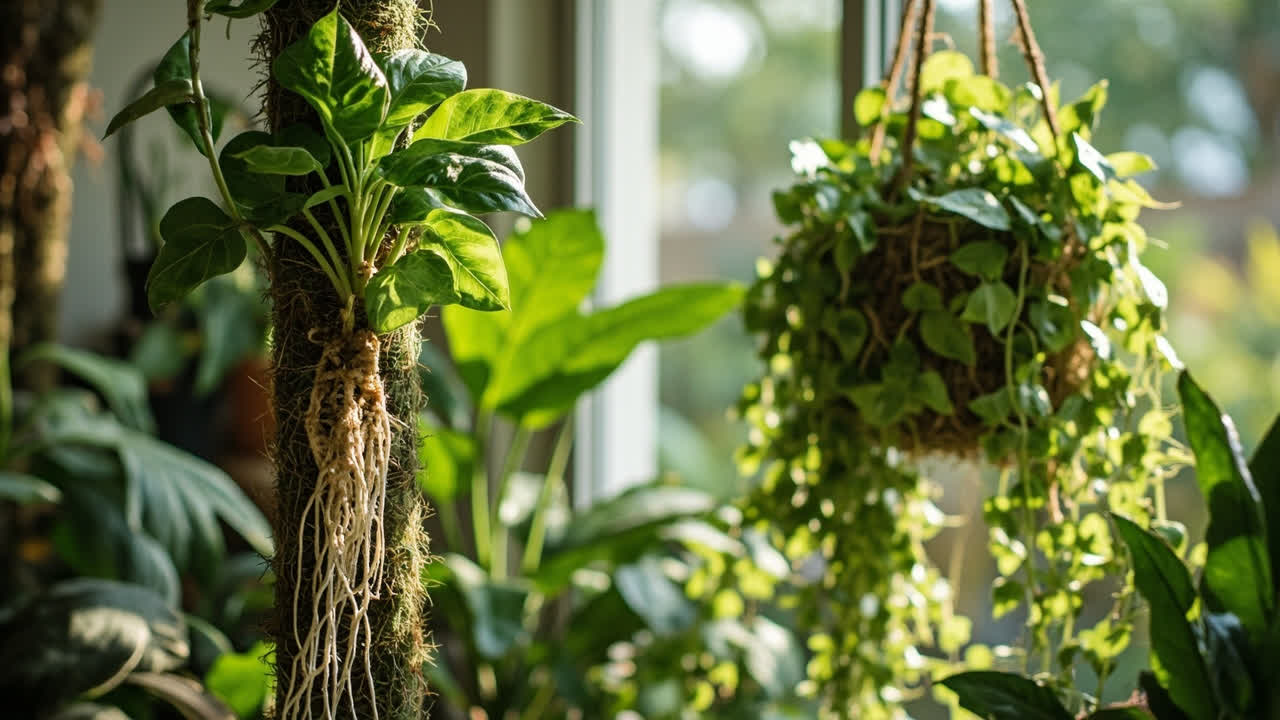
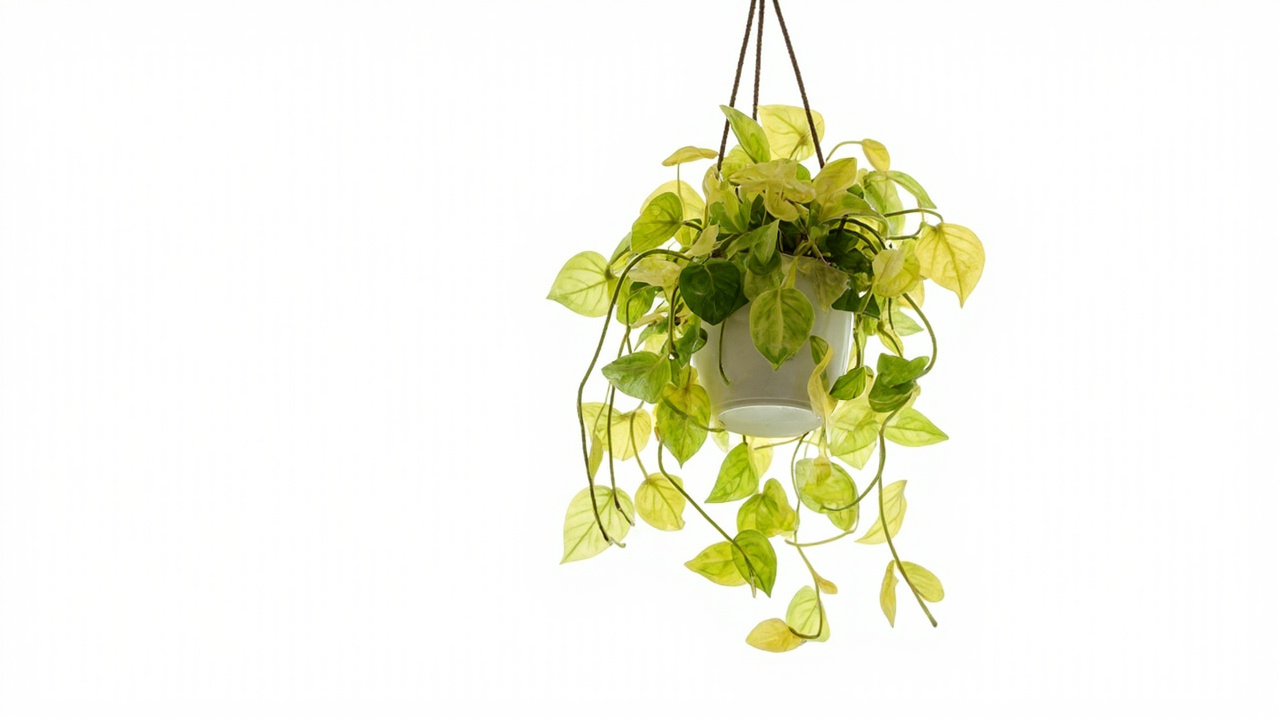
To train pothos to climb, provide a moss pole or trellis and gently tie stems to it. Aerial roots will eventually grip on their own. For a hanging basket, let the vines trail freely and trim the tips every few weeks to encourage side branching.
After pruning, the cut end may look bare for a week or two. New growth typically emerges from the nearest node within 10–14 days in warm, bright conditions.
Common Pothos Varieties and Their Care Differences
Not all pothos are identical. Here is how the most popular cultivars differ:
Golden Pothos
The classic. Green leaves splashed with yellow-gold variegation. Tolerates lower light than any other variety and grows fastest. The most beginner-proof option.
Marble Queen
Heavily marbled white and green, sometimes more white than green. Needs brighter light to maintain variegation — in low light it reverts to mostly green. Growth is noticeably slower than Golden.
Neon Pothos
Bright chartreuse-green leaves with no white variegation. The color intensifies in brighter light. More tolerant of low light than Marble Queen but less vigorous than Golden.
Pearls and Jade
Smaller leaves with white and green marbling, similar to Marble Queen but more compact. One of the slower growers. Needs bright indirect light and consistent watering.
Jessenia
Lime-green variegation on a golden-green base. Similar care to Marble Queen but slightly more tolerant of medium light. Slow grower — patience required.
When Things Go Wrong: Quick Troubleshooting
Yellow leaves, brown tips, leggy stems — pothos sends clear signals when something is off. The fix depends on reading the symptom pattern correctly:
- Yellow leaves all over + wet soil — likely overwatering. Let soil dry and check drainage
- Yellow leaves + blackened stems + sour smell — root rot. See how to save a dying pothos
- Lower leaves yellowing one at a time — natural aging. Normal if it’s occasional
- Leggy growth + small leaves — too little light. Move closer to a window
- Brown crispy tips — low humidity or salt buildup from over-fertilizing
For a full diagnostic walkthrough, see our guide to pothos yellowing causes.
Turn PDF Bank Statements Into Workable Spreadsheets
Your bank statement is a mess of numbers, but your books shouldn't be. Use our converter to get Excel, CSV, or QBO files — ready for QuickBooks.
Try It Free Now