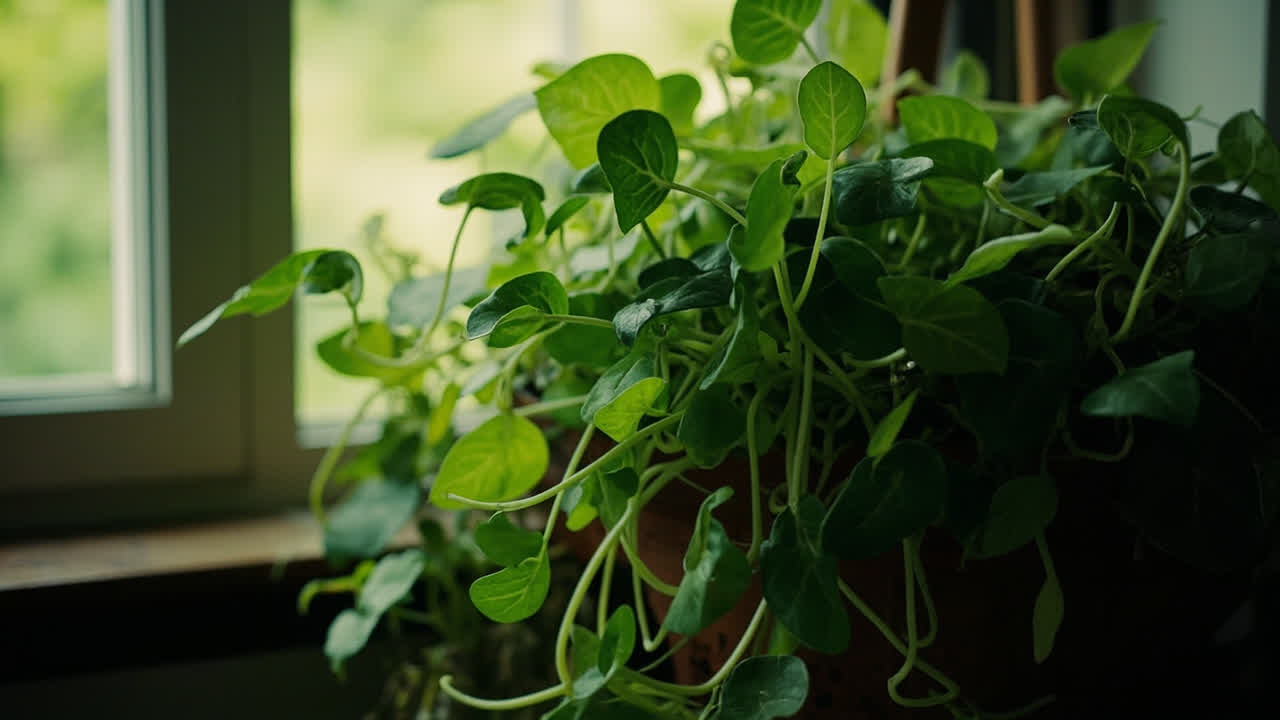
Your Pothos looked fine last week. This week, the newest leaves are coming in smaller than they should be, the vines are stretching further apart, and that rich, deep green has faded to something closer to pale yellow-green. The plant is not dying — but it is telling you something about the light it is getting.
Pothos is famous for tolerating low light, but “tolerating” and “thriving” are very different things. A Pothos that tolerates its light position survives; a Pothos that is matched to its light position produces a new leaf every 2 to 3 weeks, with compact 5 to 8 cm internode spacing and deep, even colour. The difference shows in how the plant looks and grows over months.
The right light is not a single number. It is a position, a duration, a direction, and a season — variables that change with where you place the plant and what time of year it is. This page covers the five variables that drive the result and the four cases where the standard rules fail.
What Pothos Actually Needs for Light
Epipremnum aureum — Pothos, Devil’s Ivy — is native to the Solomon Islands, where it grows as an understory vine in tropical rainforest. In that environment, it receives bright, dappled light filtered through the forest canopy. This is exactly the condition that produces the vigorous, large-leaved, deeply coloured Pothos that appears in all the photographs of thriving specimens.
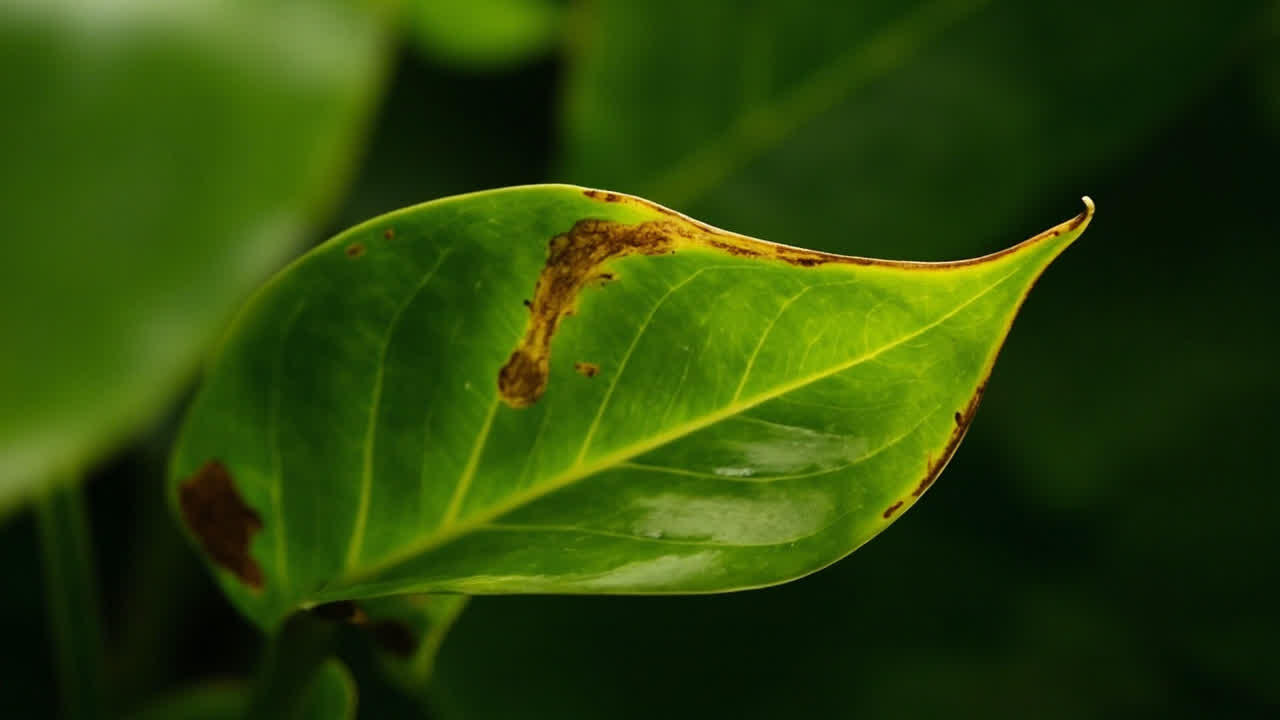
The key word is indirect. Pothos cannot handle direct sun — the leaves scorch within hours, developing brown, papery patches that are irreversible. However, it needs bright ambient light to maintain its colour, produce new leaves at a reasonable pace, and keep the internode distance compact and dense rather than stretched and sparse.
In practical terms for a Singapore home: a position within 1 to 2 metres of a window with good daylight, where the plant receives no direct sun but is in the naturally bright zone of the room. This is the sweet spot for Pothos, and it is the starting point for every adjustment below.
Light Variables That Affect Your Pothos
Light is not a single dial you set once. The variables that drive the result can be broken down into five components, and each one shifts the Pothos response in a different way.
Light intensity. This is the brightness at the leaf surface, measured in lux or in the practical units of “can you read a book without a lamp here at noon?” Pothos performs best between 2,000 and 10,000 lux — a bright window zone, not a deep interior corner. A position that looks bright to your eyes may be a third of what the plant needs.
Light duration. Pothos benefits from 8 to 12 hours of light per day. In practice this matches the natural day length at most latitudes and needs no intervention.
However, in a north-facing room in winter, the effective duration can drop below 6 hours — too short to maintain the plant’s growth budget. A simple lamp on a timer covers the gap.
Light direction. Pothos grows toward its light source. A plant that receives light from one side only will lean, develop one-sided growth, and produce uneven leaves.
Rotate the pot a quarter turn every 2 to 3 weeks to keep the growth symmetrical. The University of Florida IFAS Extension recommends the same quarter-turn cadence for most tropical foliage plants to prevent phototropism from distorting the shape.
Window orientation. North-facing windows in the northern hemisphere give steady, indirect, low-intensity light — ideal for Pothos without a curtain.
East-facing windows give bright morning sun that is generally safe for Pothos if the plant is set back 1 to 2 metres from the glass. South and west-facing windows give intense afternoon sun that scorches Pothos leaves within hours unless filtered through a sheer curtain.
Seasonal variation. A position that is bright indirect in April becomes deep interior in November once the sun angle drops. In tropical Singapore the swing is smaller; in temperate climates, the same Pothos may need to move 1 metre closer to the window between summer and winter to maintain the same effective intensity.
The Royal Horticultural Society notes that most tropical houseplants require this seasonal repositioning to hold their growth rate through the low-light half of the year.
The Four Light Zones in a Typical Home
Not all “near a window” positions are equal. The four zones, broken down by intensity:
Zone 1 — Direct sun. This zone sits 0.5 to 1 metre from an unobstructed east, south, or west-facing window. It is too intense for Pothos. The leaves will develop brown scorch patches, the colour will bleach, and the plant will show stress within days of placement.
South and west-facing windows in Singapore are the most intense because of the sun angle — avoid placing Pothos in these positions without a sheer curtain filtering the light.
Zone 2 — Bright indirect. 1 to 2.5 metres from a window, or behind a sheer curtain. This is the ideal zone for Pothos.
Pothos in this zone receives enough ambient light to maintain deep colour, produce new leaves every 2 to 3 weeks during the growing season, and keep the internode spacing tight — leaves 5 to 8 cm apart on the vine, not 15 to 20 cm apart. A position 1 to 2 metres from a north-facing window, or 2 to 3 metres from an east-facing window, typically falls into this category.
Zone 3 — Moderate to low. 3 to 4 metres from a window, interior of a room with windows on one side. Pothos will survive here, but slowly.
Growth rate drops to one new leaf every 4 to 6 weeks during the growing season. The leaves come in slightly smaller. The vines extend with wider gaps between each leaf.
Pothos in Zone 3 is not suffering — it is simply in maintenance mode rather than growth mode. If you are fine with a slow-growing, compact plant, this is acceptable. If you want the lush, full Pothos you see in photographs, it is not.
Zone 4 — Very low light. Rooms with no windows, or more than 4 metres from any window. Pothos can survive here for a few months, but this is below its actual threshold for healthy maintenance.
Within 3 to 6 months, the plant will have depleted its stored energy reserves, the newest leaves will be pale and small, and the vines will look genuinely weak and drawn. If your space has no natural light, consider a grow light — a simple LED bulb in a desk lamp positioned above the plant for 8 to 12 hours a day will provide sufficient supplementary light for a Pothos to survive and even grow slowly.
How to Optimise the Light in Your Space
If your Pothos is in the wrong position, move it. This is the single most effective change you can make — no amount of fertiliser, watering adjustment, or humidity management compensates for poor light.
The decision rule depends on the existing position. Use this match-the-plant-to-the-position logic: if the plant is in Zone 1 (direct sun), move it back 1 to 2 metres or add a sheer curtain. If it is in Zone 4 (very low light), move it closer to the brightest acceptable window, or supplement with a grow light.
Best positions:
- One to 2 metres from a north-facing window
- Two to 3 metres from an east-facing window
- Behind a sheer curtains from a south or west-facing window
- Any position in a room where the plant is clearly visible in daylight without squinting at glare
Positions to avoid:
- Directly on a windowsill, unless the window faces north and has no direct sun
- Corners that are more than 3 metres from any window
- Rooms with no windows or only small windows that provide minimal ambient light
- Any position where you can see direct sun on the plant’s leaves during the day
Grow lights as a supplement: if your space genuinely lacks natural light — a windowless room, a corridor, a bathroom with no window — a full-spectrum LED grow bulb in a desk lamp positioned 20 to 30 cm above the plant for 8 to 12 hours a day will provide enough light for a Pothos to maintain healthy growth. The lamp does not need to be expensive; any 10 to 15 watt LED grow bulb is sufficient for a single Pothos plant.
When Light Rules Don’t Apply
The bright-indirect rule covers 90 percent of Pothos light situations. However, four cases need adjustment — the standard advice does not work, and following it literally can damage the plant.
Low-light winter survival in temperate climates. A Pothos that thrived on a north windowsill in May will likely show slow growth and pale new leaves by November once the day length drops below 10 hours. The plant is not sick — it is responding to the reduced daily light integral.
A supplement of 2 to 4 hours of grow light in the morning bridges the gap and keeps the growth rate consistent through the dark months. Without that supplement, expect the plant to enter a soft dormancy and resume vigorous growth in March.
Grow light limitations in dark interiors. A single 10 to 15 watt LED bulb in a desk lamp covers one Pothos within about 30 cm. The same bulb cannot light a whole shelf of plants, no matter how bright it looks to the human eye.
For multiple plants, plan one bulb per plant, or use a 2 ft to 4 ft LED grow strip rated at 20 to 40 watts for a 60 to 90 cm shelf. The light intensity at the leaf surface is what matters — a bulb too far above the plant or too low in wattage delivers supplementary light in name only.
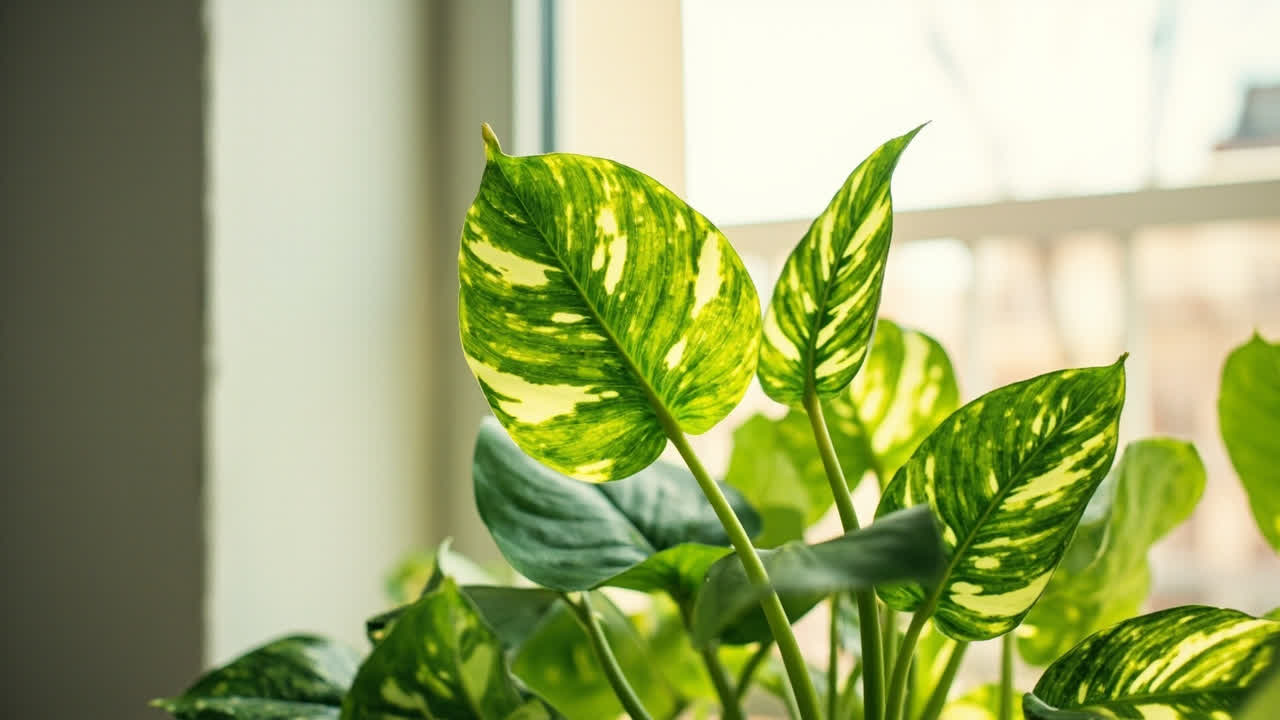
Variegated varieties needing more light. Marble Queen, Golden, and Neon Pothos carry white, yellow, or chartreuse sections in their leaves. Those sections contain no chlorophyll and cannot photosynthesise.
Variegated Pothos has to make do with the green portions, which means it needs roughly 30 to 50 percent more light than a fully green Golden Pothos to maintain the same growth rate. A position that works for a ‘Jade’ Pothos may produce slow, leggy growth on a Marble Queen in the same spot.
Move variegated varieties to the brightest acceptable zone — typically the closest position to the window that still avoids direct sun.
South-facing window risks in tropical sun. A sheer curtain in front of a south or west-facing window in Singapore does not always filter enough light. During the midday peak (roughly 11 am to 3 pm), the sun can punch through a single layer of standard sheer fabric and scorch the leaves within a single afternoon.
A double sheer layer, a linen roller blind, or moving the plant 2 to 3 metres back from the glass is safer than relying on a single curtain to filter tropical sun. If the leaves bleach at the edges within a day of placement, the curtain is not doing its job — adjust before the damage becomes permanent.
Signs Your Pothos Is Getting Too Little Light
Pothos will tell you if you know what to look for. Here is the progression:
Early stage: new leaves are noticeably smaller than older leaves. The vine is extending but the leaves are not filling in to the expected size. This is the most reliable early indicator — if the newest leaf on a vine is 30 to 50 percent smaller than the leaves behind it, the plant is not getting enough light to produce full-sized foliage.
Mid stage: internode distance increases. In good light, a Pothos vine has leaves spaced 5 to 8 cm apart. In low light, that spacing stretches to 12 to 20 cm.
Pothos is reaching — literally stretching toward whatever light is available, producing new leaves in a desperate attempt to capture more photons. Pothos in this state is etiolating, and you need to move it closer to light.
Advanced stage: overall colour fades to a washed-out yellow-green. The variegated sections of variegated Pothos varieties (Marble Queen, Golden, Neon) become more prominent because the plant reduces chlorophyll in the green sections to try to compensate for insufficient light, while the white and yellow sections expand. The plant is surviving but it is not healthy, and it will continue to decline without intervention.
Signs Your Pothos Is Getting Too Much Light
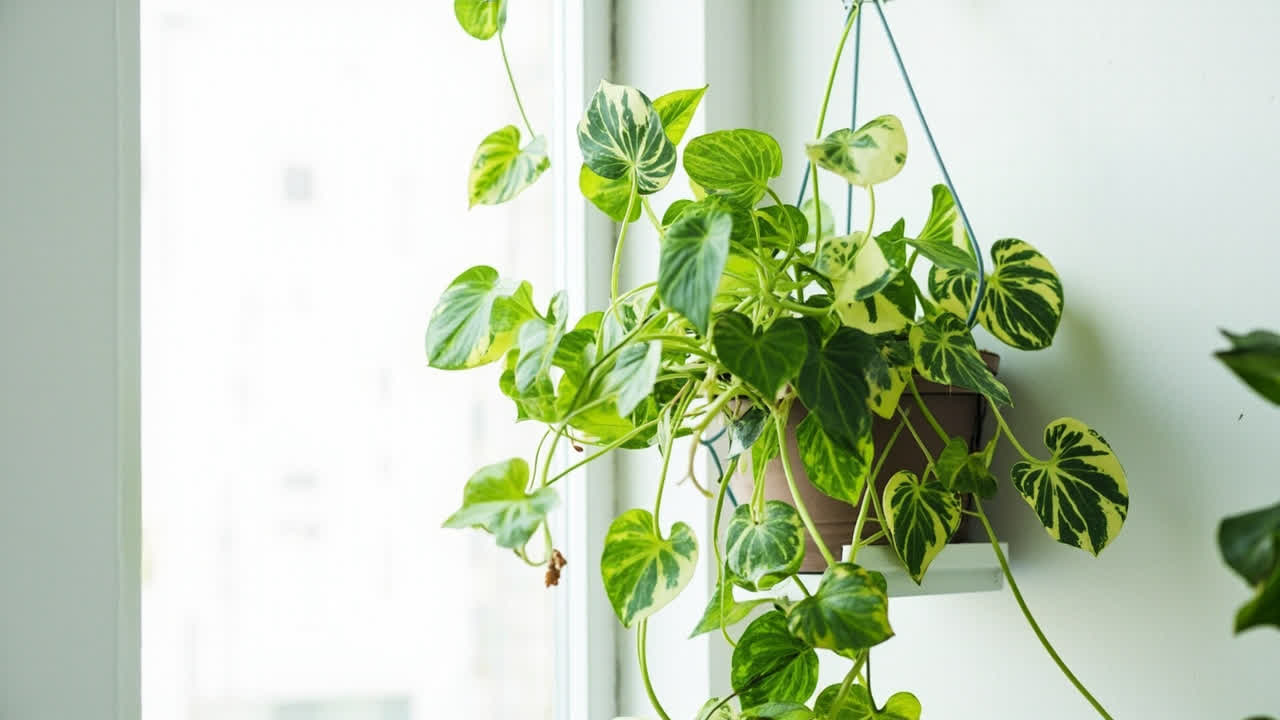
Directly opposite problem — too much light, usually from direct sun:
Brown, papery patches. These appear on the leaf surface, usually starting at the tips and spreading inward. The patches feel thin and crispy to the touch, different from the slightly rubbery texture of a healthy Pothos leaf.
Pothos needs to be moved to a lower-light position immediately, and the burned leaves can be removed at the base if they are too unsightly.
Colour bleaching. The rich green fades to yellow, then to pale yellow-white in extreme cases. This is distinct from the gradual pale wash of low-light etiolation; bleaching from excess light happens faster and is accompanied by the brown scorch patches.
What Good Light Produces Over Time
A Pothos receiving adequate bright indirect light will produce a new leaf every 2 to 3 weeks during the growing season — March through October in Singapore. The leaves will be large (10 to 15 cm on a mature vine), deeply coloured, and attached with short 5 to 8 cm gaps between them on the stem. The overall plant will look dense and lush rather than trailing and sparse.
That consistency in new growth is the real indicator of whether your Pothos has the right light. If it is producing leaves regularly, the light is sufficient. If it has slowed significantly or stopped producing new growth entirely, the first intervention is always: move it closer to the window.
For the full Pothos care routine that works in concert with proper lighting, see the Pothos Plant Care guide and the propagating Pothos from Cuttings guide.
Turn That PDF Into a Spreadsheet in Minutes
You've seen how to do it manually — now let the tool handle the heavy lifting. Upload your bank statement and get Excel, CSV, or QBO in a few clicks.
Try It Free