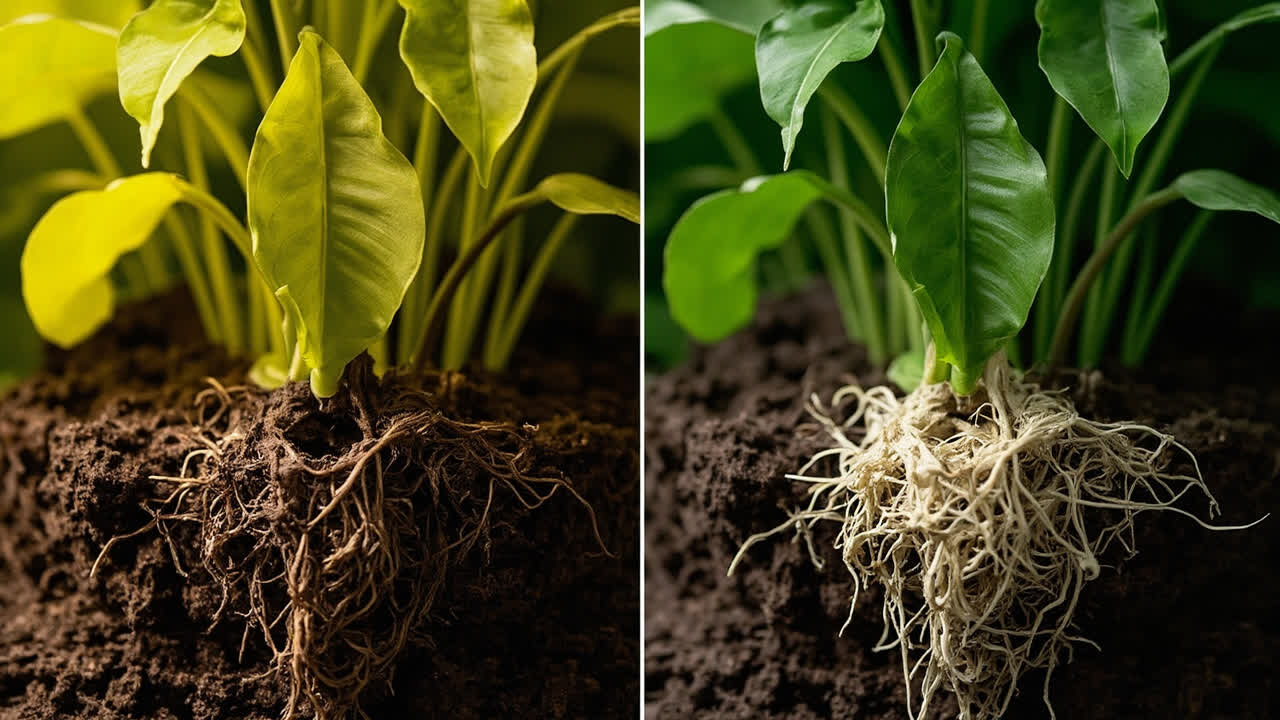
Your Pothos has been growing happily for a year or two, and lately the growth has slowed, the roots are pushing up through the drainage holes, or the soil seems to dry out almost the day after you water. These are the signs that your Pothos is telling you it needs more room. Repotting is straightforward — the right timing and the right soil mix are the only things that matter.
When to Repot a Pothos
Spring and early summer are the best window for repotting because the plant is entering its active growth phase and will recover faster. That said, if you are seeing roots escape through the drainage holes, if the soil is collapsing away from the pot walls when you water, or if growth has genuinely slowed despite good light and feeding, those are practical reasons to repot regardless of the season.
Do not repot just because time has passed. A Pothos that is still growing vigorously, with roots contained inside the pot, does not need disturbing. The stress of repotting only pays off when the plant is genuinely cramped or the soil has degraded.
A good rule of thumb: go up one pot size — roughly 2 to 3 cm larger in diameter. Repotting into a pot that is too large leads to soil staying wet too long and creates the exact conditions for root rot.
What Soil Mix to Use for Pothos Repotting
Pothos roots need two things from soil: moisture retention and drainage. A standard potting mix is too dense on its own — it holds too much water and the roots can suffocate. The ideal mix for Pothos is:
- Two parts general potting mix
- One part perlite or pumice
- One part orchid bark or coarse bark
This combination gives the roots something to grip, excellent drainage, and enough moisture retention to keep the plant happy between waterings without staying waterlogged. If you want to simplify, a 50/50 blend of potting mix and perlite works well enough for most situations.
How to Repot Step by Step
Step 1 — Water the plant the day before. A slightly moist root ball slides out of the pot more cleanly than a dry one. Water it a day before you plan to repot.
Step 2 — Remove the plant gently. Tip the pot sideways, support the base of the stem with one hand, and work the root ball out. Do not pull by the vines — support the plant from below. If the root ball resists, run a clean knife along the inside edge of the pot to free it.
Step 3 — Examine the roots. Healthy Pothos roots are firm, pale cream to tan, and slightly fleshy. If you see dark brown, mushy, or smelly roots, trim those away with clean scissors before proceeding. This is also a good opportunity to loosen the outer layer of the root ball slightly — a gentle teasing with your fingers encourages roots to spread into the new soil rather than staying coiled.
Step 4 — Add soil to the new pot. Put a layer of your soil mix in the new pot, enough so that when you set the root ball in, the top of the root ball sits about 2 cm below the rim of the pot. This gives you room to water without overflowing.
Step 5 — Position and backfill. Set the root ball in the centre. Hold the plant steady and pour the soil mix around the sides, pressing it gently as you go. Do not pack it hard — firm enough that the plant stands upright, loose enough that the soil remains aerated.
Step 6 — Water thoroughly. Water until you see it flow from the drainage hole. This settles the soil, eliminates air pockets, and gets the roots in contact with the new medium. After a week, check the soil before watering again — the plant is adjusting and may use less water than before.
What to Watch After Repotting
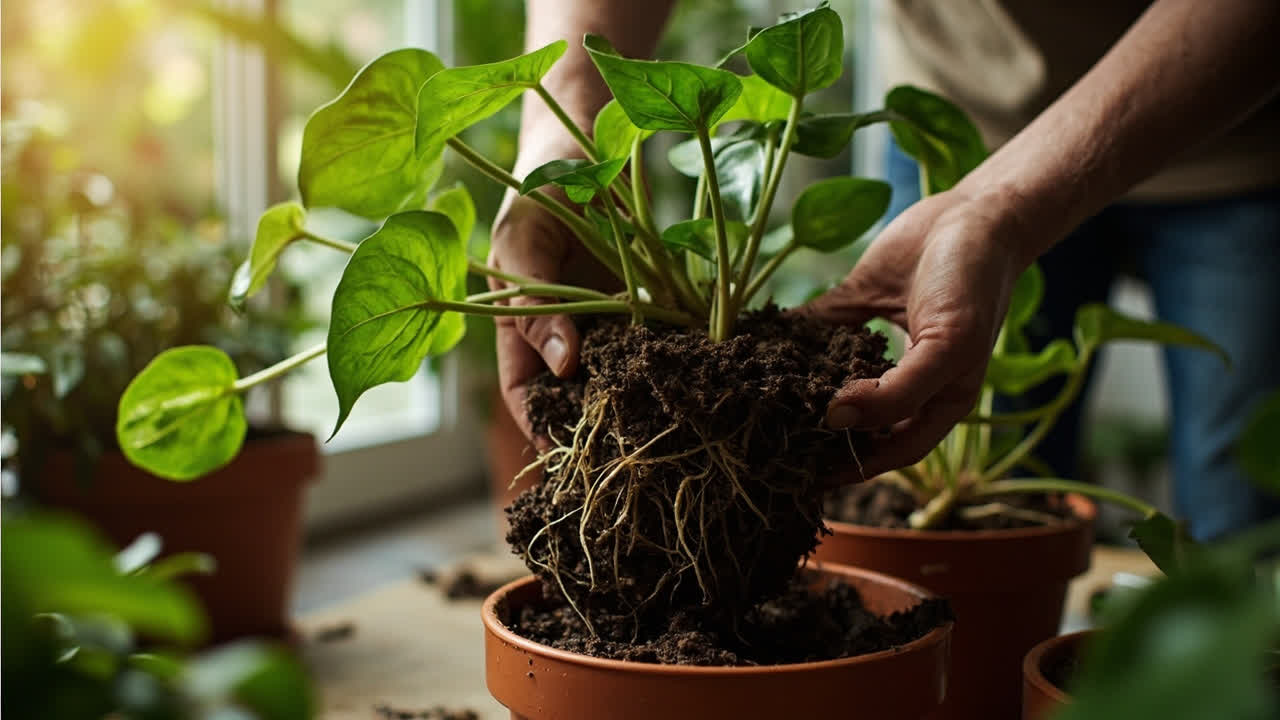
After repotting, your Pothos may look slightly wilted for a day or two. This is normal — the root system is settling and adjusting to the new volume. Do not water again until the top 3 to 5 cm of soil are dry. If the plant stays wilted after three or four days, check whether the soil is waterlogged (overwatering) or whether the roots were damaged more than expected during the process.
Once you see new growth emerging — usually within two to three weeks in the growing season — you know the plant has recovered. Resume your normal watering and feeding schedule from that point.
For the full Pothos care guide, see the Pothos Plant Care guide. For propagation after repotting, see how to propagate Pothos from Cuttings.
From Bank Statement to QuickBooks-Ready File
That manual cleanup you just read about? This tool skips it. Turn your PDF into QBO for QuickBooks without storing your data anywhere.
Start Converting