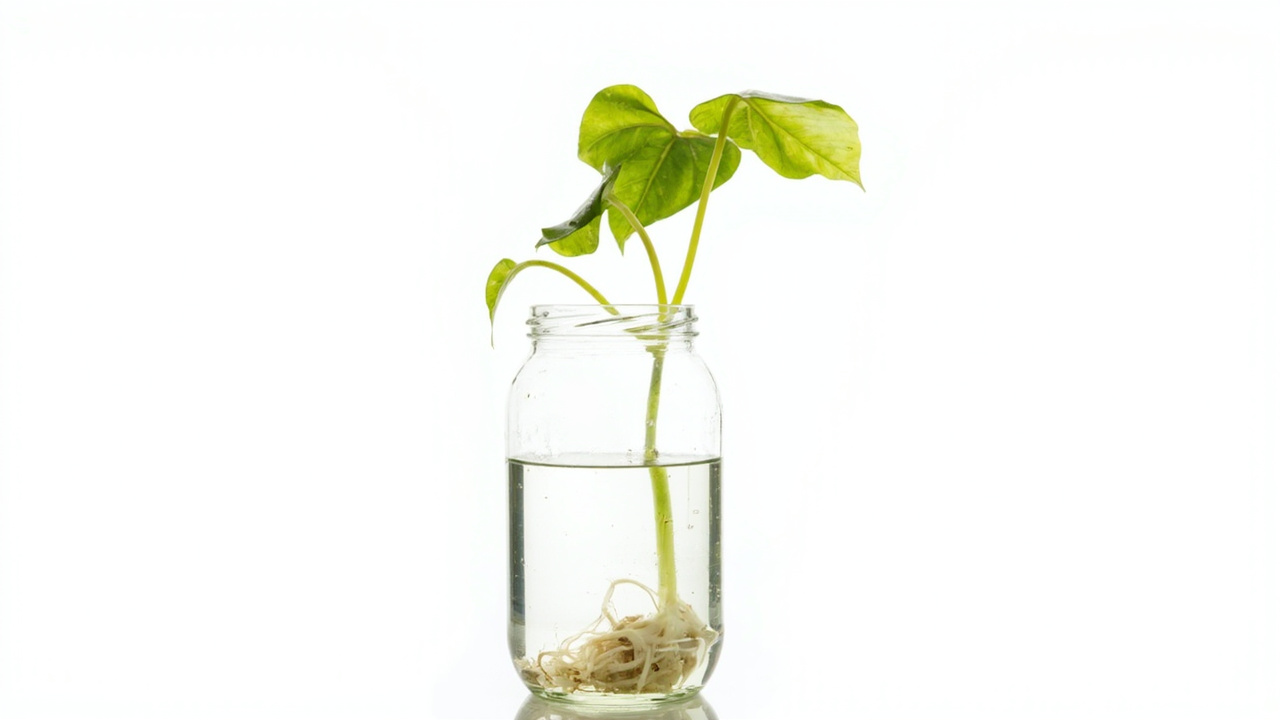
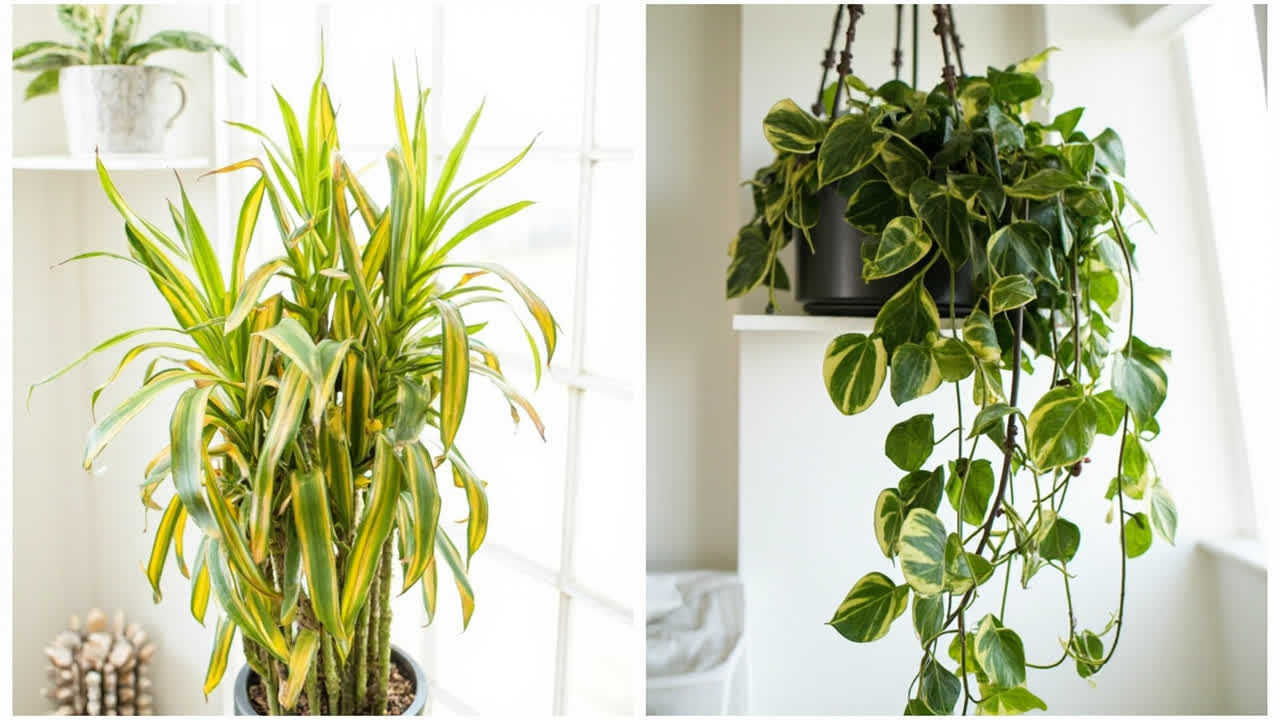
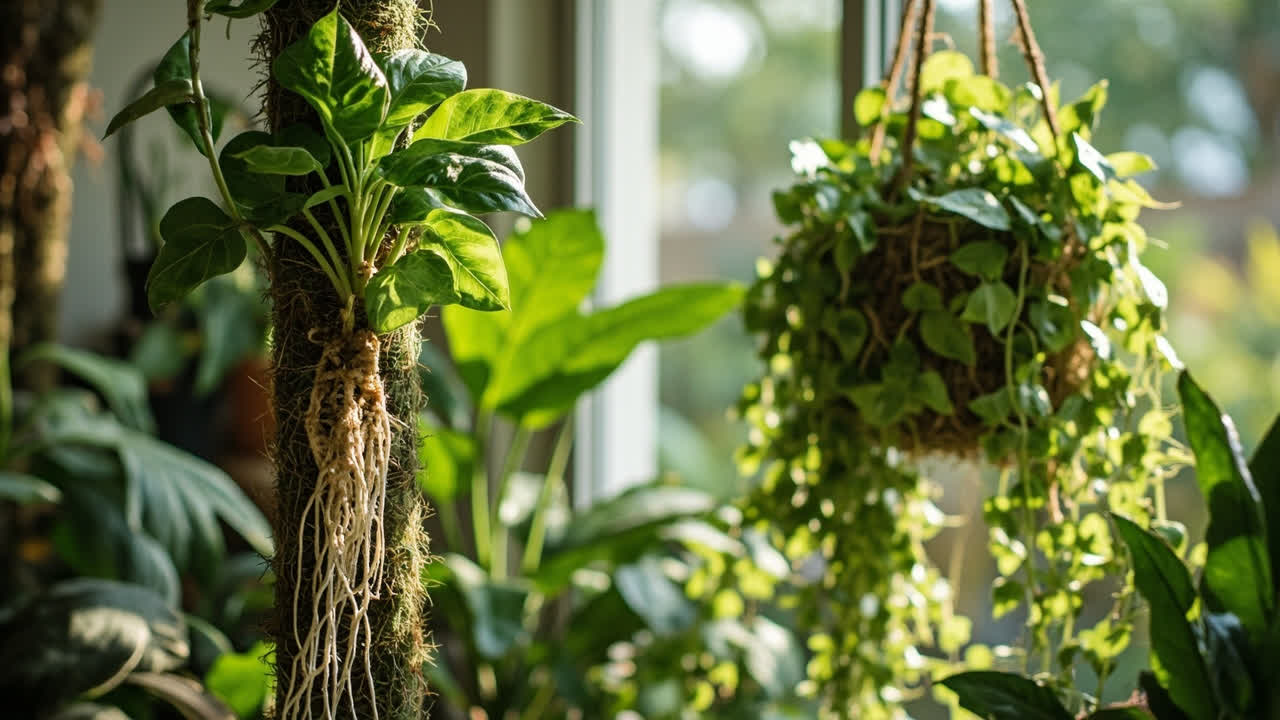
Pothos is not a heavy feeder. You can grow a healthy, actively growing Pothos with minimal fertiliser input — and in fact, this is the approach that produces the best results. The temptation is to feed frequently because the plant looks vigorous and seems to need more.
The line between adequate nutrition and fertiliser burn in Pothos is narrower than most people realise. Half-strength liquid feeds every 2 to 4 weeks during active growth is enough. More than that, and the consequences — salt accumulation, root burn, brown leaf tips — are significantly harder to reverse than the consequences of under-feeding, which mostly show up as slower growth and lighter-coloured new leaves that correct themselves once feeding resumes.
The five sections that follow cover why Pothos stays a low-input plant, the five variables that change the feeding schedule (NPK ratio, fertiliser form, growth phase, season, pot size), a concrete seasonal calendar, the honest limits — when feeding actively hurts — and how to read over- vs under-fertilising symptoms when something has already gone wrong.
Why Pothos Fertilising Is Counter-Intuitive
Most indoor-plant guides assume the reader is dealing with a heavy feeder — a tropical that evolved in nutrient-poor canopy pockets, suddenly parked in a fertilised potting mix. Pothos is the opposite. The Royal Horticultural Society notes that Epipremnum aureum in cultivation tolerates very low nutrition, and the University of Florida IFAS Extension lists Pothos among houseplants that are “sensitive to over-fertilisation” rather than under-fertilisation.
The visible signal Pothos produces is also misleading. When light and water are correct, a Pothos pushes a new leaf every 2 to 3 weeks during the growing season. That pace reads as hunger.
It is not hunger — it is the plant using what is already in the soil.
The risk is one-directional. Under-feeding produces slow growth that corrects within 3 to 4 weeks of resuming half-strength feeds. Over-feeding produces root damage that takes 6 to 8 weeks to recover from, often with visible leaf-tip burn for months.
Because the cost of over-feeding is much higher than the cost of under-feeding, the safer default is to start with less and observe the plant. Escalate only if growth stays sluggish after 4 to 6 weeks of consistent feeding.
What Pothos Actually Needs From Fertilisers
Nitrogen drives the production of new leaves and the deep green colour of the foliage. Phosphorus supports root development. Potassium strengthens cell walls and overall plant resilience.
These are the three primary macronutrients — NPK — that any fertiliser delivers. For a Pothos in active growth, nitrogen is the most important of the three, and the one that produces the most visible result.
In a 15 to 20 cm pot with standard potting mix, the nutrients in the soil are typically sufficient to support active growth for the first 2 to 3 months after purchase or repotting. After that, the reserves deplete and supplemental feeding becomes necessary to maintain the growth rate and colour that indicates a healthy plant.
Newly purchased or recently repotted Pothos plants should not be fertilised for 4 to 6 weeks after purchase, or 4 to 6 weeks after repotting. The potting mix contains enough initial nutrition, and the root system needs time to establish in the new soil volume before it can process additional nutrients efficiently. Feeding too early — when the roots are still recovering from the transplant — causes salt burn and delays rather than accelerates growth.
Fertiliser Variables: What Changes the Feeding Schedule
The same Pothos in the same pot can need fertiliser every 2 weeks in one position and every 6 weeks in another. Broken down into its smallest testable parts, the variables that drive the interval are:
NPK ratio. Balanced formulas (10-10-10, 20-20-20) work for Pothos because the plant does not have one macronutrient demand that overshadows the others.
High-nitrogen formulas (30-10-10) push faster foliage growth but accelerate salt buildup in the soil. They increase leaf-tip burn risk within 4 to 6 weeks of continuous use. High-phosphorus bloom boosters are wasted on Pothos — the plant is grown for foliage, not flowers, and the extra phosphorus precipitates as calcium phosphate in the potting mix.
Liquid vs granular vs slow-release. Liquid fertilisers give the most control — the dose is in the feed, you can skip a week, you can flush if you overdo it.
Granular slow-release products (Osmocote-style) release nutrients over 3 to 6 months depending on temperature and moisture. They suit forgetful waterers but cause salt buildup in small pots because the entire dose is fixed at application time.
Worm casting tea and liquid seaweed are gentler organic alternatives that release nutrients more gradually. They suit soils depleted by long-term synthetic feeding.
Growth phase. A Pothos pushing a new leaf every 2 to 3 weeks is using nutrients as fast as the soil can deliver them.
A Pothos producing one leaf every 6 to 8 weeks is using them slowly. Additional feeding at that point does not accelerate growth. The plant is light-limited or root-bound, not nutrient-limited.
Diagnose growth rate before adjusting the feed.
Season. Active growth runs March through September in the northern hemisphere. The plant drinks more during this window and uses nutrients at roughly twice the rate of winter.
Indoor heating drops humidity to 20 to 30 percent in many homes during winter while the plant’s uptake slows by 30 to 50 percent. Fertilising during this slowdown is the single most common cause of fertiliser burn on Pothos kept in living rooms.
Pot size. A small 10 cm pot holds roughly a quarter of the soil volume of a 20 cm pot. The same half-strength feed builds salts in the small pot four times faster.
The University of Florida IFAS Extension recommends halving standard dose rates for any container under 15 cm and feeding less frequently — every 4 to 6 weeks — rather than scaling up to match the feed schedule you would use for a larger plant.
Feeding Schedule for Pothos Through the Year
Active season: March through September, apply liquid fertiliser at half the recommended concentration every 2 to 4 weeks. Alternatively, apply slow-release granular fertiliser once in March at half the recommended label rate — that single application covers the entire growing window for most indoor Pothos in 15 to 20 cm pots.
The interval depends on the plant’s growth rate. If the Pothos is producing a new leaf every 2 to 3 weeks during the growing season, every-4-weeks feeding at half strength is sufficient. If the growth rate has slowed despite adequate light and watering, move to every-2-weeks feeding at half strength.
Dormant season: October through February, do not fertilise. The plant’s metabolic rate drops significantly in lower temperatures and reduced light, and it cannot use the nutrients efficiently.
Excess nutrients not taken up by the plant accumulate as salt in the soil, creating the exact conditions for root burn. Resume feeding when you see new growth in spring.
After the plant recovers from stress: If a Pothos has been through root rot, severe underwatering, transplant shock, or pest infestation, wait until you see clear new growth — 2 to 3 new leaves fully emerged — before resuming fertiliser. The root system needs to be fully functional to process nutrients, and feeding a stressed plant adds to the burden rather than supporting recovery.
Fertiliser Limits: When Feeding Hurts
The half-strength routine above covers about 90 percent of indoor Pothos situations. However, five cases need adjustment, and in four of them the answer is to feed less — not more.
First 4-6 weeks after repotting. Fresh potting mix carries enough starter nutrients to feed a Pothos for the first 1 to 3 months. Adding fertiliser on top of that is a known cause of leaf-tip burn in newly potted plants, because the fresh mix has no salt history to buffer the new dose.
Wait until new growth appears, then resume at half strength.
Dormant or low-light plants. A Pothos in a north-facing room during winter drinks slowly and uses nutrients slowly. A half-strength feed once a month is too much in this window — skip feeding entirely until growth resumes.
The downside of feeding a dormant plant is salt buildup in the soil, which the slow uptake cannot mask.
Slow-release in small pots. Slow-release granules release nutrients on a timer the manufacturer sets, not a timer matched to your pot size. In a 10 cm pot the released dose is concentrated four times higher per root volume than in a 20 cm pot.
Over 2 to 3 months the salt level rises steadily and produces brown leaf tips by month three. Liquid feeds let you adjust to the plant; slow-release does not.
Stressed, recovering, or pest-infested plants. A Pothos with root rot, spider mites, or active leaf drop cannot process additional nutrients. Feeding adds to the salt load on roots that already cannot keep up.
Resume only after 2 to 3 new leaves have fully emerged.
Over-fertilised plants showing leaf-tip burn. Skip feeding entirely and run a soil flush — clean water through the pot several times, allowing it to drain fully each time.
The Royal Horticultural Society recommends flushing with 2 to 3 pot-volumes of water to clear accumulated salts. Do not resume feeding for at least 6 to 8 weeks; when you do, use half the previous concentration and double the interval.
Diagnosing and Fixing Fertiliser Problems
Over-fertilising: brown leaf tips and margins, white crust of salt on the soil surface, overall wilting despite moist soil, sudden drop of multiple leaves. The fix is a soil flush, then no fertiliser for 6 to 8 weeks, then half the previous concentration at double the interval. If you see these signs, the soil has been over-loaded and the existing leaf damage does not reverse — only new growth will come in clean.
Under-fertilising: slow growth, small new leaves, overall pale colour — particularly in older leaves that have yellowed uniformly across the blade. The fix is straightforward: begin a regular feeding programme at half strength, every 2 weeks, and expect improvement in new growth within 3 to 4 weeks. The old damaged leaves will not recover, but the new growth will emerge at full size and colour.
Micronutrient deficiency: leaf veins green but the tissue between them has turned yellow — interveinal chlorosis — is typically caused by soil pH being too high rather than an actual absence of iron or manganese. Apply a chelated iron supplement as a foliar spray for fastest results, or use a micronutrient fertiliser that includes iron, manganese, and magnesium. Correcting the soil pH by switching to a slightly more acidic potting mix or using filtered water instead of tap water also helps over time.
For the full Pothos care routine, see the Pothos plant care guide. For the watering habits that work in tandem with fertilising to produce the best results, see the Pothos watering guide.
From PDF to Excel in one click
Forget retyping line by line. Upload any bank statement, get a spreadsheet you can actually use. Your files are never stored, and you can test the converter with 3 free conversions.
Try it free