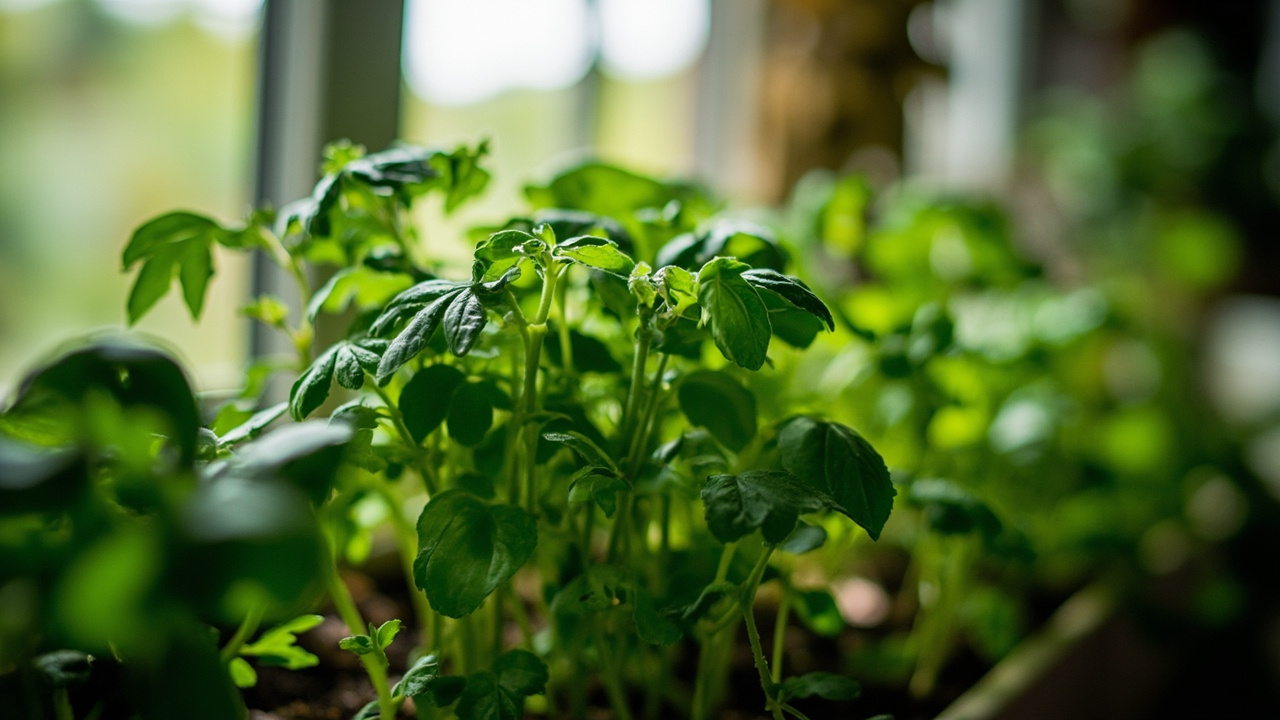
Growing basil indoors works when you treat it as a fast, light-hungry culinary herb, not as a permanent houseplant. The plant can live on a kitchen windowsill for a while, but it grows best when it gets strong light, warm roots, steady moisture, and regular cutting before it stretches or flowers.
The main mistake is trying to keep basil barely alive for months in weak indoor light. A better goal is to keep it actively producing tender leaves, then restart or replace the plant when stems turn woody. That is how indoor basil stays useful instead of becoming a thin, tired plant on the sill.
Start With the Right Indoor Basil Expectation
Basil is an annual herb in most home setups. Indoors, it can produce for several months, especially if you start with a young plant or fresh seedlings. It is not as forgiving as pothos or rosemary because it wants more light, more warmth, and more frequent harvesting.
If your goal is a dependable kitchen herb, think in cycles. Sow or buy a small basil plant, grow it hard under bright conditions, harvest often, and refresh the planting when leaf size drops. This approach fits the broader setup in Aqualogi’s indoor herb garden for beginners guide: indoor herbs work best when the setup matches the crop, not when every herb is treated the same.
Give Basil More Light Than Most Kitchen Herbs
Basil needs the brightest spot you can give it indoors. A south-facing window may work in spring and summer, but many kitchens are still too dim in winter or during cloudy stretches. If the plant leans hard toward the glass, makes long gaps between leaves, or produces pale small growth, light is the first suspect.
An indoor herb garden grow light usually makes indoor basil much easier. Keep the light close enough that the plant grows compactly, but not so close that the leaves dry or bleach. Most small LED herb lights work better when they run for a long daily window rather than a short intense burst.
This is why basil is not always the easiest herb for a casual windowsill. In Aqualogi’s guide to the easiest herbs to grow indoors, herbs that tolerate lower light usually behave better for beginners. Basil rewards better conditions, but it complains quickly when the light is weak.
Use a Pot and Mix That Keep Roots Moist, Not Wet
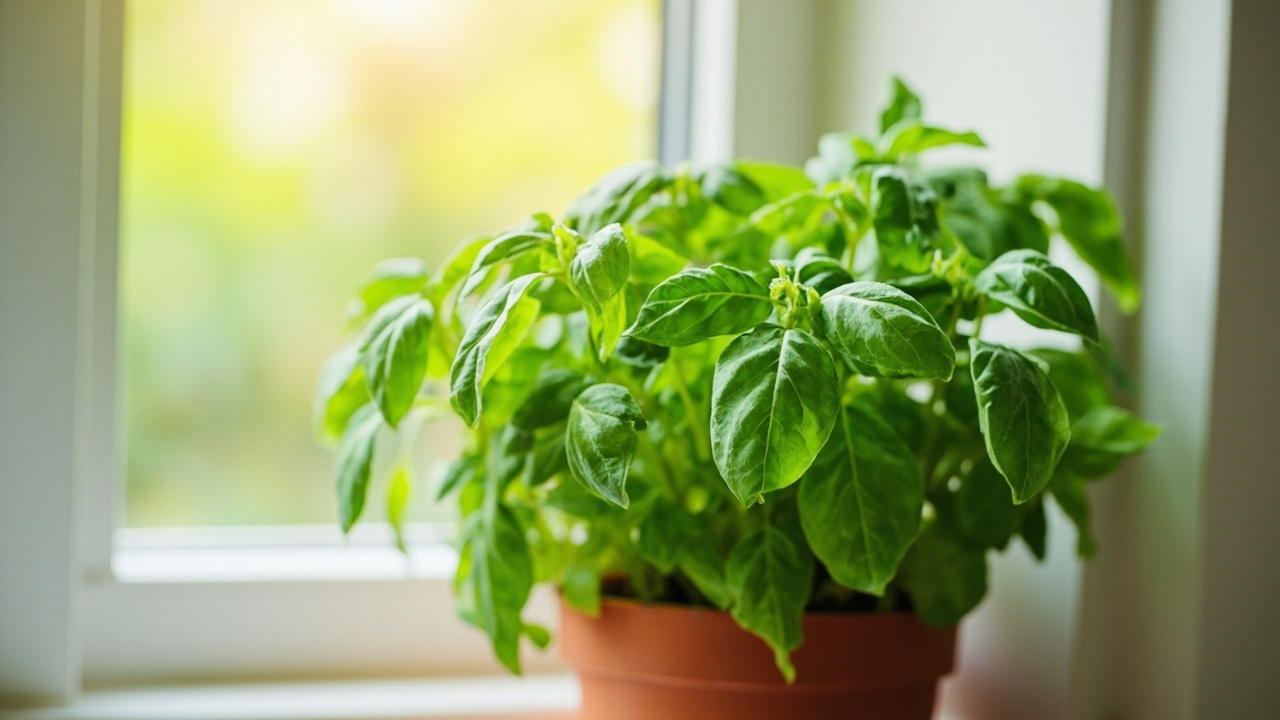
Basil likes evenly moist soil, but soggy roots decline fast indoors. Use a pot with drainage holes and a light potting mix that holds some moisture without staying compacted. If water sits in the saucer after watering, empty it rather than letting the pot wick that water back up all day.
The container should match the plant. A tiny nursery plug dries too quickly once basil starts growing, while an oversized decorative pot can stay wet around a small root system. A practical middle size gives the roots room to expand without turning the lower mix into a damp reservoir.
For container logic, the same principles from growing herbs in containers apply indoors: drainage, root room, and easy handling matter more than a decorative cachepot. If the outer pot has no drainage, keep the basil in a nursery pot inside it and lift the plant out to water.
Water Basil Before It Wilts Hard
Indoor basil should not dry until the whole plant collapses. A slight softening of the leaves can recover, but repeated hard wilting weakens stems and makes the plant more likely to yellow from the bottom. Check the top inch of mix and water when it feels dry but the pot still has a little weight.
Water thoroughly enough that moisture reaches the root ball, then let excess drain away. Small sips keep only the top layer damp and can leave lower roots dry. Heavy daily watering does the opposite: it pushes the plant toward root stress, especially in cool rooms or low light.
Harvest From the Top to Keep Basil Bushy
Do not pick single large leaves from the bottom every time. That leaves a tall stem with less branching. Instead, cut the growing tips just above a pair of healthy leaves. The plant responds by pushing side shoots, which gives you a fuller plant and a steadier harvest.
Start harvesting once the plant has several sets of leaves and enough strength to regrow. Small, regular cuts are better than stripping the plant bare. If you need a large harvest for pesto, leave enough leafy nodes behind so the plant has a path back.
Prevent Flowering Before Flavor Drops
Basil wants to flower when it matures, gets stressed, or sits in warm bright conditions without being cut. Once flower buds form, leaf texture and flavor often become sharper and less tender. Pinch buds as soon as you see them, and harvest more actively from the top of the plant.
If a plant keeps flowering immediately after you pinch it back, it may be reaching the end of its useful indoor cycle. At that point, starting fresh seed or buying a young replacement is usually more productive than trying to force an old basil plant to behave like a new one.
When Indoor Basil Struggles, Diagnose the Pattern
Leggy basil usually means not enough light. Yellow lower leaves often point to wet roots, exhausted soil, or natural aging after repeated harvests. Crispy edges can come from drying out too hard, sitting near heat vents, or being placed too close to a strong light.
The fix should match the pattern. Move the plant closer to stronger light for stretch, improve drainage for wet roots, and harvest the top growth to reset shape. If the stem is woody, bare, and flowering, replacement is not failure. For indoor basil, a fresh cycle is often the cleanest solution.
Turn PDF Bank Statements Into Workable Spreadsheets
Your bank statement is a mess of numbers, but your books shouldn't be. Use our converter to get Excel, CSV, or QBO files — ready for QuickBooks.
Try It Free Now