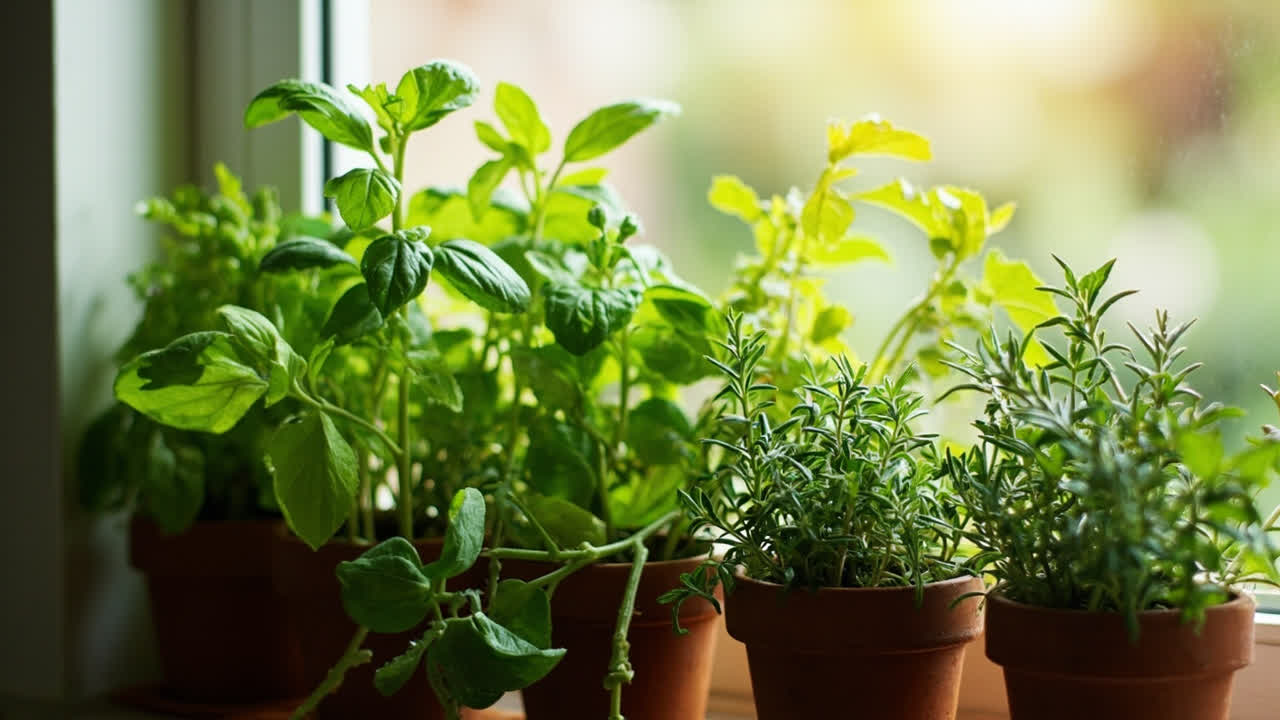

The easiest indoor herbs to grow at home are chives, mint, parsley, and thyme — these tolerate lower light and inconsistent watering better than any other culinary herbs, and they produce harvestable amounts within 4–6 weeks of planting. The reason most people fail with indoor herbs is not lack of skill — it is starting with the wrong plant for their actual kitchen conditions. Basil, the herb most people try first, needs 6+ hours of direct sunlight or equivalent artificial light to thrive. Most kitchen windowsills do not provide this, and the result is a plant that looks fine in the store and collapses within two weeks.
The pattern is consistent: buy a lush pot of basil from the grocery store, place it in a bright windowsill, water it when the soil looks dry, watch it slowly droop and turn yellow over the following two weeks. This is not a failure of care — it is a mismatch between the plant’s needs and the conditions provided. The grocery store basil pot is several seedlings crammed into one container, grown under perfect commercial greenhouse conditions, and it was never designed to survive a north-facing kitchen window. Understanding why helps you avoid repeating the mistake.
Why Your Grocery Store Herb Pot Always Dies
Supermarket herb pots are not one plant — they are 3–6 seedlings planted together in a small container. The commercial growing conditions (perfect light, controlled temperature, professional irrigation) allow all of them to coexist in that small space. Once you bring it home and put it in a regular kitchen, the plants begin competing for root space, light, and water. Within 2–3 weeks, the weakest seedlings are gone, and the remaining ones look increasingly stressed.
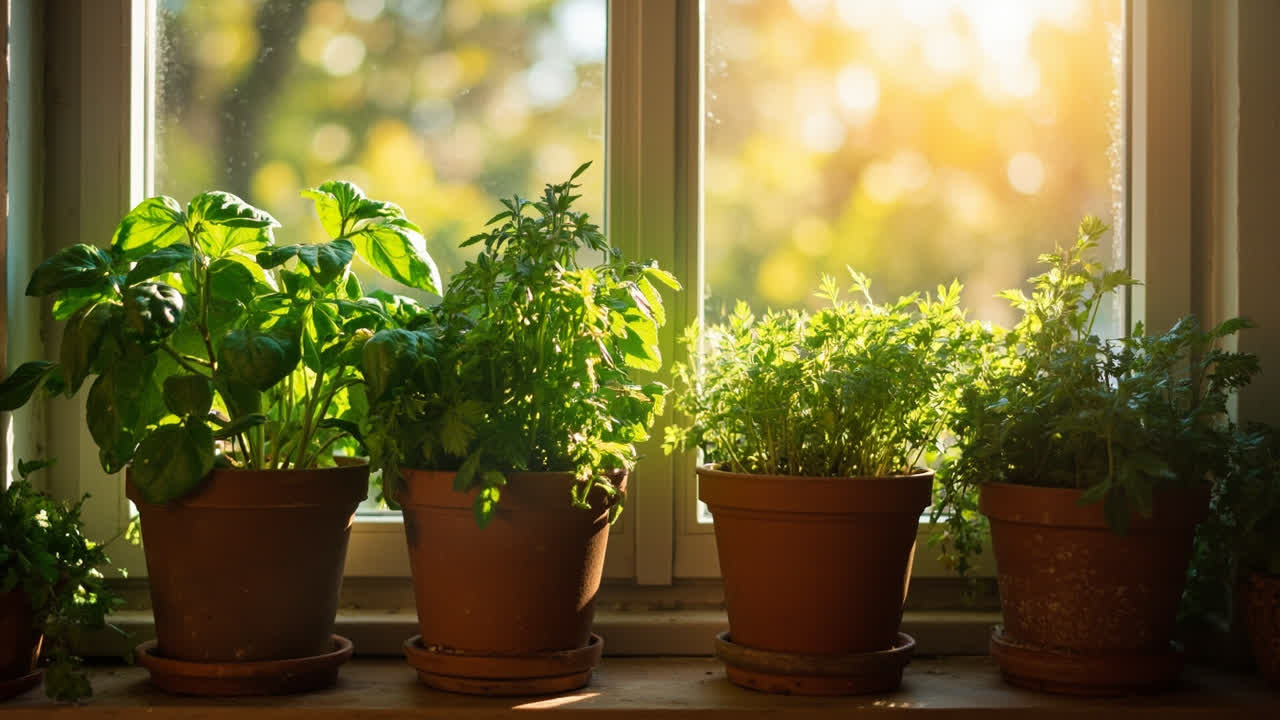
The light mismatch is the more fundamental problem. “Grows on a windowsill” is a visual shorthand in marketing — it suggests ease without specifying that basil needs 6+ hours of direct sunlight to stay healthy. A south-facing window in summer may provide this. An east or west window provides 4–6 hours of direct light, which is enough for mint, parsley, and thyme but not for basil. A north-facing window provides less than 4 hours of direct light, which limits even the easy herbs to some degree.
The watering pattern compounds the problem. Commercial growing mixes are often peat-based and kept at saturation — the pots are watered multiple times a day in professional greenhouses. Home watering is different: less frequent, using different water quality, with the soil moisture level fluctuating more than the plant prefers. The grocery store herb pot, already stressed from transplanting and root competition, does not recover from the shift in watering pattern.
The practical fix: when buying an indoor herb, either buy single seedlings in individual pots (more expensive but more reliable) or buy one of the genuinely forgiving herbs and give it the best light you have. If you have a south-facing window with 6+ hours of direct sun, basil is viable. If you have less than that, start with chives.
The Honest Light Requirements for Indoor Herbs
Light measurement for plants is not about how bright the room looks to your eyes — it is about the actual photon count reaching the leaves. The difference between a usable indoor herb space and one that will stress most herbs is substantial.
South-facing window: 6+ hours of direct sunlight — the standard benchmark. If you have this, basil, mint, parsley, thyme, and rosemary are all viable without supplemental lighting. Track the sun’s movement: if the window gets direct sun from morning through mid-afternoon, you have a viable south position. East and west windows provide 4–6 hours of direct light, which works for chives, mint, parsley, and thyme but is marginal for basil and rosemary.
North-facing window: less than 4 hours of direct light — most culinary herbs will struggle here. Mint may survive, chives will grow slowly, but basil and rosemary will not thrive without supplemental grow lights. This is where a basic LED grow light changes what is possible.
A basic LED grow light — a simple strip or clamp light with a full-spectrum bulb — changes the equation for north-facing kitchens. A 20-watt LED strip running 12–16 hours a day delivers enough PAR to make basil and mint viable in a window that would otherwise be unsuitable. The cost is $20–$40, which is less than the price of two failed basil purchases. Position the light 6–12 inches above the plants and use a simple timer to keep the run consistent. Inconsistent light duration is worse than no supplemental light — it creates stress cycles that set plants back more than stable low light.
The 6 Easiest Indoor Herbs, Ranked
The ranking here is based on forgivingness — how well the herb tolerates low light, inconsistent watering, and the imperfect conditions of a real home kitchen.
Chives — Easy. Allium schoenoprasum. Chives tolerate 4+ hours of light and recover from irregular watering better than almost any other culinary herb. They are cut-and-come-again: snip from the base, and they regrow within 1–2 weeks. They also tolerate lower temperatures than tropical herbs — a cool kitchen windowsill does not bother them. The honest catch: they grow slowly in low light, but they survive. In a dark north-facing kitchen, chives are the reliable choice.
Mint — Easy. Mentha species. Mint is nearly indestructible indoors — it tolerates 4–6 hours of light, recovers from both over and underwatering, and grows aggressively once established. It is cut-and-come-again like chives. The honest catch that nobody mentions: mint gets leggy in low light, sending out long stems with small leaves in search of more photons. The fix is to keep it closer to the window and cut it back when it gets sprawling. Mint in a small pot will also spread aggressively — give it its own pot, not a shared planter.
Parsley — Moderate. Petroselinum crispum. Parsley grows reliably in 4–6 hours of light and handles irregular watering better than basil. It is a biennial — in its first year it focuses on leaf growth, in its second year it flowers and turns bitter. Buy fresh seed-grown parsley for indoor use rather than transplanting grocery store pots. The harvest method matters: cut from the outer stems first, leaving the center growing point to continue producing. Parsley establishes slowly — do not expect a large harvest in the first 6 weeks.
Thyme — Moderate. Thymus vulgaris. Thyme is more drought-tolerant than any other herb on this list — it is native to Mediterranean conditions and prefers to dry out between waterings. Overwatering is the main way to kill thyme indoors. It needs 6+ hours of light ideally, but will survive in 4–6 hours. The harvest method: snip as needed, never remove more than one-third of the plant at once. Thyme regrows slowly, so aggressive cutting sets it back significantly.
Rosemary — Tricky. Salvia rosmarinus. Rosemary is genuinely difficult for most indoor conditions — it needs 6+ hours of direct light, cooler night temperatures (ideally 60–65°F), and excellent drainage. The most common death cause is overwatering, not underwatering — rosemary roots are adapted to dry Mediterranean soil and rot quickly in consistently moist medium. The second most common failure is heat stress from being placed too close to a heat vent or radiator. If you have a cool, bright kitchen, rosemary is rewarding. If your kitchen runs warm and dry, this is a difficult plant to keep alive.
Basil — Tricky to Hard. Ocimum basilicum. The most wanted indoor herb and the most common failure. Needs 6+ hours of direct sunlight (or an equivalent grow light), warm temperatures, and consistent moisture — not saturated, but never completely dry. In a south-facing window, basil is manageable. In an east or west window without a grow light, it will get leggy and pale within 4 weeks. The key to keeping basil alive is consistent light and watering before the soil goes completely dry. When basil wilts from underwatering, it recovers. When it wilts from overwatering, the roots are already rotting.

The One Thing That Fixes Most Indoor Herb Failures
If there is a single intervention that makes the difference between a thriving indoor herb pot and a declining one, it is adding a basic LED grow light to kitchens with less than 6 hours of direct window light. A $20–$30 full-spectrum LED strip, positioned 6–12 inches above the plants, running 12–16 hours per day on a simple timer, provides enough PAR to make basil, mint, and chives viable in north-facing kitchens where they would otherwise fail.
The placement rule is simple: closer is better until the light starts creating heat. If the leaves feel warm when you put your hand under the light, raise it a few inches. The goal is maximum photons without thermal stress.
The timer matters more than most people realize. Plants use light photoreceptors that require consistent dark periods to trigger growth and recovery cycles. Running lights 24 hours a day is counterproductive — plants need the rest period to complete physiological processes. Use a timer to run lights 12–16 hours, then give them 8–12 hours of uninterrupted dark.
How to Harvest Indoor Herbs Without Killing the Plant
Most indoor herb failures from harvesting are not from harvesting too much once — they are from harvesting the wrong stems repeatedly. The distinction matters.
Cut-and-come-again herbs (chives, mint, basil): cut outer stems first, leaving the central growing tip to continue producing. Do not harvest from the same stem more than twice before letting it regrow fully. This keeps the plant productive while allowing it to recover between harvests.
Single-stem harvest herbs (rosemary, thyme): snip from the tips of branches, never more than one-third of the total plant at once. These regrow more slowly than the cut-and-come-again types. Cutting more than one-third at once stresses them enough to slow new growth for 4–6 weeks.
The most common mistake: harvesting the same stems repeatedly until they look bare, while leaving the center of the plant to get woody and unproductive. If a stem looks bare from repeated harvesting, cut it back to the base and let it regrow from the soil level rather than trying to harvest from it again.
Indoor Herb Problems and How to Fix Them
Leggy growth — long stems with small widely-spaced leaves. This is the plant stretching toward light it does not have enough of. The fix is to move the plant closer to the window or closer to the grow light. If the plant is already at the brightest spot available, a grow light is the solution. Leggy growth is not correctable on the existing stems — the plant will fill in properly once light improves, but the stretched stems will stay stretched.
Yellowing lower leaves with consistently moist soil. This is overwatering — roots sitting in waterlogged medium cannot breathe and cannot transport nutrients properly, which shows up as yellowing starting from the bottom of the plant. The fix: let the soil dry out more between waterings. For most herbs, water when the top inch of soil is completely dry, not when it looks dry on the surface. Terra cotta pots help by wicking moisture from the sides, which is why herbs in plastic pots are more prone to overwatering issues.
Yellowing leaves with dry soil and crispy edges. Underwatering or nutrient deficiency. For herbs that have been in the same pot for more than 3 months without fresh soil or fertilizer, a diluted liquid fertilizer (worm casting tea or a balanced liquid fertilizer at half strength) every 2–3 weeks during active growth helps. If the soil is simply dry, water more frequently.
Wilting despite moist soil. Root-bound: the roots have filled the pot and are now circling inside it, unable to absorb water effectively. The plant looks like it needs water but watering does not help because the roots are not functioning. The fix is repotting to a container 2 inches larger in diameter, adding fresh potting mix around the existing root ball, and watering thoroughly after repotting.
Start With Chives : The Herb That Forgives Everything
If you want to grow an indoor herb for the first time, start with chives. Not mint (too aggressive), not basil (too demanding), not rosemary (too specific in its needs). Chives. They tolerate low light, forgive inconsistent watering, grow back quickly after cutting, and are versatile in the kitchen — eggs, potatoes, soups, sauces, salads.
Buy a small pot of chives from a garden center or plant section, not the grocery store herb pot (for the same reasons as basil — multiple seedlings in one small container). Look for a pot with 3–4 established young stems and roots that are not yet tightly packed. Repot into a 6-inch ceramic or terra cotta pot with drainage holes and standard potting mix. Place in your brightest window. Water when the top inch of soil is dry.
Cut from the base with scissors — take no more than half the plant at once, and leave at least 2 inches of growth above the soil line. The chives will regrow within 1–2 weeks and you can harvest again. Once established, a small pot of chives will produce enough for regular kitchen use without any special attention beyond watering and occasional light.
If this works — and it will if you have any window with 4+ hours of light — you have proven that indoor herb growing works for you. Then expand to mint, then to parsley, then to basil with a grow light. The sequence builds confidence and skill without the frustration of starting with the hardest herb first.
From Bank Statement to QuickBooks-Ready File
That manual cleanup you just read about? This tool skips it. Turn your PDF into QBO for QuickBooks without storing your data anywhere.
Start Converting