Lucky bamboo propagation looks deceptively simple. Snip, root, wait. But if you’ve ever lost a cutting after it looked fine for a week, you already know the real problem: not every stem section has the energy to root, and not every setup keeps the cutting stable long enough to recover. Here’s how to do it so the plant actually takes.
What lucky bamboo propagation is really doing
Lucky bamboo is Dracaena sanderiana, not true bamboo, so you’re propagating a dracaena cane. That means the plant roots from nodes and stem tissue, not from a bamboo-style rhizome system. Why does that matter? Because the cutting needs a live node and a healthy stem section, or it has almost nothing to build from.
Choose the right stem
Pick a firm cane with healthy green growth above it. Avoid yellow, soft, or badly scarred sections. If the cane is already stressed, rooting gets slower and failure becomes much more likely. After you choose the stem, the next step is to cut below a node so the cutting has a real rooting point.
Decide whether to root in water or soil
Water rooting is easier to monitor. Soil rooting is less flashy but can produce a stronger transition later. The tradeoff: water lets you see roots early, while soil can hide rot until the cutting is already failing. For beginners, water is usually the better first pass.
One honest limitation worth knowing: water roots look white and healthy, but they’re structurally different from soil roots. When you eventually move a water-rooted cutting to soil, expect a brief adjustment period where growth may pause or look slightly stressed. That’s normal — not a sign you’ve done something wrong.
How to take the cutting
Use sterile scissors or a knife and make a clean cut below a node. Leave at least one to two nodes on the cutting. If the stem is too short, it dries out too quickly. After the cut, the plant needs moisture and stability fast, so don’t leave it sitting around while you search for a vase.
Trim the leaves if needed
If the cutting carries too much leaf mass, reduce it a little. That lowers water loss while roots form. The tradeoff is simple: fewer leaves mean less stress, but also less stored energy from photosynthesis. So trim lightly, not aggressively.
Use clean water and a narrow container
Set the cutting in enough water to cover the node, but not so much that the whole cane sits submerged. A narrow container helps keep the stem upright. After you place it, the cutting should stay steady. If it keeps wobbling, the rooting delay gets longer.
What to expect while roots form
Roots usually take a few weeks, not a few days. That’s the part people misjudge. The cutting may look unchanged for a while, then suddenly show thin white roots near the node. That is normal. If the water stays clean and the stem stays firm, the plant is doing exactly what it should.
Watch for trouble signs
If the water turns cloudy fast, or the stem softens at the base, the cutting is in trouble. Change the water, remove any mushy tissue, and reset the container. After that, watch the base for new firmness.
The most common mistake here is patience without action. If something looks wrong after 5 days, it probably is — don’t wait three more weeks hoping it corrects. Cuttings either have enough energy to root or they don’t, and the early signs are more honest than the later ones.
When to move a rooted cutting
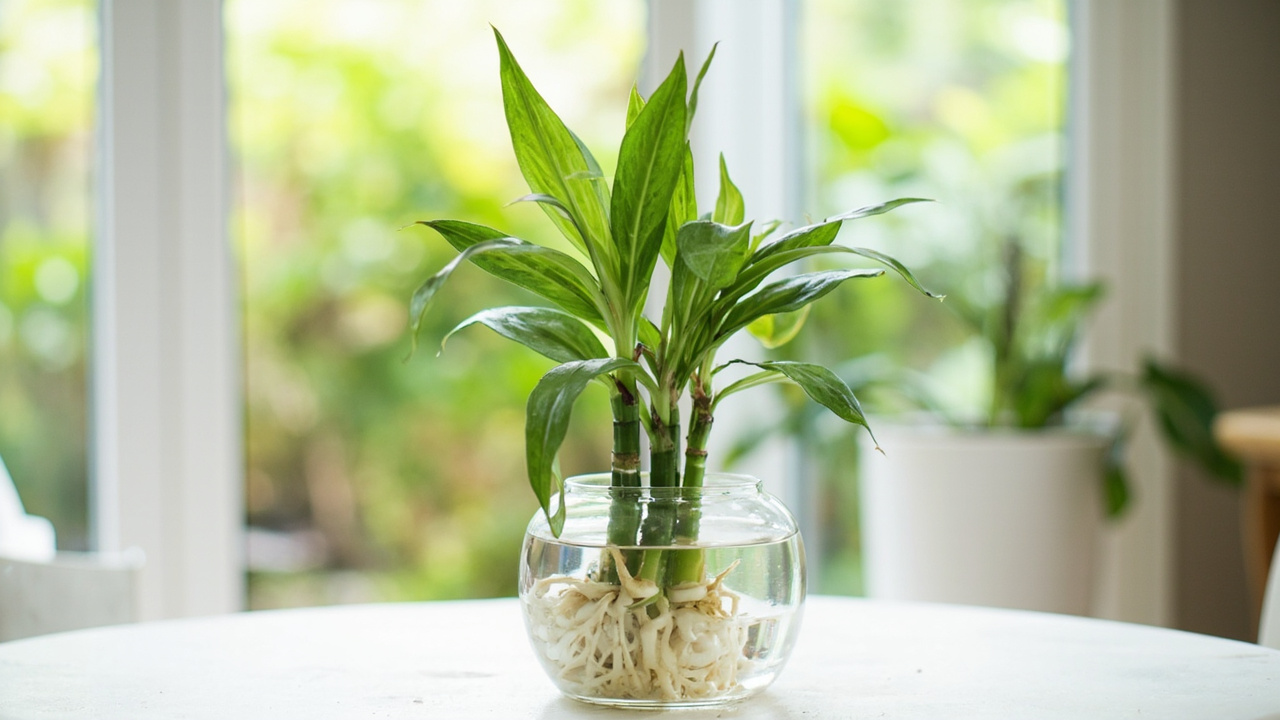
Move it only after the roots are a few inches long and look stable. Rushing this step is a classic mistake. The cutting needs a root system it can actually rely on before you change the medium. If you move too soon, the plant may pause or collapse.
Transition slowly
If you’re moving from water to soil, keep the soil barely moist at first. If you’re keeping it in water, continue with clean water changes every 7-14 days. After transition, the next flush of growth tells you whether the move worked.
How to keep the new plant alive
Give it bright indirect light, stable temperature, and very light feeding. Lucky bamboo propagation doesn’t fail because the plant is fragile; it fails because the aftercare gets treated like an afterthought. Keep the plant stable for the first month and you’ll give it a real chance to establish.
For the parent plant side of the equation, Lucky Bamboo Care for Beginners covers the baseline routine. If your cutting is trying to root in water, Lucky Bamboo in Water vs Soil helps you choose the best setup. For a broader identity check, Dracaena Braunii vs Dracaena Sanderiana explains what you’re actually propagating.
From PDF to Excel in one click
Forget retyping line by line. Upload any bank statement, get a spreadsheet you can actually use. Your files are never stored, and you can test the converter with 3 free conversions.
Try it free