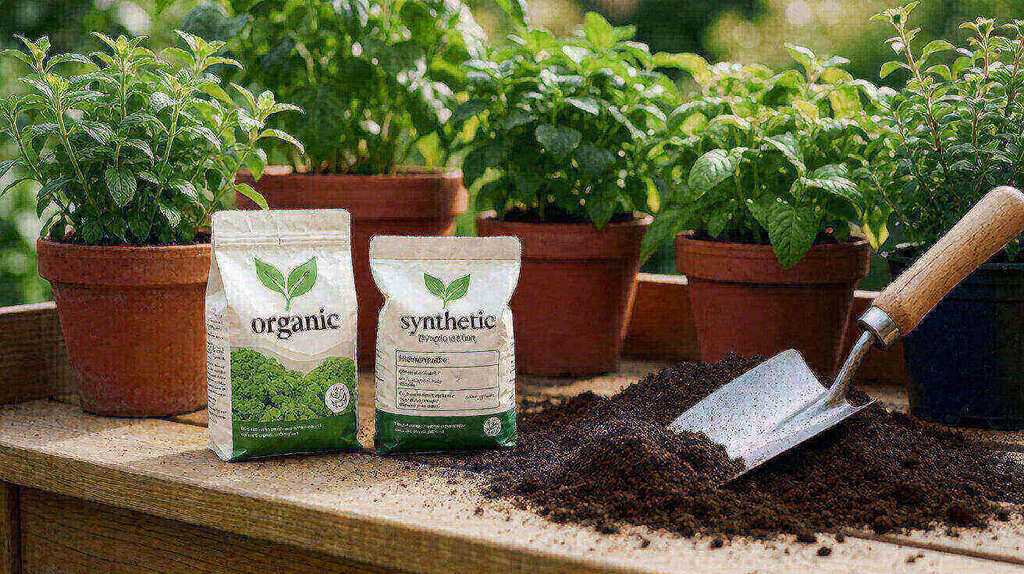

The organic vs synthetic debate is the most polarized in gardening and the most misunderstood. Gardeners pick sides as if the choice were moral. It is not. It is a tooling decision. Organic and synthetic NPK fertilizers differ in source, release speed, soil biology impact, concentration, and cost per unit of nutrient. Each has a job it does better. The smart garden does not choose one. It uses each where it fits.
What “organic” and “synthetic” actually mean on a label
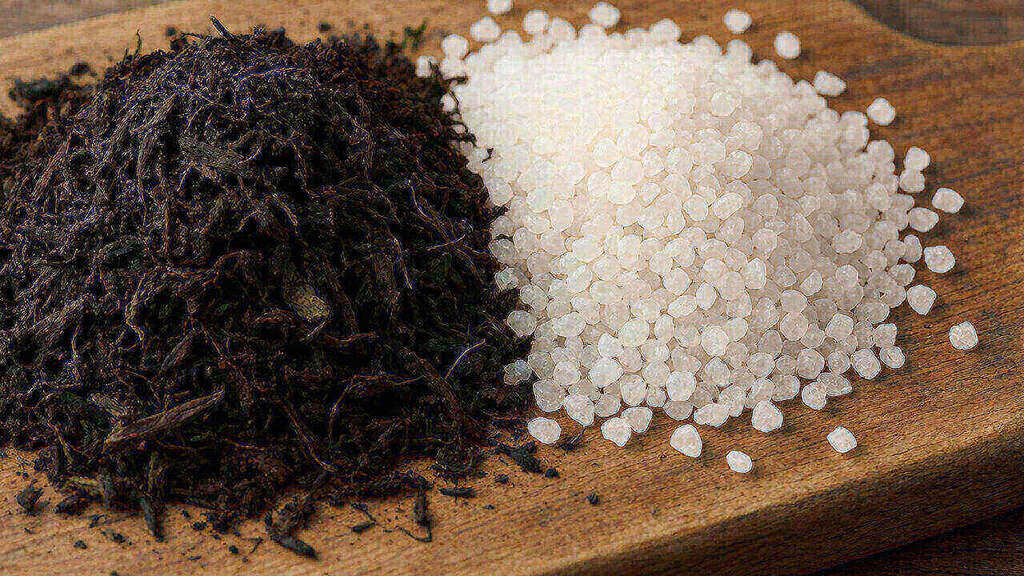
On a fertilizer label, “organic” refers to the source of the nutrients, not to the chemical identity of the nutrient itself. Organic NPK sources are derived from plant or animal materials or mined minerals that have not been chemically altered: bone meal, blood meal, fish emulsion, feather meal, compost, manure, rock phosphate, greensand, kelp meal. The nitrogen in blood meal is the same nitrogen atom as the nitrogen in urea. The difference is everything around it.
“Synthetic” (also called inorganic or chemical) sources are manufactured or refined to deliver nutrients in readily available forms: urea, ammonium nitrate, ammonium sulfate, superphosphate, triple superphosphate, muriate of potash (potassium chloride), potassium sulfate. These are concentrated, predictable, and fast acting. If you want to understand what the three numbers on either type of label mean, see NPK ratio explained.
The practical distinction comes down to three things: how fast the nutrient becomes available to the plant, how much soil biology is involved, and how concentrated the product is. Organic sources are usually low concentration and slow release. Synthetic sources are usually high concentration and fast release. That gap is the whole decision. Neither category is a single uniform product. Bone meal and fish emulsion behave very differently even though both are organic. Urea and slow release coated urea behave very differently even though both are synthetic. The label alone does not tell the full story. You also need to know the formulation and the release mechanism.
Another point of confusion: “organic” on a fertilizer label is not the same as “certified organic” for food production. A product can be derived from natural materials without meeting organic certification standards. Certification depends on processing, sourcing, and prohibited substance rules that go beyond the ingredient list. For home gardeners the distinction rarely matters, but it matters if you are growing for certified organic sale.
How they differ in release speed and soil impact
Release speed is the biggest functional difference. Synthetic nitrogen as urea converts to ammonium within days. Ammonium nitrate is available almost immediately. A plant can take up synthetic nitrogen within hours of application. Organic nitrogen in blood meal or compost has to be broken down by soil microbes before the plant can use it. That takes weeks to months depending on temperature and moisture.
Soil biology impact follows from that. Organic fertilizers feed the soil food web. Microbes, fungi, and earthworms process the material and release nutrients as a byproduct of their activity. Over time, organic inputs build soil structure, water holding capacity, and cation exchange capacity. Synthetic fertilizers bypass the biology and feed the plant directly. Used heavily over years, they can reduce microbial diversity and acidify soil, especially ammonium based sources.
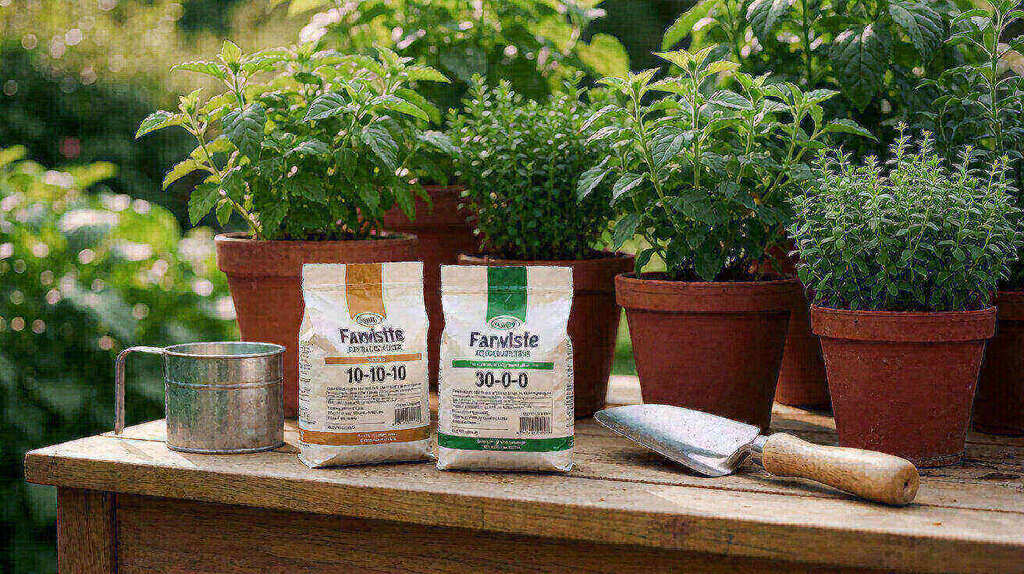
Concentration matters for cost and handling. A typical organic fertilizer runs 3-4-3 or 5-3-3. A typical synthetic runs 20-20-20 or 34-0-0. To deliver one pound of actual nitrogen, you need far more organic product by weight. That drives cost and storage. The full math on application rates is covered in fertilizer application rate.
| Factor | Organic NPK | Synthetic NPK |
|---|---|---|
| Source | Plant, animal, mined | Manufactured or refined |
| N concentration | 1-6% | 10-46% |
| Release speed | Weeks to months | Days |
| Soil biology | Feeds and builds | Bypasses; can reduce over time |
| Precision | Low | High |
| Cost per lb N | Higher | Lower |
Both types still deliver the same three macronutrients. What changes is the pathway and the pace. For a deeper look at how nitrogen, phosphorus, and potassium each function in plants, see what nitrogen does for plants and the matching phosphorus and potassium guides.
Temperature and moisture gate organic release. In cold spring soil, microbes are sluggish and organic nitrogen barely moves. In hot summer soil with adequate moisture, the same product can release faster than expected. Synthetic release is less temperature dependent, which makes it more predictable across seasons. That predictability is a real advantage when you are timing a feeding to a growth stage.
The “organic is always better” myth
The first myth says organic is always better for the garden, the soil, and the planet. It is not. Organic fertilizers have real limitations that matter.
- Low concentration means you apply more product for the same nutrient, which costs more and takes more storage space.
- Slow release means you cannot fix a deficiency quickly. A nitrogen deficient plant needs nitrogen now, not in six weeks.
- Variable composition means the label is an average, not a guarantee. Batch to batch variation is real.
- Some organic sources carry risks: fresh manure can burn plants and introduce pathogens; bone meal can attract animals.
- Organic is not automatically low salt. Some organic inputs are quite salty.
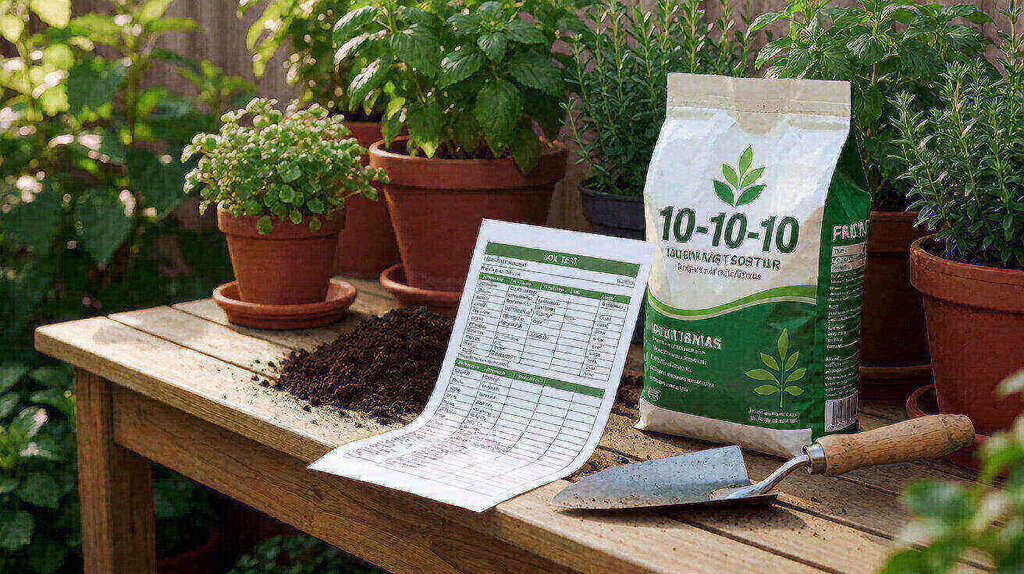
Organic also is not automatically better for the environment. Manure runoff can pollute waterways just like synthetic runoff. The source does not excuse poor application practice. What matters is matching rate to need, which is why reading a soil test report comes before any fertilizer choice.
There is also a scale problem. On a small raised bed, the volume difference between organic and synthetic is trivial. On a half acre lawn, applying enough organic nitrogen to match a synthetic program means tons of material, multiple applications, and significant labor. The right tool depends on the size of the job. For choosing products within either category, see fertilizer buying guide.
The “synthetic is always better” myth
The second myth says synthetic is always better because it is cheaper, faster, and more precise. It is not. Synthetic fertilizers have their own failure modes.
- Fast release can burn plants if overapplied. A single heavy application of urea can kill a lawn.
- No soil biology benefit. Synthetic inputs do not build structure or water holding capacity.
- Repeated use without organic matter addition degrades soil over time.
- Leaching risk is higher. Nitrate moves with water and can reach groundwater.
- Volatilization. Urea left on the surface can lose nitrogen to the air as ammonia.
Synthetic also does not fix poor soil. It feeds the plant, not the system. A garden that relies only on synthetic inputs over years becomes dependent on them. The soil does not get better. It gets harder. pH can drift acidic under heavy ammonium use, which then locks up phosphorus and micronutrients. Correcting that requires lime, which is another input you would not need with a balanced organic program.
When organic wins
Organic NPK wins in these situations.
- Long term soil health is the goal. Building structure and biology takes years of organic inputs.
- Sensitive plants and seedlings. Slow release reduces burn risk.
- Sustainable and low input gardening. Organic aligns with closed loop systems.
- Maintenance feeding of established plants with adequate baseline fertility.
- Gardens where soil biology is already strong and you want to keep it that way.
If you are committed to organic methods, the full picture is in organic fertilizer: nourish your garden the natural way. For the comparison with compost specifically, see NPK fertilizer vs compost.
Organic also wins on tolerance. A slightly overapplied organic feeding rarely causes visible damage because the nutrients are not all available at once. That safety margin matters for beginners and for gardens where application precision is hard.
When synthetic wins
Synthetic NPK wins in these situations.
- Precise correction of a diagnosed deficiency. Soil test says low phosphorus? Superphosphate delivers it exactly.
- Fast results needed. A yellowing plant needs nitrogen this week.
- Cost per unit of nutrient matters. Synthetic is cheaper per pound of actual N, P, or K.
- Large areas where volume and handling cost dominate.
- Controlled environments where you manage every input.
For the synthetic side in depth, see synthetic fertilizer: supercharging your garden growth. For release speed trade offs specifically, see slow release vs quick release fertilizer.
Synthetic also wins on measurement. You know exactly how much nitrogen you are adding. That makes it the right tool for spoon feeding, for fertigation, and for any situation where you are managing a nutrient budget against a soil test.
The hybrid approach
The decision framework that falls out of all of this is simple. Synthetic for correction, organic for maintenance.
Use synthetic when a soil test shows a specific deficiency and you need to fix it fast and precisely. Use organic as the routine feed that builds soil over time. Many commercial products already blend both: a synthetic base for quick availability plus an organic fraction for sustained release. Those blends are often the best value for home gardeners.
Cost comparison makes the case concrete. A pound of actual nitrogen from urea (46-0-0) costs a fraction of a pound from blood meal (12-0-0). But the blood meal also feeds microbes, adds organic matter, and releases slowly. You are not just buying nitrogen. You are buying a soil building program. Price the job, not the nutrient. For plant specific NPK targets, see NPK ratio chart for vegetable crops.
In practice, the hybrid program looks like this: test the soil in spring, correct any deficit with a targeted synthetic, then feed through the season with a low concentration organic. Repeat the test every two to three years. Adjust. That loop is the whole method.
Cost per pound of actual nitrogen is the number that settles most arguments. Urea at 46 percent nitrogen delivers about 0.46 pounds of nitrogen per pound of product. Blood meal at 12 percent delivers 0.12. To get one pound of nitrogen you need roughly 2.2 pounds of urea and 8.3 pounds of blood meal. The urea is cheaper per pound of product and far cheaper per pound of nitrogen. But the blood meal carries 88 percent other material that feeds soil biology and builds organic matter. If you value only the nitrogen, synthetic wins. If you value the soil building, organic earns its premium.
Neither organic nor synthetic is the right answer in general. The right answer is the one matched to the plant, the soil, and the season. Test first. Then choose the tool that fits the job.
One final note on application. Whichever source you choose, apply it to moist soil and water it in. Dry application followed by no water is the single most common cause of burn with synthetics and of wasted money with organics. Water activates the process. Without it, neither source works as intended.
Last updated: October 28, 2026.
Sources
- Sunset, “Synthetic vs Organic Fertilizer”
- Chicago Botanic Garden, “Synthetic vs Natural Fertilizer”
- Penn State Extension, “Organic vs Synthetic Fertilizers”
- University of Minnesota Extension, “Fertilizers for Gardens”
- Purdue Extension, “Fertilizer Sources”
- Colorado State Extension, “Organic vs Synthetic”
The actual number is the decision.
From Bank Statement to QuickBooks-Ready File
That manual cleanup you just read about? This tool skips it. Turn your PDF into QBO for QuickBooks without storing your data anywhere.
Start Converting