
The question “what NPK ratio for vegetables” is really two questions: which crop, and which growth stage. Leafy greens want nitrogen early and often. Fruiting crops want a steadier hand so they set fruit instead of just leaves. Root crops want potassium for storage quality. This chart gives a starting ratio for 25 common vegetable crops at planting and at side-dress, grouped by family, with a soil-test override column so you never apply nutrients you do not need.
Use it as a lookup, not a rulebook. Match the crop to its family pattern, note the planting ratio and the side-dress ratio, then check your soil test before buying anything. If the test shows high phosphorus or potassium, ignore that column in the table and apply only what is missing.
Keep a notebook of what you applied and when, alongside harvest results. Over a few seasons you will see which crops on your soil actually needed the side-dress and which did not. That record is worth more than any chart.
How to use this chart
Find your crop in the table, then read across. “At planting” is the ratio or analysis to work into the bed or starter band before or at transplant. “Side-dress” is what to apply mid-season, after the plant is established. Treat the numbers as a starting point, not a prescription. The override rules in the section below take priority over anything in the table.
If you have not tested your soil, start here and test next season. Michigan State University Extension Bulletin E-3507 recommends a soil test every two to three years for home gardens, and the chart below assumes a typical loam with moderate organic matter and no known nutrient excess. A test costs little, takes about two weeks, and replaces guessing with numbers.
Read the table in this order. First, find the crop. Second, note the family pattern, because crops in the same family behave alike. Third, check the side-dress column, since that is where most gardeners overfeed. Fourth, compare with your soil test and remove any nutrient that is already high.
When in doubt, underfeed. You can always add more nitrogen later. You cannot easily remove excess once it is in the soil or in the plant.
NPK ratio chart for vegetable crops
Ratios are given as N-P2O5-K2O. A “balanced” entry means roughly equal parts, such as 10-10-10. “High N” means a ratio with nitrogen clearly higher than phosphorus and potassium, such as 21-0-0 or 34-0-0. “Low N” means a ratio with nitrogen held back, such as 5-10-10. Side-dress entries marked “none” mean the crop usually does not need a mid-season nitrogen application when soil is adequate.
| Crop | At planting | Side-dress | Notes |
|---|---|---|---|
| Lettuce | High N, e.g. 21-0-0 | Light N, 1-2 weeks after transplant | Shallow roots, feed little and often |
| Spinach | High N, e.g. 21-0-0 | Light N if pale | Bolts fast in heat, do not overfeed |
| Kale | High N, e.g. 21-0-0 | One side-dress mid-season | Heavy feeder, long season |
| Swiss chard | High N, e.g. 21-0-0 | One side-dress mid-season | Similar to kale |
| Cabbage | 10-10-10 balanced | High N at heading | Needs nitrogen for head formation |
| Broccoli | 10-10-10 balanced | High N after first cut | Side shoots need nitrogen |
| Cauliflower | 10-10-10 balanced | High N at curd set | Sensitive to boron deficiency |
| Brussels sprouts | 10-10-10 balanced | High N mid-season | Long season, steady feed |
| Tomato | 5-10-10 or 6-24-24 starter | Low N, e.g. 5-10-10 | Too much N gives leaves, not fruit |
| Pepper | 5-10-10 starter | Low N at flowering | Similar to tomato, less total |
| Eggplant | 5-10-10 starter | Low N at flowering | Needs warm soil to use nutrients |
| Cucumber | 10-10-10 balanced | Light N at vining | Heavy feeder, frequent small doses |
| Squash (summer) | 10-10-10 balanced | Light N at flowering | Similar to cucumber |
| Pumpkin | 10-10-10 balanced | Low N at fruit set | Reduce nitrogen once fruit sets |
| Watermelon | 5-10-10 starter | Low N at vining | Too much N delays fruiting |
| Carrot | Low N, e.g. 5-10-10 | none | Excess N causes forked roots |
| Beet | Low N, e.g. 5-10-10 | Light N if needed | Root and leaf both edible |
| Radish | Low N, e.g. 5-10-10 | none | Fast crop, minimal feeding |
| Potato | 10-10-10 balanced | Low N at tuber set | High K supports tuber quality |
| Sweet potato | Low N, e.g. 5-10-10 | none or light K | Excess N gives vines, not tubers |
| Onion | 10-10-10 balanced | Low N until bulbing | Stop nitrogen once bulbing starts |
| Garlic | 10-10-10 balanced | Light N early spring | Fall-planted, feed in spring |
| Corn | 10-10-10 balanced | High N at knee-high | Heavy feeder, side-dress is key |
| Bean (snap) | Low N or none | none | Fixes nitrogen, avoid high N |
| Pea | Low N or none | none | Fixes nitrogen |
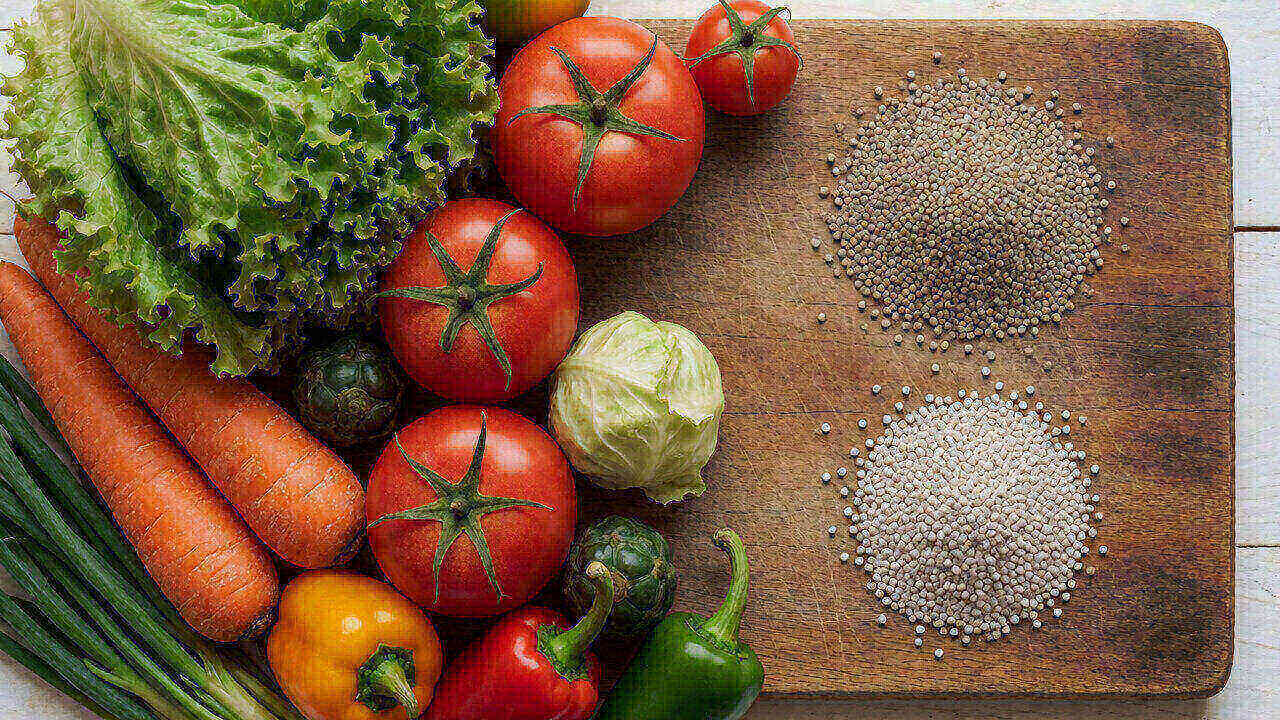
Reading the table by crop family
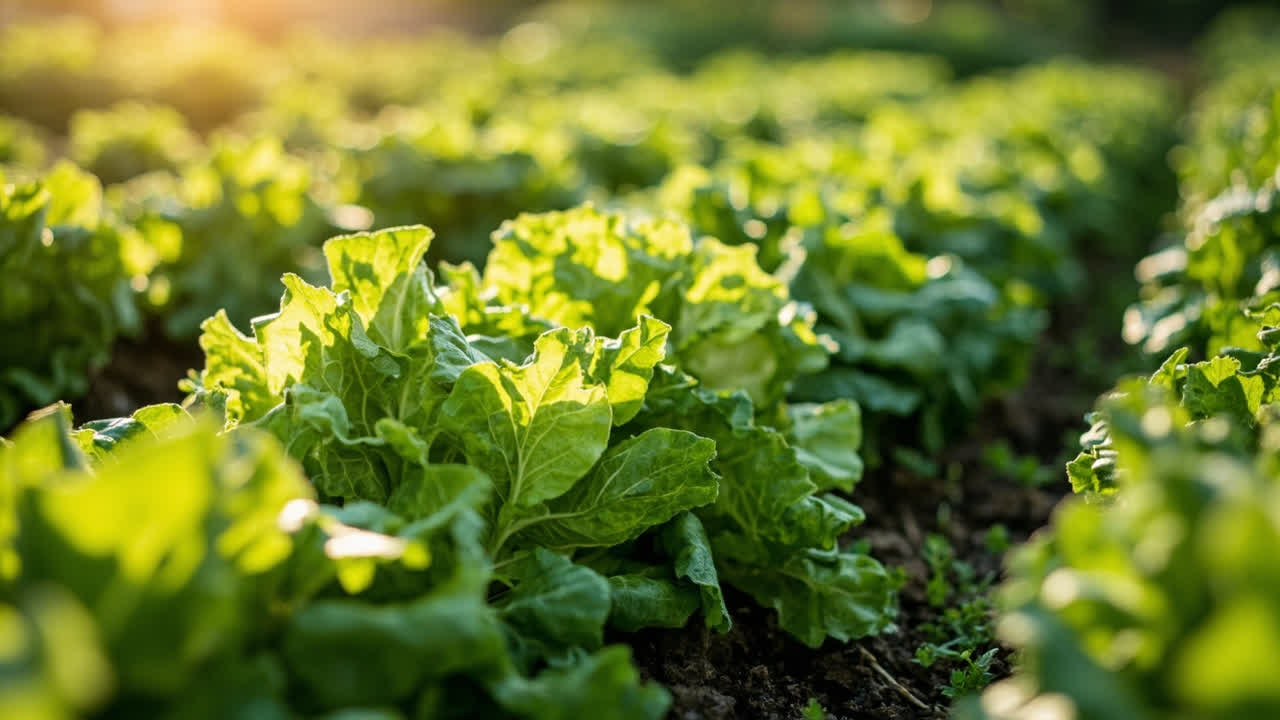
Leafy crops such as lettuce, spinach, kale, and chard are nitrogen-driven. Nitrogen builds the leaves you harvest, so the ratio skews high N. The risk is bolting and soft growth, so feed in smaller, more frequent doses rather than one heavy application. Harvest early and often, and do not let plants sit in saturated soil after feeding.
Fruiting crops such as tomato, pepper, eggplant, cucumber, and squash need enough nitrogen to build the plant, then a shift toward phosphorus and potassium to set and ripen fruit. That is why the planting ratio is moderate and the side-dress ratio is low N. Too much nitrogen after flowering gives lush foliage and poor fruit set, and it can delay ripening by several weeks.
Root crops such as carrot, beet, radish, potato, and sweet potato need moderate to low nitrogen. Excess nitrogen pushes top growth and produces forked, hairy, or small roots. Potassium matters more here for storage quality and disease resistance. Consistent moisture matters as much as the ratio, because uneven watering causes cracking and hollow centers.
Legumes such as beans and peas fix their own nitrogen through root nodules. A high-nitrogen fertilizer is usually wasted on them and can suppress nodulation. If the soil is poor, a small amount of phosphorus and potassium at planting is enough. Do not side-dress with nitrogen unless plants show clear deficiency.
The brassica family, including cabbage, broccoli, cauliflower, and Brussels sprouts, sits between leafy and fruiting. It needs steady nitrogen for leaf and head formation plus adequate boron and calcium. Watch for hollow stems, which signal boron deficiency more often than a ratio problem.
If two crops share a family, you can usually reuse the same starter ratio and adjust only the side-dress amount. This is why the table groups by family rather than alphabetically. A gardener who learns the four family patterns, leafy, fruiting, root, and legume, can estimate a ratio for a crop not on the chart without memorizing twenty-five entries.
Starter fertilizer vs side-dress
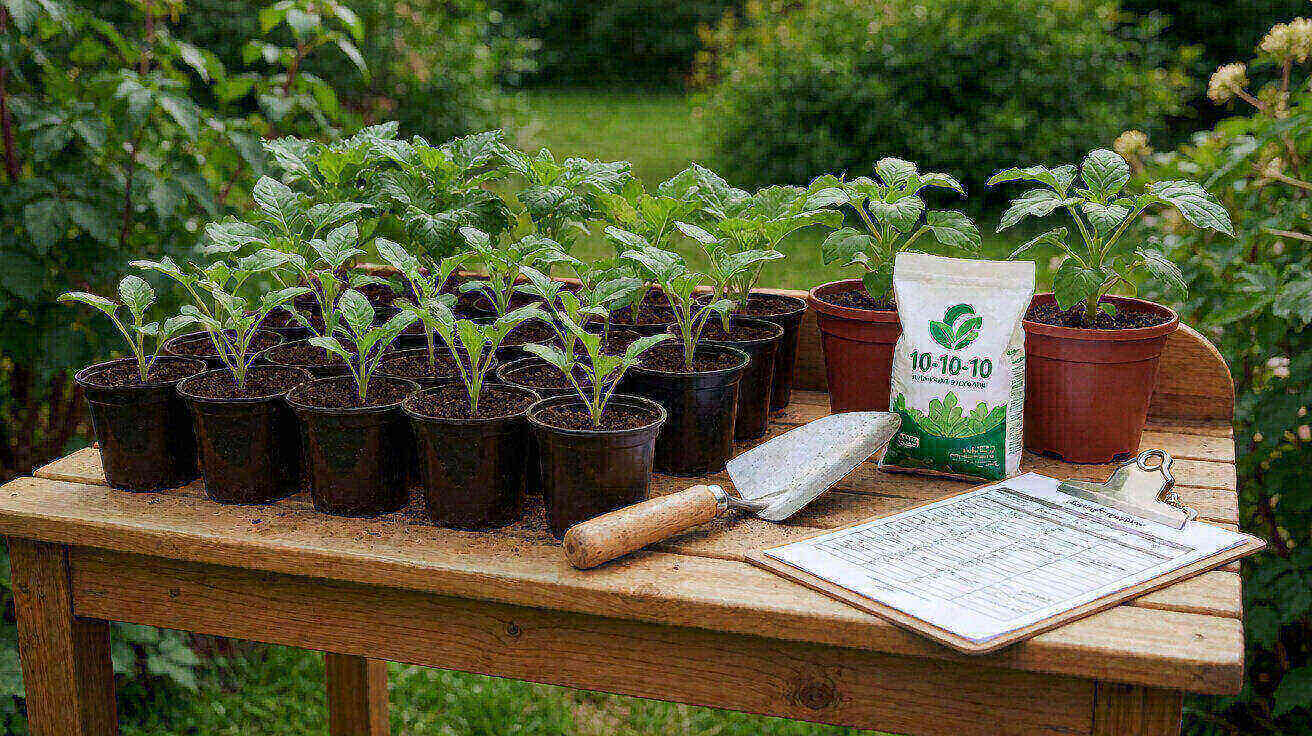
Starter fertilizer goes in or near the planting hole. Its job is to get roots established. Side-dress goes beside the row later in the season. Its job is to sustain the crop through its heaviest demand period. The two are rarely the same ratio, because the plant’s needs change as it matures. A common mistake is to apply the planting ratio again at side-dress, which overfeeds nitrogen on fruiting and root crops.
For liquid feeds, dilute to half strength and apply more often. For granular products, broadcast beside the row and water in. Cornell Cooperative Extension notes that side-dressing is most effective when applied just before a rain or irrigation so nutrients move into the root zone. Avoid placing granular fertilizer against stems or leaves, which can burn tissue.
Timing matters more than the exact product. Side-dress when the crop enters its rapid growth phase, not on a calendar date. For corn that is knee-high, for tomatoes just after first fruit set, for potatoes when tubers begin to form. Applying too early wastes nitrogen to leaching; applying too late misses the window of need.
Do not skip the soil test because the chart looks complete. The chart covers macronutrient ratios only. It does not tell you whether your soil is acidic, whether organic matter is high, or whether micronutrients are adequate. Those three factors often explain more of the yield difference than the NPK ratio does.
When to override the chart
The chart assumes an average soil. Override it in these cases:
- High phosphorus or potassium on a soil test. If phosphorus or potassium is already high or very high, drop that nutrient from the ratio. Adding more does not help and can harm soil biology and water quality.
- Low pH. Below pH 6.0, most nutrients become less available. Lime first, fertilize second. See the soil pH guide for the mechanism.
- High organic matter. Beds with more than 5 percent organic matter release nitrogen as they decompose. Reduce or skip the nitrogen side-dress.
- Sandy soils. Nutrients leach faster. Split applications into smaller, more frequent doses.
- Container mixes. Containers have no soil reserve. Use a balanced liquid feed at lower concentration and feed more often.
- Heavy clay. Drainage is poor and roots are shallow. Feed less per application and improve structure with compost.
North Carolina State Extension emphasizes that a soil test is the only reliable way to know whether phosphorus and potassium are needed. Guessing based on crop type alone is how gardeners build up excess nutrients over several seasons. Excess phosphorus in particular binds with other nutrients and can lock up iron and zinc.
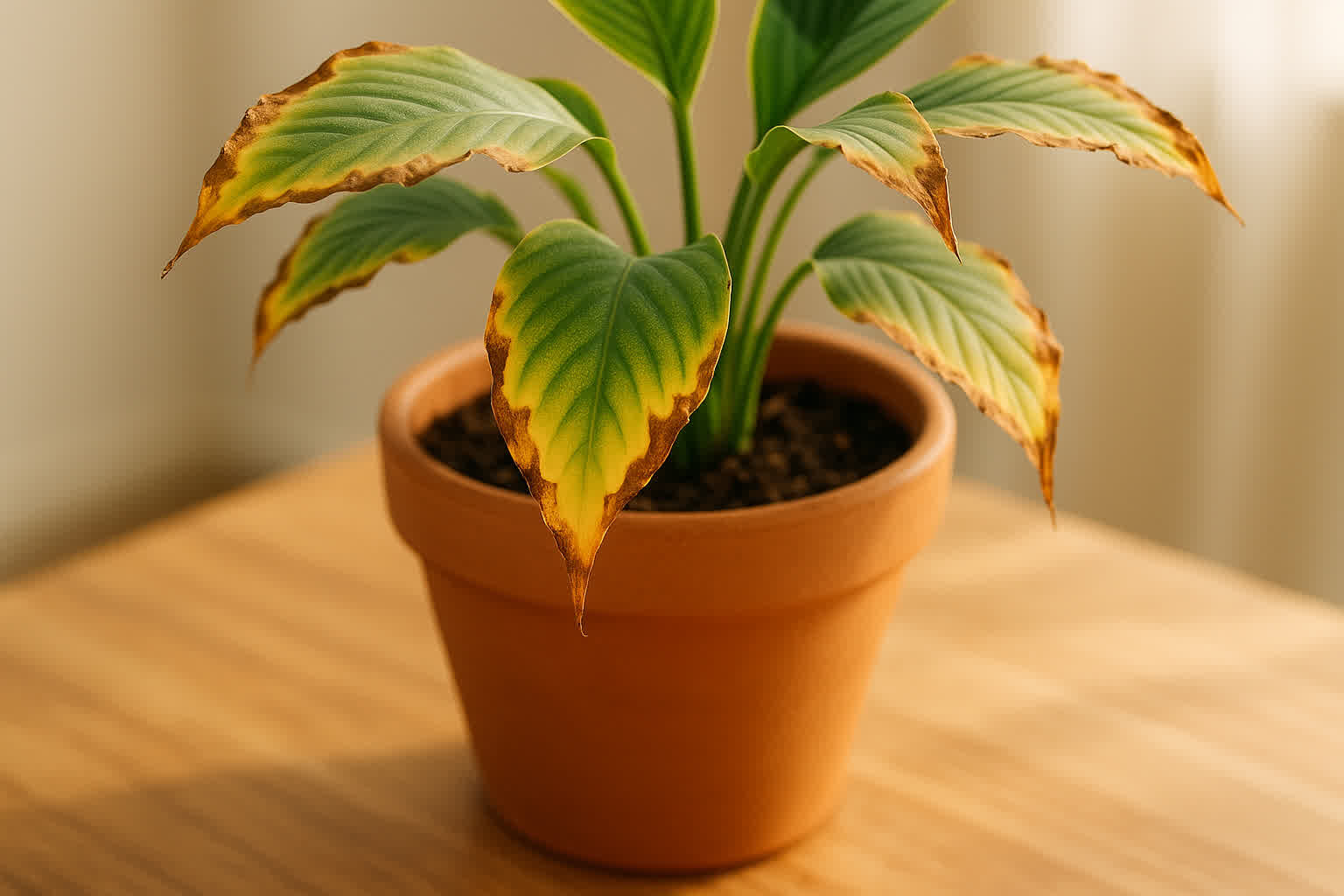
Also remember that crop rotation and residue management change the baseline. A bed that grew legumes last season carries more nitrogen into the next crop. A bed mulched with fresh wood chips ties up nitrogen as it decomposes. Adjust the chart downward when the soil is already working for you, and upward only when plants show deficiency. Yellowing older leaves, stunted growth, and poor fruit set are the usual signals, but confirm with a test before adding more.
What the ratios are not telling you
The ratio on the bag is a proportion, not a dose. A 10-10-10 product and a 5-5-5 product have the same ratio but different concentrations. The dose depends on application rate, which is a separate calculation. The ratio also says nothing about micronutrients such as calcium, magnesium, sulfur, or boron, which can be the real limiting factor in a garden. Finally, the ratio does not account for what the soil already holds. That is why the soil test override matters more than the crop column.
For the meaning behind the three numbers and the P2O5 to elemental phosphorus conversion, see the NPK ratio explained guide. For how much to apply per square foot, see the fertilizer application rate guide. For choosing between product formats and prices, see the fertilizer buying guide.
A worked example
Suppose you are planting tomatoes and peppers in a bed that tested medium in phosphorus and potassium and slightly low in nitrogen. From the chart, tomatoes want 5-10-10 or a 6-24-24 starter at planting, then low nitrogen at side-dress. Because your test shows medium phosphorus and potassium, you do not need the full 10-10-10. Choose a lower phosphorus and potassium starter, or a nitrogen-only product plus a light balanced feed. At planting, work the starter into the hole. When the first fruit sets, side-dress a small amount of low-nitrogen fertilizer beside the row and water it in. If the plants are deep green and vigorous, skip the side-dress entirely. If they are pale and slow, give half the chart amount and reassess in two weeks.
The same logic applies to a root crop. Carrots on a high-potassium soil need almost nothing at planting and nothing at side-dress. Adding the chart’s 5-10-10 would only push top growth and fork the roots. This is why the soil test column beats the crop column every time. The chart gives you a direction. The test tells you whether to walk.
- What the NPK label numbers mean
- Fertilizer application rate math
- Choosing a fertilizer product
- Fertilizer schedule by plant type
- Soil pH and nutrient availability
- Essential nutrients and soil testing
- Signs of over-fertilization
Sources
- Michigan State University Extension, Bulletin E-3507, “Fertilizer Recommendations for Vegetable Crops.”
- Cornell Cooperative Extension, “Fertilizing Garden Vegetables.”
- North Carolina State Extension, “Fertilizing the Home Garden.”
- University of Massachusetts Extension, “Fertilizing Guidelines for Vegetable Gardens.”
- Penn State Extension, “Soil Fertility Management for Vegetable Crops.”
- University of Florida IFAS Extension, “Vegetable Gardening Guide.”
- Purdue Extension, “Growing Vegetables in the Home Garden.”
The actual number is the decision.
Turn That PDF Into a Spreadsheet in Minutes
You've seen how to do it manually — now let the tool handle the heavy lifting. Upload your bank statement and get Excel, CSV, or QBO in a few clicks.
Try It Free