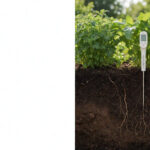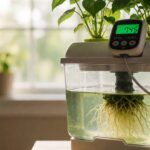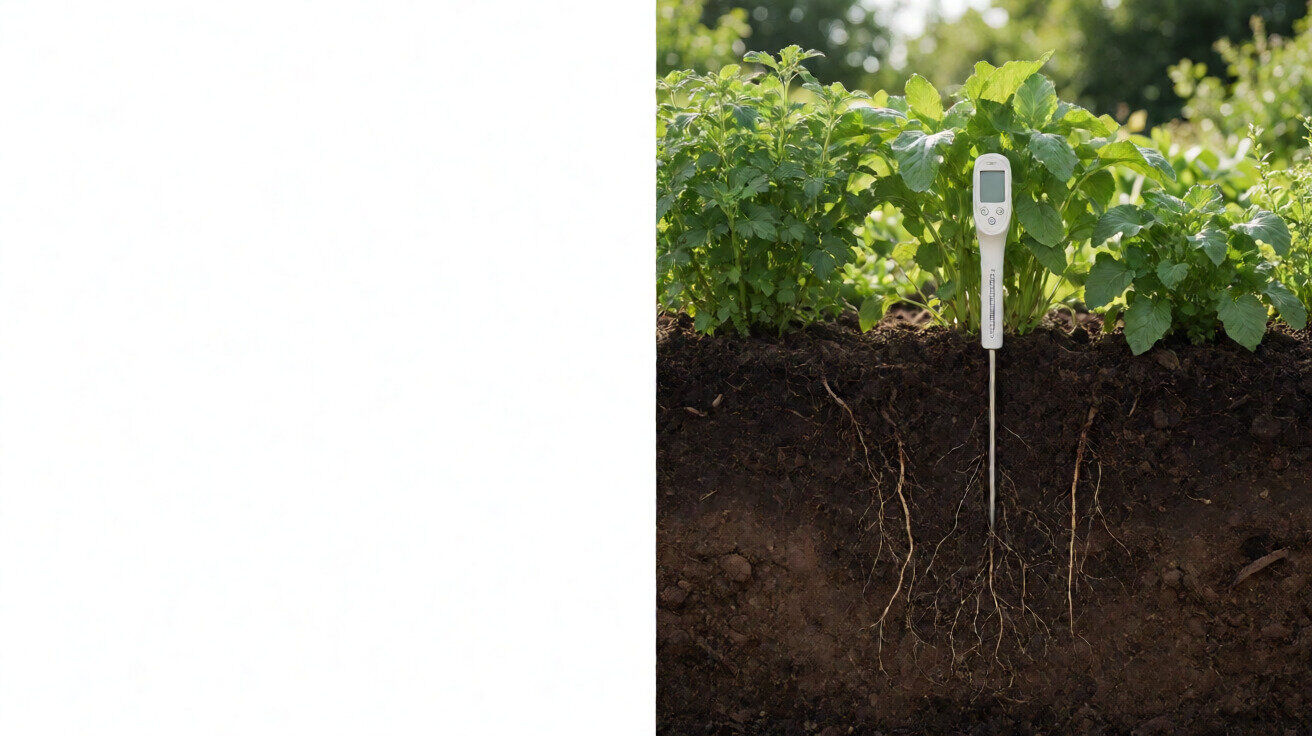

Your soil can be full of nutrients and still starve a plant. pH is not a label; it is the gatekeeper that decides which ions stay dissolved in the water film around roots and which ones lock into solids the root cannot touch. When pH drifts, the chemistry of the soil changes before the plant shows it, and the fix is rarely more fertilizer.
The failure mode looks like this: you spread a bag, leaves stay yellow, and a second bag does nothing. Iron and manganese precipitate out of solution in alkaline soil. Phosphorus binds to iron and aluminium oxides in acid soil. Calcium, magnesium and potassium get pushed off clay surfaces by hydrogen. The nutrients are present, just not reachable.
What most growers get wrong is treating pH as a number to fix with one product. It is a direction, not a destination. You test, you decide whether to raise or lower, and you choose an amendment whose chemistry matches that direction. Guessing wastes money and can lock up the very nutrients you were trying to free.
The short version: the soil may not be starving
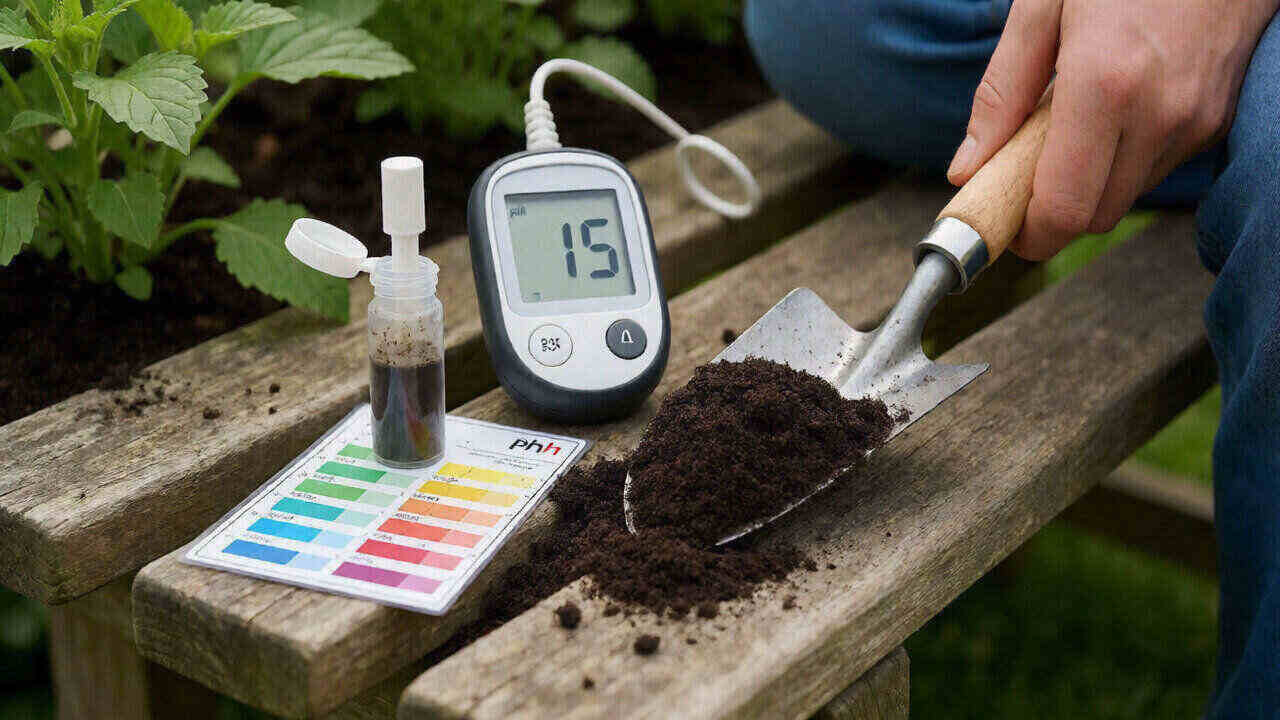
If a plant shows deficiency symptoms after you have already fed it, suspect the soil before you suspect the fertilizer. A soil can hold plenty of nitrogen, phosphorus, potassium, calcium, magnesium, iron and the rest, and still deliver almost none of them. The mechanism is pH, and it is the single largest reason a feeding program fails in a garden that is otherwise well managed. Test first. Feed second.
The mechanism, in plain English
Soil pH measures hydrogen ion activity. More hydrogen ions means lower pH, more acidity. Those hydrogen ions compete with nutrient ions for the charged surfaces of clay and organic matter, a process called cation exchange. When hydrogen wins, calcium, magnesium and potassium are displaced into the soil solution, where they can be leached or taken up in uneven bursts. When hydrogen is scarce, as in alkaline soil, other ions take over: carbonates and hydroxides tie up iron, manganese, zinc and copper as insoluble solids. Phosphorus is the special case, because it binds to iron and aluminium oxides in acid soil and to calcium in alkaline soil, so it is least available at both extremes and most available near neutral.
Cation exchange capacity, the soil’s ability to hold positively charged nutrients, is the buffer that slows all of this. High organic matter and clay mean slow pH change and slow nutrient release. Sandy, low-organic soil swings fast in both directions.
What happens in acidic soil
Below about pH 5.5, aluminium and manganese become soluble and can reach toxic levels for roots. Phosphorus fixes to iron and aluminium oxides and becomes unavailable. Calcium, magnesium and potassium are displaced and leached. Microbial activity drops, and nitrification slows below pH 5.5, so nitrogen cycles more slowly even when it is present. Molybdenum becomes scarce. The result is a soil that is chemically hostile to most garden plants even when it tests high in total nutrients.
What happens in alkaline soil
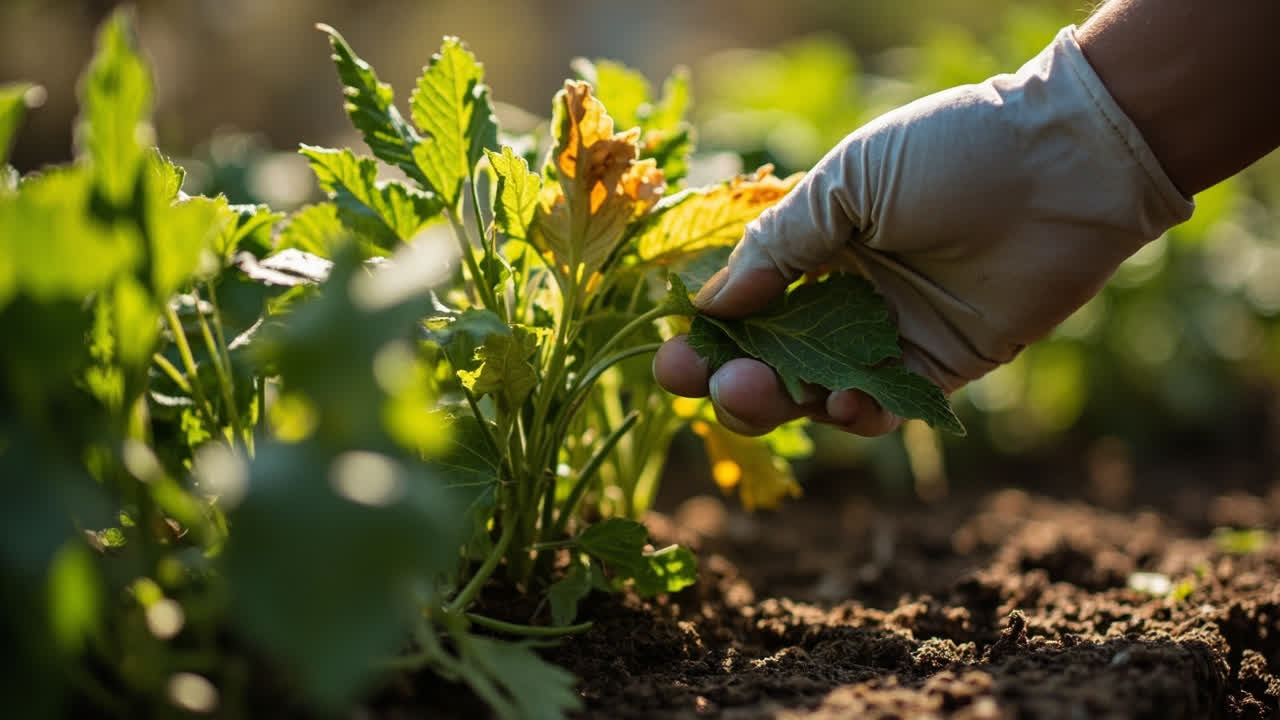
Above about pH 7.5, iron, manganese, zinc and copper precipitate as hydroxides and carbonates, and plants show interveinal chlorosis, the classic yellow-leaf-with-green-veins picture. Phosphorus binds to calcium. Boron can become deficient in sandy alkaline soils. Molybdenum is the exception: it becomes more available as pH rises. Nitrogen and potassium are usually unaffected directly, but the plant cannot use them well when iron and manganese are locked out.
Nutrient availability by soil pH (the table)
The chart you see in extension PDFs is, in plain form, this table. Relative availability, not absolute quantity, is what matters, and the band where the most nutrients overlap is 6.0 to 7.0.
| Nutrient | Optimal pH band | What limits it |
|---|---|---|
| Nitrogen | 6.0 to 7.5 | Low nitrification below 5.5 |
| Phosphorus | 6.0 to 7.0 | Fixation by Fe/Al oxides in acid, by Ca in alkaline |
| Potassium | 6.0 to 7.5 | Leaching when H+ displaces it |
| Calcium | 6.5 to 8.5 | Low availability in acid soil |
| Magnesium | 6.0 to 8.5 | Low availability in acid soil |
| Sulfur | 6.0 to 7.0 | Leaching in sandy acid soils |
| Iron | 5.0 to 6.5 | Precipitation above 7.0 |
| Manganese | 5.0 to 6.5 | Precipitation above 7.0; toxicity below 5.5 |
| Zinc | 5.0 to 7.0 | Precipitation in alkaline soil |
| Copper | 5.0 to 7.0 | Precipitation in alkaline soil |
| Boron | 5.0 to 7.0 | Leaching in acid sandy soils; fixation at high pH |
| Molybdenum | 7.0 to 8.5 | Low availability in acid soil |
Why 6.0 to 7.0 is the target
There is no single magic number. 6.0 to 7.0 is the band where the largest number of nutrients are simultaneously available, and where the toxic ones, aluminium and manganese, stay locked in the solid phase. Most garden vegetables, herbs and ornamentals are comfortable across that band. The goal is not to hit 6.5 exactly; it is to stay inside the band and to move in the right direction when you are outside it.
Moving pH in the right direction
To raise pH, use agricultural lime: calcitic limestone if you only need calcium, dolomitic limestone if you also need magnesium. Rates come from a buffer pH test, not from a guess. To lower pH, use elemental sulfur or an acidifying fertilizer such as ammonium sulfate; lowering is slower and harder than raising, and in lime-rich soils it is nearly impossible. Always test before and after, and make small corrections rather than big swings. The buffer pH test matters because it estimates how much lime the soil actually needs to reach a target, accounting for the reserve acidity held on clay and organic matter, not just the acidity in the water film. A plain pH reading tells you where you are; the buffer test tells you how much amendment it will take to move.
What gypsum does and does not do
Gypsum supplies calcium and sulfur without changing pH. It is useful for sodium-affected soils and for calcium deficiency, and it does not raise pH. If your goal is to raise pH, gypsum will not do it. Limestone will. The reason is chemical: gypsum is calcium sulfate, which dissolves and releases calcium and sulfate ions but neither ion consumes hydrogen ions, so the hydrogen ion activity stays the same. Limestone is calcium carbonate, and the carbonate reacts with hydrogen ions to form water and carbon dioxide, which removes acidity from the solution. That distinction matters in practice because gypsum is often sold as a “soil conditioner” and confused with lime. Use gypsum when you need calcium in a soil that is already at the right pH, or when sodium has displaced calcium on clay surfaces and you need to flush it. Use lime when the pH itself is low. Applying gypsum to acid soil wastes money and leaves the pH problem untouched, and applying lime to a soil that only needs calcium can push pH too high and lock up iron and manganese.
How long a correction takes
Lime reacts over 6 to 12 months to fully shift pH; sulfur takes 3 to 6 months. Availability of iron and phosphorus can respond within weeks of a correction, because the chemistry at the root surface changes before the bulk soil does. Retest annually. Expect pH to move slowly and availability to move faster, and plan your feeding schedule accordingly. The timeline depends on how the amendment is applied. Lime needs to be incorporated into the top few inches of soil and needs moisture to react; surface application on a dry bed can take a full season longer. Finer particle size reacts faster, which is why agricultural lime is ground to a specific mesh. Sulfur must be oxidized by soil bacteria into sulfuric acid, so it is slower in cold or waterlogged soils and faster in warm, moist, well-aerated ones. If you are correcting for a crop that is already in the ground, you can shorten the wait by using a faster-acting form such as pelleted lime or a liquid acidifier, but the effect is smaller and shorter lived, so treat those as a bridge rather than the fix. Do not reapply a full rate before the first application has had time to work; doubling up is the most common way to overshoot and create the opposite problem.
Containers, raised beds and acid-loving crops
Containers and raised beds have little buffering capacity, so pH drifts faster than in ground soil. Use a soilless mix with a starting pH of 5.5 to 6.5, and retest twice a season. Acid-loving crops such as blueberry (Vaccinium corymbosum), azalea (Rhododendron spp.), rhododendron and hydrangea need 4.5 to 5.5, which is outside the general target and should be managed as a separate case. See blueberry soil pH requirements for that scenario. The low buffering in containers comes from the absence of mineral soil: peat and bark decompose and acidify over time, while fertilizer salts accumulate and push pH around. Watering with alkaline tap water, common in hard-water areas, gradually raises pH in a container, and heavy nitrogen feeding can acidify it. In raised beds the situation is intermediate: the mix has more volume and some mineral content, but still far less buffering than a garden bed, so test at least once per season and correct lightly. For acid-loving crops the management is different in kind, not just degree. Do not try to hold a blueberry at 4.5 with sulfur in a container that also grows vegetables; give it its own bed or container with an acidic mix, water with rainwater or acidified water, and feed with an ammonium-based fertilizer. Hydrangea flower color is the visible proof of this: blue flowers need 4.5 to 5.0, pink needs 6.0 to 6.5, and the same plant can shift color across seasons as the pH moves.
Sources and further reading
Changing Soil pH · Colorado State University Extension.
Soil Fertility Module 4449-2 · Montana State University.
Changing the pH of Your Soil · Clemson HGIC.
Soil pH and Nutrient Availability · University of Maryland Extension.
Soil pH and Nutrient Availability · Purdue University Extension.
Soil pH and Nutrient Availability · University of Georgia Extension.
For the broader picture of where nutrients come from and how to test, see soil testing and where plant nutrients come from. For symptom diagnosis, see the symptom-to-nutrient deficiency chart. For reservoir pH, see how pH works in a hydroponic reservoir. For application rates once pH is right, see how much fertilizer to apply. For the compost-versus-NPK decision, see compost or NPK fertilizer.
Read also: blueberry soil pH requirements, ph levels, how pH works in a hydroponic reservoir, soil testing and where plant nutrients come from.
Your soil isn’t starving. It may be holding.
Last reviewed on 28 October 2026.
Read Also on Aqualogi
Related on the site, broken out by topic:
Start here: Unlocking the Magic of Essential Nutrients for Plants: Handbook for Thriving Gardens.
For the organic versus synthetic choice: Organic Fertilizer: Nourish Your Garden the Natural Way covers the quick guide, the organic advantage, the types, the impact on soil health, and how to use them.
For working out the amount: Fertilizer Application Rate: How to Calculate the Right Amount covers how to turn a soil-test recommendation into pounds of product.
From Bank Statement to QuickBooks-Ready File
That manual cleanup you just read about? This tool skips it. Turn your PDF into QBO for QuickBooks without storing your data anywhere.
Start Converting