A plant that looked healthy last week is now showing leaf yellowing, leaf wilt, or leaf drop, and you are holding a dying plant wondering which mistake to fix first. The reflex is to add more watering or move it into stronger sunlight, but those two moves cause most indoor decline. Start with the symptom. In nine out of ten cases, the visible sign points to a cause you can resolve in a single weekend, and this plant rescue guide walks the full path from diagnosis to plant revival.
The Symptom-First Diagnosis (And Why Most People Guess Wrong)
Asking why a plant is dying leads nowhere. Asking what the symptom looks like leads to the cause. Most generic guides start from causes such as water, light, or humidity and ask you to match your plant to one. Real diagnostic work runs the other direction. You look at the leaf in front of you and place it in a category, and the cause follows. This page owns that symptom-first method, and the step-by-step rescue guide is the companion procedure once you know what you are treating.
Two details change almost every diagnosis. First, the speed of decline. A plant that faded over three months usually suffers a chronic care issue such as poor light rhythm or a root bound pot. A plant that collapsed in three days usually suffered acute shock such as overwatering, frost, or repotting trauma. Second, whether one symptom or several appeared together. Leaf yellowing alone is often a watering or light issue, while yellowing plus sticky residue plus ants usually means aphids. Sudden change and environmental stress leave different fingerprints, and reading them correctly is the whole skill.
Before any of this lands, learn the confusion that wrecks the most houseplants. A chronically overwatered plant wilts because rotted roots can no longer drink, and that wilt looks identical to thirst. Most rescue attempts pour more water on a root system that is already drowning. An overwatering diagnosis starts by checking the soil and roots, never by adding water. An underwatering diagnosis starts the same way, and the drainage check below tells the two apart.
Overwatered vs Underwatered: The Single Most Common Confusion
Push a finger two inches into the soil. If the mix is wet and the plant still wilts, the roots are likely damaged and this is an overwatering diagnosis. Lift the nursery pot and look at the drainage holes. Brown, mushy root tips and a sour smell confirm rot, while white firm roots with dry soil confirm thirst. A sun stress diagnosis can wait until water is ruled out, because water kills faster than light ever does.
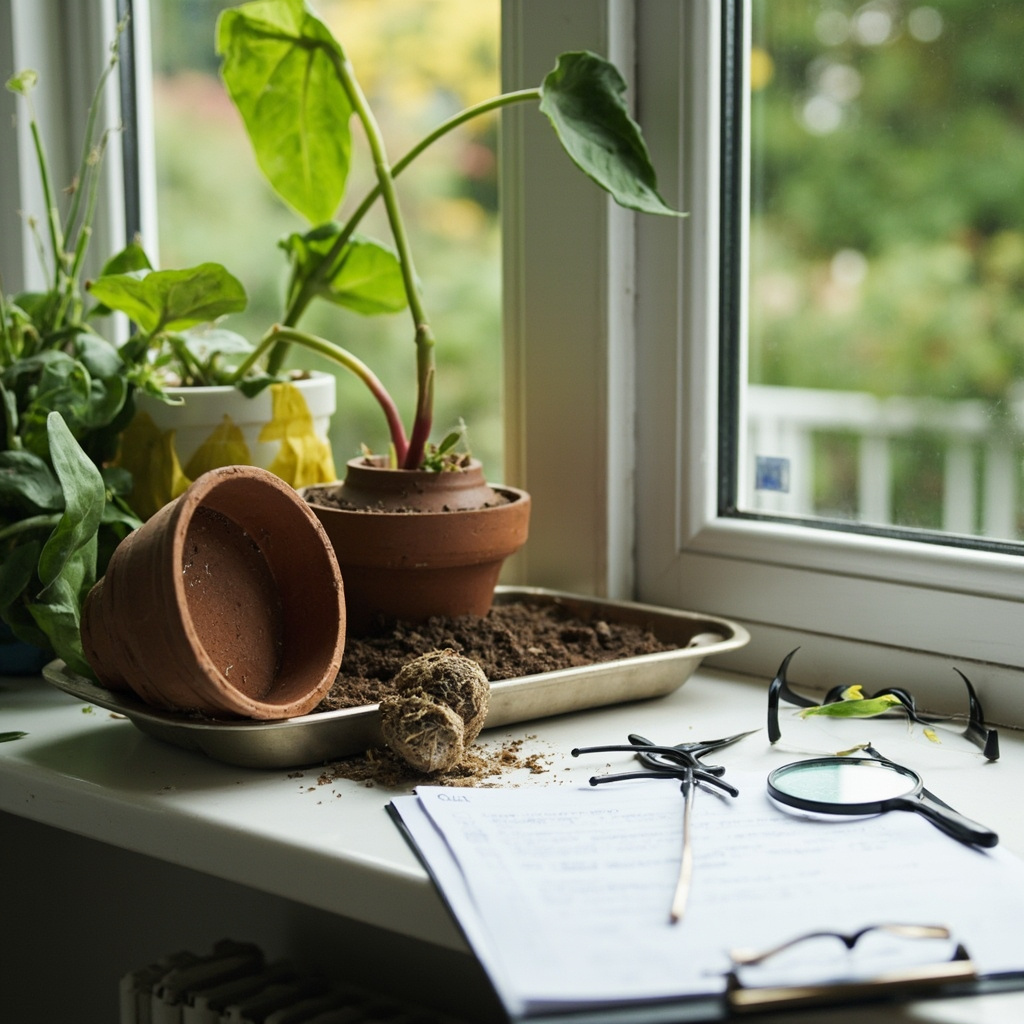
For a suspected overwatering case, tip the root ball out of its pot and inspect the root color test directly. Healthy roots look white or tan and feel firm. Rotted roots look brown or black and feel slimy. Trim the dead tissue, rinse with a dilute hydrogen peroxide solution, and repot into fresh soil with added perlite for air flow. Then switch to bottom watering for the recovery period so the upper soil stays drier while deep roots reestablish.
Symptom to Cause to Decision: The 9 Most Common Symptoms
Use this table as the triage step. Find the row that matches what you see, read the likely cause, and follow the decision. Each row links to a deeper section below.
| Symptom | Likely cause | First decision |
|---|---|---|
| Leaf yellowing on lower leaves | Overwatering or low light | Check soil moisture, then light level |
| Brown leaf tip and crispy edges | Salt buildup or low humidity | Flush salts, raise humidity |
| Leaf drop after a move | Sudden change and draft | Stabilize position, stop fertilizing |
| Leaf curl with dry soil | Underwatering | Deep soak, then reset rhythm |
| Leaf wilt with wet soil | Root rot | Unpot, trim, repot |
| Leggy plant with small leaves | Etiolation from low light | Move toward light gradually |
| Sticky leaves | Honeydew from aphids or whiteflies | Wash, treat, trap |
| Fine webbing | Spider mites | Raise humidity, treat |
| White powder on leaves | Powdery mildew | Improve air flow, treat |
If yellowing dominates, the yellow leaves guide goes deeper on each of the six causes. If you already know your home runs dark, the four-tier light framework maps every room to its true level so the next plant starts in the right spot.
Brown Tips, Brown Spots, and Crispy Edges: Diagnosis Beyond Water
A brown leaf tip with a yellow halo usually means salt buildup from fertilizer, not thirst. Salts accumulate when small sips never flush the pot, and the fix is flushing salts with a deep drench until water runs clear from the saucer. After flushing, practice withholding fertilizer for a month while the plant stabilizes. Beginners choosing their next plant should read the tiered beginner guide so the replacement matches the care they can actually give.
Brown crispy edges with no halo usually mean dry air, heat from a vent, or cold draft. Move the plant away from heating vents, add a humidity tray with pebbles and water beneath the pot, and group plants so their transpiration raises local moisture. A temperature shock from a single cold night near glass can brown every exposed tip at once, so check placement before blaming water. Pruning the dead tips with sterile scissors keeps the plant tidy, and deadheading spent blooms redirects energy into recovery rather than seed.
Wilting After Watering (The Classic Overwatering Signal)
Wilting within a day of watering is the signature of root rot surgery territory. Unpot the plant, shake off the old mix, and perform root pruning on everything brown and mushy. Keep every firm white root. Repot into a nursery pot one size down with fresh soil loosened by perlite, because a smaller pot dries faster and denies rot the wet conditions it needs. Water once, then wait until the top two inches dry before watering again.
Severe cases need propagation as insurance. Take a stem cutting rescue from any healthy stem, root it in water or moist mix, and keep the mother plant recovering in parallel. This propagation rescue means even a failed recovery still leaves you with the same plant. The bird of paradise rescue walks this exact dual-track method for a dramatic specimen, and the steps transfer to almost any leafy houseplant.
Sticky Residue, Webbing, and White Powder: The Pest Trio
Sticky leaves mean honeydew, and honeydew means sap feeders. Check leaf undersides for aphids, whiteflies, or mealybugs clustered along veins. Wash the plant under a firm shower, then treat with neem oil or insecticidal soap once a week for three weeks to catch hatching generations. Hang yellow sticky traps nearby to monitor fungus gnats and whiteflies while treatment runs, since a falling trap count is the first sign the population is breaking.
Fine webbing between leaves signals spider mites, which thrive in dry still air. Raise humidity, shower the foliage, and treat with neem oil, repeating after five days. White powder that wipes off is powdery mildew, and dark sunken stem lesions with damping off at the soil line mean fungal wilt that rarely reverses. Thrips leave silvered streaks and black specks, and they hide in buds, so inspect flowers first when streaks appear. The pest and disease diagnosis framework covers eleven organisms with the same symptom-first method used here, and its confusion rules transfer directly to soil growing.
The “Is It Saveable?” 60-Second Test
Run the stem scratch test first. Scratch a thumbnail patch on the main stem. Green tissue underneath means living cambium and a plant worth saving. Brown dry tissue on every stem means that stem is dead, so test lower and closer to the base before giving up. Some plants enter dormancy and look dead while resting, so a bare winter stem with firm roots deserves patience rather than disposal.
Next run the root color test. Slide the root ball out and look. White or tan firm roots mean the foundation is alive even if every leaf looks terrible. A plant with living roots and one living stem node can rebuild a full canopy within one growing season. If every root is black mush and every stem scratches brown, the honest answer is replacement, and the low-light collection plus the air-purifying review are the two best places to pick a successor that fits the same room.
Bringing Your Plant Back (Without Killing It Twice)
Recovery is quiet care, not heroic intervention. Place the plant in stable medium light, ideally mapped with the light framework, and protect it from draft and sudden change while it rebuilds. Hold all fertilizer during the early recovery period, since salts stress damaged roots. Resume feeding at quarter strength only after new growth appears. A small grow light on a timer can bridge a dark season without moving the plant into shock territory.
Repot only when roots have recovered enough to need room, using fresh soil and a clean nursery pot, and prune only dead tissue with sterile scissors. Expect the plant to look worse for two weeks before it looks better, because root pruning and repotting cost energy before they pay back. New leaves smaller than the old ones are normal in the first flush. Steady light, careful watering, and patience bring more plants back than any product ever will.
From Bank Statement to QuickBooks-Ready File
That manual cleanup you just read about? This tool skips it. Turn your PDF into QBO for QuickBooks without storing your data anywhere.
Start Converting