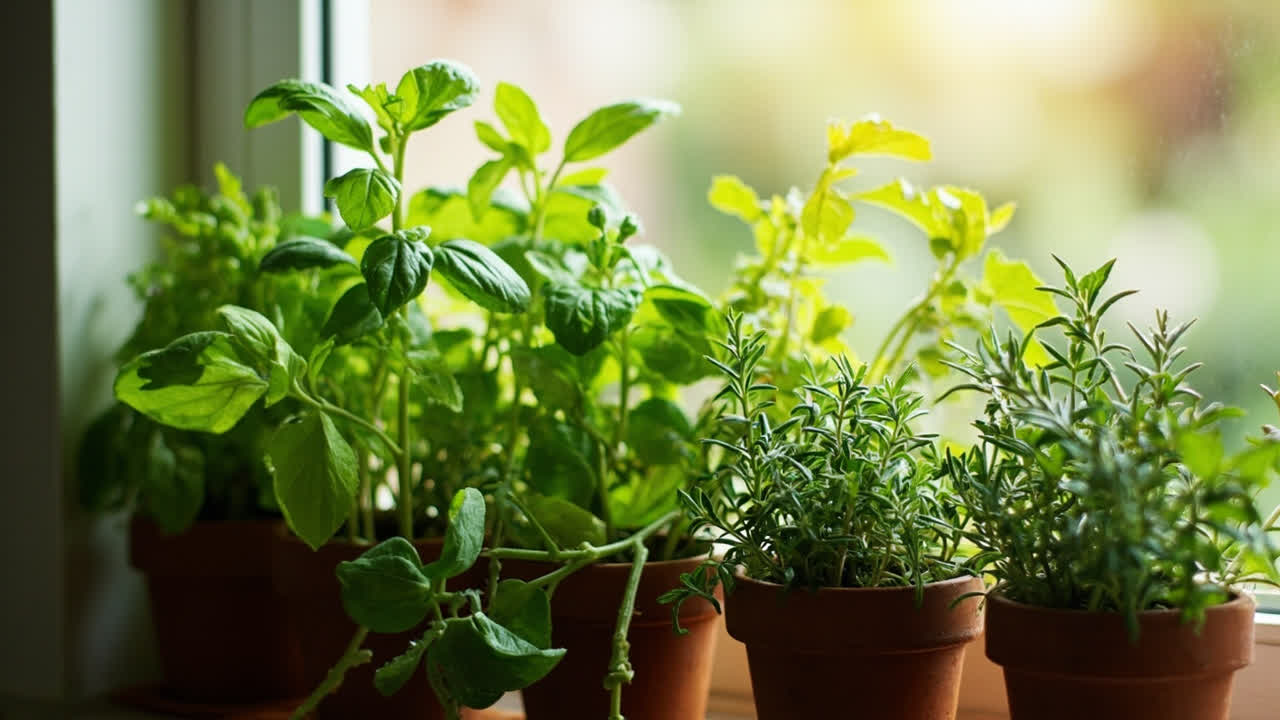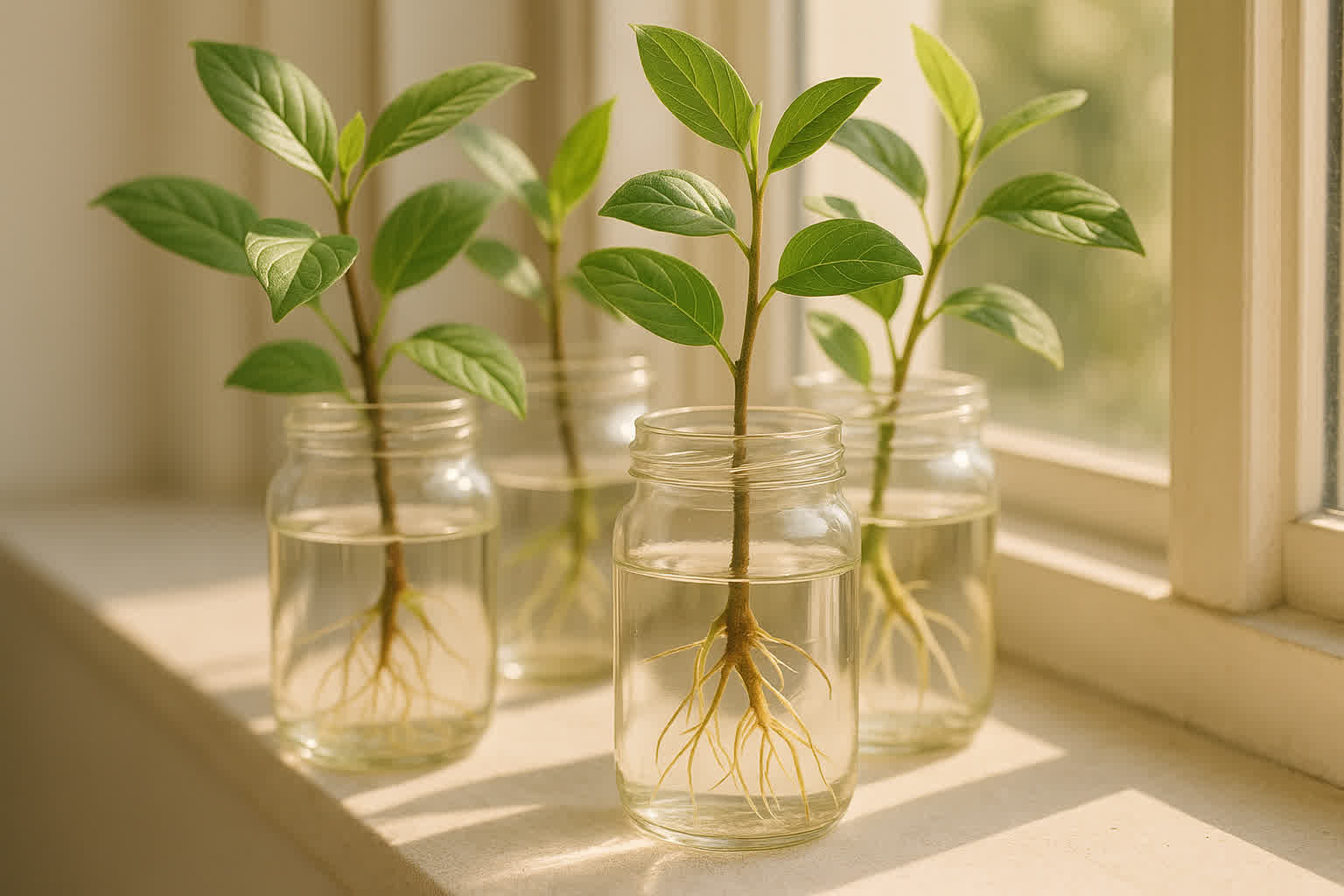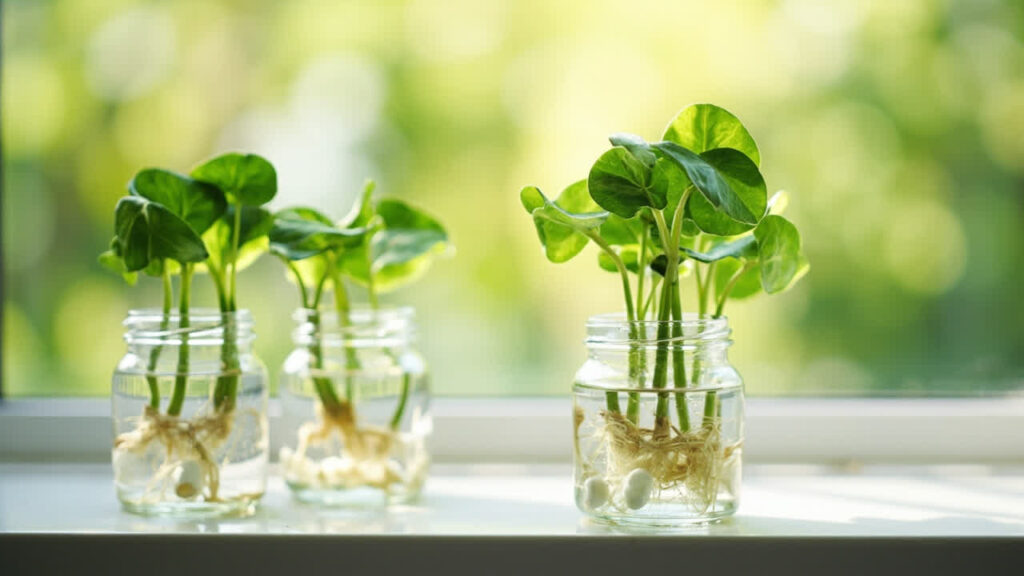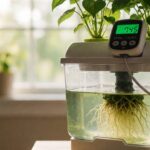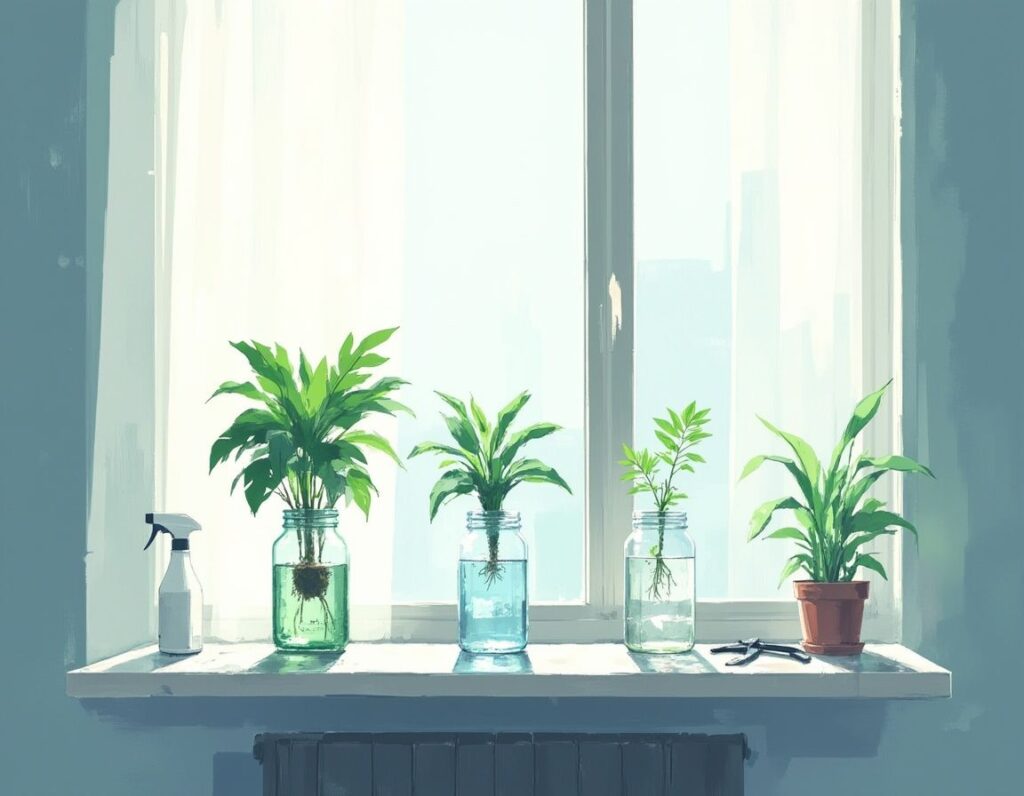

Avoiding the most common water propagation mistakes is the key to turning that single, hopeful plant clipping into a thriving new houseplant. Our plant propagation guide covers the fundamental principles that apply to all houseplants..
You’ve seen the beautiful pictures… a perfect cutting suspended in a sparkling glass jar, its roots elegantly unfurling in the water.
You try it yourself, full of optimism, only to watch in dismay as your cutting is plagued by leaf yellowing. Our pothos propagation guide shows exactly how to set up water propagation for the best results. or, worse, develops a dreaded mushy stem.
Why do some people make water propagation look so easy while your cuttings seem destined for the compost bin?
The difference isn’t a magical green thumb; it’s avoiding a few critical, yet simple, errors.
With houseplant ownership becoming a cherished part of home life for millions—with the indoor plant market projected to grow by over $5 billion by 2028—learning this skill is more rewarding than ever.
I will guide you through the most frequent water propagation pitfalls, from root rot to soil transition shock, and provide clear, actionable steps to ensure your propagation journey is a successful one.
Mistake 1: Starting with a Flawed Foundation
Your success begins long before the cutting ever touches water; it starts with the parent plant.
Using the wrong cutting from a stressed, diseased, or pest-ridden mother plant is setting yourself up for failure.
These clippings lack the vital energy reserves needed to sprout new roots and are more susceptible to disease.
Remember, not all plants are created equal when it comes to water propagation!
This simple chart breaks down which plants to start with and which might be better for other methods.
| Plant Type | Water Propagation Suitability | Expert Tip |
| Pothos, Philodendron, Tradescantia | Excellent (Easiest) | Almost foolproof. These are the best plants for practicing your technique. |
| Monstera Deliciosa, Spider Plant | Excellent | Very reliable. For a Monstera, ensure your cutting includes an aerial root nub if possible for faster results. |
| Snake Plant (Dracaena trifasciata) | Challenging | Prone to rot. Better propagated by division or in soil. If using water, the cut end must be callused. |
| ZZ Plant (Zamioculcas zamiifolia) | Challenging | Propagates more reliably from leaf cuttings in soil. It is extremely slow to root in water and prone to rot. |
| Most Succulents & Cacti | Not Recommended | Extremely high risk of rot due to their high water content. Propagate by letting leaves callusing and placing them on top of soil. |
Mistake 2: The “No Node” Cutting
Cutting without a node is perhaps the single most frequent reason for no root growth.
A plant node is a small, often slightly swollen bump or ring on the stem from which leaves, buds, and—most importantly—roots emerge. It contains the concentrated cells necessary for new growth.
Without a plant node, your cutting simply cannot root!
How to Find and Cut at the Node
Follow these steps to ensure your cutting has everything it needs to succeed.
- Locate the node: on a vining plant like a Pothos, find the spot where a leaf meets the main stem. Look for a small brown nub or a slight bump. That’s your target.
- Make a clean cut: use sterilized scissors or shears to cut about a quarter-inch below the node. A clean cut prevents crushing the stem tissue and reduces the risk of infection.
- Choose the right size: a cutting too large struggles to support its leaves, while a cutting too small lacks energy. Aim for a cutting with 1 to 3 healthy leaves and at least one node.
- Remove lower leaves: this is non-negotiable. Snip off any leaves that will fall below the waterline. Submerged leaves will rot, leading to bacterial infection and fouling your water.
Mistake 3: Creating a Swamp in Your Jar
The vessel and water you use can either be a nurturing nursery or a graveyard for your cutting.
The number one enemy here is stagnant water, which creates a lack of oxygen environment perfect for harmful microbes.
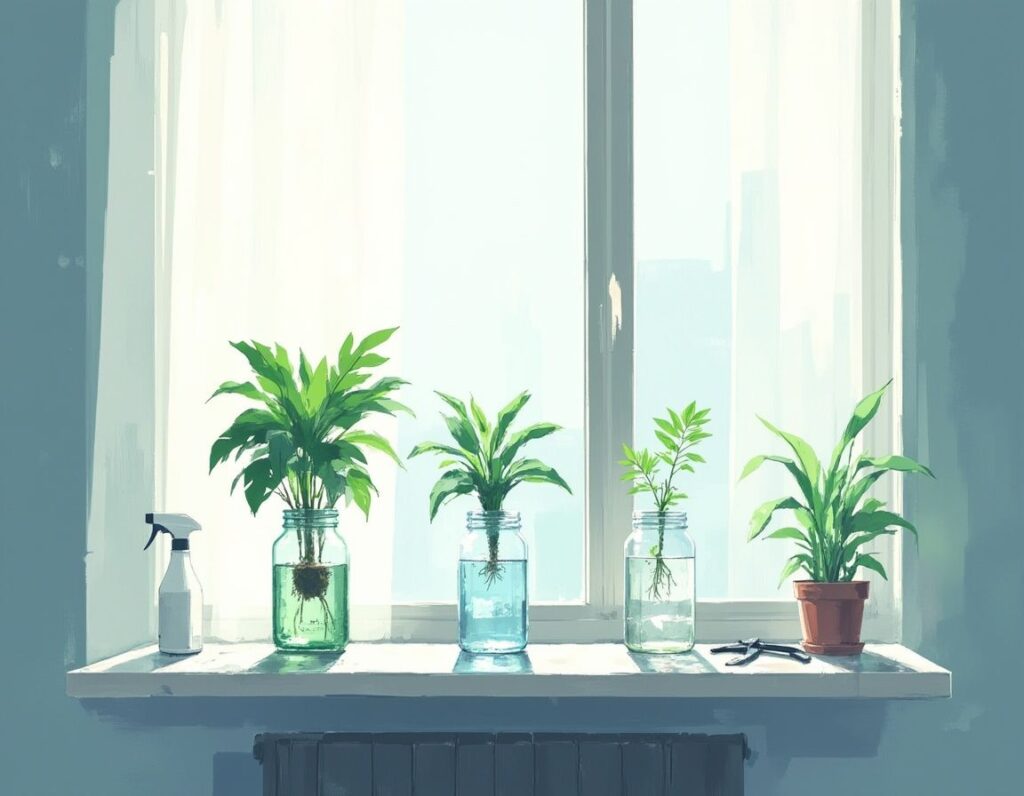
The Problem with Poor Water Hygiene
Unclean water in a dirty container is an open invitation for algae growth and bacterial colonies. This is the direct cause of the dreaded root rot, identifiable by brown, slimy roots and a mushy stem.
The Actionable Solution:
- Change the Water: not changing water is a guaranteed path to failure. You must refresh the water every 2-3 days to replenish oxygen.
- Prepare Your Water: distilled water will be better for your plants. If using tap water, let it sit out for 24 hours. This allows chlorine in water, which can be harsh on new roots, to dissipate. Avoid using water from a softener, as this soft water contains salts.
- Maintain the Water Level: only the stem and node(s) should be submerged. Ensure the incorrect water level doesn’t drown the cutting. Whether you use a simple jar or a multi-vial propagation station, cleanliness is key.
Pro Tip: If you have an established freshwater aquarium, use some of its water during a water change. It’s naturally dechlorinated and contains beneficial nitrates that can act as a mild fertilizer for your cutting.
Mistake 4: Getting the Light and Temperature Wrong
Your cutting needs energy to produce roots, and that energy comes from photosynthesis. But the wrong light can do more harm than good.
The goal is bright, indirect light!
Placing your cutting in too much direct sunlight will scorch its leaves and heat the water, creating a perfect incubator for algae.
Similarly, the wrong temperature (too cold or drafty) will stall progress. A stable, warm spot away from direct sun is ideal.
Mistake 5: Believing All Roots Are the Same
Here is an insight many guides miss: water roots are not the same as soil roots.
The delicate, often bright white roots that form in water are fragile and adapted to a life of constant moisture. They are not built to push through dense soil or search for pockets of water.
You can add rooting hormone in your water to help your propagation grow healthier and stronger roots.
Pro Tip: To help your cutting prepare for soil, you can add one spoonful of sterile potting soil to your propagation water a week before you plan to plant it. This introduces beneficial microbes and helps the roots begin the acclimatization process.
Mistake 6: Transferring to Soil Too Soon
This is where many new plants meet their demise…
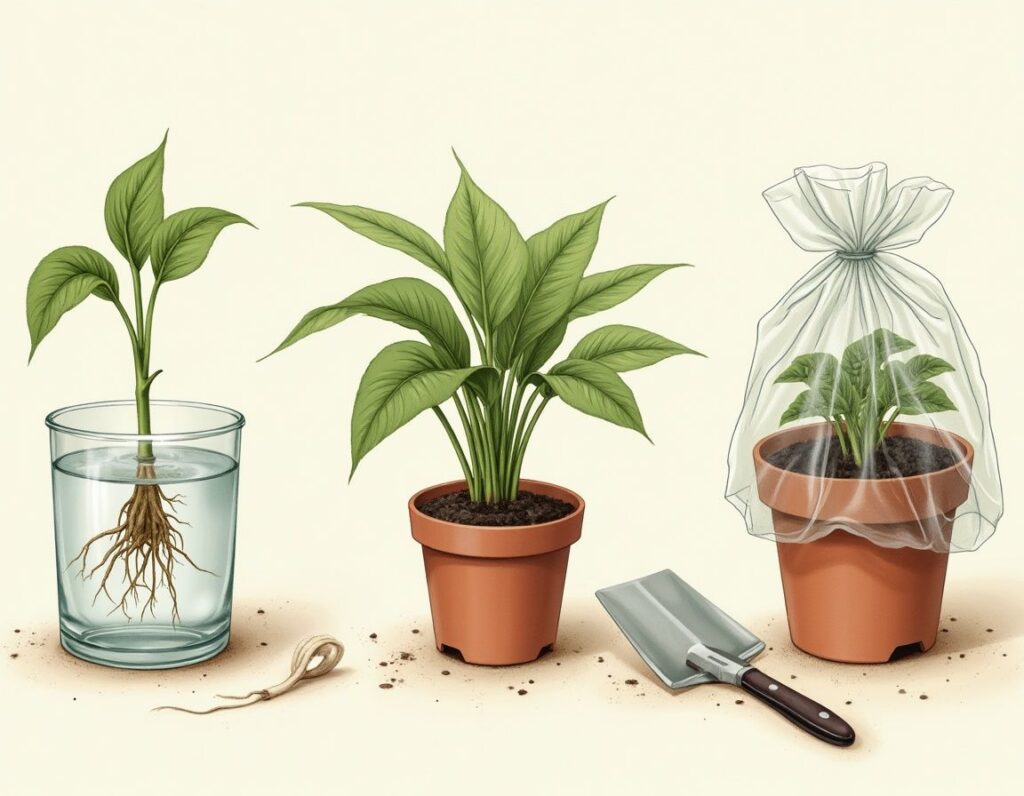
Transferring to soil too soon moves the cutting from its comfortable aquatic home into a harsh new environment, causing soil transition shock.
The Proper Acclimatization Process
- Be Patient: Don’t rush it. Wait until the weak roots are at least 1-2 inches long and have begun to grow secondary roots off the main ones.
- Ease the Transition: For the first two weeks after potting, keep the soil consistently moist (but not soggy). This helps the water roots adapt and encourages new, stronger soil roots to form.
- Boost Humidity: After potting, place a clear plastic bag over the plant for the first week. This creates a mini-greenhouse effect, trapping humidity and reducing the stress on the leaves and roots.
Quick Troubleshooting Guide of Water Propagation Mistakes
| Symptom | Likely Mistake(s) | Solution |
| Stem is brown/black & mushy at the base | Root rot from stagnant water or submerged leaves. | Discard the cutting if rot is advanced. If minor, trim the rotted part, let it callus, and start over in fresh water. |
| White film or green algae in the water | Bacterial infection or algae growth from too much light or infrequent water changes. | Change water immediately. Wash the dirty container with soap and rinse well. Move to a spot with less direct light. |
| No roots after several weeks | No root growth due to a cutting without a node, or the water is too cold. | Double-check your cutting for a node. If none, you must take a new one. Move the jar to a consistently warmer spot. |
| New plant wilts badly after moving to soil | Classic soil transition shock. | Keep soil consistently moist (not wet). Create a humidity dome with a plastic bag to support the plant as it adjusts. |
Water Progation Mistakes
Successful water propagation isn’t about luck; it’s about science and patience!
By understanding the ‘why’ behind these water propagation mistakes—from selecting a healthy cutting with a plant node to mastering the art of acclimatization to soil—you can reliably turn frustrating failures into a steady supply of new plants to grow your indoor jungle or share with friends.
Happy gardening!
From Bank Statement to QuickBooks-Ready File
That manual cleanup you just read about? This tool skips it. Turn your PDF into QBO for QuickBooks without storing your data anywhere.
Start Converting