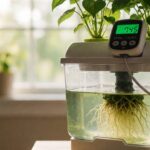

Hi gardener, do you know about Aeroponics system that revolutionize smart farming? What if you could grow healthier plants, faster, using 98% less water and no soil at all?
Imagine the frustration: you’ve meticulously planned your spring garden, only to watch delicate seedlings succumb to unseen soil pests.
Perhaps your prized tomato plants are struggling with root-knot nematodes, or basil leaves are yellowing due to poor drainage.
Maybe you dream of a vibrant urban garden, but your small apartment balcony or lack of a sizable backyard makes it seem impossible.
These aren’t just minor gardening annoyances; they’re the direct limitations of a centuries-old method, and they don’t have to be your reality.
There’s a revolutionary, clean, and surprisingly futuristic way to cultivate food that directly addresses these very challenges.
This is where aeroponic systems steps in!
You’re about to discover what this innovative soilless cultivation technique is, how it functions, why it often surpasses traditional gardening in effectiveness, and how you can begin your own aeroponics system right at home.
Did you know that traditional agriculture consumes a staggering 70% of the world’s freshwater resources? With aeroponics, we can dramatically reduce that footprint.
Aerop0nics: What Exactly is Growing in Mid-Air?
At its core, aeroponics isn’t just about growing without soil. It’s a cutting-edge precision-agriculture technique where plant roots are meticulously suspended in an enclosed aerial environment, receiving nourishment from a fine nutrient mist.
Unlike hydroponics, where roots are submerged in a nutrient solution, aeroponic gives plant roots unparalleled access to oxygen.
This constant air exposure is the secret ingredient, enabling incredibly rapid plant growth and robust development.
You’re essentially giving your plants the ultimate breath of fresh air, directly to their root zone.
The Science: How Plants Thrive on Nutrient Mist
Let’s demystify the core process of an aeroponic system.
Imagine growing a crisp head of lettuce…
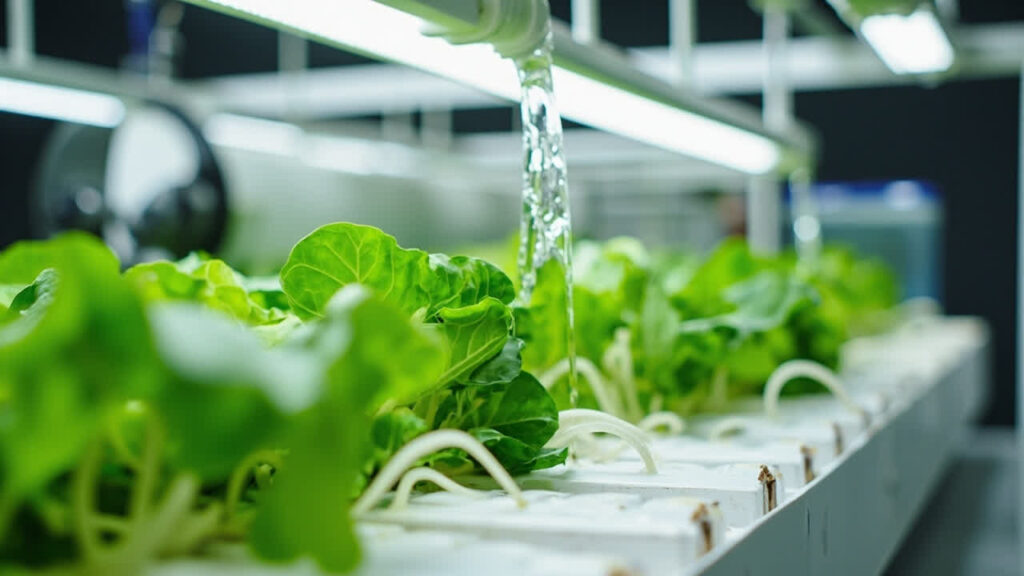
The process begins with a young lettuce seedling placed gently into a specialized support structure, often a net pot.
Its delicate roots are then allowed to hang freely within an enclosed chamber below.
This chamber is where the magic happens…
Inside, a high-pressure pump precisely delivers a prepared nutrient solution to an array of fine misting nozzles.
This misting system with nozzles don’t just spray water; they atomize the solution, transforming it into a micro-fine, oxygen-rich fog that delicately envelops the suspended roots.
This nutrient-dense fog ensures every tiny root hair is coated with vital minerals and water, maximizing absorption efficiency.
The system operates on what’s known as a repeating cycle timer.
For an optimal misting schedule, you’ll typically find the system activating for a very brief period—say, 3 to 5 seconds—every 10 to 15 minutes.
This precision timing is absolutely crucial, it provides continuous nourishment without oversaturating the roots, effectively preventing common issues like root rot while ensuring constant access to both nutrients and the abundant oxygen in the air.
This accurate delivery system contributes significantly to faster cycling of crop production.
Key Terms to Know Before You Start
Diving into aeroponic cultivation introduces a few specific terms that are good to know. Understanding them will build your confidence and clarify your journey.
1. High-Pressure Aeroponics (HPA)
High-Pressure Aeroponics (HPA) is regarded as the “true” form of aeroponics. It utilizes specialized pumps and misting nozzles to create an ultra-fine mist, typically with droplet sizes of 50 microns or less.
This incredibly fine atomization allows for optimal nutrient absorption by the plant’s root zone, leading to superior plant growth rates and higher yields.
When you hear commercial aeroponics farms or smart farming operations, they’re most likely leveraging HPA.
2. Low-Pressure Aeroponics (LPA)
Often confused with aeroponics, LPA systems are more common in initial home aeroponics setups due to their simplicity and lower cost.
These systems, sometimes colloquially called soakers or sprayers, use standard pumps to deliver a coarser spray rather than a true misting system.
While an effective form of soilless cultivation, the larger droplet size can be less efficient for nutrient uptake compared to HPA, as the roots don’t receive the same level of oxygen exposure.
3. Nutrient Solution
Think of nutrients solution as your plant’s good balanced meal.
It’s a precise mixture of purified water and essential mineral salts, containing all the macro and micronutrients your plants need to thrive.
Unlike soil, which inherently contains some nutrients, an aeroponic system requires you to provide every element your plant consumes, tailored to its specific growth stage.
Why Traditional Gardening Can Be a Losing Battle
Let’s be frank… traditional gardening, while deeply rewarding, presents a series of challenges that can exhaust even the most dedicated plant enthusiast.
These are not minor inconveniences; they are fundamental obstacles inherent to antiquated methods.
1. The Hidden Work and Waste of Soil
The earth beneath our feet, while life-giving, comes with significant, often overlooked, drawbacks.
1. Soil-Borne Pests and Diseases
From unseen bacteria to pervasive fungi, soil is a breeding ground for pathogens.
You might constantly fight off fusarium wilt in your tomatoes, the insidious root-knot nematodes that cripple plant development, or damping-off disease in your seedlings.
Each battle requires time, labor, and often, chemical interventions that you might prefer to avoid.
2. Water Inefficiency
In a traditional garden bed, a substantial amount of precious water is lost.
It either quickly evaporates from the soil surface, runs off before roots can absorb it, or leaches deep into the ground, taking valuable nutrients with it.
Contrast this with aeroponics, which uses astounding efficiencies; studies show it requires up to 98% less water than conventional soil-based agriculture. This water efficiency is critical for sustainable agriculture in a world facing increasing water scarcity.
3. Inconsistent Soil Quality
Achieving and maintaining optimal soil quality is a never-ending chore.
You might spend countless hours testing pH levels, amending with compost, vermiculite, perlite, or other substrates, just to create a decent growing environment.
Even then, consistency across your garden bed is a perpetual challenge.
2. When Your Space and Time Run Out
Modern life often leaves little room for extensive gardening. If you’re an urban gardener living in a compact space, a sprawling garden plot is simply not an option.
For those with demanding careers or busy family lives, the daily demands of traditional gardening—weeding, constant watering, tilling, pest patrol—can quickly become overwhelming.
Aeroponic offers a liberating alternative, allowing you to cultivate fresh produce in limited footprints, making urban farming and indoor farming highly viable.
The Aeroponic Advantage: More Growth, Less Waste
The beauty of aeroponics advantages lies in its ability to eliminate the pain points of traditional gardening while simultaneously amplifying the benefits.
It’s truly a leap forward in agricultural technology!

Faster Growth and Higher Yields
The constant, perfectly oxygenated nutrient mist bathing the root zone of plants in an aeroponic system creates an environment of unparalleled efficiency.
Roots don’t have to expend energy searching for water or nutrients; they are delivered directly and constantly.
This optimal absorption fuels accelerated plant growth!
Think about it.. a head of lettuce that might take 60 days to mature in soil can be ready for harvest in as little as 30 days in an aeroponic setup.
Research conducted by institutions like NASA, which studied aeroponics for long-duration space missions, has shown that nutrient delivery with aeroponics significantly boosts crop yield and growth rates compared to traditional methods.
This translates directly to higher yields in a shorter amount of time, providing fresh food more rapidly and frequently.
A Cleaner, More Sustainable Way to Grow
One of the most compelling aspects of aeroponics is its profound environmental benefits.
Since it’s a closed-loop system, the nutrient solution is continually recaptured and recirculated, dramatically reducing water and nutrient waste.
No more run-off polluting local water sources!
Furthermore, the sterile, soilless environment naturally eliminates soil-borne pests and diseases, eradicating the need for harmful herbicides and drastically reducing the reliance on chemical pesticides.
This makes your crop production inherently cleaner and safer, aligning perfectly with principles of sustainable agriculture and food security.
Vertical farming structures, often paired with LED grow lights, further maximize space efficiency, making aeroponics ideal for controlled environment agriculture.
Getting Started with Your Own Aeroponic System

Ready to dip your toes into the future of gardening? Setting up a basic home aeroponics system is more attainable than you might think.
The Essential Components You’ll Need
A simple aeroponic system consists of several key parts:
- A Reservoir: This container holds your pre-mixed nutrient solution. It’s typically located beneath the root chamber to allow excess mist to drain back for recirculation.
- A Quality Pump: This is the heart of your system, responsible for pushing the nutrient solution from the reservoir to your misting nozzles. Look for one designed for continuous operation.
- Misting Nozzles: These specialized components atomize the nutrient solution into the fine mist that feeds your plants. The type of nozzle determines if you’re building an HPA or LPA system.
- A Growth Chamber: This is the enclosed space where your plants’ roots hang freely, protected from light and contaminants, and where the nutrient mist is delivered. Often, aeroponic tower designs integrate these chambers vertically.
- A Repeating Cycle Timer: Crucial for precise misting, this timer controls the on/off cycles of your pump, ensuring roots are adequately nourished without being constantly saturated.
Choosing Your First Plants
For beginner home aeroponics enthusiasts, success hinges on selecting the right plants. Opt for those with relatively small root systems and quick growth cycles.
- Leafy Greens: Varieties like lettuce (butterhead, romaine), spinach, kale, and arugula are excellent choices. They thrive in aeroponic systems, grow quickly, and are very forgiving.
- Herbs: Basil, mint, cilantro, and oregano flourish remarkably well, providing you with a constant supply of fresh aromatics.
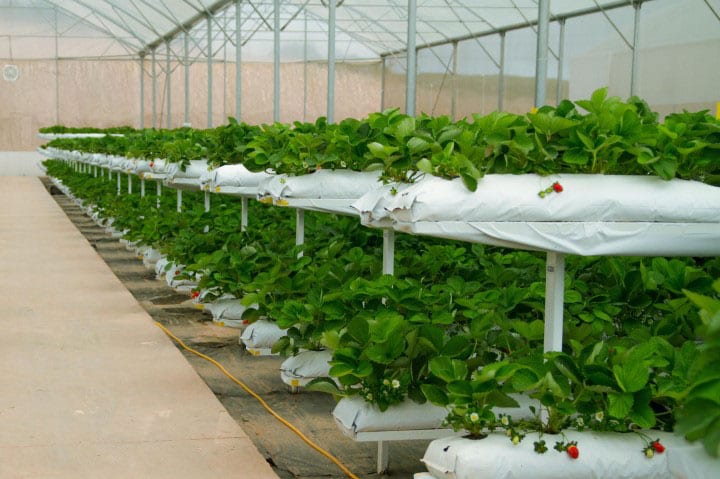
- Strawberries: While slightly more complex, strawberries can be incredibly rewarding in aeroponic setups, especially in vertical farming configurations.
Common Pitfalls and How to Avoid Them
Even with the best intentions, new aeroponic growers might stumble. Knowing the common pitfalls ahead of time will save you time and frustration.
1. Keeping Your Misters from Clogging
One of the most frequent challenges in aeroponic systems is misting nozzle clogging. This often happens due to the buildup of mineral salts from your water or nutrient solution.
- Simple Solution: Implement a routine cleaning schedule. Plan to clean your nozzles weekly or bi-weekly. A simple soak in a vinegar-water solution (e.g., 1 part white vinegar to 4 parts water) can dissolve mineral deposits.
- Prevention is Key: To minimize buildup from the start, consider using filtered water, reverse osmosis (RO) water, or distilled water in your nutrient reservoir. This reduces the mineral content entering your system.
2. Mastering Your Nutrient Mix
The number one learning curve for new aeroponic growers is correctly balancing the nutrient solution’s pH and its strength, measured in Electrical Conductivity (EC) or Parts Per Million (PPM).
Too acidic or too alkaline, and your plants can’t absorb nutrients. Too strong, and you risk nutrient burn; too weak, and they starve.
Ready to Grow Food in the Air?
The frustrations of traditional gardening—soil-borne pests, wasteful watering, and limited space—don’t have to define your gardening experience.
Aeroponics offers a compelling alternative: a cleaner, faster, highly sustainable, and incredibly efficient way to cultivate abundant, fresh food right in your home.
This isn’t just about growing vegetables; it’s about embracing agricultural technology that delivers food security and empowers you to produce healthy sustenance with a minimal environmental footprint.
You gain higher yields with remarkable water efficiency, all while participating in the exciting world of controlled environment agriculture.
So.. start your first soilless garden this week , your flourishing aeroponics garden awaits!
Turn any PDF statement into a clean sheet
Skip the typos and the hours of copying. Our converter handles any bank statement format and outputs Excel, CSV, or QBO for QuickBooks. No file retention, free to try.
Convert your statement