Spider plants are famous for producing spiderettes — those baby plants dangling from long stems that make propagation so easy and give the plant its cascading, ornamental quality.
If your spider plant is mature, healthy, and not producing any spiderettes, something in its environment is not meeting the conditions it needs to trigger reproduction.
Understanding what spiderettes are and why plants produce them helps you identify exactly what to change.
What Spiderettes Are
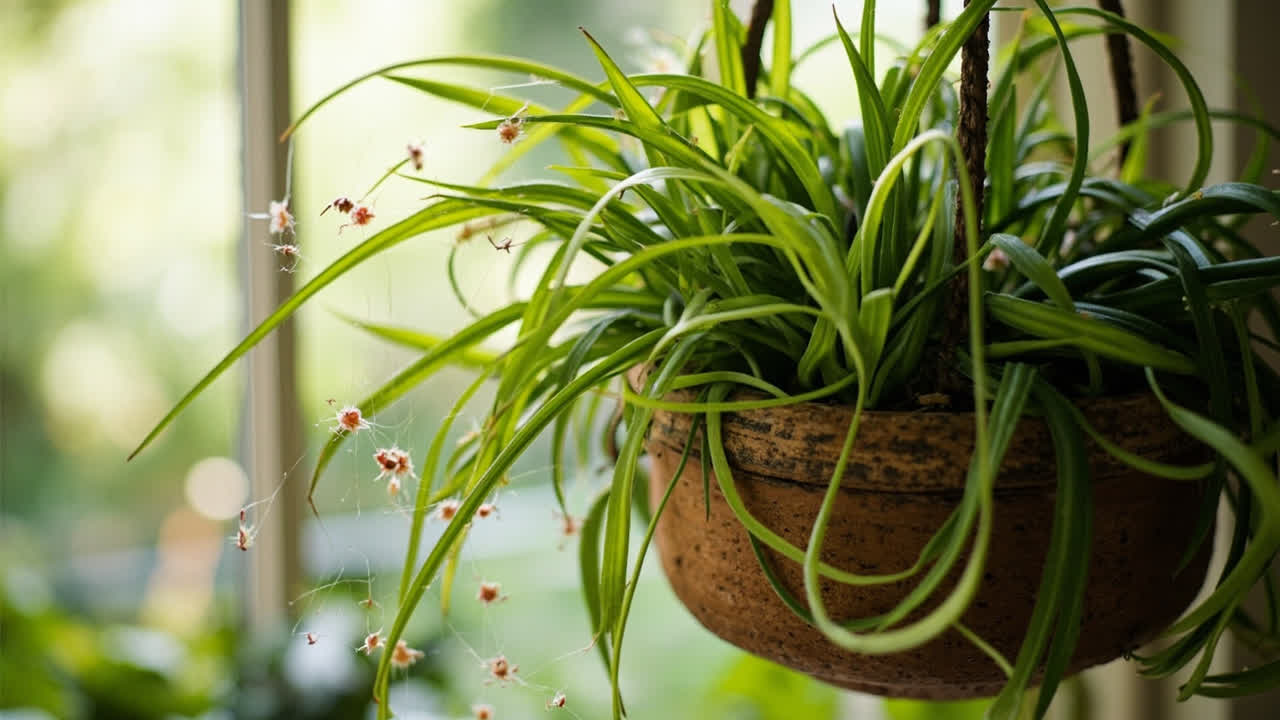
Spiderettes are offsets — miniature clones of the parent plant — produced on long stems called stolons or runners. A mature spider plant channels energy into these runners as a natural reproductive strategy: in the wild, the spiderettes would root where they touch soil, effectively creating new plants without the parent needing to invest in seeds.
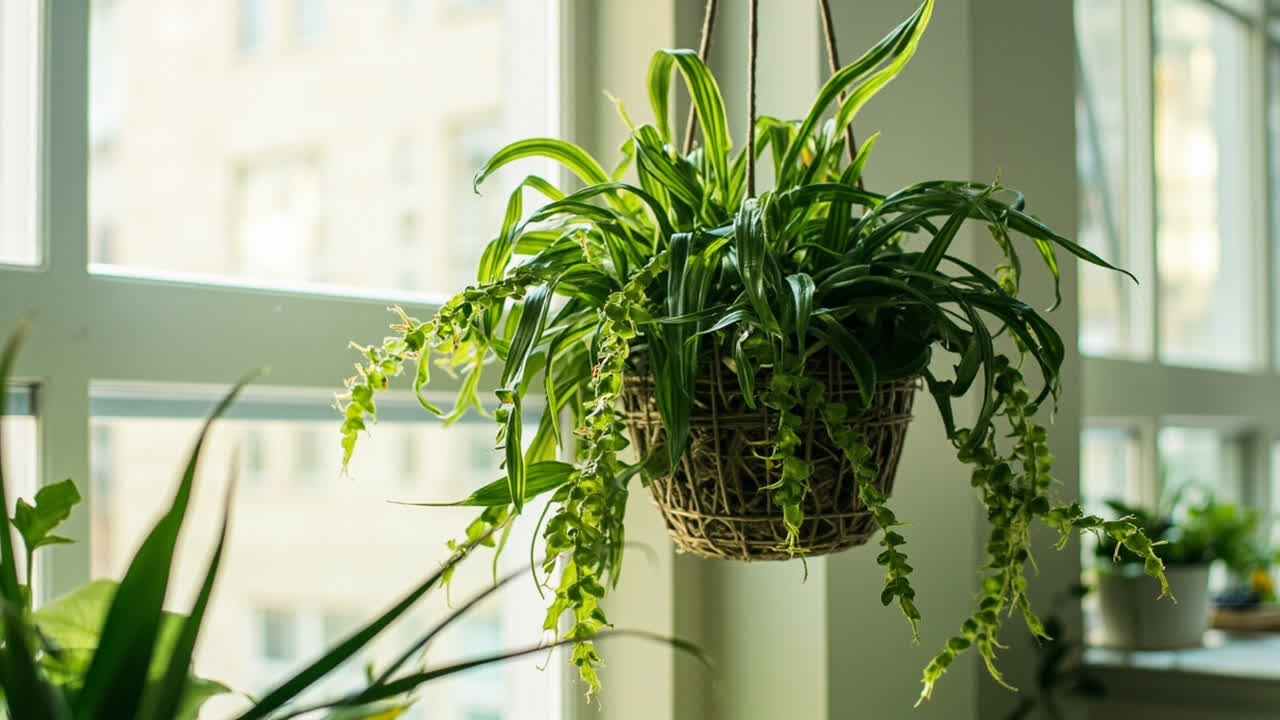
Indoors, spiderettes on long stems trailing from a hanging basket is the same process, just in a domestic context.
For a spider plant to produce spiderettes, it must be mature enough — young plants put their energy into establishing a root system and foliage before they invest in reproduction.
A spider plant bought from a garden centre in a 4-inch pot is unlikely to produce spiderettes yet, no matter how good its care is.
Generally, spider plants begin producing spiderettes when they are one to two years old and have filled their pot with a healthy root system.
Common Reasons Spider Plants Do Not Produce Spiderettes
Insufficient light is the most common reason a mature spider plant fails to produce spiderettes. A spider plant in a low-light position — a hallway, a bathroom without a window, a room with north-facing windows — may survive and even look healthy, but it will not have enough energy surplus to invest in reproduction.
Spiderette production is a signal that the plant has adequate resources and good conditions; it is essentially a sign of a thriving plant rather than a surviving one.
The fix: move the spider plant to the brightest spot you have, ideally near an east- or south-facing window with bright indirect light. Avoid direct afternoon sun, but make sure the plant receives good light levels for most of the day.
Watch for new growth and improved variegation as signs that the light improvement is working. Once the plant is visibly thriving in its new position, it should begin producing spiderettes within the next growing season.
Overwatering or root-bound conditions will also suppress spiderette production. A plant that is stressed by consistently wet soil or a pot that has become completely root-bound is operating in survival mode — it does not have the resources to invest in reproduction.
If the soil is staying wet for more than a week after watering, or if roots are visible coming out of the drainage hole, the plant needs to be repotted into fresh soil and a slightly larger container before it will produce spiderettes.
Incorrect temperature can also delay spiderette production. Spider plants grow best between 60°F and 80°F (15°C–27°C). Temperatures consistently outside this range — particularly temperatures below 55°F (13°C) or above 85°F (29°C) — slow growth and suppress reproductive effort.
Cold drafts from open doors or air conditioning vents in winter are a common and often unnoticed cause of temperature stress in indoor spider plants.
Under-fertilizing can slow growth but is less commonly the sole cause of missing spiderettes. A spider plant that has been in the same soil for two or more years without any fertilizer may be nutrient-depleted, and the plant will not have the resources to produce spiderettes.
Apply a balanced liquid houseplant fertilizer at half strength once a month during the growing season and see if spiderette production resumes within a few months.
How to Encourage Spiderette Production
Give the plant more light than it currently has. This is the single most effective intervention. Move it to your brightest window and watch for the characteristic arching stems to begin emerging from the center of the rosette — those arching stems are the runners that will carry spiderettes at their tips.
Repot if the plant is root-bound. A spider plant that has filled its pot with roots has nowhere to expand and will not invest in reproduction. Move it into a pot that is one size larger — 1–2 inches larger in diameter — with fresh, fast-draining potting mix. Water thoroughly after repotting and place back in good light.
Be patient. If the plant is in good conditions and has just been repotted into larger pot with fresh soil, it may take a full growing season before you see spiderettes. The plant needs to establish its root system in the new soil, fill the new pot with roots, and accumulate enough surplus energy before it triggers the reproductive response. This process takes months, not weeks.
Fertilize during the growing season. A balanced liquid houseplant fertilizer at half strength applied monthly in spring and summer provides the nutrient surplus the plant needs to produce spiderettes. Do not fertilize in winter when the plant’s growth naturally slows.
What to Do With Spiderettes Once They Appear
Spiderettes develop root nubs at their base as they mature on the stem. Once those nubs are visible — small raised bumps where the spiderette meets the stem — the spiderette is ready to be propagated. You can cut it free and root it in water or soil, or leave it on the plant to develop into a long, trailing display.
Leaving spiderettes on the plant does not harm the parent — it simply redirects some of the plant’s energy into the next generation rather than the current one. Some spider plant owners remove some spiderettes to encourage the plant to redirect energy into root and foliage growth; others leave all of them and enjoy the cascading effect. The choice is aesthetic and does not significantly affect the parent plant’s health either way.
Spider Plant Not Producing Spiderettes
Most spider plants that are not producing spiderettes are either not getting enough light or are too young or root-bound to have the resources for reproduction.
Address the light, repot if needed, fertilize during the growing season, and be patient for the next growing season.
A spider plant in genuinely good conditions — bright indirect light, proper watering, adequate nutrients — will produce spiderettes reliably once it is mature enough.
Turn any PDF statement into a clean sheet
Skip the typos and the hours of copying. Our converter handles any bank statement format and outputs Excel, CSV, or QBO for QuickBooks. No file retention, free to try.
Convert your statement