Snake plants — Dracaena trifasciata — are toxic to cats and dogs. This is important to know if you have pets that chew on houseplants, because the consequences of ingestion, while rarely life-threatening, are genuinely unpleasant for the animal.
The good news is that snake plant toxicity is relatively mild compared to some other common houseplants, and prevention is simple.
What Makes Snake Plants Toxic
Snake plants contain saponins — chemical compounds that are naturally defensive toxins produced by the plant.
Saponins are found in all parts of the plant: the leaves, the rhizome, and the roots. When chewed or ingested by a pet, they cause a range of gastrointestinal symptoms that are uncomfortable but not typically dangerous in otherwise healthy adult animals.
What Happens When a Cat or Dog Eats Snake Plant
Symptoms typically appear within a few hours of ingestion and may include:
- Nausea and vomiting
- Drooling or excessive salivation
- Diarrhoea
- Lethargy or reduced appetite
- Abdominal discomfort — the pet may appear to be in pain or be restless
The symptoms are caused by the saponins irritating the gastrointestinal tract. In most cases, the animal recovers within 24 to 48 hours once the plant material has passed through.
There is no specific antidote — treatment is supportive: keeping the animal hydrated and comfortable while the symptoms run their course.
When to Go to the Vet
Seek veterinary attention if:
- The animal has eaten a large amount — multiple leaves
- Symptoms are severe or persist beyond 48 hours
- The animal is very young, elderly, or has pre-existing health conditions
- You are unsure how much was consumed
For most healthy adult cats and dogs that have chewed a small amount — one leaf or less — monitoring at home with access to fresh water is usually sufficient.
Call your vet to confirm the approach — they will advise based on the animal’s size and the amount ingested.
How to Keep Pets Safe
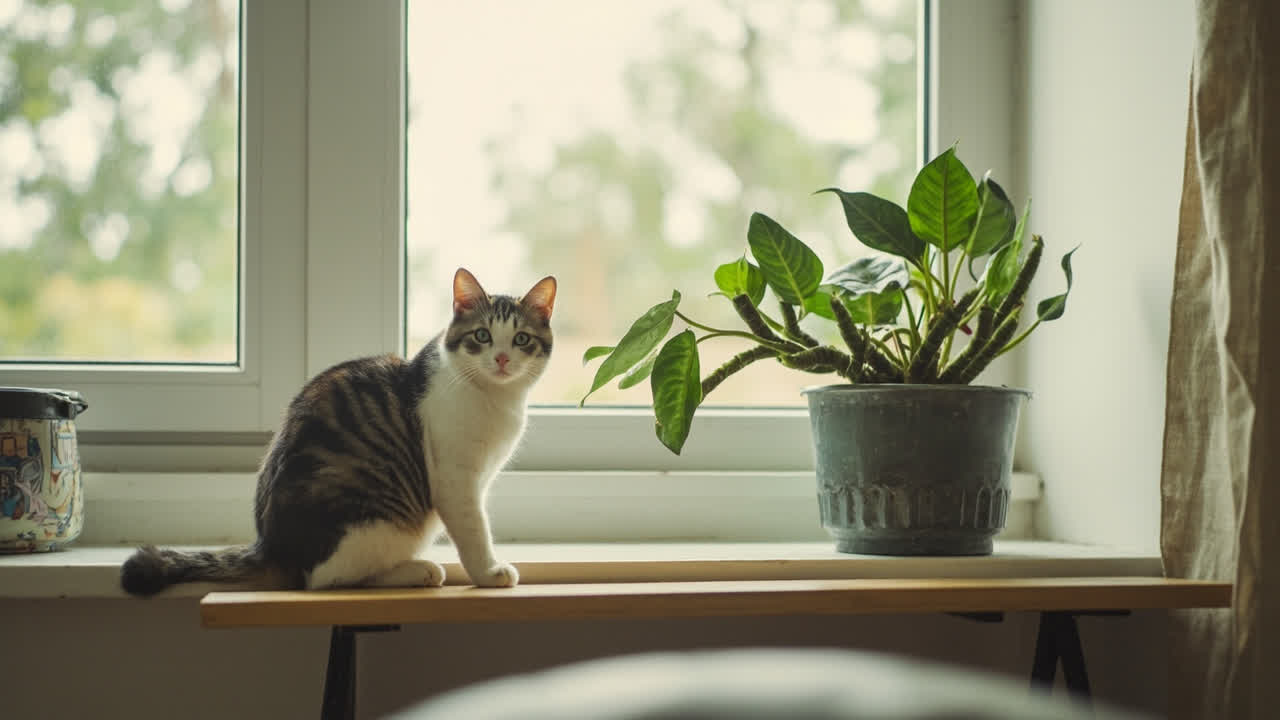
The most effective approach is placement. Snake plants grow in rosette or upright forms that can be placed on high shelves, in hanging planters, or in rooms that are off-limits to the pet. A snake plant on a high shelf is out of reach for most cats and is difficult for dogs to access.
Bitter apple spray applied to the leaves can deter some animals from chewing, but it is not a reliable primary prevention. It is a supplement to proper placement, not a substitute for it.
If you have a pet that cannot be trained away from chewing plants and you cannot create a safe space for your snake plant, the plant should be rehomed.
No houseplant is worth a pet’s discomfort.
Are Snake Plants Toxic to Humans
Snake plants are considered mildly toxic to humans as well — the same saponins that affect pets can cause nausea and vomiting if large amounts are ingested by people.
This is most likely to occur accidentally with children who may be tempted to chew on the leaves.
While the toxicity is low, it is still advisable to keep snake plants out of reach of young children who chew on household objects.
For general care, see the Snake Plant Care guide.
Turn That PDF Into a Spreadsheet in Minutes
You've seen how to do it manually — now let the tool handle the heavy lifting. Upload your bank statement and get Excel, CSV, or QBO in a few clicks.
Try It Free