—
title: Why Is My Pothos Turning Yellow? (And How to Fix It)
target: why is my pothos turning yellow
slug: why-is-my-pothos-turning-yellow
cluster: house-plants
type: SEO Backbone
—
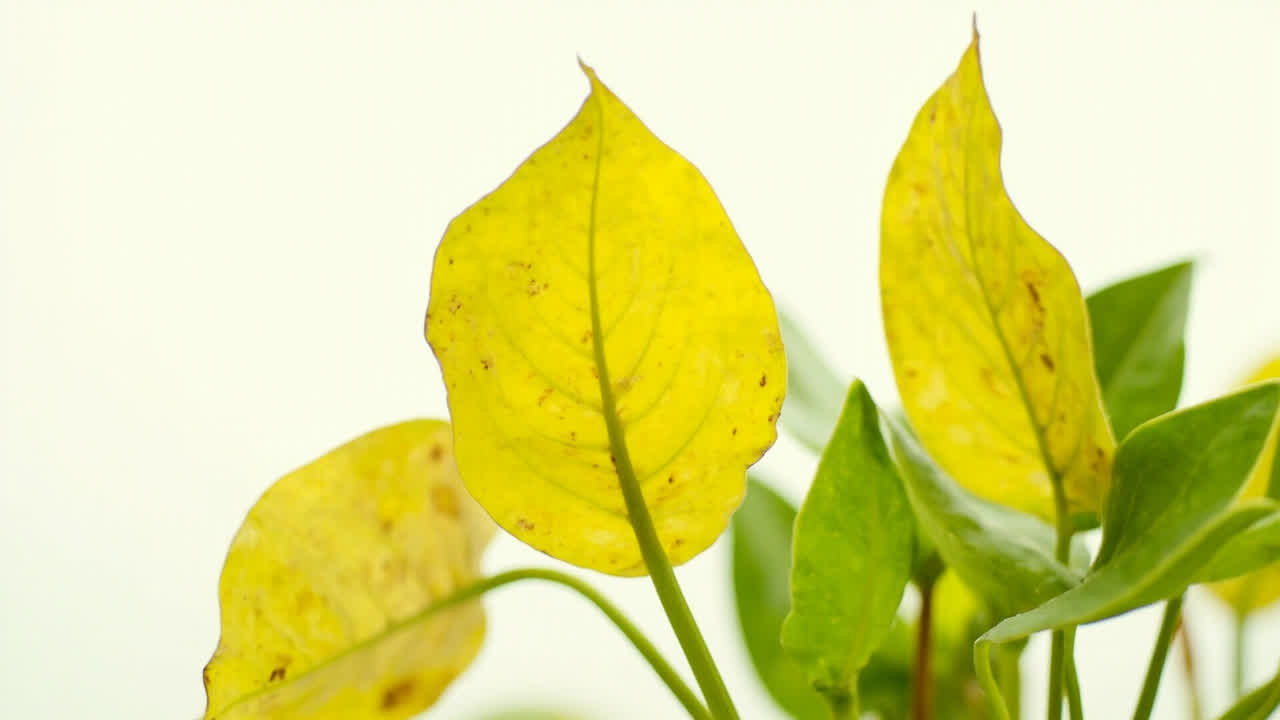
Yellow leaves on your Pothos (Epipremnum aureum) are one of the most common cries for help this plant sends. The good news is that Pothos is remarkably forgiving, and most causes of yellowing are reversible — if you catch them in time. The bad news is that “yellow” means something is off, and guessing wrong can make it worse.
This guide walks you through every real cause of yellow leaves, the exact symptoms that tell each one apart, and exactly what to do next. No fluff. No generic watering advice. Just the diagnosis your plant is trying to give you.
Quick Diagnostic Table
| Symptom | Most Likely Cause |
|---|---|
| Lower leaves turn yellow first; older leaves affected | Natural aging |
| Multiple leaves turn yellow at once; soil stays wet | Overwatering |
| Leaves look pale yellow before browning; soil bone dry | Underwatering |
| Yellow patches between veins; soil rarely dries out | Nutrient deficiency |
| Yellow leaves with blackened stems at the base | Root rot |
| Leaves closest to the window turn pale and fade | Light stress |
If you’re seeing multiple signals at once — wet soil and black stems, for instance — skip to the compound problem section at the end.
1. Natural Aging
Your Pothos has a lifecycle. Older leaves near the base of the vine naturally yellow and drop as the plant pushes energy toward new growth at the tips. This is normal. This is healthy.
What it looks like: One or two lower leaves turn yellow at a time. The rest of the plant looks vibrant. New leaves are emerging. No mushy stems, no crispy edges, no pattern beyond “oldest leaves first.”
What to do next: Let the leaf yellow completely and drop on its own, or snip it off cleanly at the stem if it looks untidy. No change to your watering or light routine is needed. This is not a problem to fix — it’s a process to accept.
2. Overwatering
This is the most common cause of yellow Pothos leaves, and it’s usually born from good intentions. You want your plant to thrive, so you water when the soil still feels damp. The roots sit in water, oxygen is displaced, and they begin to rot. As roots die, they can’t deliver water and nutrients to the leaves — and yellowing follows.
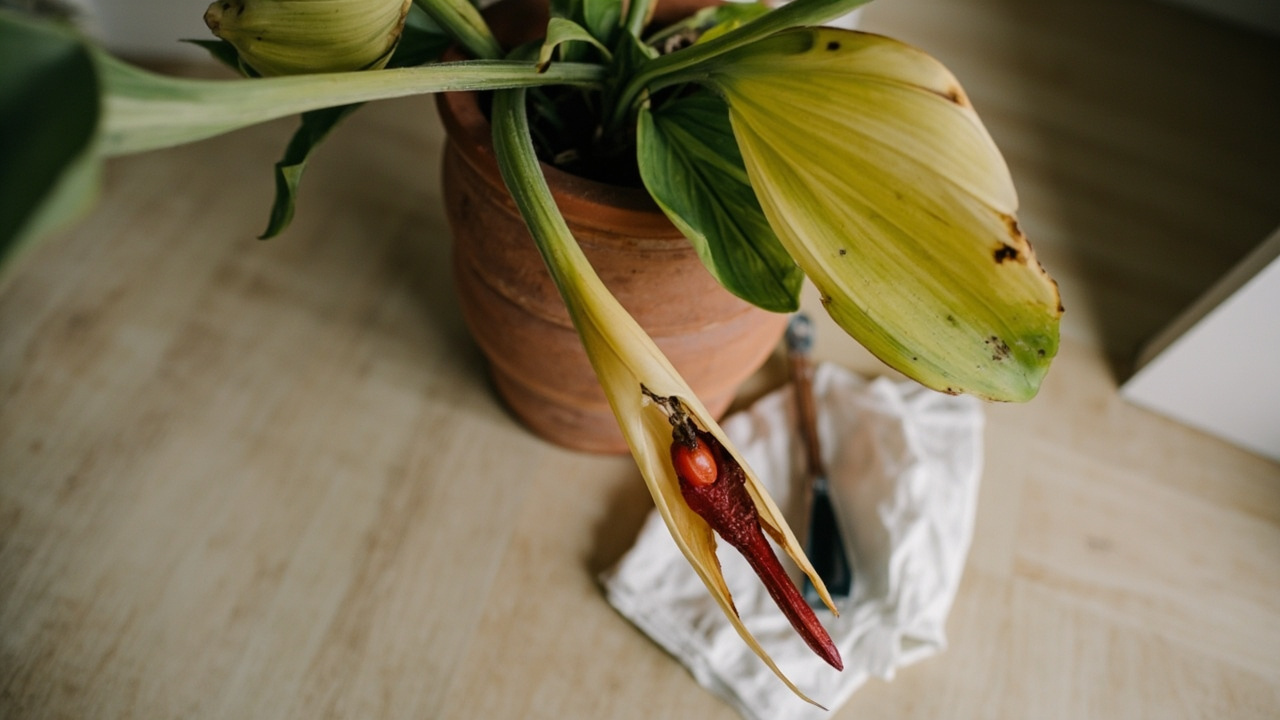
What it looks like: Multiple leaves turn yellow simultaneously. The soil stays wet for a week or more between waterings. You may notice the soil shrinking away from the sides of the pot, or a musty smell. Stems near the base feel soft rather than firm. Lower leaves are usually affected first, but the yellowing can spread upward.
What to do next: Stop watering immediately. Place the plant in bright indirect light and let the soil dry out. If the soil is severely waterlogged and the pot has no drainage, unpot the plant, shake off excess moisture, and let the root ball air out for a few hours before repotting in fresh, well-draining mix. Going forward, water only when the top 2–3 inches of soil are dry. Stick your finger in. Don’t guess.
3. Underwatering
Underwatering sends a different signal. The plant isn’t getting enough water to support all its leaves, so it cuts losses — sacrificing older leaves to keep the growing tips alive.
What it looks like: Leaves turn a pale, washed-out yellow before browning at the tips and edges. The soil pulls away from the pot edges and feels dry several inches down. The plant may look slightly wilted even though the stems are still firm. Affected leaves tend to be throughout the plant, not just at the base.
What to do next: Water thoroughly — until you see water flow from the drainage hole. Let any excess drain away completely. In most cases, a single thorough watering revives the plant within a day or two. If the soil is so dry it repels water (hydrophobic), soak the whole pot in a tray of water for 20–30 minutes to rehydrate it from the bottom up. After that, establish a consistent checking routine — don’t let the plant reach this point regularly.
4. Nutrient Deficiency
Pothos growing in nutrient-poor soil — especially after being in the same potting mix for a year or more — will show deficiency as generalized yellowing. This is common in nursery plants that have depleted the available nitrogen, iron, or magnesium in their pot.
What it looks like: A general, even yellowing across most or all of the leaves, sometimes more pronounced between the veins (interveinal chlorosis). The plant isn’t wilted or mushy. The soil is usually in acceptable moisture condition — not wet, not bone dry. Yellowing started gradually, over weeks, not days.
What to do next: Apply a balanced liquid houseplant fertilizer diluted to half strength. Feed every 4–6 weeks during the growing season (spring and summer). Do not fertilize a stressed or waterlogged plant — it will burn the roots. If it’s been more than a year since you repotted, consider refreshing the top 2 inches of soil with a nutrient-rich mix instead.
5. Root Rot
Root rot is what happens when overwatering is left unchecked. Fungal or bacterial pathogens attack the root system, turning roots brown, mushy, and unable to function. By the time you see yellow leaves, the damage below the surface is already significant.
What it looks like: Widespread yellowing that keeps spreading even after you’ve corrected your watering. Stems at the base are dark, soft, or slimy. The soil smells sour or rotten. When you gently tip the plant out of its pot, roots look brown and stringy rather than white and firm.
What to do next: Unpot the plant immediately. Rinse the root ball and trim away every soft, brown, or smelly root with clean scissors or shears. Repot in a clean pot with fresh, well-draining soil. Water very lightly at first — just enough to settle the soil — and hold off on fertilizer for at least a month. If the rot has consumed most of the root system, your best option is to take healthy stem cuttings and propagate them in water while you start fresh with the parent plant.
6. Light Stress
Pothos tolerates low light well, but too much direct sun causes photooxidation — essentially sunburn on the chloroplasts. Too little light, on the other hand, slows photosynthesis and can cause gradual yellowing from sheer energy deficit.
What it looks like: With too much light: yellow or bleached-looking patches on leaves that face the window directly, often with crispy or burnt edges. With too little light: the plant looks dull, growth has slowed or stopped, and yellowing is more uniform across the plant rather than localized.
What to do next: Move the plant to bright, indirect light — a few feet back from a window with sheer curtains is ideal. Pothos thrives in the kind of light you’d find in a well-lit living room, not a sunny windowsill. If the location is permanently dark (no windows, hallways), consider a grow light. Most Pothos will recover from mild light stress within a few weeks once the location is corrected.
Compound Problems: When Yellowing Has More Than One Cause
Here’s what trips up even experienced plant parents: overwatering often causes root rot, which then causes more yellowing, which prompts you to water less — but now the roots are damaged and can’t absorb what little water you give. You’re caught in a loop.
The pattern to watch for: if you’ve already made a correction (watering less, moving the plant) and the yellowing is still getting worse after a week, a second problem is at play. Root rot is the most common second culprit. Check the roots. Always check the roots.
How to Prevent Yellow Leaves Going Forward
Prevention is simpler than treatment. Three habits cover most of the causes above:
Water with your finger, not the calendar
Stick your finger into the soil up to the second knuckle. If it feels dry, water. If it feels damp, wait. Seasonal changes, pot material, and indoor heating all affect how quickly soil dries — a rigid weekly schedule will fail you.
Give it the right light
Pothos is forgiving, but it performs best in bright, indirect light. Direct afternoon sun is too intense. Deep shade is too little. Find the middle ground and your plant will tell you with steady, vibrant growth.
Repot on a reasonable schedule
Every 12–18 months, refresh the soil or go up one pot size. Roots that circle the bottom of an undersized pot can’t absorb nutrients efficiently, and you’ll see the yellowing reflect that exhaustion.
For a full breakdown of Pothos care fundamentals, including the ideal soil mix, temperature range, and pruning technique, see our complete Pothos care guide.
The Bottom Line
Yellow leaves on your Pothos are a signal, not a sentence. Most of the time, the plant is telling you exactly what’s wrong — if you know how to listen. Start with the soil: wet means overwatering or root rot. Dry means underwatering. Fine means look at the roots, the light, or the calendar. Follow the rescue protocol for your specific cause, and give the plant four to six weeks to show real recovery.
If you’ve tried the steps above and your Pothos is still declining, our reviving guide walks you through the full rescue process — including when propagation is the better path forward.
Pothos are one of the most forgiving houseplants you can grow. A little targeted attention at the first sign of yellow is almost always enough to turn things around. Your plant wants to be green. Help it get there.
—
Turn That PDF Into a Spreadsheet in Minutes
You've seen how to do it manually — now let the tool handle the heavy lifting. Upload your bank statement and get Excel, CSV, or QBO in a few clicks.
Try It Free