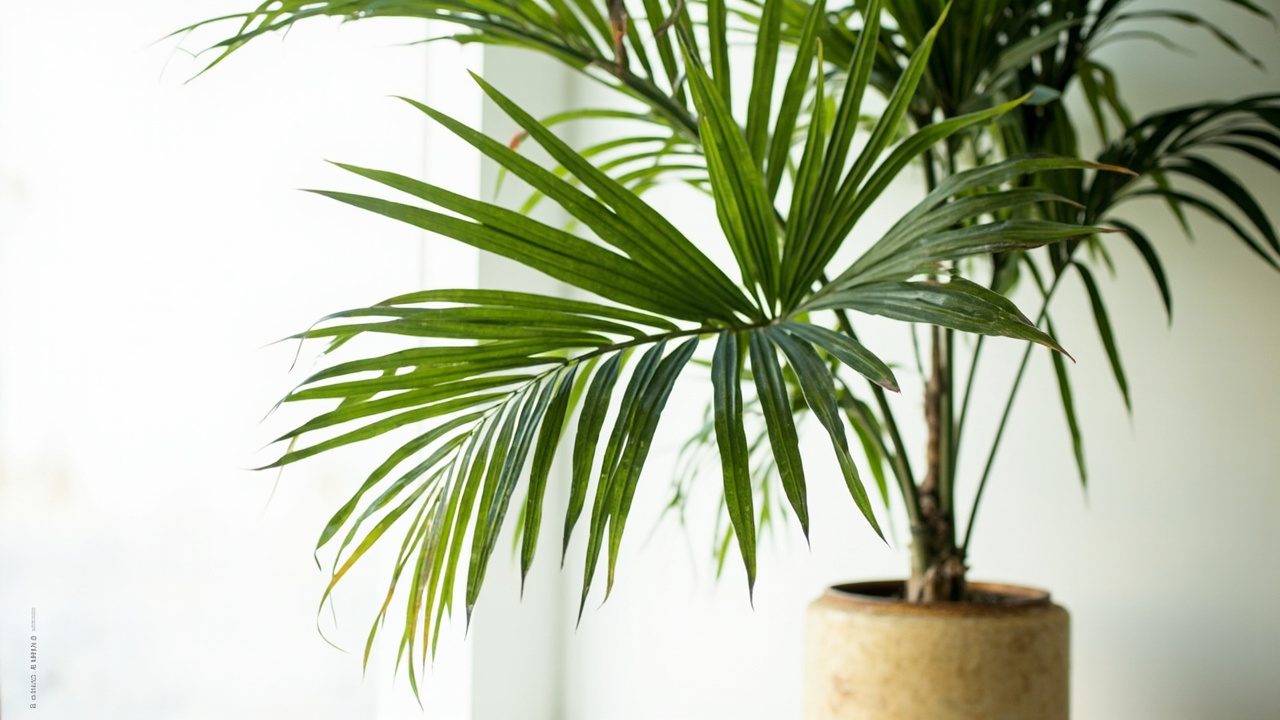

Most palms kept as houseplants don’t die from neglect. They die because the conditions inside a typical home work against everything the plant evolved for. Dry air, inconsistent watering, and light that looks adequate to your eyes but reads as dim to a plant that grew under a full tropical canopy. The result is a slow decline that shows up as brown tips or yellowing fronds weeks after the actual problem started.
This guide covers the fundamentals — watering, light, humidity, and fertilization — for the most common indoor palm species. It also explains what the plant is actually telling you when something goes wrong, because palms don’t have dramatic symptoms. They just quietly decline.
Understanding How Indoor Palms Differ from Outdoor Palms
Almost every palm sold as an indoor plant originated in tropical or subtropical regions with consistently high humidity, filtered light, and soil that drains fast. Replicating those conditions indoors is harder than it sounds — not because palms are demanding, but because homes are structurally incompatible with what palms need.
The most common mismatch is humidity. Most homes run at 30–50% relative humidity, especially in winter when heating strips moisture from the air. Many palm species prefer 60% or higher. The plant won’t immediately show stress, but over weeks the leaf edges dry out first — before you see any yellowing or browning. By the time the tips turn brown, the damage is already done.
The second mismatch is drainage. Palms growing in tropical forests sit in fast-draining leaf litter over mineral soil. Potted palms in standard potting mix stay wet too long after watering if the drainage isn’t excellent. Root rot develops quietly below the surface, and by the time you notice the fronds yellowing, the roots are already compromised.
Watering Your Palm Plant Correctly
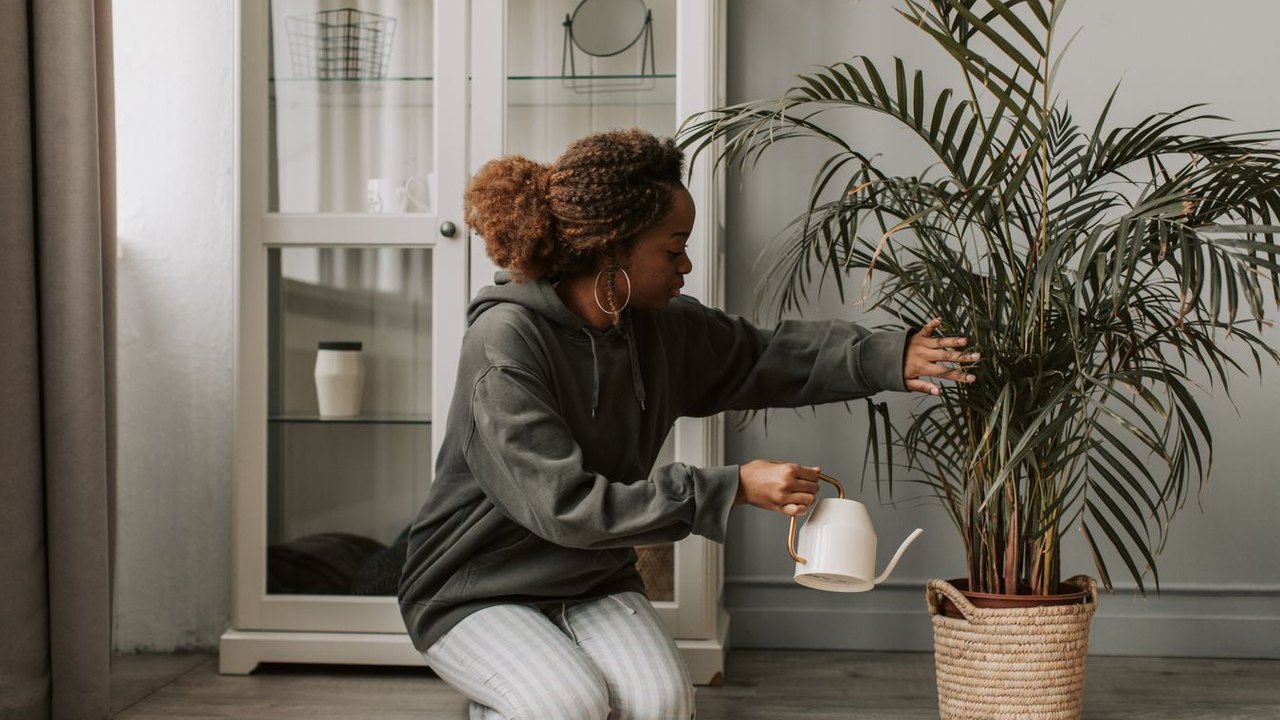
The single most important rule for watering indoor palms: let the top 2–3 inches of soil dry out completely before you water again. Not “feel dry to the touch” — check with your finger down to the first knuckle. If it’s still moist at that depth, wait.
Palms are more tolerant of underwatering than overwatering. Their root systems are relatively shallow and efficient at conserving water, which means they can recover from a single missed watering. But they recover slowly from root rot caused by consistently wet soil. In practical terms: if you’re unsure whether to water, don’t. Waiting a day or two is almost always safer than watering early.
Step 1: Push your finger into the soil to check moisture at 2–3 inches deep. If it’s dry, proceed. If it’s damp, wait 2–3 more days and check again.
Step 2: Water slowly and evenly until you see water flowing out of the drainage holes. A quick pour from above almost always misses the root ball — the water channels down the sides of the pot and leaves the center dry. Slow, thorough watering ensures the entire root mass gets wet.
Step 3: Empty the drainage saucer after 30 minutes. Palms sitting in standing water develop root rot faster than you’d expect, especially in cooler months when the plant’s water demand drops significantly.
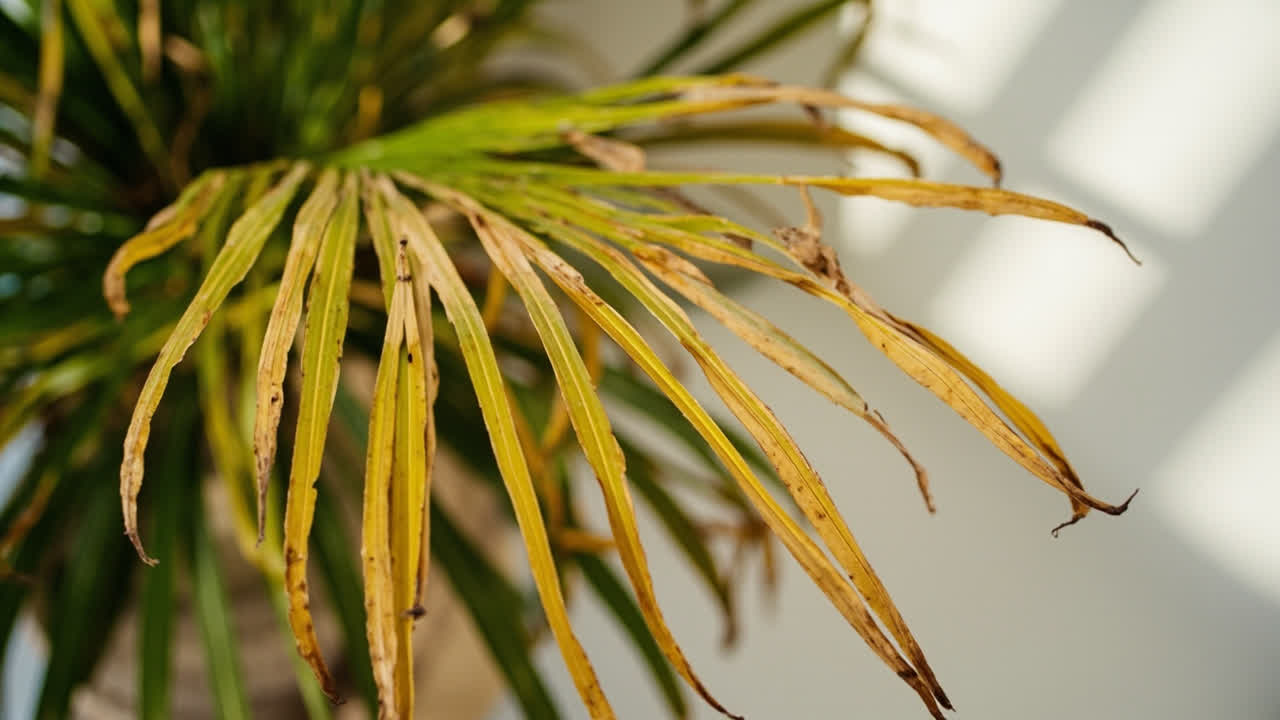
What happens next: if the soil is properly dry before watering, the leaves will hold their color and the new fronds will emerge without browning at the tips. If you water too early, the oldest fronds — the ones at the bottom — will start to yellow first. That yellowing typically starts at the leaf tip and moves inward along the leaflet.
Water Quality and Its Effect on Palm Health
Palms are sensitive to dissolved salts in water, which is why tap water that works fine for most houseplants can cause brown tips on palms over time. Fluoride and chlorine, even in small concentrations, accumulate in the leaf tissue and cause marginal burn — the edges of the fronds turn brown while the rest of the leaf stays green.
If your tap water is heavily chlorinated, fill a container the night before and let it sit uncovered until morning. Most of the chlorine dissipates overnight. For palms showing persistent tip burn despite otherwise correct care, switching to filtered or rainwater often resolves the issue within 4–6 weeks.
Seasonal Watering Adjustments
In summer and spring, when temperatures are warmer and daylight is longer, palms use significantly more water. You may find yourself watering every 5–7 days in peak growth season. In winter, the same plant might only need water every 2–3 weeks. The mistake most people make is keeping the summer watering rhythm going into winter — the plant simply doesn’t use that much water when growth slows and light decreases.
A useful signal: if the newest fronds are shorter than usual or emerging slowly, that’s usually a light or temperature issue first, not a water issue. Check light levels before adding water.
Light Requirements for Indoor Palms
Most indoor palms perform best in bright, indirect light. The key word is indirect — palms grown in direct sun through a window often scorch, even though they would thrive in the same light if it were filtered by a sheer curtain or the diffuse light of a shaded outdoor space.
A north-facing window usually cannot sustain most palm species through winter. The light is simply too weak and the days too short for the plant to maintain its metabolic rate. If your only available light is north-facing, consider a grow light — the additional 6–8 hours of artificial light makes a meaningful difference for palms in low-light positions.
Most Areca palms (Dypsis lutescens) and Majesty palms (Ravenea rivularis) sold as indoor plants want more light than most homes can provide without a window-facing south or west. If your Areca palm keeps producing pale, thin fronds no matter how you adjust watering, insufficient light is almost always the cause.
Kentia palms (Howea forsteriana) and Lady palms (Rhapis excelsa) are notably more tolerant of lower light conditions and are better choices for rooms with only moderate natural light.

Humidity: The Factor Most Palm Keepers Overlook
Humidity matters more for palms than for most other common houseplants, and it’s the factor that most consistently causes the slow, subtle decline that doesn’t show obvious symptoms until weeks after the damage begins.
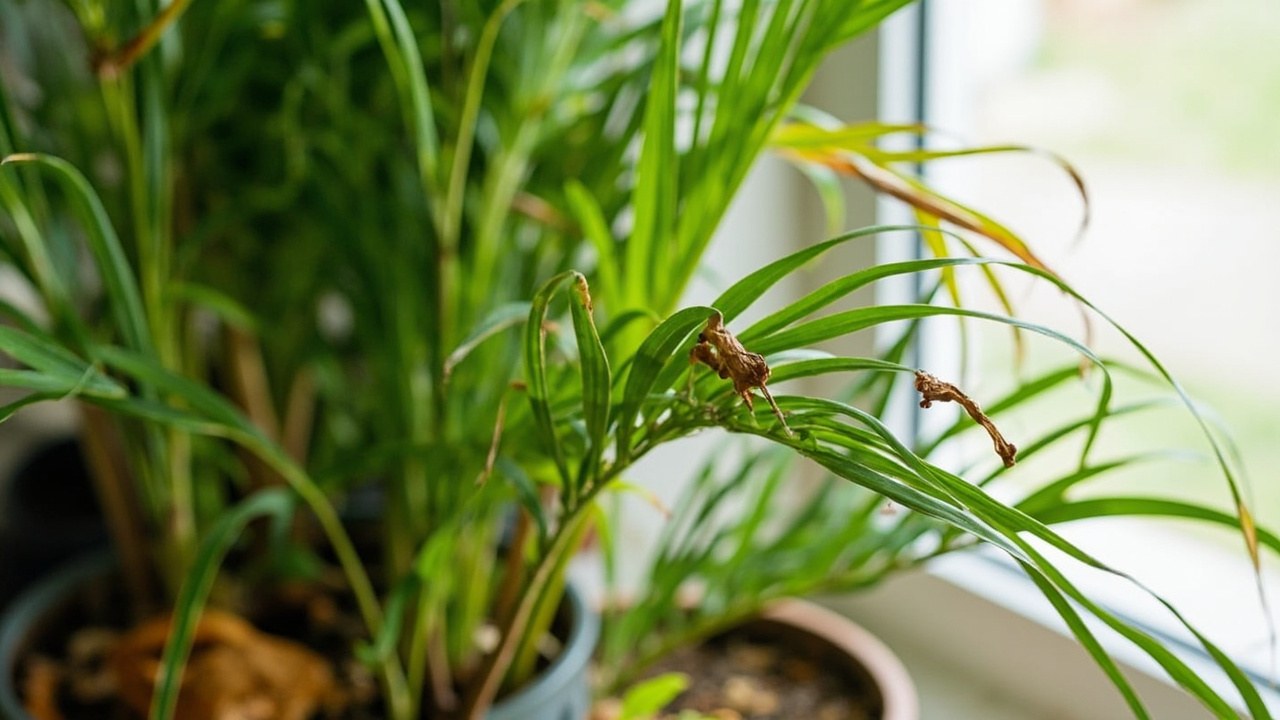
Symptoms of low humidity in palms show up first as browning leaf tips, followed by yellowing at the base of individual leaflets. The leaf margins may dry and crack. Unlike a watering problem, which affects the oldest fronds first, low humidity typically affects the newest growth — the fronds that are still expanding.
What happens next: as the humidity stays low, the tips of the newest fronds turn brown before the leaf has fully expanded. The result is a palm with permanently shortened leaflets that look torn or ragged at the edges. Once that damage is done, it doesn’t reverse — the frond needs to grow out and be replaced.
The practical solution: a pebble tray filled with water placed beneath the pot, run consistently, can raise the immediate humidity around the plant by 10–15%. In dry climates or during winter heating, that’s often enough. For species like the Majesty palm that want consistently higher humidity, a humidifier nearby is more effective and more reliable than any passive method.
Misting and Why It Doesn’t Work
Misting — spraying water on the leaves — provides a brief humidity spike that dissipates within minutes. It doesn’t meaningfully raise the ambient humidity around the plant, and water sitting on the fronds for extended periods can encourage fungal issues, particularly if the air circulation is poor. If you mist, do it in the morning so the leaves can dry before evening.
Feeding and Fertilizing Indoor Palms
Palms are not heavy feeders. In their natural habitat, they grow slowly and steadily, producing only a few new fronds per year. Over-fertilizing causes more problems than under-fertilizing — excess salts accumulate in the soil and cause root burn, which shows up as brown tips and stunted growth.
Use a balanced liquid fertilizer (such as 10-10-10 or 8-8-8) diluted to half the recommended strength. Apply during the growing season — spring through early fall — and stop entirely through winter when the plant’s growth slows and its nutrient demands drop. Fertilizing in winter when the plant isn’t actively growing is one of the most common palm care mistakes.
What happens next: if you’ve been over-fertilizing, you’ll see white crusting on the surface of the soil or on the rim of the pot. Flush the soil thoroughly with clean water — run water through the pot several times, letting it drain fully each time — to leach out the accumulated salts. Then hold off on fertilizer for 4–6 weeks.
Nutrient Deficiency Signs
Magnesium deficiency is common in palms and appears as yellowing between the green veins of older leaflets while the veins themselves stay green. It typically affects the lower, older fronds first. If you see this pattern and you haven’t been over-fertilizing, a magnesium-rich fertilizer or Epsom salt solution (dissolved at 1 teaspoon per gallon of water) applied at half strength can address it.
Potassium deficiency shows up as translucent yellow or orange spotting on the leaflets, usually starting on the oldest fronds. This is harder to address with standard houseplant fertilizers and may require a palm-specific formula with higher potassium content.
Repotting and Soil for Palm Plants
Palms need fast-draining soil. Standard potting mix holds too much moisture for too long — the root ball stays wet for days after watering, creating the conditions for root rot. Mix a standard potting mix with perlite or coarse sand at roughly a 2:1 ratio, or use a cactus and succulent mix as a base.
Palms don’t need frequent repotting. Their root systems are relatively shallow and don’t expand quickly. Most indoor palms only need repotting every 2–3 years, and even then you typically only move up one pot size. Repotting into a pot that’s too large leaves excess soil that holds moisture the roots can’t use, defeating the drainage advantage.
What happens next: after repotting, don’t fertilize for at least 6–8 weeks. The new soil provides enough nutrients initially, and the roots need time to re-establish before they can handle additional feeding without risk of burn.
Common Palm Plant Problems and How to Fix Them
Brown Leaf Tips
Brown tips on palms usually trace back to one of three causes: low humidity, fluoride in tap water, or over-fertilizing. Start with the humidity check — it’s the most common cause and the easiest to fix. If the humidity is adequate, switch to filtered or rainwater and monitor for improvement over 4–6 weeks. If brown tips persist, reduce or eliminate fertilizer and flush the soil.
Yellowing Fronds
Yellow fronds on a palm usually mean the plant is either over-watered or receiving insufficient light. Check the soil moisture — if it’s wet below the top inch, you’ve been watering too frequently. If the soil is dry and the plant is in a low-light position, move it closer to a brighter window. Pale, washed-out fronds that yellow from a distance usually indicate the plant needs more light.
The trade-off with light: moving a palm from low light to direct sun will scorch it. Acclimate any palm to brighter conditions gradually — move it 6–12 inches closer to the light source every few days rather than relocating it all at once.
Fungal Infections and Leaf Spot
Palms in consistently humid conditions with poor air circulation can develop fungal leaf spot. Small brown or black spots with yellow halos, spreading across the fronds, are the typical symptom. Remove affected fronds immediately to prevent spread — the fungus grows slowly but can cover an entire frond within days if conditions stay favorable. Improve air circulation around the plant and reduce leaf wetness. A fungicide formulated for houseplants can help prevent reinfection on remaining growth.
Frequently Asked Questions About Indoor Palm Care
How often should I water my indoor palm in winter?
Most indoor palms need watering only every 2–3 weeks in winter. The combination of lower temperatures, shorter days, and reduced growth means the plant uses far less water than in summer. Check soil moisture before every watering — if it’s dry 2–3 inches down, water. If it’s damp, wait and check again in 3–4 days.
Can palms survive in low-light rooms?
Some species can. Kentia palms (Howea forsteriana) and Lady palms (Rhapis excelsa) are among the most shade-tolerant indoor palms and can survive in rooms with moderate, indirect light. Most other species — Areca, Majesty, Ponytail — need bright, indirect light to maintain healthy growth. A palm in genuine low light will gradually decline, producing smaller and paler fronds until growth stops entirely.
Why are my palm’s leaf tips turning brown even though I’m watering correctly?
If watering is correct and the plant still shows brown tips, the most likely causes are low humidity or dissolved salts in your water supply. Try raising the humidity around the plant and switching to filtered or rainwater. If you’ve been fertilizing regularly, pause for 6–8 weeks and flush the soil to rule out salt buildup.
How do I know when to repot my palm plant?
Repot when you see roots growing out of the drainage holes, when the plant’s growth has noticeably slowed despite correct care, or when water runs straight through the pot without retaining any moisture (which indicates the soil has broken down). Avoid repotting just because the plant looks large — palms tolerate being slightly root-bound better than most houseplants.
If your palm needs saving from a more serious problem — root rot, severe pest infestation, or prolonged decline — this guide to rescuing a dying palm plant covers the full recovery process.
For diagnosing other common problems that affect palms, this guide to identifying indoor plant pests covers the insects most likely to damage palms and how to treat them.
Light is one of the most common limiting factors for palms indoors. Our guide to indoor plant light requirements explains what different light levels mean in practice and how to assess the light in your specific space.
If your home air is dry — especially in winter — our guide to increasing humidity for indoor plants covers practical methods that actually work, beyond the pebble tray basics.
Root rot is the most common reason palms decline without obvious early symptoms. Root rot explained covers what causes it, how to identify it early, and what to do when you find it.
Turn That PDF Into a Spreadsheet in Minutes
You've seen how to do it manually — now let the tool handle the heavy lifting. Upload your bank statement and get Excel, CSV, or QBO in a few clicks.
Try It Free