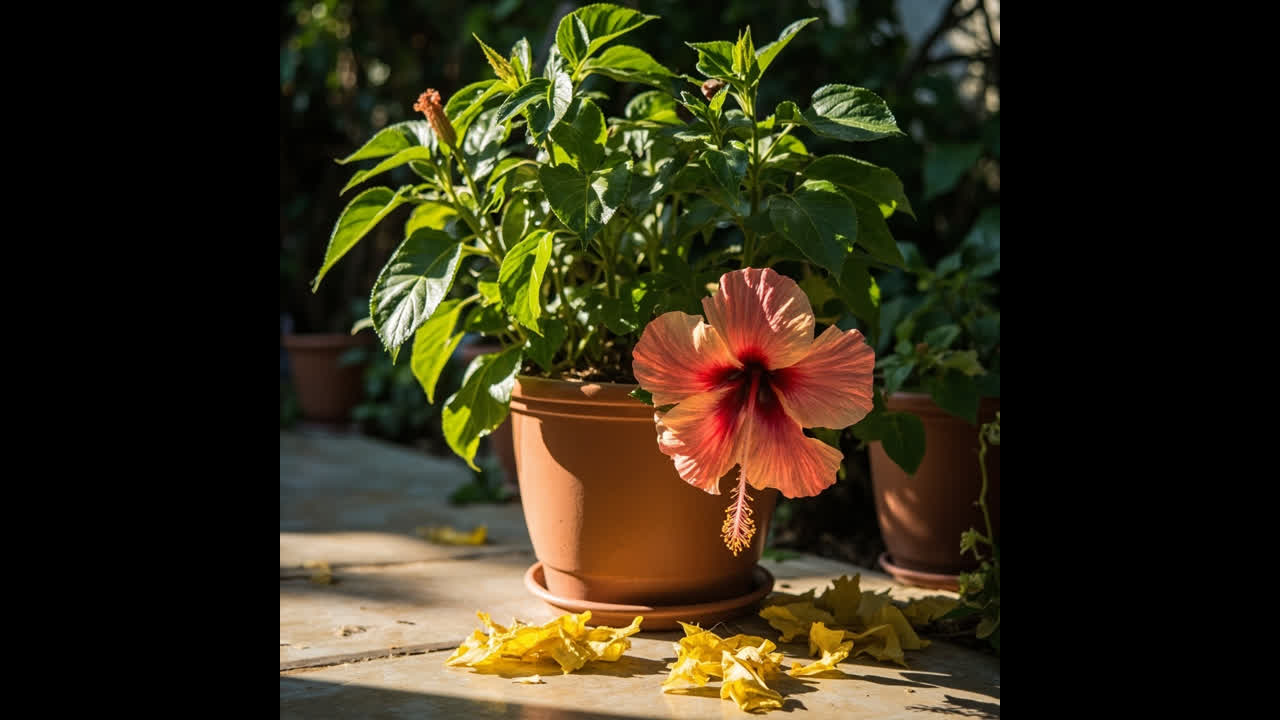
Your hibiscus needs feeding to stay healthy and produce blooms, but the timing, formula, and frequency matter as much as the quantity. Get the fertilizer schedule right and your hibiscus grows vigorously with abundant flowers. Get it wrong and you either have a plant all leaves and no blooms, or one that looks burned and stressed. Here is how to set up a fertilizer schedule that works.
Understanding NPK: What the Numbers Mean
Every fertilizer label shows three numbers — N-P-K — representing nitrogen, phosphorus, and potassium. Understanding what each does for hibiscus is the foundation of smart fertilizing.
- Nitrogen (N): drives leaf growth, chlorophyll production, and the green colour of foliage. Hibiscus needs this most in early spring when the plant is building its structure after dormancy. Too much nitrogen later in the season pushes foliage at the expense of flowers.
- Phosphorus (P): supports root development and flower bud formation. A plant with adequate phosphorus blooms more prolifically. Too much phosphorus can lock out zinc and iron.
- Potassium (K): strengthens the plant’s overall health — cell wall structure, disease resistance, tolerance of temperature extremes, and bloom quality. Hibiscus needs this consistently throughout the growing season.
A balanced fertilizer (10-10-10 or similar) provides all three in equal measure. This is the default choice for general feeding and works well in early spring.
Phase-Based Fertilizer Schedule
Early Spring (Before New Growth)
When the hibiscus begins to show new bud break in early spring, start fertilizing at half strength. Use a balanced liquid fertilizer (10-10-10) diluted to half the label’s recommended concentration.
Apply every two weeks for the first month. This gets the plant building leaves and roots without overwhelming it with nutrients after the dormant period.
Active Growth Phase (Spring Through Summer)
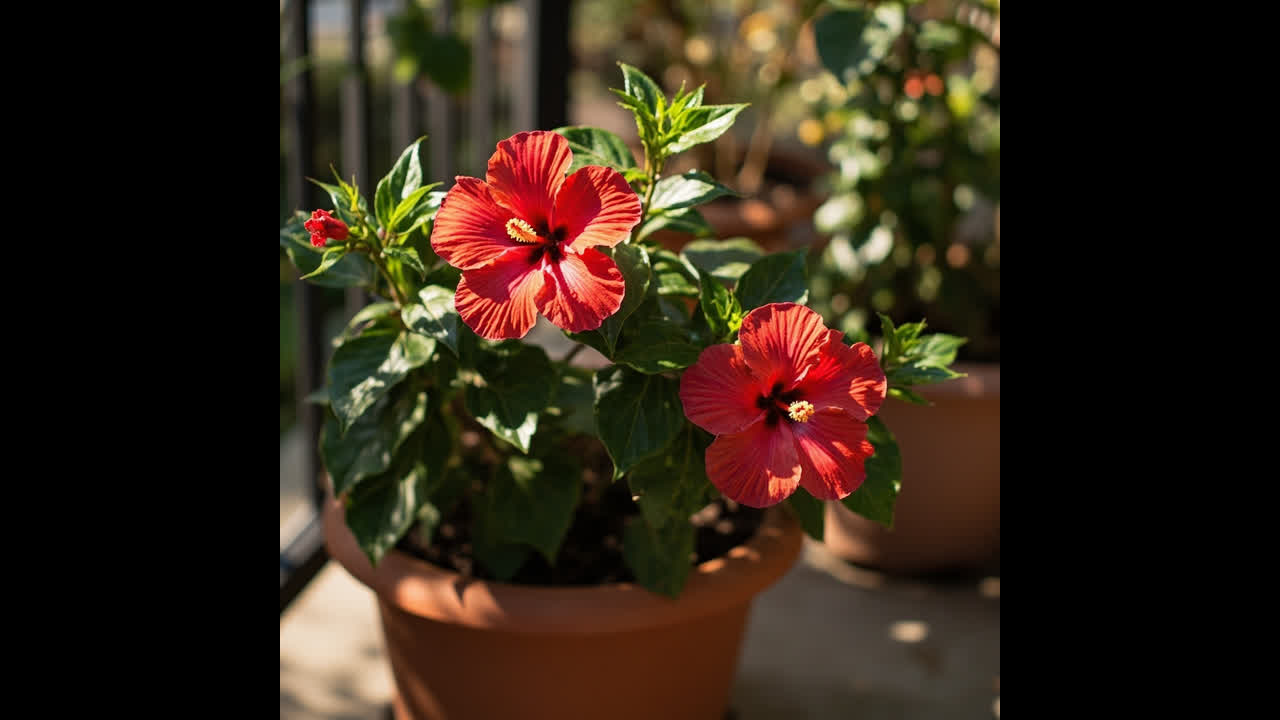
Once the plant is in full active growth — new leaves emerging regularly, stems extending — increase to full strength fertilizer every two weeks. A balanced liquid fertilizer (10-10-10) works well, or you can switch to a bloom-boosted formula (higher middle number, e.g., 10-30-20) from mid-spring onward to encourage flowering.
For a plant that is growing well but not blooming — which is a common complaint — the fertilizer is often the cause. If you are using a general-purpose fertilizer with a high first number (nitrogen), switch to a bloom formula with a higher phosphorus content. Within four to six weeks, flower buds should begin appearing.
Late Summer Through Early Autumn
As the growing season starts to wind down, reduce fertilizing frequency. From roughly late August (northern hemisphere) or late February (southern hemisphere), switch to monthly applications at half strength.
Late-season heavy fertilizing encourages new growth that will not have time to harden before cooler temperatures arrive. Soft new growth in autumn is more susceptible to cold damage and pest infestations.
Winter Dormancy (Late Autumn Through Winter)
Do not fertilize during dormancy. The plant cannot use nutrients when it is not actively growing, and fertilizer salts accumulate in the soil, damaging roots over the winter months.
Resume fertilizing only when new spring growth is visibly emerging. Starting too early — before the plant has broken dormancy — burns roots that cannot yet absorb the nutrients.
Container Hibiscus: More Frequent Feeding Required
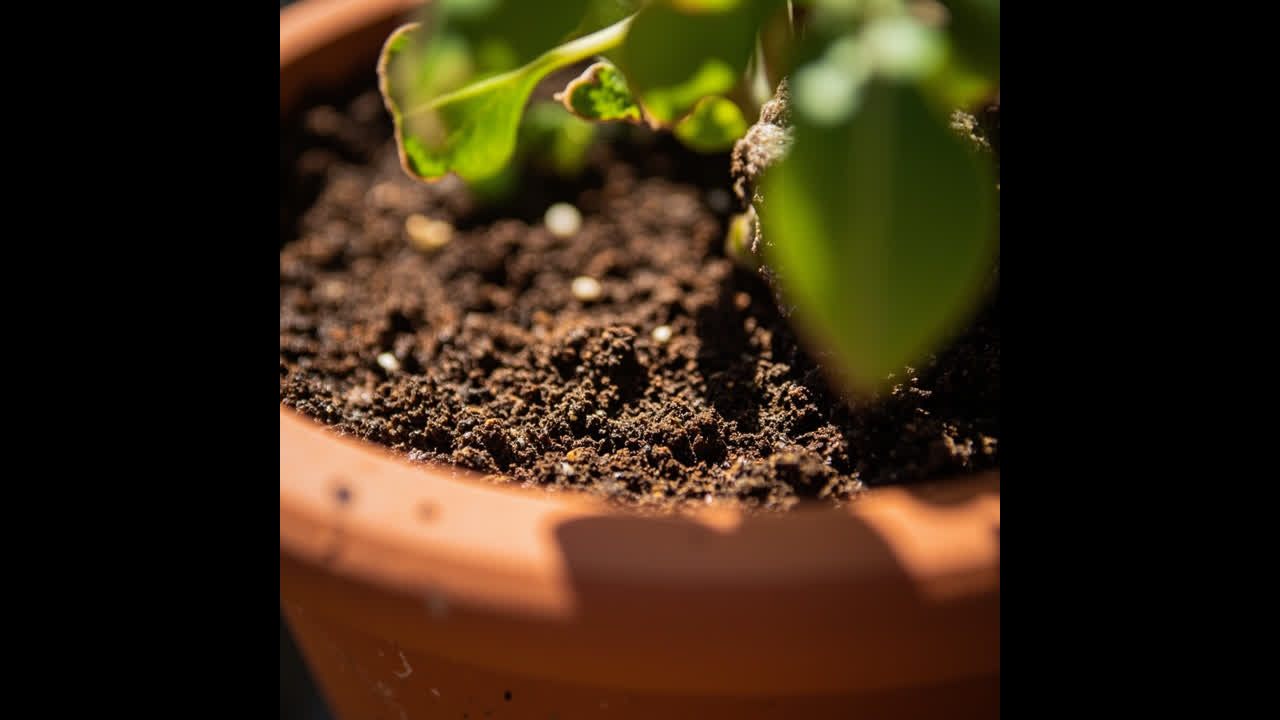
Container hibiscus needs more frequent fertilizing than in-ground plants. Watering container plants flushes nutrients out of the soil with every watering — the nutrients you applied last week are partially gone after the next few waterings.
The solution is to fertilize at half the strength but twice the frequency: apply liquid fertilizer at half strength every one to two weeks rather than full strength monthly. This maintains a steady supply of nutrients without the peaks and troughs that stress the plant.
For overwintered container hibiscus indoors, do not fertilize at all from roughly November through February. The plant is semi-dormant and cannot use the nutrients.
Signs of Fertilizer Problems
Too Much Nitrogen: All Leaves, No Flowers
The most common fertilizer problem with hibiscus. The plant looks lush and green but produces no blooms. The cause is almost always a nitrogen-heavy fertilizer (e.g., 20-10-10 or lawn fertilizer) used too frequently.
The fix: switch to a bloom-boosted fertilizer (10-30-20 or similar) at half strength, applied every two weeks. Within 4–6 weeks, buds should appear. Alternatively, use a slow-release granular fertilizer with a lower nitrogen number.
Fertilizer Burn: Brown Leaf Edges and Tips
Over-fertilizing or fertilizing a dry plant causes fertilizer burn — the salts draw moisture out of the roots, and the leaf edges and tips turn brown and crispy. This is different from underwatering brown (which starts from the whole leaf margin and moves inward) — fertilizer burn starts at the tips and edges and the affected tissue feels dry and brittle.
The fix: stop fertilizing immediately. Flush the soil thoroughly with clean water — pour water through the pot, let it drain, repeat several times over an hour. This dilutes and removes the salt buildup. Resume fertilizing at half the previous concentration after four weeks, and only when the soil is moist before application.
Phosphorus Lock: High pH Blocking Nutrient Uptake
If you are fertilizing correctly but the plant still shows symptoms of nutrient deficiency (yellowing leaves, poor growth, no blooms despite good light), check the soil pH. In alkaline soil (pH above 7.0), phosphorus becomes locked and unavailable to roots even when present in the fertilizer. The plant effectively starves despite being fed.
Test the soil pH and lower it if needed — see our hibiscus soil requirements guide for correction steps.
Organic Options for Hibiscus
Organic fertilizers work for hibiscus but require slightly different application timing. Organic options include:
- Liquid seaweed or kelp: provides potassium and trace minerals, gentle on roots. Apply every two weeks at half strength.
- Fish emulsion: provides nitrogen and phosphorus, strong smell but effective. Apply monthly at half strength.
- Compost tea: provides general nutrition and supports soil microbial health. Use as a soil drench every two weeks.
Organic fertilizers are less likely to cause fertilizer burn but also release nutrients more slowly. Switch from synthetic to organic without expecting identical results — the plant may need four to six weeks to show the full benefit as soil microbes colonize and make nutrients available.
Fertilizer Application Rules
- Always water before fertilizing — applying fertilizer to dry soil burns roots. Moist soil first, then fertilizer.
- Do not fertilize a stressed plant — if hibiscus is wilting, has root rot, or is recovering from pest damage, withhold fertilizer until it has recovered.
- Measure carefully — more fertilizer is not better. Excess salts accumulate and damage roots.
- Use liquid fertilizer for container plants — granular fertilizers dissolve less predictably in containers and can create hot spots of concentration.
For the full context of hibiscus care including light, watering, soil, and pest management, see our hibiscus care guide.
Turn any PDF statement into a clean sheet
Skip the typos and the hours of copying. Our converter handles any bank statement format and outputs Excel, CSV, or QBO for QuickBooks. No file retention, free to try.
Convert your statement