Palm watering works best when the root ball stays lightly moist, not wet. For most indoor palms, that usually means watering every 7 to 10 days in bright warm rooms and every 10 to 21 days in cooler or darker rooms, but the plant should decide the timing, not the calendar.
The common mistake is checking only the surface. A palm can have a dry top inch and a wet lower root ball, especially in a deep nursery pot or a decorative cachepot. If you water again at that point, the lower roots lose oxygen, the fronds yellow, and the plant starts looking thirsty even though the real problem is rot beginning below the surface.
This guide gives you the practical watering rhythm: what the soil should feel like, how much water to give, how the season changes the schedule, and how to tell a dry palm from an overwatered palm before the decline becomes serious.
The Palm Watering Rule In One Sentence
The rule is simple: water an indoor palm when the top 1 to 2 inches of mix are dry and the pot feels noticeably lighter, then water thoroughly until a little drains from the bottom. That keeps moisture moving through the root ball while still leaving air pockets around the roots.
Most indoor palms are not desert plants, even when they tolerate a dry room for a while. Areca palm, parlor palm, majesty palm, kentia palm, and similar houseplant palms all grow best with steady moisture and good drainage. They decline when the root ball swings from bone dry to soggy, or when it stays wet for days without enough light to drive water use.
For the broader care context around light, temperature, and placement, the palm plant care guide explains the whole indoor setup. Watering is the part you adjust most often, but it only works when the palm is also getting enough light and airflow.
The Finger Test Is Only The First Check
The finger test is useful, but it is not enough by itself. Use it as the first step in a three-part check:
- Push a finger 1 to 2 inches into the potting mix. If it feels damp or cool, wait.
- Lift the pot or tilt it gently. A pot that still feels heavy usually has moisture lower in the root ball.
- Look at the drainage hole and saucer. If water has been sitting in the saucer, empty it before judging the next watering.
The pot-weight check matters because palm roots often sit deeper than the surface test can reach. A large palm in a tall pot may dry at the top while the lower third stays wet. A small palm in a terracotta pot may dry evenly and need water sooner. The goal is not to memorize one interval; it is to learn how fast your specific pot dries in your room.
How Much Water To Give Each Time
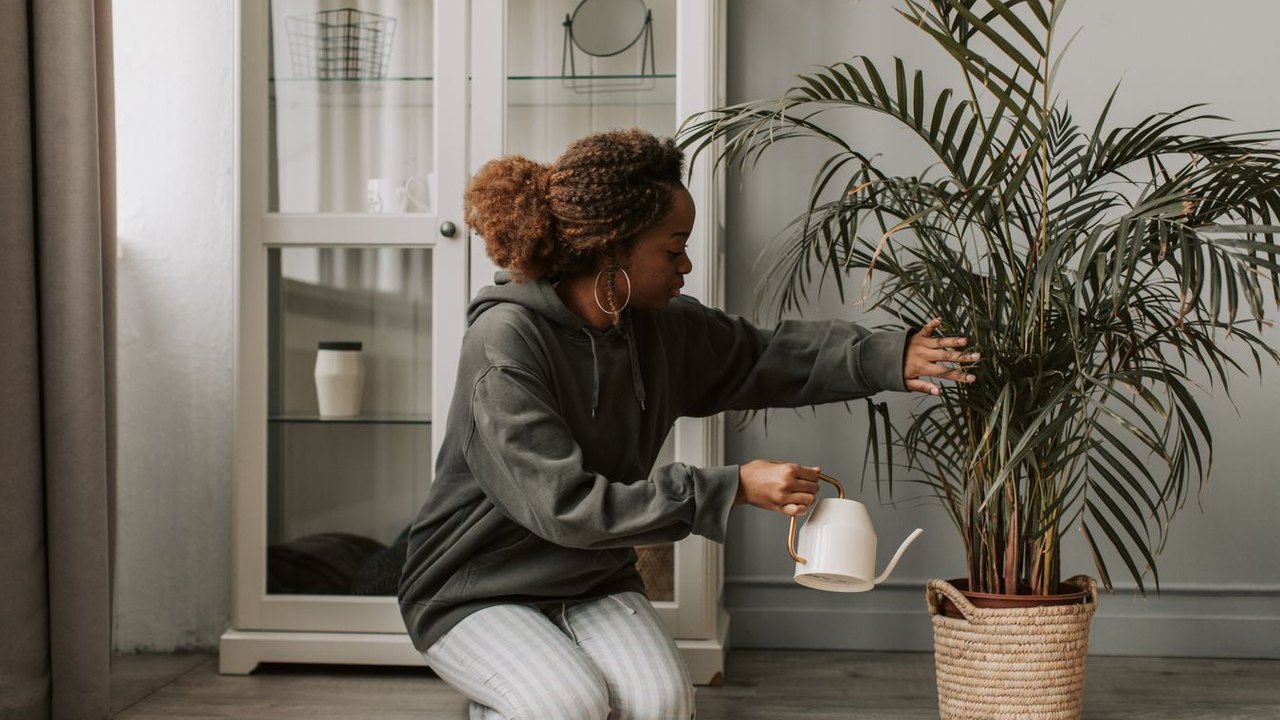
When the palm is ready, water slowly over the potting mix until moisture reaches the full root ball and a small amount drains from the bottom. Then empty the saucer within 10 to 15 minutes. That full soak-and-drain pattern is healthier than giving a small splash every few days.
Small sips create a dry center. The surface looks cared for, but water never reaches the inner roots, so the palm produces brown tips and limp fronds even though you feel like you are watering often. A thorough watering rewets the root ball evenly and flushes some salts out of the mix at the same time.
There is one limit: if the pot has no drainage hole, do not water it like a normal container. Either move the palm into a nursery pot with drainage inside the decorative pot, or water in tiny measured amounts and accept the higher root-rot risk. Palms tolerate steady moisture; they do not tolerate standing water around the roots.
Seasonal Watering: Summer, Winter, And Heated Rooms
The schedule changes because the palm’s water use changes. Light, temperature, pot material, and airflow all affect drying speed.
| Room condition | Typical check interval | What changes |
|---|---|---|
| Bright warm spring and summer room | Every 5 to 7 days | The palm uses more water and the mix dries faster. |
| Average indoor room | Every 7 to 10 days | Most palms land here during active growth. |
| Cool or low-light winter room | Every 10 to 21 days | The plant slows down and wet mix lingers longer. |
| Near heater or air vent | Check weekly | Leaf tips dry faster even when the lower mix is still moist. |
The honest trade-off is that winter is when many palms are overwatered. The room feels dry to you, so watering seems helpful, but the plant is using less water because the days are shorter. In winter, humidity support and better placement often do more than extra watering.
Dry Palm Or Overwatered Palm: The Signal Split
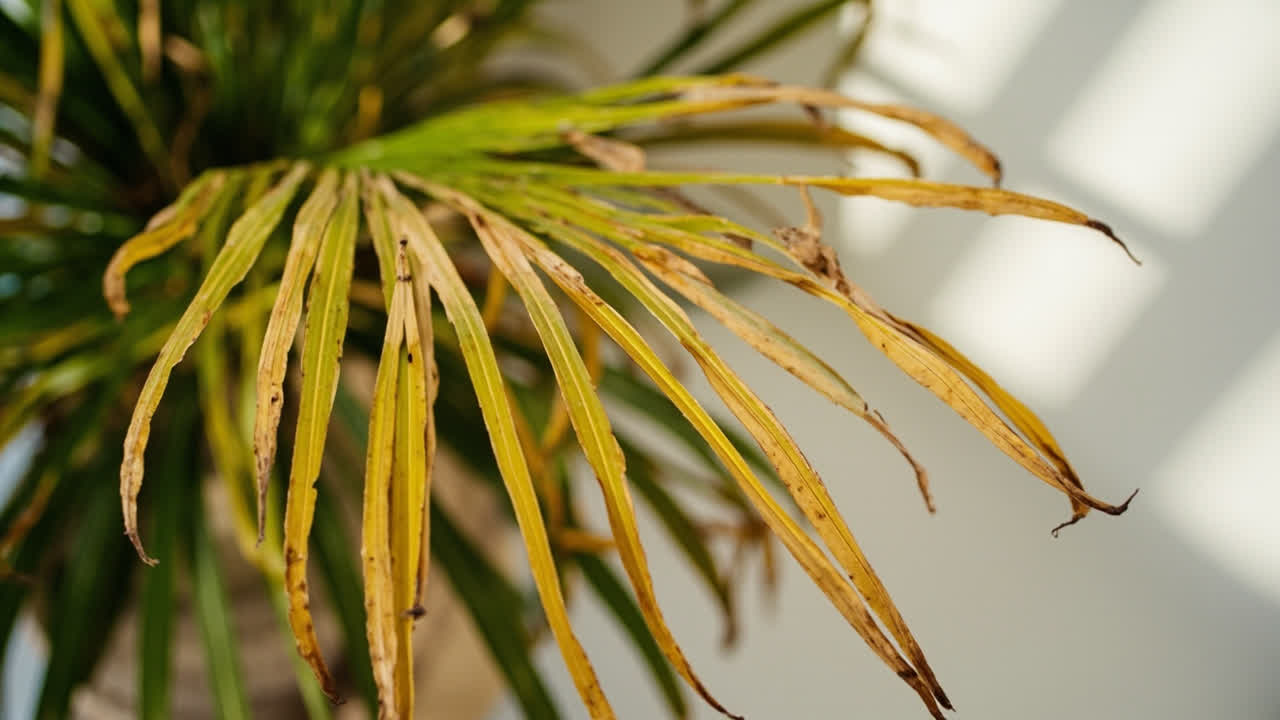
A dry palm and an overwatered palm can both look tired, but the pattern is different. A dry palm usually has crispy brown tips, dry potting mix, a light pot, and fronds that fold or droop without turning soft at the base. An overwatered palm usually has yellowing lower fronds, a heavy pot, a sour smell from the mix, and stems or leaf bases that feel soft.
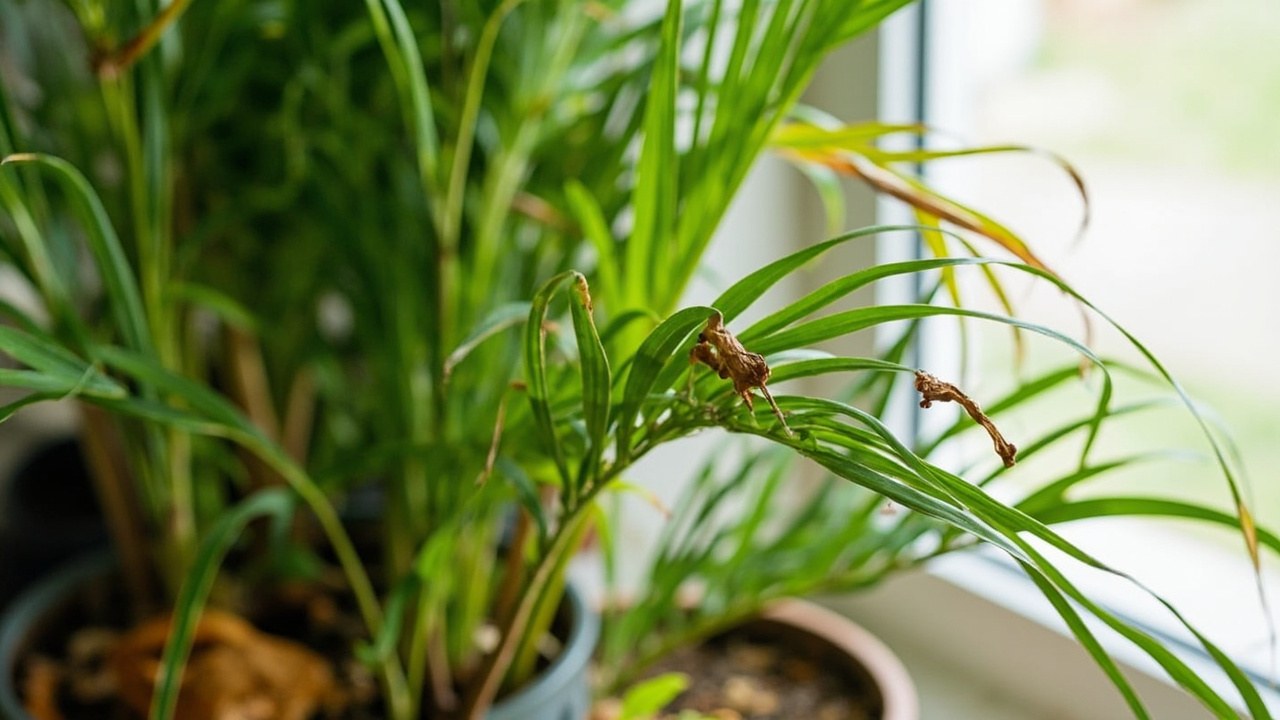
- Dryness pattern: brown leaflet tips first, then drooping, with soil that pulls slightly from the pot edge.
- Overwatering pattern: yellowing fronds, soft bases, fungus gnats, or a pot that stays heavy for more than a week.
- Mixed pattern: brown tips plus yellow lower fronds often means the palm has been watered unevenly for weeks.
If the palm has soft bases, a sour smell, or several fronds collapsing at once, switch from routine watering adjustment to diagnosis. The save a dying palm guide is the better next step when the root system may already be damaged.
Water Quality, Salt Buildup, And Brown Tips
Brown tips are not always a frequency problem. Palms can also brown at the tips when salts build up in the potting mix from fertilizer or hard tap water. The signal is a white crust on the soil surface or pot rim, brown tips on otherwise firm green fronds, and no sour smell from the root ball.
Flush the mix every 6 to 8 weeks during active growth by pouring room-temperature water through the pot until it drains freely. Use about two pot volumes of water, then let the pot drain fully. This does not repair old brown tips, but it reduces the salt pressure on new roots and new fronds.
If your tap water is very hard or heavily treated, filtered water or rainwater can reduce tip burn over time. The limitation is worth naming: changing water quality helps future growth, not existing damage. Brown tips stay brown until that leaflet ages out or is trimmed.
The Simple Weekly Palm Watering Routine
Once a week, do the same short routine: check the top 1 to 2 inches of mix, lift the pot, empty any standing saucer water, rotate the palm a quarter turn, and wipe dust from a few fronds if needed. Water only when the mix and pot weight agree that the root ball is approaching dry.
After watering, check again two days later. The surface should feel less wet and the pot should be starting to lighten. If the mix is still saturated after five to seven days, the palm needs more light, a smaller watering volume, better drainage, or a fresher potting mix.
The best watering rhythm is boring: a full soak when the root ball is ready, then enough patience to let oxygen return to the roots. That is what keeps palm fronds green for months instead of cycling through brown tips, yellow leaves, and rescue attempts.
Turn That PDF Into a Spreadsheet in Minutes
You've seen how to do it manually — now let the tool handle the heavy lifting. Upload your bank statement and get Excel, CSV, or QBO in a few clicks.