
Mass Cane (Dracaena fragrans ‘Massangeana’) is a slow grower by nature. A plant that pushes one or two new leaves a season is normal. But if nothing has changed for months, or the plant is shrinking, something is off. This guide diagnoses why a Mass Cane stops growing and what to fix.
For the full year-round routine, see our Mass Cane care and maintenance guide.
First: define “not growing”
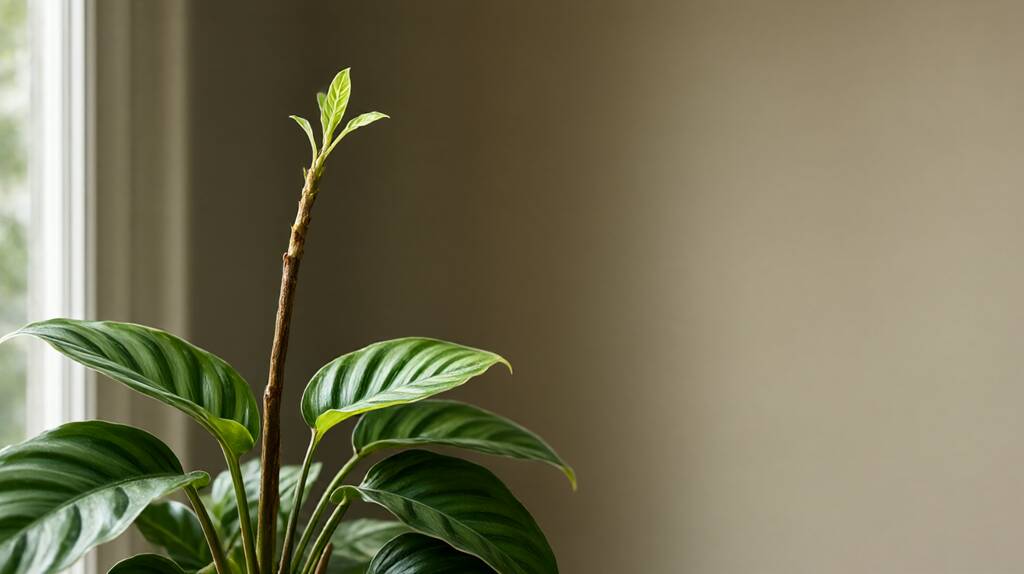
Mass Cane adds leaves from the top of the cane. New growth is small, pale-green shoots that darken over weeks. If you see these, the plant is growing even if it looks static. If the top is brown or mushy, or leaves are dropping faster than they appear, the plant is declining, not just slow.
Cause 1: Insufficient light
Low light is the most common reason a Mass Cane stalls. The plant survives in dim corners but will not produce new leaves. Move it to bright, indirect light: within 2-3 feet of an east or south window, or add a grow light for 10-12 hours daily. Avoid direct midday sun, which scorches leaves.
See our Mass Cane light requirements guide for placement details.
Cause 2: Root-bound or depleted soil
A plant that has been in the same pot for 2+ years may be root-bound or nutrient-depleted. Check by sliding the plant out: if roots circle the pot or the soil is hard and compacted, repot into a pot one size larger with fresh, well-draining mix. Spring is the best time.
See our soil and repotting guide.
Cause 3: Overwatering or underwatering
Both extremes stop growth. Overwatering suffocates roots and leads to rot; underwatering dehydrates the plant. Water only when the top 2-3 inches of soil are dry, and empty saucers after 15 minutes. In winter, reduce frequency.
See our how often to water Mass Cane guide.
Cause 4: Nutrient deficiency
Mass Cane is a light feeder, but it still needs nitrogen, magnesium, and trace minerals. If leaves are pale and growth is slow despite good light and water, feed with a balanced, diluted houseplant fertilizer every 4-6 weeks in spring and summer. Stop in fall and winter.
See our fertilizer for Mass Cane guide.
Cause 5: Temperature stress
Mass Cane grows between 65-80 F (18-27 C). Below 60 F (15 C), growth stops and leaves may yellow or drop. Keep away from cold drafts, AC vents, and heaters. Stable warmth matters more than peak temperature.
Cause 6: Seasonal dormancy
In fall and winter, shorter days and cooler temps slow or pause growth. This is normal. Do not increase water or fertilizer to force growth; it causes rot. Resume normal care in spring when days lengthen.
Cause 7: Pest or disease
Spider mites, scale, and mealybugs sap energy and stall growth. Inspect leaf undersides and cane joints for webbing, bumps, or cottony clusters. Treat with neem oil or insecticidal soap. Fusarium leaf spot and root rot also suppress growth.
See our pests and diseases guide.
Diagnostic order
- Check light first (most common).
- Check watering and soil moisture.
- Check temperature and drafts.
- Check for pests.
- Check if root-bound or nutrient-depleted.
- Consider season: is it fall/winter dormancy?
When to worry
If the cane is soft, leaves are dropping rapidly, or soil smells sour, the plant is declining, not just slow. Check for root rot and follow the recovery steps. See our root rot and save a dying Mass Cane guides.
Summary
A Mass Cane that is not growing is usually light-starved, water-stressed, or root-bound. Work through the diagnostic order, fix the most likely cause, and give the plant 4-6 weeks to respond. Growth resumes when conditions improve.
Read Also on Aqualogi
Related on the site, broken out by topic:
For the overall routine: Mass Cane Plant guide covers the complete routine from light and water to pruning and propagation.
For diagnosing what the plant is telling you: Drooping guide covers the five causes and how to tell them apart, Brown Tips guide covers the seven causes behind brown leaf tips, Yellow and Brown Leaves guide covers water, roots, light, and normal ageing, Fusarium Leaf Spot guide covers spotting and treating the fungal disease, Leaves Curling guide covers the causes behind curled leaves and how to fix them, Leaves Falling Off guide covers normal shedding versus warning signs and Soft or Mushy Cane guide covers rot at the base and how to save the plant.
One naming note before you pick a page: Mass Cane Varieties guide covers telling the Dracaena cultivars apart, including the one often confused with it.
Turn That PDF Into a Spreadsheet in Minutes
You've seen how to do it manually — now let the tool handle the heavy lifting. Upload your bank statement and get Excel, CSV, or QBO in a few clicks.
Try It Free