
Mass Cane (Dracaena fragrans ‘Massangeana’) drops leaves for several reasons, some normal and some alarming. This guide separates natural shedding from warning signs and tells you what to do.
For the full care routine, see our Mass Cane care and maintenance guide.
Normal leaf drop
Lower, older leaves yellow and drop as the plant ages and grows new leaves at the top. One or two leaves per month on a healthy plant is normal. The cane remains firm and new growth continues.
Abnormal: sudden or excessive drop
If multiple leaves drop in a short time, or new leaves fall, something is wrong. Work through the causes below.
Cause 1: Overwatering
Soggy soil suffocates roots and triggers leaf drop. Check soil: if it is wet 2+ inches down, stop watering. Let the top 2-3 inches dry before watering again. Empty saucers. If roots are black and mushy, treat for root rot.
See our root rot guide.
Cause 2: Underwatering
Prolonged dryness causes leaves to brown and drop. Water thoroughly when the top 2-3 inches are dry. Consistent moisture, not feast-or-famine, prevents this.
Cause 3: Low light
In dim conditions the plant sheds leaves it cannot support. Move to bright, indirect light within 2-3 feet of an east or south window. Growth resumes and leaf drop stops.
See our light requirements guide.
Cause 4: Temperature shock
Cold drafts, AC vents, or sudden moves cause leaves to drop. Keep between 65-80 F (18-27 C). Acclimate slowly when relocating.
Cause 5: Pests
Spider mites and scale sap energy and cause leaf drop. Inspect leaf undersides. Treat with neem oil weekly for 3 weeks.
See our pests and diseases guide.
Cause 6: Nutrient deficiency
Pale, dropping leaves with slow growth can indicate nitrogen or magnesium deficiency. Feed with a balanced, diluted fertilizer every 4-6 weeks in spring/summer only.
When to worry
If the cane is soft, leaves drop rapidly, or the plant looks bare, it is declining. Check for root rot and follow recovery steps. See our save a dying Mass Cane guide.
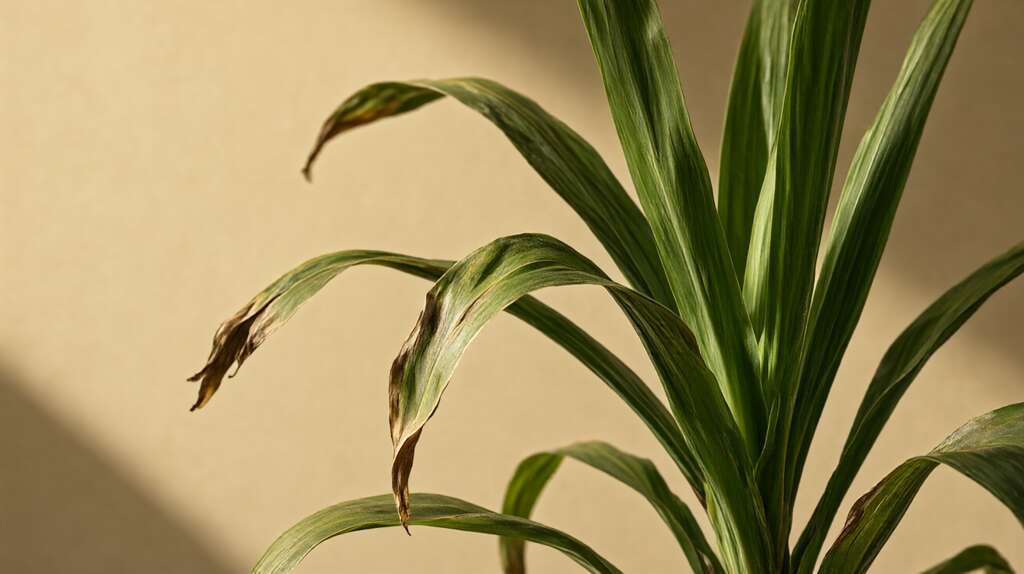
Sudden leaf drop is a stress signal; stabilize conditions and the plant recovers.
Summary
Normal leaf drop is slow and limited to older lower leaves. Sudden or excessive drop signals watering, light, temperature, pest, or nutrient problems. Fix the cause and the plant stabilizes.
Read Also on Aqualogi
Related on the site, broken out by topic:
For the overall routine: Mass Cane Plant guide covers the complete routine from light and water to pruning and propagation.
For diagnosing what the plant is telling you: Drooping guide covers the five causes and how to tell them apart, Brown Tips guide covers the seven causes behind brown leaf tips, Yellow and Brown Leaves guide covers water, roots, light, and normal ageing, Fusarium Leaf Spot guide covers spotting and treating the fungal disease, Not Growing guide covers diagnosing why a Mass Cane stalls and how to fix it, Leaves Curling guide covers the causes behind curled leaves and how to fix them and Soft or Mushy Cane guide covers rot at the base and how to save the plant.
One naming note before you pick a page: Mass Cane Varieties guide covers telling the Dracaena cultivars apart, including the one often confused with it.
From PDF to Excel in one click
Forget retyping line by line. Upload any bank statement, get a spreadsheet you can actually use. Your files are never stored, and you can test the converter with 3 free conversions.
Try it free