
—
title: Mass Cane Light Requirements: How Much Light Your Dracaena Massangeana Actually Needs
target: mass cane light requirements
slug: mass-cane-light-requirements
cluster: house_plants
type: SEO Backbone
—
Your mass cane plant is not a low-light plant. It tolerates low light the way you tolerate a cramped airplane seat — it survives, but it doesn’t thrive. If your Dracaena massangeana has been sitting in a dim corner for months and its leaves are losing their golden yellow stripe, the problem isn’t water, it isn’t pests, and it isn’t the pot. It’s light. Specifically, it’s not getting enough of the right kind.
The mass cane plant comes from the understory of West African forests, where dappled sunlight filters through the canopy above. That means it evolved in bright, indirect light — not darkness, not full blast, and definitely not the dim interior of a north-facing room. Understanding this one fact changes how you care for it entirely. In this guide, you’ll learn exactly what “bright indirect light” means for your mass cane, what happens when it doesn’t get enough, and the warning signs you should be catching right now before the variegation is gone for good.
What “Bright Indirect Light” Actually Means for Your Mass Cane
The phrase “bright indirect light” gets thrown around so often that most plant owners never actually stop to measure whether their space delivers it. Here’s what it means in practice.
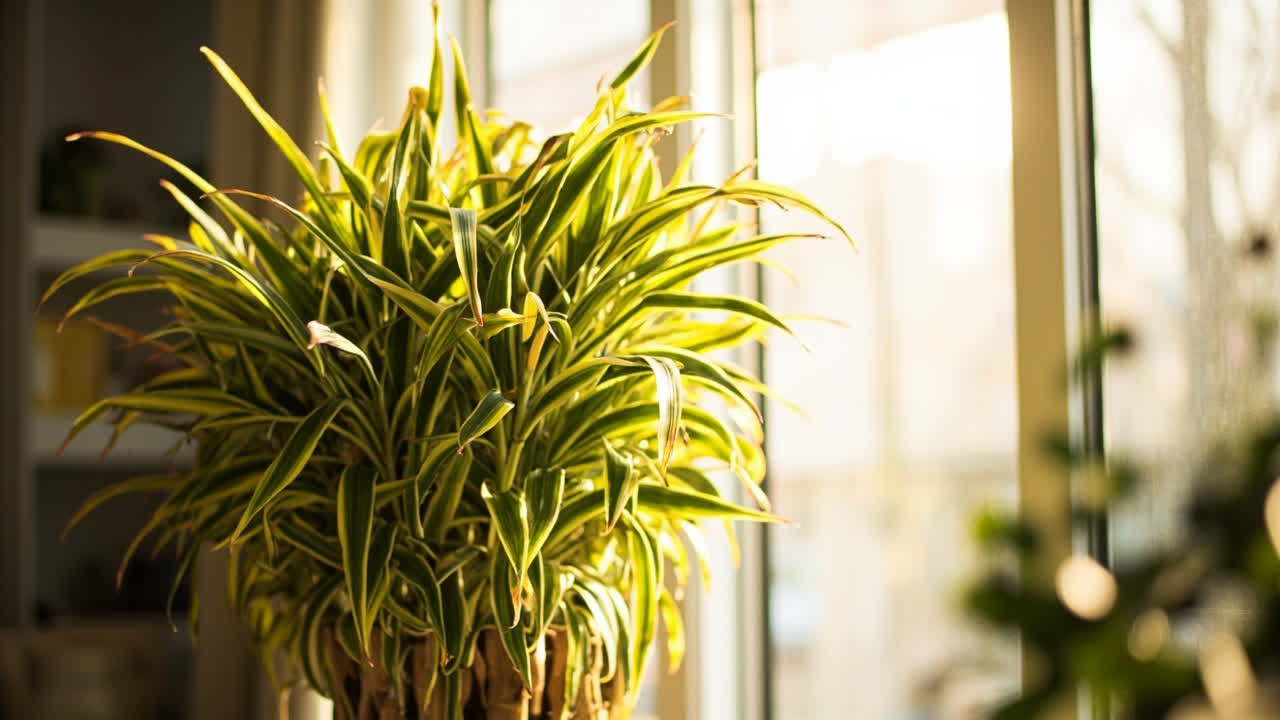
Bright indirect light is the kind of light you get near an east or west-facing window, filtered through a sheer curtain, or a few feet back from a south-facing window where direct sun never reaches. Your mass cane sits in this zone, and the light feels comfortable on your hand when you hold it near the leaves. That’s your baseline.
Direct sunlight — the kind that casts sharp shadows — is too intense for a mass cane plant. Those strong rays burn the leaves, bleaching them and creating scorched brown patches. But low light, the kind in the middle of a room away from windows, is equally damaging over time. Your plant slowly starves without enough photosynthetically active light, and the first thing to go is the signature yellow variegation that makes Dracaena massangeana so distinctive.
How Light Affects Your Mass Cane’s Growth and Variegation
Light drives everything in a plant. Through photosynthesis, your mass cane converts light energy into the carbohydrates it uses to build new leaves, extend roots, and maintain that lush, tropical look. When light drops below a certain threshold, the plant’s growth slows to a crawl. New leaves emerge smaller, slower, and less impressive than they should be.
The most visible casualty of insufficient light is the variegation. That broad yellow stripe running down the center of each mass cane leaf — the feature that makes Dracaena massangeana instantly recognizable — is a direct product of light exposure. The yellow color exists because those cells contain less chlorophyll, which makes them less efficient at photosynthesis. When a mass cane plant senses it needs to maximize its light capture, it responds by reducing that yellow variegation, pushing the leaves to become more uniformly green to compensate for the lower light levels.
What this means for you: if your mass cane is producing new growth that looks mostly green, with only faint traces of yellow, it is telling you — in the only language it has — that it is not getting enough light to sustain the variegation it was bred to express. This is not a phase. This is a slow irreversible shift toward a duller-looking plant.
Low Light Warning Signs: Catch These Before It’s Too Late
The damage from low light accumulates gradually, which is why it catches most plant owners off guard. By the time symptoms become obvious, the plant has been struggling for months. Watch for these specific warning signs.
Fading or Disappearing Variegation
The yellow stripe becomes progressively narrower, paler, or disappears entirely on new leaves. Older leaves may fade as well. This is the earliest and most reliable indicator that your mass cane is not getting enough light.
Slow or Stunted Growth
During the active growing season — spring and summer — a healthy mass cane plant produces a new leaf or two every four to six weeks. If your plant sits stationary through spring with no new growth, light is almost certainly the limiting factor. Water and fertilizer won’t fix this. Only more light will.
Leggy or Leaning Growth
Plants reaching toward light sources is called phototropism. If your mass cane is leaning noticeably toward the window or growing with elongated, spaced-out stems, it is desperate for more light and attempting to compensate by physically orienting itself closer to the source.
Smaller New Leaves
New leaves that emerge noticeably narrower or shorter than previous leaves are a classic stress response to inadequate light. The plant is rationing resources because it cannot produce enough through photosynthesis to support normal development.
Brown Tips on Older Leaves
While brown tips on mass cane plants have several causes — including fluoride sensitivity and low humidity — chronic low light weakens the plant systemically, making it more susceptible to tip burn from every minor environmental stressor. If you see browning tips alongside the other signs on this list, light is the primary issue.
Too Much Direct Light: The Other Extreme
Just as damaging as low light is the wrong kind of light. Direct sun exposure, especially afternoon sun through glass, causes immediate and visible damage to mass cane leaves. You’ll see bleached, washed-out patches where the sun struck directly. The leaf tissue dies and turns brown, and unlike the slow fade of low-light damage, this happens within hours of exposure.
The fix is simple: move your plant back from the window, add a sheer curtain as a buffer, or filter the light with a translucent blind. Your mass cane does not need direct sun. It needs the brightness of a sunlit room without the direct rays. Once you remove it from direct exposure, new growth will emerge clean and undamaged.
Where to Place Your Mass Cane Plant for Optimal Results
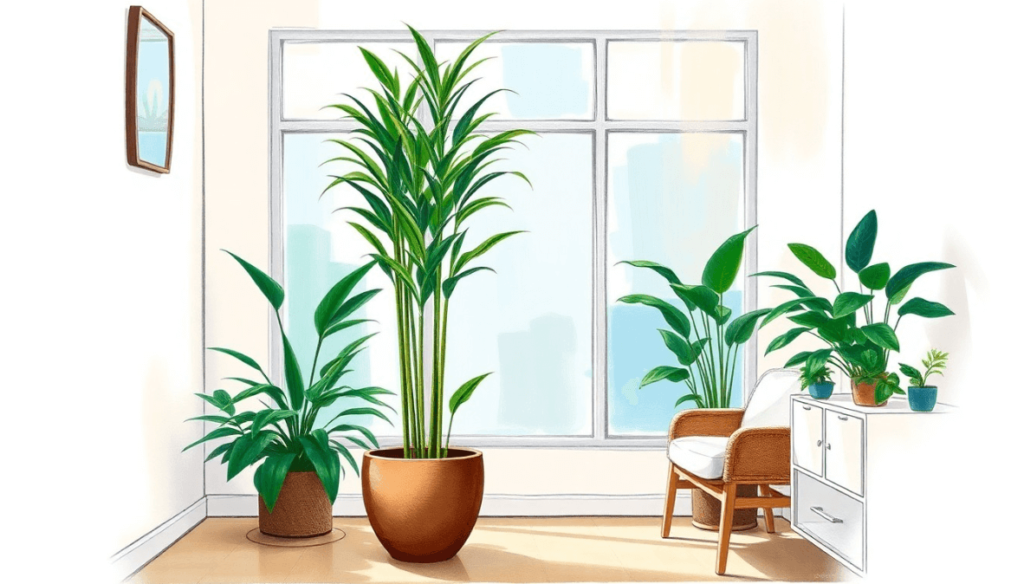
Now that you know what bright indirect light means, here is where to actually position your mass cane for maximum variegation and health. An east-facing window is ideal — your plant gets gentle morning sun, which is direct but low-intensity and won’t burn leaves, followed by bright ambient light through the rest of the day.
A west-facing window works nearly as well, but watch for the stronger afternoon light. Keep your mass cane two to three feet back from the glass or behind a sheer curtain. South-facing windows are fine if the plant is pulled back from the window — approximately four to five feet — and never in direct line with unfiltered afternoon sun.
North-facing windows are the weakest option. Unless the room is exceptionally bright with large windows on multiple walls, a north-facing placement almost certainly delivers insufficient light for a mass cane plant over the long term. If this is your only option, consider supplementing with a grow light.
Using Grow Lights to Supplement Low-Light Spaces
If your living space genuinely lacks adequate natural light — windowless rooms, apartments on the north side of dense buildings — a full-spectrum LED grow light is a practical solution. Position the light twelve to eighteen inches above your mass cane and run it for ten to twelve hours per day. This effectively replaces the bright indirect light the plant evolved to need, and it will sustain variegation and growth in spaces where no natural light could otherwise do the job.
How Light Interacts With Your Watering and Care Routine
Light doesn’t operate in isolation — it directly affects how you water and care for your mass cane plant. In higher light conditions, your plant photosynthesizes more actively, which means it draws water from the soil more readily. Your mass cane will dry out faster in summer near a bright window than it would in a dim corner of the same room.
This is why knowing how to water your mass cane plant properly means first understanding its light environment. Check the soil every five to seven days in bright indirect light during summer. In lower light conditions, soil drying slows dramatically, and overwatering becomes the primary risk. A mass cane plant in low light needs watering half as often — or less — than one near a bright window.
This interplay between light and water is why moving your plant to a brighter spot often causes you to re-evaluate your watering schedule. What looked like overwatering symptoms — yellowing leaves, soft stems — may have actually been a plant sitting in too-low light while you watered it on the same schedule as a brighter-grown specimen.
The Cats and Pets Consideration
Before placing your mass cane plant, it is worth noting that Dracaena massangeana is toxic to cats and dogs. The plant contains saponins, which cause vomiting, drooling, and lethargy if ingested. If you have curious pets that chew on houseplants, placing your mass cane up high or in a room pets cannot access is the responsible choice.
For the full details on toxicity symptoms and what to do if your pet ingests any part of the plant, read our guide to mass cane plant toxicity in cats. Knowing this before an accident happens is always better than scrambling afterward.
Seasonal Light Changes and What to Do About Them
Light availability shifts with the seasons, and your mass cane plant notices. In winter, the days shorten and the sun sits lower in the sky — even a normally well-lit room may deliver significantly less photosynthetically active light from November through February. Your mass cane plant may slow its growth or stop producing new leaves entirely during this period, which is normal. It is not necessarily a sign that something is wrong.
What you should watch for is a cumulative drift toward lower light conditions over the winter months. If you pushed the plant back from the window to protect it from heating drafts, that small move can compound across weeks and result in noticeably worse variegation by spring. In spring, when you return the plant to its bright position for the growing season, the contrast can be jarring — the plant looks significantly diminished compared to six months earlier.
The solution is simple: resist the urge to relocate your mass cane plant away from its bright spot during winter. Keep it in the same location year-round and supplement with a grow light if needed rather than moving it to a dimmer permanent position.
Signs Your Mass Cane Is Thriving in the Right Light
When your mass cane plant receives adequate bright indirect light, you will see it in the plant’s vigor. New leaves emerge regularly through the growing season, and each one arrives with broad, vivid yellow variegation running the full length of the leaf. The leaves hold their color without fading, and the overall posture of the plant is upright, not leaning or stretching.
A well-lit mass cane plant develops a full, balanced canopy. The stems thicken over time, and the plant generates a visible sense of momentum — each year’s growth visibly larger than the last. This is what you are working toward. Every adjustment you make to your plant’s light environment brings you closer to it.
For the complete picture of what thriving mass cane care looks like, including temperature, humidity, soil, and long-term maintenance, see our mass cane plant care and maintenance guide. And for a deeper overview of everything that makes Dracaena massangeana one of the most rewarding houseplants you can grow, start with everything you need to know about mass cane plants.
The Core Truth About Mass Cane Light Requirements
Your mass cane plant is not a shadow plant. It is a forest understory plant that evolved under bright, filtered light, and it carries that genetic expectation into your living room. Low light does not kill it immediately — it lingers, faded and diminished, for months or years before most owners realize the problem. By then, the variegation has faded, the growth has slowed, and the plant looks nothing like the one you bought.
Move it to bright indirect light. Watch for the recovery. New growth will tell you everything — bright yellow stripes returning, leaves arriving on schedule, the plant standing upright without leaning. That response, visible within weeks, is proof that light was the missing ingredient all along.
Your mass cane is waiting for you to get this right. The light is the first variable to optimize, before water, before fertilizer, before any other intervention. Once you give it the brightness it was built to need, everything else in its care starts working the way it should.
—
For more on keeping your mass cane plant healthy, vibrant, and growing strong, explore our full collection of mass cane plant guides at Aqualogi.
—
From Bank Statement to QuickBooks-Ready File
That manual cleanup you just read about? This tool skips it. Turn your PDF into QBO for QuickBooks without storing your data anywhere.
Start Converting