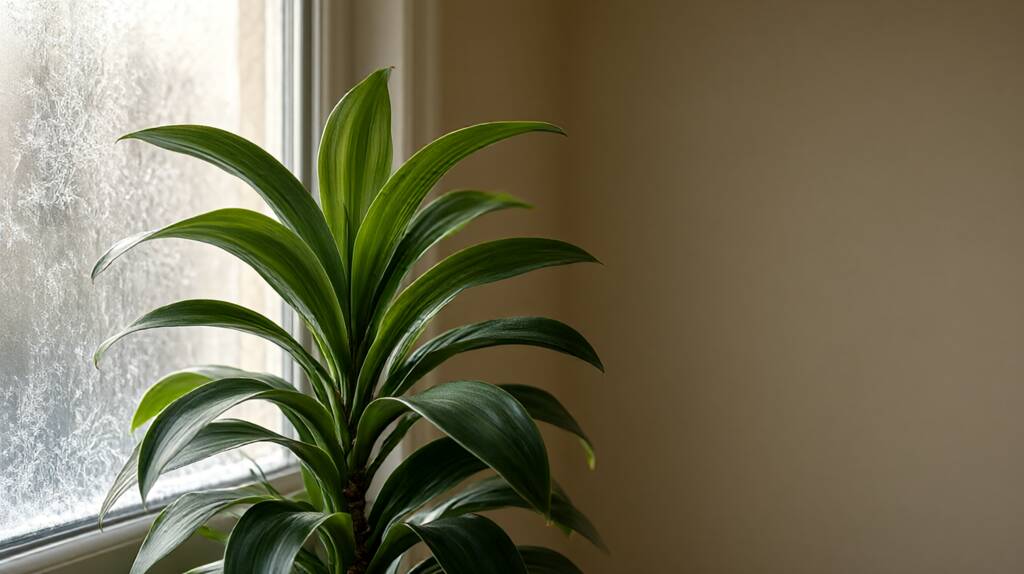

Mass Cane (Dracaena fragrans ‘Massangeana’) slows down in winter. The goal is not to push growth but to keep the plant stable until spring.
This guide covers what changes in winter, how to adjust light, watering, humidity, temperature, fertilizing, and pruning, and which warning signs deserve action. For the full year-round routine, see our Mass Cane care and maintenance guide.
What changes in winter
Light drops. Indoor humidity from heating systems drops. Soil stays wet longer. Mass Cane responds by slowing transpiration and root activity. Forcing summer habits onto a winter plant is the most common cause of winter decline.
Light: compensate, do not overcompensate
Move the plant closer to its brightest window, but keep it out of cold drafts. South- or east-facing windows work best in winter. If natural light is under roughly 4-6 hours of bright indirect light, add a grow light for 8-10 hours daily. Avoid moving the plant to a hot spot near a heater; that dries leaf tips and stresses roots.
Watering: less, but not never
Winter watering is the biggest adjustment. Check soil moisture with a finger or moisture meter at 2-3 inches depth. Water only when the top 2-3 inches are dry. Empty saucers after 15 minutes. Use room-temperature water to avoid root shock. Overwatering in winter is the leading cause of root rot in Mass Cane. See our how often to water Mass Cane guide for the full schedule.
Humidity and temperature
Mass Cane tolerates 40-60% humidity. Winter heating often drops indoor humidity below 30%. Group plants, use a pebble tray, or run a small humidifier nearby. Keep temperatures between 65-80 F (18-27 C). Avoid cold drafts from windows and doors, and keep the plant away from heating vents. For the full environmental picture, see our Mass Cane humidity and temperature guide.
Fertilizer: stop during dormancy
Stop fertilizing from late fall through winter. Mass Cane does not use nutrients when growth is slow, and unused fertilizer salts accumulate in soil and burn roots. Resume a balanced, diluted fertilizer in spring when new growth appears.
Pruning and cleaning
Remove only dead or damaged leaves in winter. Heavy pruning waits for spring when the plant can recover. Wipe leaves with a damp cloth to remove dust so the plant captures available light efficiently.
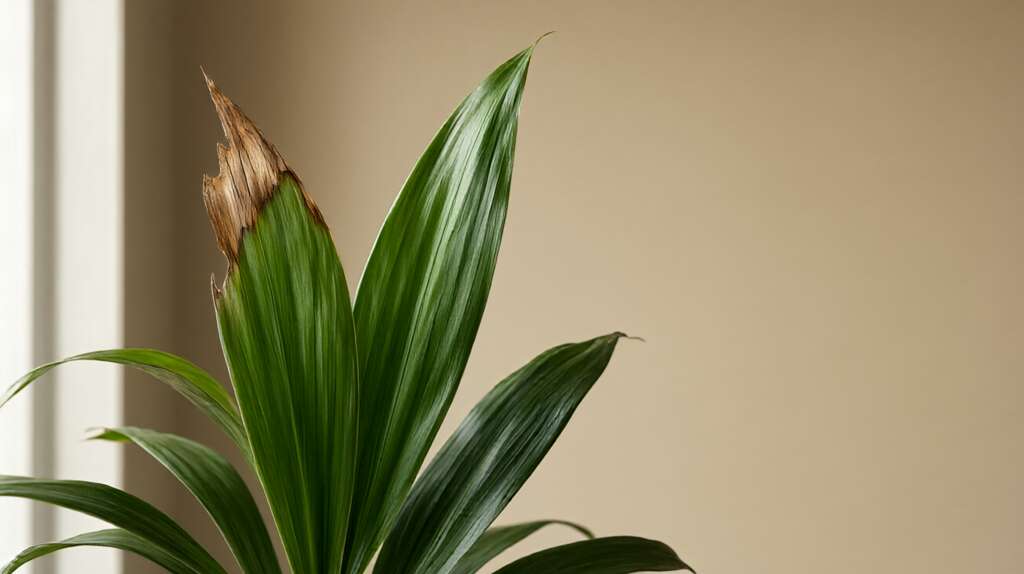
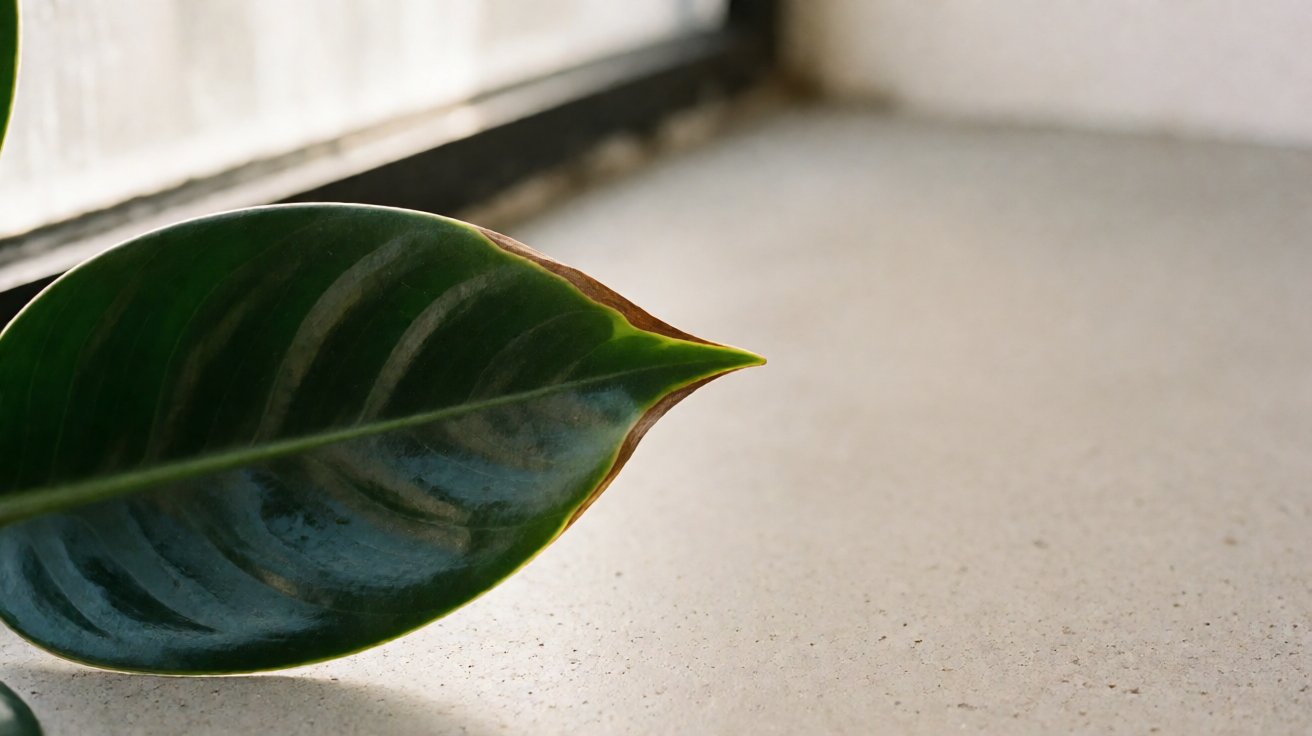
Winter tip burn is often the first visible sign that humidity or water quality is off.
Common winter problems
- Brown leaf tips: often from low humidity or fluoride in tap water. Increase humidity and use filtered or distilled water. See our Mass Cane brown tips guide.
- Yellowing lower leaves: normal aging, or early sign of overwatering. Check soil before watering.
- Drooping: usually cold shock or overwatering. Move away from drafts and let soil dry slightly. See our Mass Cane drooping fix guide.
- No new growth: expected in winter. Do not force with extra water or fertilizer.
When to worry
If multiple leaves yellow rapidly, cane feels soft, or soil smells sour, check for root rot. Unpot, trim black mushy roots, repot in fresh well-draining mix, and reduce watering. See our Mass Cane root rot guide for the full procedure.
Spring transition
As days lengthen, gradually increase watering, resume light feeding, and prune to shape. Acclimate any moved plant slowly to avoid shock.
Summary
Winter Mass Cane care is about restraint: less water, no fertilizer, stable warmth and humidity, and patience. The plant resumes growth in spring if kept stable through winter.
Read Also on Aqualogi
Related on the site, broken out by topic:
For the overall routine: Mass Cane Plant guide covers the complete routine from light and water to pruning and propagation.
For understanding the plant and choosing one: Is It Really Easy guide covers an honest test of neglect and condition tolerance, Buying guide covers picking a healthy plant and what to do at home, Mass Cane vs Pothos guide covers which plant suits your light and your patience, Mass Cane vs Peace Lily guide covers which one survives lower light and harder conditions, Benefits guide covers what the plant actually does for a room, Growth Rate and Mature Size guide covers realistic size, growth rate, and size management, Flowering Indoors guide covers when and why Mass Cane blooms indoors, Cleaning Leaves guide covers how to clean without damaging the leaves and Lifespan guide covers how long it lives and how to extend it.
One naming note before you pick a page: Mass Cane Varieties guide covers telling the Dracaena cultivars apart, including the one often confused with it.
Turn PDF Bank Statements Into Workable Spreadsheets
Your bank statement is a mess of numbers, but your books shouldn't be. Use our converter to get Excel, CSV, or QBO files — ready for QuickBooks.
Try It Free Now