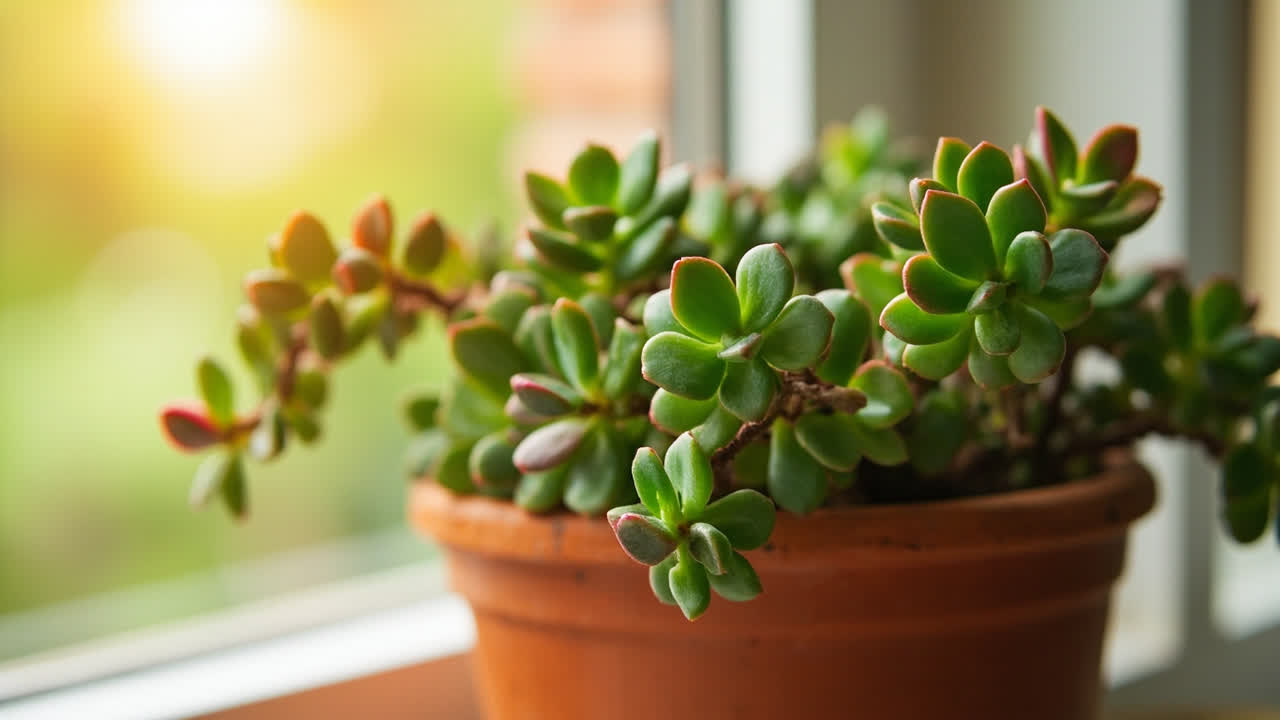
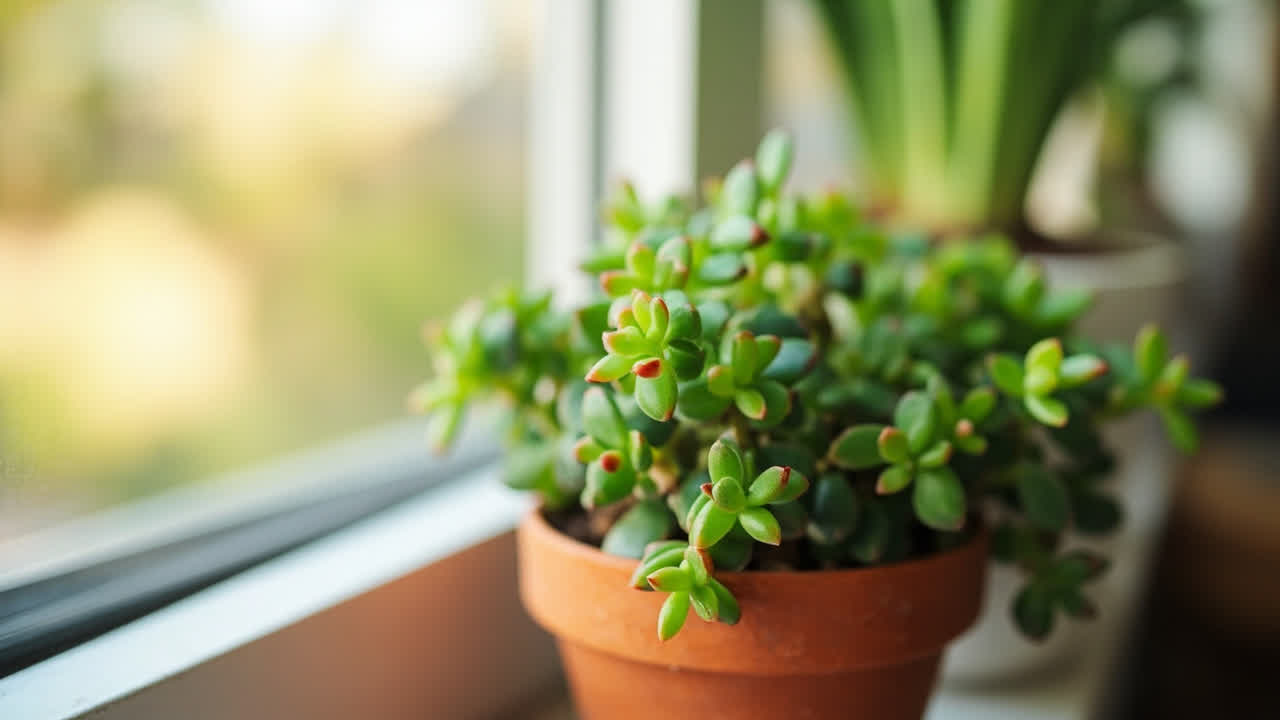
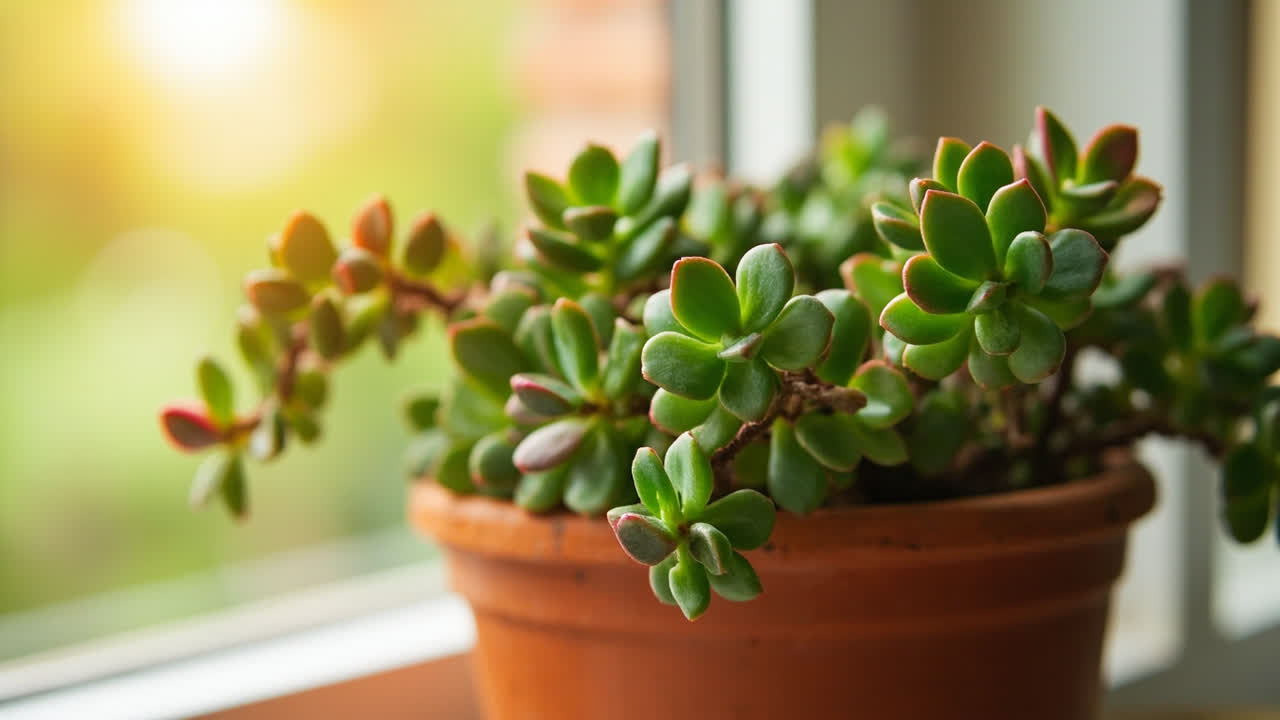
You bought the best potting mix you could find. You repotted your jade plant. Within two weeks, the lower leaves started yellowing and the stem near the soil line felt a little soft. So you watered less. The plant kept declining. That’s not overwatering — or at least, it’s not only that. Commercial potting mixes are designed to retain moisture for a broad range of plants. Jade plants are not most plants.
Jade plants (Crassula ovata) are succulents native to South African rocky ridges where rain is infrequent and the soil drains almost immediately. Their root systems evolved in conditions where excess moisture is rare and short-lived. A standard indoor potting mix holds water for three to five days after watering. A jade plant in that mix sits in moisture for three to five days — and that’s where the decline starts.
The Drying Rate Is Everything
The difference between a jade plant that thrives and one that declines isn’t the watering frequency alone — it’s how long the soil stays wet after each watering. A properly draining mix should pass through the drainage hole within 30 seconds of watering, then begin drying from the top down over the next 48–72 hours in average indoor conditions. In summer with good light, it may dry in 24 hours. In winter with low light, it may take five days. The mix needs to handle both extremes without staying wet for more than five days under any conditions.
Trade-off: Fast-draining mixes are safer for the roots — but they also mean the plant dries out faster and needs watering more often in summer. A faster-drying mix is not automatically better; it’s just a different set of trade-offs. The goal is a mix that matches your actual watering habits and indoor environment.
What Commercial Mixes Get Wrong
Most commercial indoor potting mixes contain peat moss as their primary component. Peat moss is excellent at retaining moisture and provides a good structure for most tropical houseplants. For jade plants, it’s the wrong choice because it holds too much moisture for too long — especially in plastic pots where the evaporation rate is lower than in terracotta. A peat-heavy mix in a plastic pot can stay moist for a week or more in moderate light, and jade plant roots were not built for that.
Some cactus and succulent mixes are better but still variable. Many commercial succulent mixes use a sand-heavy formula that sounds right for a desert plant but drains too fast without enough water retention for healthy leaf development. The ideal jade plant soil isn’t desert-dry between waterings — it dries in a specific rhythm that matches the plant’s growth cycle.
The Jade Plant Soil Mix That Works Across Seasons
Jade plants have different water needs in summer than in winter. A mix that drains fast enough to prevent root rot in summer must still hold enough moisture to sustain the plant through a week of winter darkness. These four components together handle both requirements — each doing a specific job the others cannot.
The Base: Standard Potting Mix (50%)
Start with a quality standard indoor potting mix as the base — not garden soil, not anything from an outdoor garden. Look for a mix that contains peat or coco coir as the base with perlite already added. The base should be relatively fine — nothing that will create large air pockets immediately.
Why 50%? Because you want enough organic material to retain some nutrients and moisture between waterings, but not so much that the soil stays wet for days. The remaining 50% of the volume should be inorganic drainage material.
The Drainage Layer: Perlite (30%)
Perlite is the white volcanic glass pellets you see in commercial potting mixes. They don’t absorb water — they create air pockets and improve drainage. For jade plants, 30% perlite by volume is the minimum; 40% is better if you tend to overwater or are using a plastic pot.
Perlite is inert, permanent, and never breaks down. It doesn’t contribute nutrients but it also doesn’t compress over time like organic materials do, which means the drainage channels it creates stay open season after season.
The Third Component: Coarse Sand or Pumice (20%)
Add either coarse horticultural sand (not beach sand, which compacts and can contain salt) or pumice. Both serve the same structural purpose — they improve drainage, add weight to keep the pot stable for a top-heavy jade plant, and prevent the organic components from compressing over time.
Pumice is my preference because it’s lighter than sand, stays in the mix better during watering, and doesn’t pack down. It’s also the standard in professional succulent and cactus nurseries. Coarse sand works fine if that’s what you have access to — just make sure it’s explicitly horticultural grade, not construction grade.
Optional: Orchid Bark (10%)
If you want to add an extra aeration component, replace 10% of the base potting mix with fine orchid bark. Orchid bark improves the mix structure over time as it slowly decomposes, adds beneficial micro-organisms, and creates tiny air channels that help roots breathe. This is especially useful if you’re growing jade plants in humid environments where fungal issues are more common.
The formula by volume: 50% potting mix + 30% perlite + 20% coarse sand or pumice. Optional: up to 10% fine orchid bark as a partial replacement for the potting mix portion.
How to Assemble and Use the Mix
Having the right mix is only useful if you assemble it correctly and pot into it properly. How you handle the root ball during repotting, whether you water immediately after, and which pot material you choose — all of these affect how the mix performs once it is in the pot. The assembly matters as much as the formula.
Mixing Procedure
Mix all components while dry before adding any water. This ensures even distribution rather than layering — you want the perlite and sand uniformly distributed through the organic base, not sitting at the bottom of the pot because you added them in layers. A large bowl or bucket works well for mixing by hand. For larger quantities, a trowel and a tarp on the ground works.
Moisten the mix before potting — add water to the dry mixture while mixing, just until the mix is damp throughout but not saturated. A properly moistened jade plant mix should hold its shape when squeezed but crumble easily when poked. It should not drip water.
Choosing the Right Pot for This Mix
Because this mix drains fast, your pot material matters. Terracotta breathes through its walls, meaning soil dries out faster in terracotta than in plastic. In summer with good light, a jade plant in a terracotta pot with this mix may need watering every three to four days. In a plastic pot, every five to seven days. In glazed ceramic, somewhere between the two.
Choose based on how you water. If you tend to water frequently and the soil stays wet for days, use terracotta. If you tend to underwater, plastic or glazed ceramic is more forgiving because it retains moisture longer. Regardless of material, always use a pot with a drainage hole — no exceptions for jade plants.
Repotting Into This Mix
If you’re repotting an existing jade plant into the improved mix, you may notice the root ball falls apart more than expected — the old peat-heavy soil may not hold together well when the roots are removed from it. This is normal. Gently remove as much of the old soil as possible from the root ball without breaking the roots, then pot into the new mix. The contrast between the old and new soil drainage rates is one reason to replace as much old soil as practical.
After repotting, do not water for five to seven days. The jade plant’s root system needs time to recover from the disturbance, and the fresh mix is already moist. Watering too soon after repotting, combined with the moisture-holding old soil that may still be clinging to the inner root ball, is the most common cause of post-repotting decline in jade plants.
Seasonal Adjustments and Problem Indicators
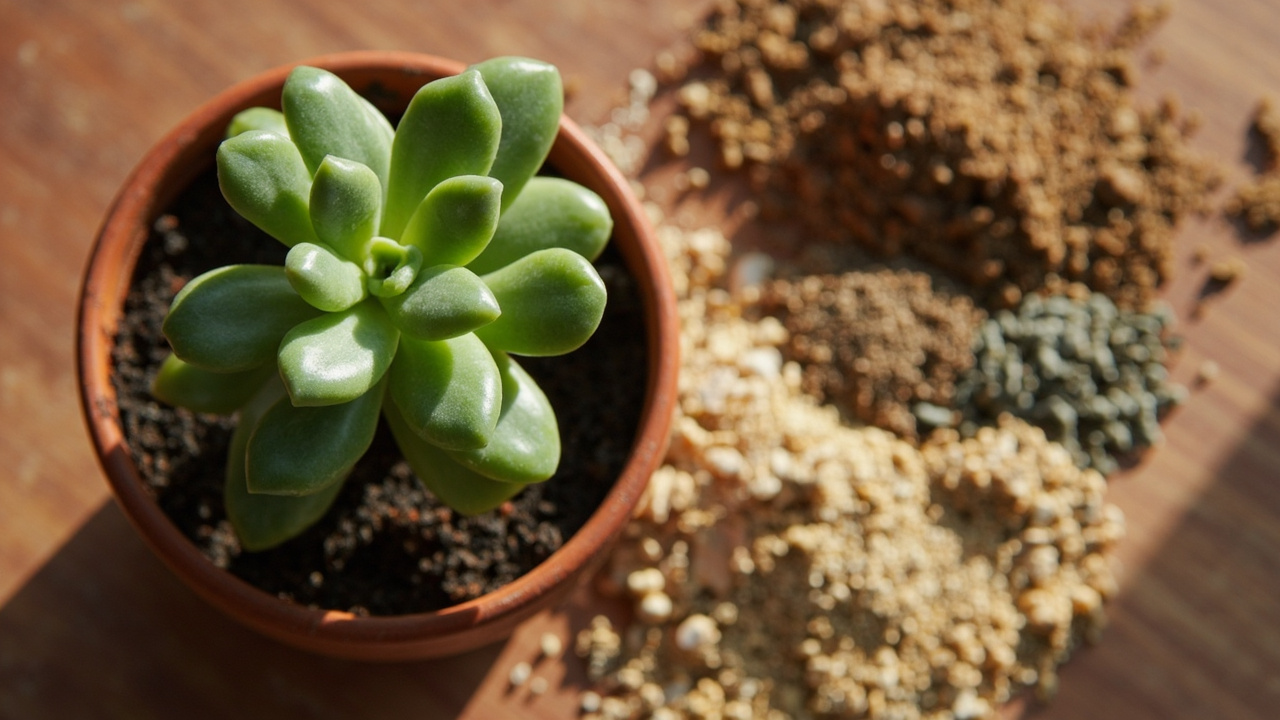
The same mix behaves differently depending on the season and your indoor environment. Learning to read what the soil is telling you — and adjusting your mix or your watering habits accordingly — is what separates a jade plant that lasts decades from one that slowly declines over a few seasons.
Winter vs. Summer Soil Behavior
In winter with lower light and shorter days, a jade plant’s water needs drop significantly — often to half of summer levels. In this mix, that means the soil may stay moist for twice as long in December as it does in July. The mix itself is correct for both conditions, but your watering frequency must change with the season. In winter, wait until the soil is completely dry 2–3 inches down before watering again. In summer, you may be watering every three to four days.
The soil itself will tell you what it needs if you learn to read it. Touch the surface. If it feels cool and damp, wait. If it feels warm and dry to the touch, water.
Signs the Mix Is Wrong
If your jade plant’s lower leaves are yellowing and the soil is staying wet for more than five days after watering, the mix is retaining too much moisture — add more perlite (10% more perlite, 10% less potting mix). If the leaves are shriveling despite regular watering and the soil seems to dry out within 12 hours every time, the mix may be draining too fast and you need more potting mix or a higher proportion of organic material.
If roots are appearing above the soil surface or coming out the drainage hole, the plant may have been in the same soil too long and the mix has compressed — time to repot with fresh mix. For more on diagnosing what else might be going wrong with your jade plant, see our jade plant problems guide. And for full care context, our jade plant care guide covers watering, light, and ongoing maintenance in detail.
Turn PDF Bank Statements Into Workable Spreadsheets
Your bank statement is a mess of numbers, but your books shouldn't be. Use our converter to get Excel, CSV, or QBO files — ready for QuickBooks.
Try It Free Now