Tropical hibiscus evolved in warm, humid environments — the kind of air moisture that sustains lush, glossy foliage and prolific flowering. When you grow it indoors in a centrally heated home, or outdoors in a dry climate, humidity becomes one of the biggest gaps between what the plant experiences and what it actually needs. Understanding this gap — and bridging it practically — makes the difference between a hibiscus that survives and one that truly thrives.
What Humidity Is and Why Hibiscus Cares
Humidity is the amount of water vapour present in the air. It is usually expressed as a percentage — 50% relative humidity means the air is holding half the water it could hold at that temperature. Warm air holds more moisture than cold air, which is why tropical regions are naturally humid: warm temperatures allow the air to hold more evaporated water.
For hibiscus, the ideal humidity range is roughly 50–70% relative humidity. In this range, the plant transpires efficiently — water moves from roots through the plant and evaporates from leaf surfaces at a healthy rate. This process is how the plant regulates temperature, transports nutrients, and maintains cell turgidity.
When humidity drops below 40% — common in heated indoor spaces in winter and in dry summer climates — the plant loses water faster than its roots can supply it. The leaves lose moisture through transpiration faster than they can replace it, which causes:
- Brown leaf edges and tips (the first and most common sign of low humidity)
- Crispy, dry leaf margins progressing inward
- Slowed growth and reduced flower production
- Increased susceptibility to spider mite infestations (spider mites thrive in dry conditions)
- Bud drop before opening (flowers are more sensitive to low humidity than foliage)
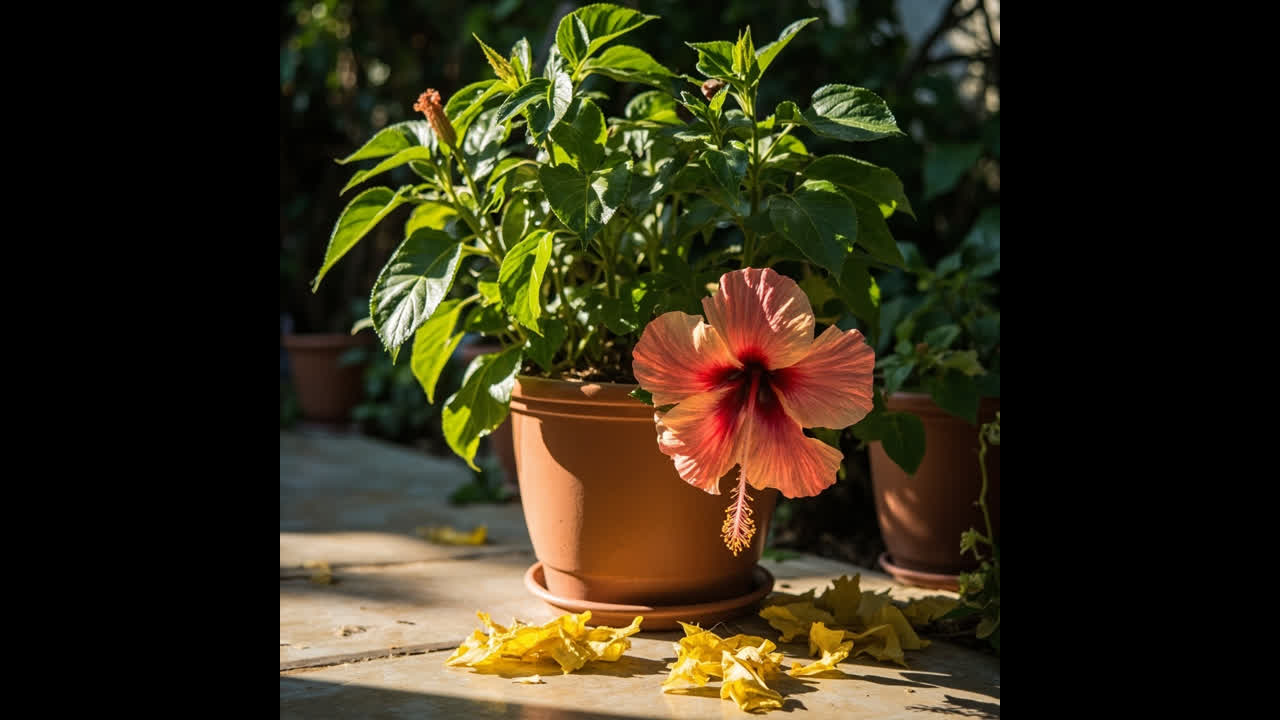
Measuring Your Home’s Humidity
The first practical step is to understand what humidity your hibiscus is actually experiencing. A hygrometer — a small device that measures temperature and relative humidity — costs very little and gives you data instead of guesswork.
Place the hygrometer near your hibiscus and check the reading at different times of day. Indoor humidity fluctuates: it drops in heated rooms, rises in bathrooms and kitchens, and varies between day and night. The reading that matters most is the one during the day when the plant is photosynthesizing.
If the reading is consistently below 40%, your hibiscus is experiencing humidity stress. If it is above 60%, conditions are good. Between 40–60% is marginal — the plant will survive but may show mild symptoms of humidity stress.
Turn any PDF statement into a clean sheet
Skip the typos and the hours of copying. Our converter handles any bank statement format and outputs Excel, CSV, or QBO for QuickBooks. No file retention, free to try.
Convert your statementMethods to Raise Humidity
Pebble Tray
The pebble tray is the most reliable low-maintenance humidity method. Here is how to set it up correctly:
- Choose a tray or shallow dish that is wider than your hibiscus pot — at least 5 cm larger in diameter on each side
- Spread a layer of pebbles (river stones, marble chips, or gravel) 2–3 cm deep across the tray
- Fill the tray with water until the water is just below the top of the pebbles — the pot sits on the pebbles, not in the water
- The evaporating water from the tray creates a humid microclimate around the plant as the water level gradually drops
Key mistake: if the pot sits in water rather than on pebbles, the drainage holes are submerged and you are creating the exact waterlogged conditions that cause root rot. The pot must be elevated above the water line.
Misting
Misting is the most commonly used humidity method — and the most misunderstood in its effectiveness. A fine mist spray over the leaves raises humidity momentarily, but the effect dissipates within minutes in a ventilated room. Misting does not sustain higher humidity over time.
Misting is useful in one specific situation: temporarily cooling leaf surfaces on very hot days, which reduces heat stress. For this purpose, mist in the morning so leaves have time to dry before evening — wet leaves left overnight are susceptible to fungal infection.
For sustained humidity improvement, misting is not the answer. Use a pebble tray or humidifier instead.
Humidifier
A small room humidifier near your hibiscus is the most effective and consistent method for raising indoor humidity. Ultrasonic humidifiers are quiet, energy-efficient, and available in sizes suitable for a single plant or a whole room.
Position the humidifier so the mist does not directly hit the plant — the mist should disperse into the air before reaching the foliage. Direct mist on leaves can create conditions that promote fungal growth if the leaves stay wet for extended periods.
Clean your humidifier regularly according to manufacturer instructions — humidifiers that are not cleaned become breeding grounds for bacteria and mould, which then circulate in the air around your plants.
Grouping Plants
Plants transpire individually, and multiple plants together create a collective humid microclimate. Grouping several plants close together — so their foliage is touching or overlapping — raises the humidity in the immediate zone around them. This is the most effortless humidity-raising method if you have multiple plants.
Grouping also helps in summer when individual plants are transpiring actively. The collective moisture output of several plants in a sheltered corner of a balcony or patio can significantly raise humidity in that microzone.
Bathroom Placement
The bathroom is naturally the most humid room in most homes due to showers and bathing. A south-facing bathroom window makes an excellent position for a hibiscus — the humidity stays elevated, the light is adequate, and the temperature is usually stable and warm. This is the simplest placement solution if your bathroom has sufficient light.
Humidity and Indoor Hibiscus in Winter
Indoor hibiscus faces its greatest humidity challenge in winter, when heating systems reduce indoor humidity to levels that can drop below 20% in some homes — more arid than many deserts. This is why indoor hibiscus in winter commonly develops brown leaf edges, leaf drop, and spider mite infestations.
The solutions are the same as in summer, but the urgency is greater. A humidifier near your hibiscus in winter is not a luxury — it is often the difference between a plant that survives to spring and one that does not. The pebble tray method also works well in winter, as the evaporation rate is slower in cool rooms but still meaningful.
For more on keeping indoor hibiscus alive through winter, see our hibiscus dormancy and winter care guide.
Signs Your Hibiscus Is Humidity-Stressed
- Brown leaf edges and tips — the most common humidity-related symptom. Starts at the leaf margins and progresses inward.
- Bud drop — flowers abort and fall before opening. Flowers are the most humidity-sensitive part of the plant.
- Slowed growth — new leaves and stems emerge more slowly than in the growing season.
- Spider mite predisposition — dry conditions make spider mite infestations more likely and more severe. Check leaf undersides regularly.
For the full guide to identifying what is actually causing symptoms on your hibiscus — humidity stress shares symptoms with watering issues and nutrient deficiency — see our hibiscus yellow leaves guide and our leaf drop guide.
For the overall care that supports good humidity, see our hibiscus care guide.