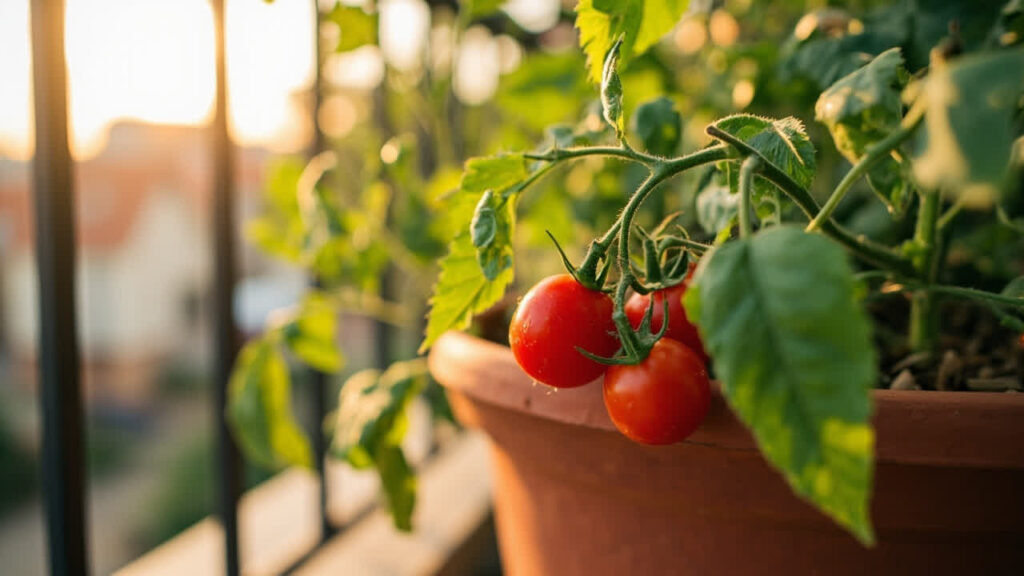

Growing tomatoes in containers works — but only with the right varieties, adequate container size, and consistent watering.
The gap between what most people expect and what a 5-gallon bucket actually produces is why container tomatoes fail more often than any other patio vegetable. This is the realistic guide.
Most container tomato failures trace back to three predictable causes: wrong variety, undersized container, and inconsistent watering that disrupts how the plant moves calcium to developing fruit. All three are preventable.
This article tells you exactly how to grow tomatoes in containers successfully.
Why Container Tomatoes Fail (And How to Avoid It)
Growing container tomatoes do not fail because containers are a bad idea. They fail because the conditions inside a container are fundamentally different from in-ground soil — and most generic tomato advice doesn’t make that distinction.
The first failure is variety selection. Beefsteak tomatoes dominate seed rack displays, but they need more root space, more water, and more nutrients than a container can practically provide.
The second failure is container size. A 1-gallon nursery pot sounds reasonable until you see how aggressively tomato roots develop.
The third failure is inconsistent watering. Containers dry out from the top while lower roots stay moist — a pattern that disrupts calcium transport and causes blossom end rot. None of these are mysteries.
The failures are predictable, which means preventable.
Choosing the Right Container Size
Container size is the single most impactful decision in container tomato growing. Too small, and the plant spends the season under stress. Too large, and soil stays wet too long, inviting root diseases.
Why 5 Gallons Is the Minimum
A 5-gallon container — roughly 14 inches in diameter — is the minimum for any tomato plant expected to produce fruit. Anything smaller severely limits root expansion, which limits the plant’s ability to access water and nutrients.
A determinate variety in a 5-gallon container performs adequately. An indeterminate variety in the same container struggles past mid-season.
For indeterminates — the tall, vining types that produce continuously — aim for 10 to 15 gallons where space and weight allow. More soil volume means more buffer against watering inconsistency and more stable nutrient availability.
Bigger is not always better on exposed balconies. A 20-gallon container on a rooftop adds significant weight and becomes difficult to manage in wind. A well-managed 10-gallon container outperforms a neglected 20-gallon one every season.
Container Material
Fabric grow bags drain well and air-prune roots naturally, keeping root systems healthier than plastic or ceramic.
Plastic containers retain moisture longer — useful in hot climates but risky if you tend to underwater.
Terracotta is porous and dries out faster, which suits hot climates but demands more frequent watering. Avoid dark plastic containers in full sun; they absorb and radiate heat that damages roots.
The Best Tomato Varieties for Containers
Variety selection matters more in growing tomatoes in containers than in garden beds. In a bed, you can absorb a poor variety match with better soil volume and natural moisture buffering.
In a container, the variety either fits the conditions or it doesn’t.
Determinate Varieties: The Container Workhorse
Determinate tomatoes grow to a fixed height — typically 3 to 4 feet — and set fruit in a concentrated window. They need less staking, less pruning, and less daily attention.
For containers, this compact habit is a significant advantage. They are also more forgiving of irregular watering, which matters on a patio where you cannot check the plant every morning.
Indeterminate Varieties: Possible, But Harder
Indeterminate tomatoes grow and produce continuously until frost. In a 5-gallon container, most will survive but not thrive — the root system cannot support that level of top growth with that limited soil volume.
If you want an indeterminate in a container, use the largest container available and water and feed more aggressively.
Cherry tomatoes handle container stress better than slicing varieties because the fruit is smaller and sets faster.
Varieties Worth Growing in Containers
Roma (determinate) — compact, meaty fruit, disease-resistant, reliable producer. Good for cooking and sauces.
Better Bush (determinate) — 3-to-4-foot plant with decent slicing fruit. Tolerates container stress well.
Tiny Tim (determinate, dwarf) — 12 to 18 inches tall. Suits very small containers and even windowsills. Cherry-sized fruit.
Tumbling Tom (determinate, trailing) — cascading habit ideal for rail planters and hanging baskets. Yellow and red varieties available.
Cherry Falls (determinate, cascading) — bred specifically for containers and hanging baskets. Small sweet fruit over a long season.
Sweet 100 (indeterminate, cherry) — high-yielding cherry tomato that handles containers better than most indeterminates. Needs a 10-gallon minimum.
Not worth growing in a 5-gallon bucket: standard beefsteak varieties — Brandywine, Beefsteak, Cherokee Purple. They need more root space than a container can provide. Grow these in a garden bed, not a bucket.
Soil and Potting Mix
Never use garden soil in a container. It compacts in the confined space, drains poorly, and concentrates soil-borne diseases that would otherwise disperse through the ground.
Use a potting mix formulated for vegetables or build your own.
A good container tomato mix is roughly 60% peat moss or coco coir, 30% perlite for drainage, and 10% finished compost.
Coco coir outperforms peat in hot climates because it holds moisture more consistently. Adding perlite is not optional — it prevents compaction and keeps the medium aerated. Without it, the soil structure collapses within a few weeks of watering.
How to Plant Tomatoes in Containers
Tomato stems can grow auxiliary roots along any buried portion of the stem. This is not a quirk — it is an advantage.
When planting a transplant, bury 4 to 6 inches of the lower stem, even if it means removing some lower leaves. The buried portion develops additional root systems that improve water and nutrient uptake significantly.
Fill the container to about 2 inches below the rim — this creates a reservoir that helps water soak in rather than run off. Water thoroughly at planting, then move the container to its final position and leave it. Tomato transplants should not be moved once established in full sun.
Install support at planting time, not later. Inserting a cage or stake into an established root system causes real damage. On windy balconies, a single bamboo stake is more manageable than a conical cage and less likely to tip the container over.
Watering Container Tomatoes : The Critical Factor
Inconsistent watering kills more container tomatoes than pests, disease, or the wrong variety. The mechanism is simple: tomato fruit development requires steady calcium uptake, and calcium uptake requires consistent water movement through the plant.
When soil dries out and then floods, the calcium transport system breaks down and blossom end rot follows.
Containers dry out faster than garden beds, especially in wind and direct sun. A 5-gallon container in full afternoon sun may need water twice daily during peak summer. This is not an exaggeration or an unusual condition — it is what you are agreeing to when you grow tomatoes in containers.
How Often to Water
There is no fixed schedule. Water when the top 1 to 2 inches of soil feels dry.
In practice, this means checking every morning during hot weather and every second day during moderate temperatures. Stick your finger in. If it comes out clean and dry past the first knuckle, water.
Deep Watering vs. Light Watering
When you water, water deeply until it runs from the bottom. Light watering that only moistens the top inch creates shallow root systems that stress easily. Deep watering develops resilient roots that handle heat and wind better.
This is the same principle behind deep watering for houseplants — the technique applies directly to containers.
Water early in the morning. Evening watering leaves foliage wet overnight, which promotes fungal disease. Morning watering gives the plant moisture for the hottest part of the day and lets leaf surfaces dry before evening.
Self-Watering Containers and Drip Systems
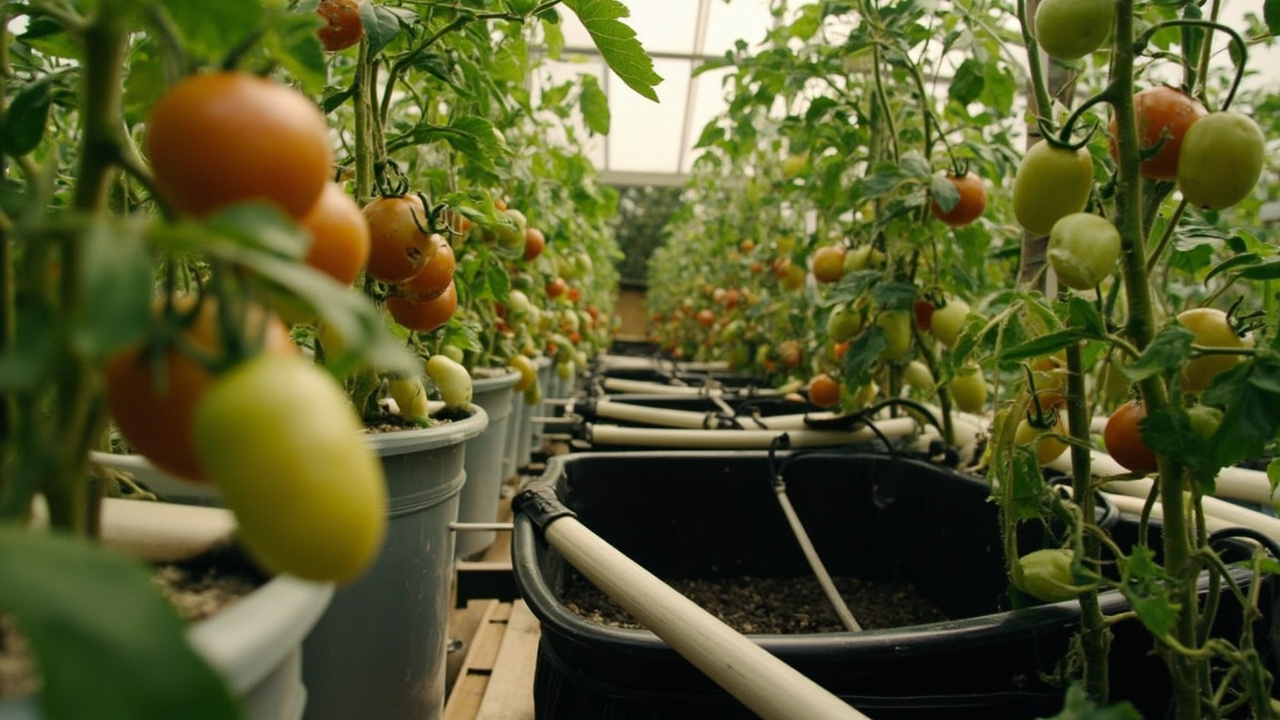
If you cannot water daily during summer, a self-watering container with a bottom reservoir reduces watering frequency to every 2 to 3 days.
A simple drip irrigation system on a timer is another option — set it for early morning and adjust based on temperature and rainfall.
Feeding and Fertilizer Schedule
Container soil is a closed system with finite nutrients. Garden beds get continuous nutrient recycling from earthworms and soil biology.
A container relies entirely on what you add — which means you control exactly what the plant gets, but also that you have to actually add it.
What to Use
A balanced liquid fertilizer with an NPK ratio near 10-10-10 works for seedlings and early vegetative growth.
Once the plant begins flowering, switch to something lower in nitrogen and higher in phosphorus and potassium — 5-10-10 or a dedicated tomato formula. Too much nitrogen during flowering pushes leaf growth at the expense of fruit.
Supplementing with worm castings is one of the most reliable upgrades for container tomatoes. Work a half-inch layer into the soil surface every 4 to 6 weeks, or add a cup to your mix at planting.
Worm castings provide slow-release micronutrients and beneficial biology that liquid fertilizers skip.
How Often to Feed
Feed with liquid fertilizer every 10 to 14 days during active growth. If using slow-release granules mixed in at planting, supplemental feeding can wait for the first 6 to 8 weeks.
During fruiting, move to every 7 to 10 days if the plant shows pale leaves or slow growth.
When to Stop Feeding
Stop fertilizing about 4 to 6 weeks before the first expected frost, or when the plant is clearly declining at season’s end.
Late-season feeding produces new growth that frost will kill, wasting nutrients and inviting pest problems on dying tissue.
Support, Staking, and Training
Most tomato varieties need support once they reach about 12 inches. Unsupported plants sprawl, break under fruit weight, and take up more space than trained ones.
For determinates, a simple cage or 4-foot stake is sufficient. For indeterminates, a 5-to-6-foot stake with weekly tieing is more manageable than a cage in tight spaces. Tie stems loosely with soft plant ties or cloth strips — wire and hard ties cut into stems.
Pruning suckers — the shoots in the angle between the main stem and branches — redirects energy from foliage to fruit. On determinates, light pruning is enough. On indeterminates, removing lower suckers up to the first flower cluster improves air circulation and reduces disease pressure.
Wind stress is the most underestimated factor in container tomato management. On windy balconies, determinate plants in cages outperform tall indeterminates on stakes every season. A 4-foot plant in a 5-gallon container in a 30-mph gust can tip, break stems, or blow over entirely.
Common Container Tomato Problems
Container tomatoes face the same problems as garden tomatoes, but container conditions amplify most of them.
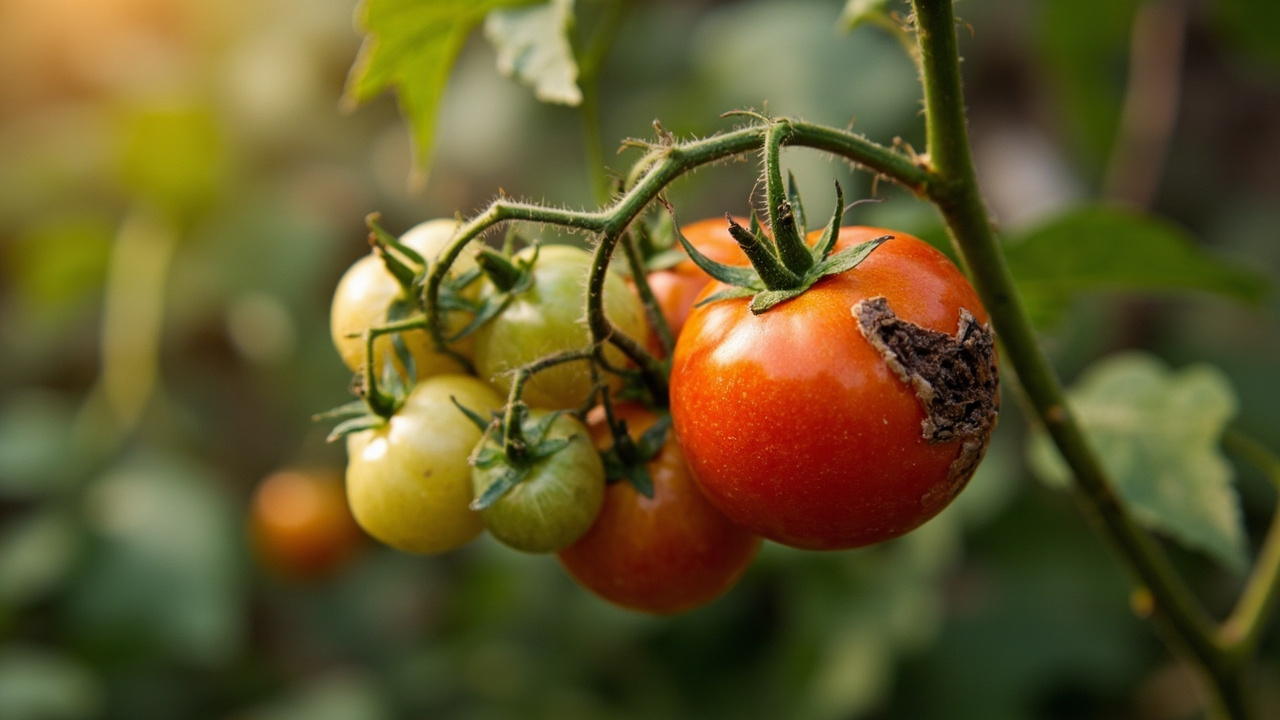
Blossom end rot appears as a dark, sunken rot on the bottom of developing fruit. The cause is calcium deficiency at the fruit tip — but the deficiency usually stems from inconsistent watering, not a calcium shortage in the soil. When water movement through the plant is erratic, calcium cannot reach the developing fruit fast enough. The fix is not calcium addition; it is fixing the watering inconsistency. Affected fruit will not recover and should be removed. New fruit will develop normally once watering is consistent.
Blossom drop — flowers that fall without setting fruit — is usually temperature stress. Tomatoes prefer nights between 60 and 70 degrees Fahrenheit and days below 90 degrees. Containers on south-facing walls absorb more heat than ground soil, pushing daytime temperatures above the fruit-set threshold earlier in summer. If blossom drop persists in a hot climate, afternoon shade during peak months helps.
Yellowing lower leaves typically indicate nitrogen deficiency, especially when the yellowing progresses up the plant in a uniform pattern. This is common by mid-season when container nitrogen is depleted. A dose of liquid fertilizer higher in nitrogen corrects it quickly.
Aphids cluster on new growth and under leaves, especially on stressed plants. A strong spray of water removes them effectively. Insecticidal soap is safe for edible plants. Neem oil works but can affect fruit flavor if applied close to harvest.
Realistic Yield Expectations : Worth Growing or Not?
A healthy determinate plant in a 5-gallon container produces roughly 10 to 15 pounds of fruit in a good season. That is not 30 to 50 pounds. It is not enough to preserve in quantity. It is enough for fresh salads, sandwiches, and the occasional pasta dish throughout the season.
Setting this expectation before you start determines whether you feel successful or disappointed at harvest.
Indeterminate varieties in 10-to-15-gallon containers with excellent care can reach 20 to 25 pounds per season — but that requires consistent watering, regular feeding, and attentive management. The effort level is not casual.
Worth growing if: you have a sunny balcony or patio, you want fresh tomatoes without a garden bed, you can check on the plant daily during hot months, and your space is too small for an in-ground garden.
Not worth growing if: you want quantities for preserving or canning, your balcony is in full afternoon sun and summer temperatures regularly exceed 95 degrees — containers overheat in ways garden beds do not — or you are on a very windy rooftop where plants are under constant physical stress. In these cases, a farmers market is a better use of your time and space.
Growing Tomatoes in Containers
The people who succeed growing tomatoes in containers are not better gardeners. They chose the right varieties, sized the container correctly, and showed up consistently with water and fertilizer.
That is achievable!
From Bank Statement to QuickBooks-Ready File
That manual cleanup you just read about? This tool skips it. Turn your PDF into QBO for QuickBooks without storing your data anywhere.
Start Converting