Feeding begonias is one of those tasks that looks simple on the surface — grab a fertilizer, water it in, done — but the difference between a begonia that blooms for months and one that develops crispy leaf edges and stops growing often comes down to three things: dilution, timing, and the NPK ratio. Get those right and your begonias will reward you consistently from spring through late summer.
The single most common mistake home growers make with begonia fertilizer is treating it like a robust tropical — reaching for full-strength feed, feeding year-round, or not adjusting for the fact that begonia roots are finer and more sensitive than those of many popular houseplants. Begonias are not heavy feeders, and they have a defined dormant period where feeding does more harm than good.
This guide covers what to feed begonias, how strong to mix it, when to apply it across the growing season, and how to recognize when you’ve overdone it. The fix for fertilizer problems is straightforward once you know what to look for.
Why Half-Strength Matters for Begonia Fertilizer
Commercial fertilizer solutions are formulated for plants with robust, spreading root systems — the kind you’d find in a ficus or a monstera. Begonia root systems are comparatively fine, branching, and dense, occupying a tighter zone in the potting mix. When a full-strength fertilizer solution hits these fine roots, the salt concentration in the root zone spikes, drawing moisture out of the root tips through osmosis. The result is the same root burn you’d see from over-salty soil.
Diluting to half-strength delivers the nutrients begonias need — primarily nitrogen for foliage, phosphorus for root development, and potassium for overall cell function — without creating the osmotic stress that causes damage. The plants absorb what they need from a dilute solution more evenly across the root zone. For reference, the American Begonia Society notes that begonias are best fed “only when they are actively growing,” which means the dilution rule matters most during peak season.
The practical upshot: under-feeding a begonia is significantly safer than over-feeding. If you’re unsure whether to feed, don’t. A slightly hungry begonia will show slow growth and smaller leaves; an over-fed one will show root burn that takes weeks to recover from.
For more on the broader care framework that supports healthy fertilizer uptake, see the comprehensive begonia care guide.
Choosing the Right Fertilizer: NPK Ratios for Begonias
The three numbers on any fertilizer label — NPK — represent nitrogen (N), phosphorus (P), and potassium (K). For begonias, the ratio you want depends on whether you’re growing primarily for foliage or for flowers.
- Balanced (10-10-10 or 14-14-14): A good all-round choice for general begonia health. These formulas support both foliage and bloom without strongly favoring either.
- High phosphorus (15-30-15 or similar): Use this when you want to encourage flowering. The higher phosphorus drives root development and bloom production, but can reduce foliage quality if used long-term on foliage-first begonias like rex varieties.
- Low nitrogen (9-3-6): Popular for rex begonias and other foliage-focused varieties. Less nitrogen means the plant puts energy into leaf color and pattern rather than green growth. Reddit users growing rex begonias report excellent results with 9-3-6 formulas like SuperThrive Foliage Pro.
- Water-soluble vs. slow-release: Water-soluble liquid fertilizers are easiest to dilute precisely and are absorbed quickly. Slow-release granular fertilizers work well for outdoor begonias or in larger containers where consistent feeding over months is desired. For indoor potted begonias, liquid formulas give you more control.
The best choice for most indoor begonias is a balanced, water-soluble formula — 10-10-10 or 14-14-14 — mixed at half strength. If your begonia is primarily a foliage specimen (rex begonia, for example), a 9-3-6 at half strength is a better fit.
When to Fertilize: Seasonal Schedule
Begonias follow a clear seasonal growth pattern, and your fertilizing schedule should follow it too.
- Spring (when new growth appears): Begin feeding when you see active new leaves or stems emerging. This typically coincides with longer daylight hours and warmer indoor temperatures — around 60-70°F (16-21°C). Don’t rush this: feeding a dormant begonia does nothing useful.
- Late spring and summer (peak growing season): Feed every 2 to 4 weeks at half strength. The exact interval depends on your home — warmer, brighter conditions push faster growth and may call for the more frequent end of that range.
- Fall (growth slows): Reduce frequency as daylight shortens and temperatures drop. Many growers drop to monthly at this point.
- Winter (dormancy): Stop feeding entirely. Begonias photosynthetically slow when light levels drop, and fertilizer salts accumulate in cold, damp soil — a combination that leads to root burn. Resume only when you see new growth in spring.
The visual cue to watch for is new growth. When you see fresh leaves pushing out, resume your feeding schedule. The exact timing varies by household — a south-facing window in January will bring plants out of dormancy faster than a north-facing room. Trust the plant’s behavior over the calendar date.
How to Apply Fertilizer Correctly
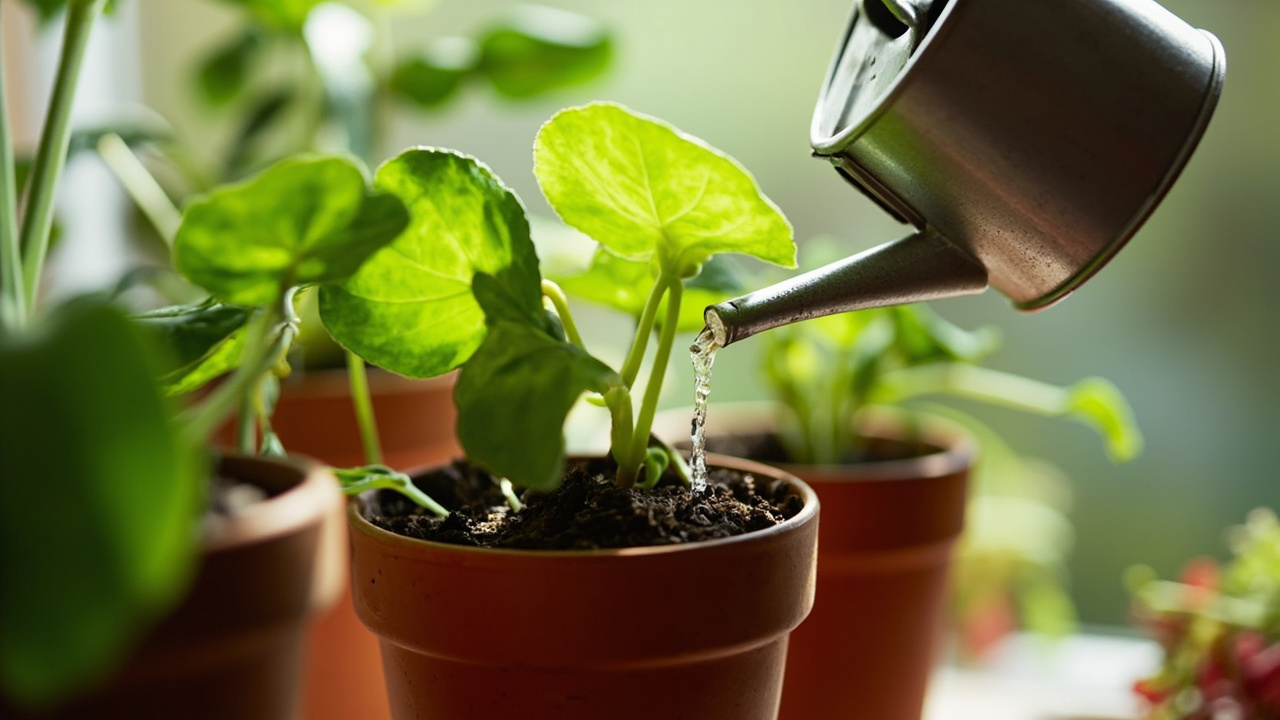
How you apply fertilizer matters as much as what you use. Two key principles: always water before you feed, and apply at soil level, not over the foliage.
- Water first: Moisten the soil with plain water before applying fertilizer solution. This protects fine roots from direct salt contact and ensures the root zone is already hydrated so it absorbs the nutrient solution evenly.
- Mix at half-strength: If your fertilizer label says 1 teaspoon per gallon, use ½ teaspoon per gallon. For a typical 4-inch pot, that’s roughly ¼ teaspoon of water-soluble powder or 2-3 ml of liquid concentrate per pint of water.
- Pour at soil level: Apply the diluted solution directly to the soil surface, around the base of the plant, not over the leaves. Begonia leaves are prone to fungal spotting if kept wet, and fertilizer solution on foliage can cause chemical burn marks.
- Allow to drain: Make sure the pot has drainage holes and let excess solution escape. Never let begonias sit in a tray of fertilizer solution.
- Repeat every 2-4 weeks: Mark your calendar — consistent feeding on a schedule produces better results than sporadic heavy feeding.
For a full overview of watering practices that work well alongside regular fertilizing, see the begonia watering schedule.
Signs of Over-Fertilizing and How to Fix It
Over-fertilizing is the most common nutritional problem with indoor begonias. The symptoms are distinctive once you know what to look for.
- Crispy brown leaf edges: The classic sign. Salt buildup at the root zone draws moisture out of leaf margins, causing characteristic browning that starts at the edges and works inward.
- White crust on the soil surface: Visible fertilizer salt accumulation. If you see a white or grayish film on the top of the soil, you’ve been over-feeding.
- Wilting despite moist soil: Root burn impairs the plant’s ability to take up water, so the plant wilts even though the soil feels damp.
- Yellowing between leaf veins: While nitrogen deficiency causes overall yellowing, over-fertilizing with high-phosphorus formulas can cause yellowing between veins (interveinal chlorosis) — a sign of micronutrient lockout from salt excess.
- Stunted or slow growth: Roots that are burned can’t support new growth. If your begonia was growing well and suddenly slows, over-fertilizing is a likely cause.
The recovery method for over-fertilized begonias is straightforward: flush the soil. Take the pot to a sink or outdoors, and run plain water through the soil slowly for several minutes — enough to dilute and wash out the accumulated salts. Let the pot drain completely. Don’t feed again for at least 4 to 6 weeks, and when you resume, use a more conservative dilution than before.
If the problem is severe — wilting, extensive root burn — you may need to repot into fresh, unfertilized soil mix. Trim any visibly mushy or black roots before repotting.
For more on diagnosing begonia problems including fertilizer-related symptoms, see the common begonia problems guide.
Turn any PDF statement into a clean sheet
Skip the typos and the hours of copying. Our converter handles any bank statement format and outputs Excel, CSV, or QBO for QuickBooks. No file retention, free to try.
Convert your statement